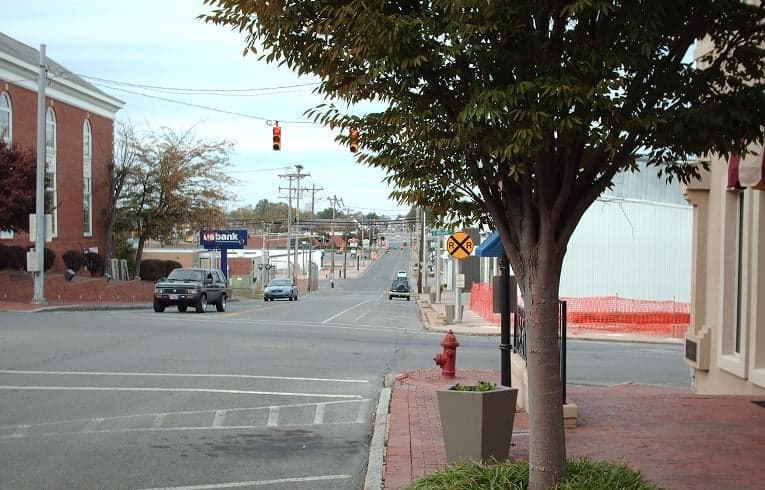
Photo: Wikipedia
Political ClimatePolitical Climate in Shelbyville, TN
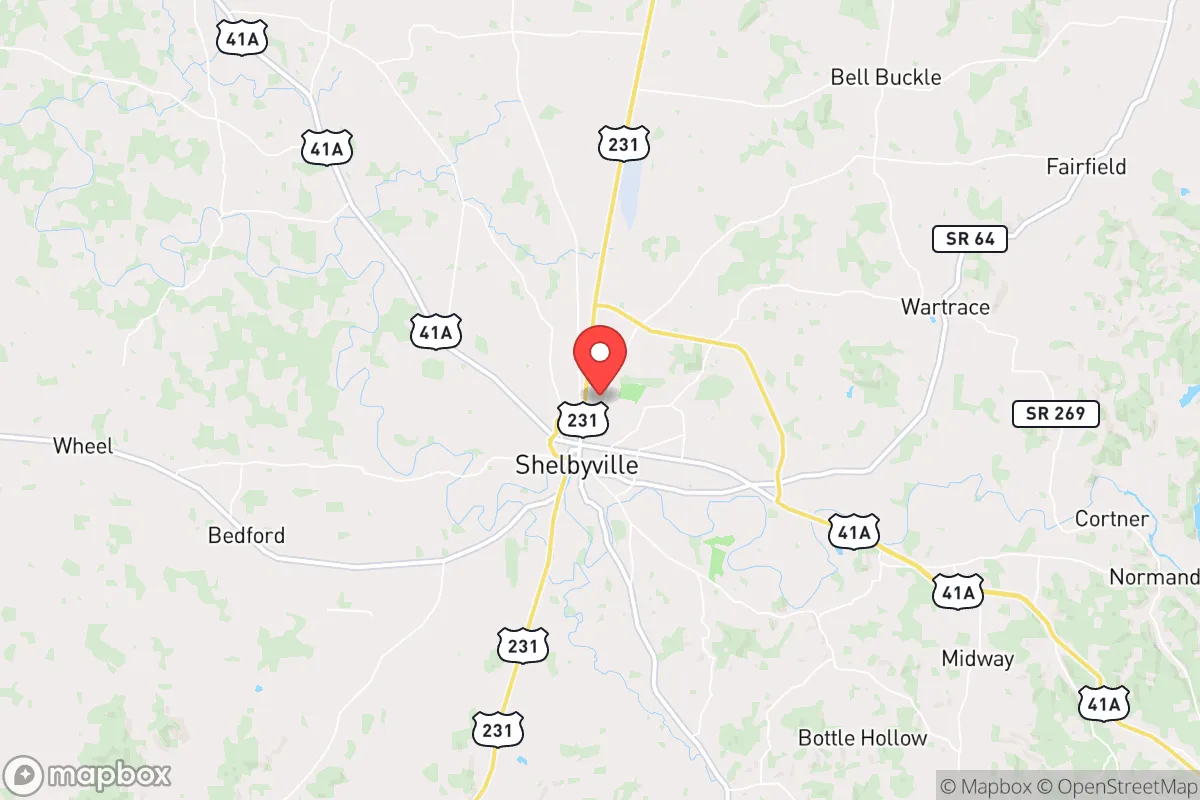
District shown is the primary district for this city’s centroid. Cities may span multiple districts.
Local Political AnalysisPolitical Analysis of Shelbyville, TN
Shelbyville, Tennessee, sits solidly in conservative territory, with a Cook PVI of R+21 that reflects a deep-rooted preference for limited government and traditional values. This isn't a purple area that flips with the national mood; it's a place where Republican candidates routinely win by double digits, and the local culture reinforces that lean. Over the past decade, the political trajectory has held steady, though there's been a subtle shift as some newcomers from bluer states bring different ideas—ideas that long-time residents watch closely, wary of any creeping government overreach into personal freedoms and local decision-making.
How it compares
Shelbyville's politics are more conservative than nearby Murfreesboro, which has grown more moderate as a college town and bedroom community for Nashville. Drive 30 minutes north, and you'll feel the difference in campaign signs and local ordinances. To the south, Lynchburg and Fayetteville lean similarly red, but Shelbyville stands out for its consistent, unapologetic conservatism—no one here is apologizing for Second Amendment rights or school choice. The contrast is sharpest with Nashville, about an hour away, where progressive policies on taxes, zoning, and public safety have raised eyebrows among Shelbyville residents who see that as a cautionary tale of what happens when government gets too big for its britches.
What this means for residents
For folks living here, the political climate means fewer headaches from overbearing regulations. Property taxes stay low, business permits are straightforward, and there's no city council pushing woke agendas in schools or mandating vaccine passports. The local government generally takes a hands-off approach, trusting residents to run their own lives. That said, the recent influx of out-of-state transplants—many from California and Illinois—has introduced some tension. You'll hear chatter at the feed store about new folks wanting bike lanes and "affordable housing" mandates, which some see as the first step toward the kind of bureaucratic meddling that ruined their old hometowns. So far, the old guard holds the line, but it's something to keep an eye on over the next five to ten years.
Culturally, Shelbyville remains a place where church potlucks outnumber city council meetings, and the annual Tennessee Walking Horse Celebration draws more attention than any political rally. The biggest policy distinction is the county's resistance to state-level pushes for expanded Medicaid or stricter environmental rules—local leaders argue those are federal overreach dressed up as help. If you value personal liberty, low taxes, and a community that doesn't tell you how to live, Shelbyville still feels like a safe bet. But if you see the national trend toward progressive governance as a threat, you'll want to pay attention to who moves in next door and what they bring to the voting booth.

State Political ClimatePolitical Climate in Tennessee
State Political AnalysisPolitical Environment in the State
Tennessee has been a reliably red state for decades, and that’s not changing anytime soon. The Volunteer State leans solidly Republican at the state level, with a GOP trifecta controlling the governorship, supermajorities in both legislative chambers, and a conservative-leaning Supreme Court. Over the past 10-20 years, the shift has been dramatic: in 2000, Tennessee was a swing state that went for George W. Bush by just 4 points; by 2024, Donald Trump carried it by over 30 points. The state’s political trajectory is driven by a combination of rural conservatism, suburban realignment, and a steady influx of conservative-leaning migrants from blue states like California and Illinois. However, the fast-growing metro areas—especially Nashville and Memphis—are becoming more progressive, creating a growing urban-rural tension that defines Tennessee’s political landscape today.
Urban vs. rural divide
The political map of Tennessee is a study in contrasts. The state’s two largest metros, Nashville (Davidson County) and Memphis (Shelby County), are deep blue strongholds. Nashville has become a progressive hub, with a Democratic mayor, a city council that has pushed for sanctuary city policies, and a growing activist class. In 2024, Davidson County voted for Kamala Harris by a 30-point margin. Memphis is even more Democratic, with Shelby County delivering a 40-point margin for Harris. These two counties alone account for roughly 20% of the state’s population, but they are increasingly isolated politically. The rest of the state is overwhelmingly red. The rural counties in Middle and East Tennessee—like Williamson, Rutherford, and Washington—are solidly Republican, often voting 70-80% for the GOP. The suburbs around Nashville, such as Franklin and Brentwood in Williamson County, are among the most conservative in the nation, with Williamson County voting +35 R in 2024. The divide is stark: drive 30 minutes outside of Nashville, and you’re in deep red territory where Trump flags fly year-round. The urban-rural split is the defining political fault line in Tennessee, and it’s only widening as Nashville and Memphis grow more diverse and liberal while the rest of the state doubles down on conservative values.
Policy environment
Tennessee’s policy environment is a model for conservative governance. The state has no income tax on wages, a low property tax burden, and a sales tax that is high (9.55% average) but offset by the lack of income tax. The regulatory posture is business-friendly, with right-to-work laws and minimal zoning restrictions in most areas. On education, Tennessee has embraced school choice: the state’s Education Savings Account (ESA) program, expanded in 2023, allows families in certain counties to use public funds for private school tuition. The state also passed a universal school voucher bill in 2024, making it one of the most aggressive school choice states in the South. On healthcare, Tennessee did not expand Medicaid under the Affordable Care Act, and the state’s TennCare program is limited. The state has also passed strict abortion laws: a near-total ban on abortion after six weeks (the "Heartbeat Bill") was enacted in 2020, and after the Dobbs decision in 2022, a trigger law banned abortion at all stages with limited exceptions. Election laws are secure: Tennessee requires photo ID to vote, has strict voter roll maintenance, and banned ballot drop boxes in 2023. The state also passed a law in 2024 making it a felony for non-citizens to vote, though that was already illegal. For a conservative moving in, the policy environment is about as friendly as it gets—low taxes, school choice, and strong election integrity measures.
Trajectory & freedom
Tennessee is becoming more free in many respects, but there are warning signs. On the positive side, the state has expanded gun rights significantly: in 2021, Tennessee became a permitless carry state, allowing any law-abiding adult to carry a concealed firearm without a permit. The state also passed a "Second Amendment Sanctuary" resolution in 2020, affirming that local law enforcement won’t enforce federal gun laws they deem unconstitutional. On parental rights, Tennessee passed the "Parental Bill of Rights" in 2022, which gives parents the right to review curriculum and opt their children out of lessons they find objectionable. The state also banned gender transition procedures for minors in 2023, a law that has been challenged in court but remains in effect. On medical autonomy, Tennessee has a broad religious exemption for vaccine mandates and passed a law in 2023 prohibiting employers from requiring COVID-19 vaccines. However, there are concerning trends. The state’s property tax system is regressive, and while rates are low, assessments have been creeping up in fast-growing areas like Williamson County. The state also has a high sales tax, which hits low-income families hardest. On speech, Tennessee has not passed a "critical race theory" ban in K-12 schools, but the state board of education has adopted standards that emphasize "American exceptionalism" and prohibit teaching that the U.S. is "fundamentally racist." Overall, the trajectory is toward more personal liberty, but the state’s tax structure and growing government spending (the budget has increased 40% since 2020) are worth watching.
Civil unrest & political movements
Tennessee has seen its share of political flashpoints. In 2020, Nashville was the site of large Black Lives Matter protests, including a march on the state capitol that led to the toppling of a statue of a Confederate general. The city also saw a "Justice for Jocques" movement after the police killing of Jocques Clemmons in 2017. On the right, the state has a strong Second Amendment movement, with groups like the Tennessee Firearms Association holding regular rallies at the capitol. In 2023, a mass shooting at The Covenant School in Nashville sparked a wave of protests from both sides: gun control advocates demanded red flag laws, while gun rights activists held counter-protests. The state legislature ultimately passed a bill to keep the shooter’s manifesto sealed, citing privacy concerns. Immigration politics are a hot-button issue: Tennessee has no sanctuary cities, but Nashville’s "Welcoming City" resolution (which limits cooperation with ICE) has been a flashpoint. The state legislature passed a law in 2024 banning sanctuary policies and requiring local law enforcement to cooperate with federal immigration authorities. Election integrity has been a major issue since 2020: Tennessee’s Republican-controlled legislature passed a series of laws tightening voter ID requirements, banning ballot harvesting, and requiring signature verification for absentee ballots. There have been no major election fraud scandals, but the state’s election laws are among the most secure in the nation. A new resident would notice that political activism is visible but not overwhelming—you’ll see Trump flags in rural areas and "Coexist" bumper stickers in Nashville, but the state is not as polarized as, say, Oregon or Pennsylvania.
Projection
Over the next 5-10 years, Tennessee will likely become more Republican at the state level, but the urban-rural divide will deepen. The state is projected to gain a congressional seat after the 2030 census, and that seat will likely be in the fast-growing suburban areas around Nashville and Knoxville, which are trending red. However, Nashville and Memphis will continue to become more progressive, and the state’s Democratic minority will become more concentrated in those two metros. The in-migration from blue states—especially California, Illinois, and New York—is overwhelmingly conservative-leaning, as people move to Tennessee for lower taxes and fewer regulations. This will reinforce the state’s red tilt. However, there are risks. The state’s reliance on sales tax revenue makes it vulnerable to economic downturns, and the growing budget could lead to pressure for an income tax, which has been proposed but never passed. The state’s education system is underfunded, and teacher shortages are a growing problem. On the cultural front, the state’s abortion ban and transgender laws will continue to be challenged in court, but the conservative judiciary (the Tennessee Supreme Court is all Republican appointees) will likely uphold them. A new resident moving in now should expect to find a state that is solidly conservative, with a strong economy, low taxes, and a growing population, but with increasing tension between the liberal cities and the conservative countryside.
For a conservative moving to Tennessee, the bottom line is this: you’re getting a state that respects your freedoms, keeps taxes low, and protects your rights. The urban areas are a concern—Nashville and Memphis are becoming more progressive, and their policies (like sanctuary city resolutions) clash with state law. But if you choose a suburb like Franklin, Brentwood, or Collierville, you’ll find a community that shares your values. The state’s trajectory is positive for conservatives, but you’ll need to be aware of the growing urban-rural divide and the potential for property tax increases in high-growth areas. Overall, Tennessee is one of the best states in the country for a conservative family looking for freedom, opportunity, and a community that respects traditional values.
* Values derived from national, state, county, city and local statistics and may differ in a specific area. Last updated: 2026-05-01T14:40:15.000Z
Narrative content on this page is AI-generated and may contain mistakes. Verify any details that matter before acting on them.
ReloMaps may earn a commission from affiliate links at no extra cost to you.

