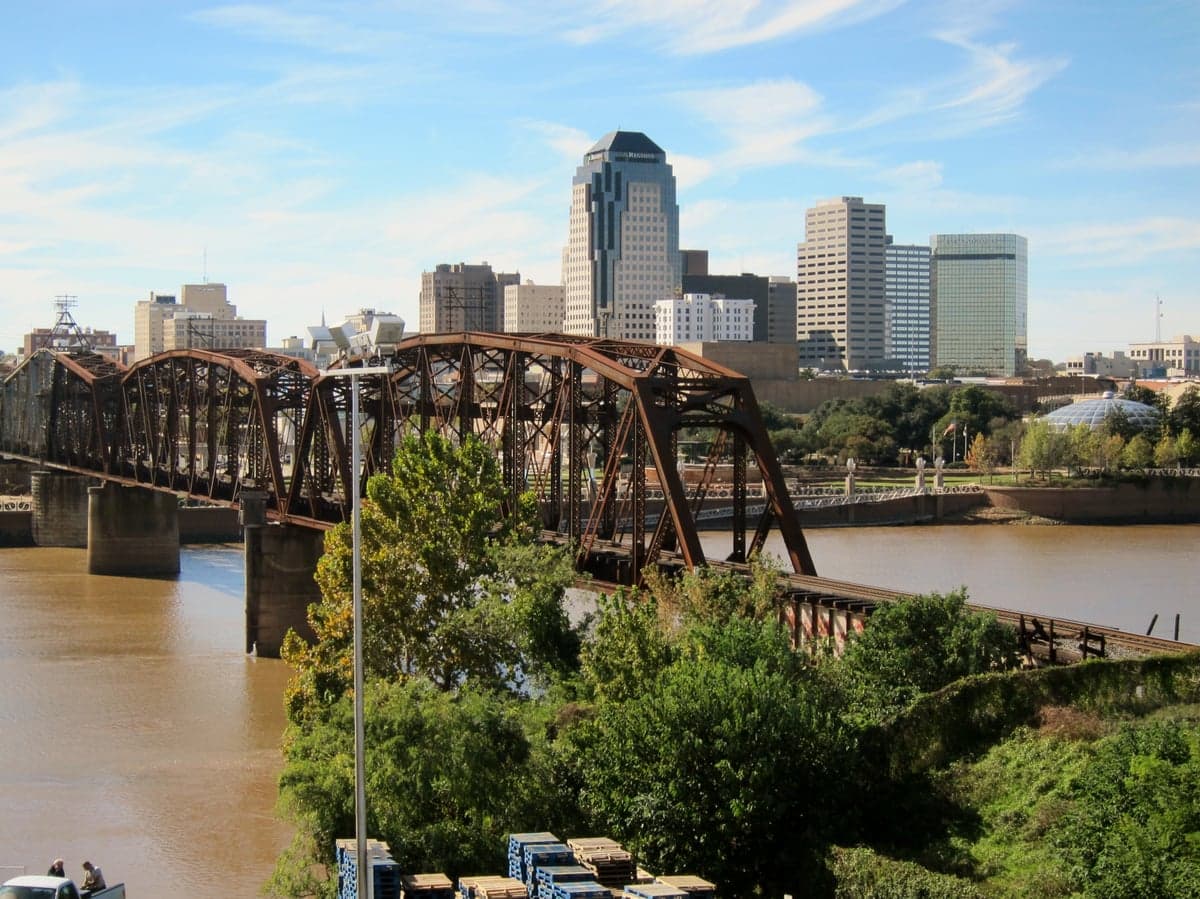
Photo: Wikipedia
Political ClimatePolitical Climate in Shreveport, LA
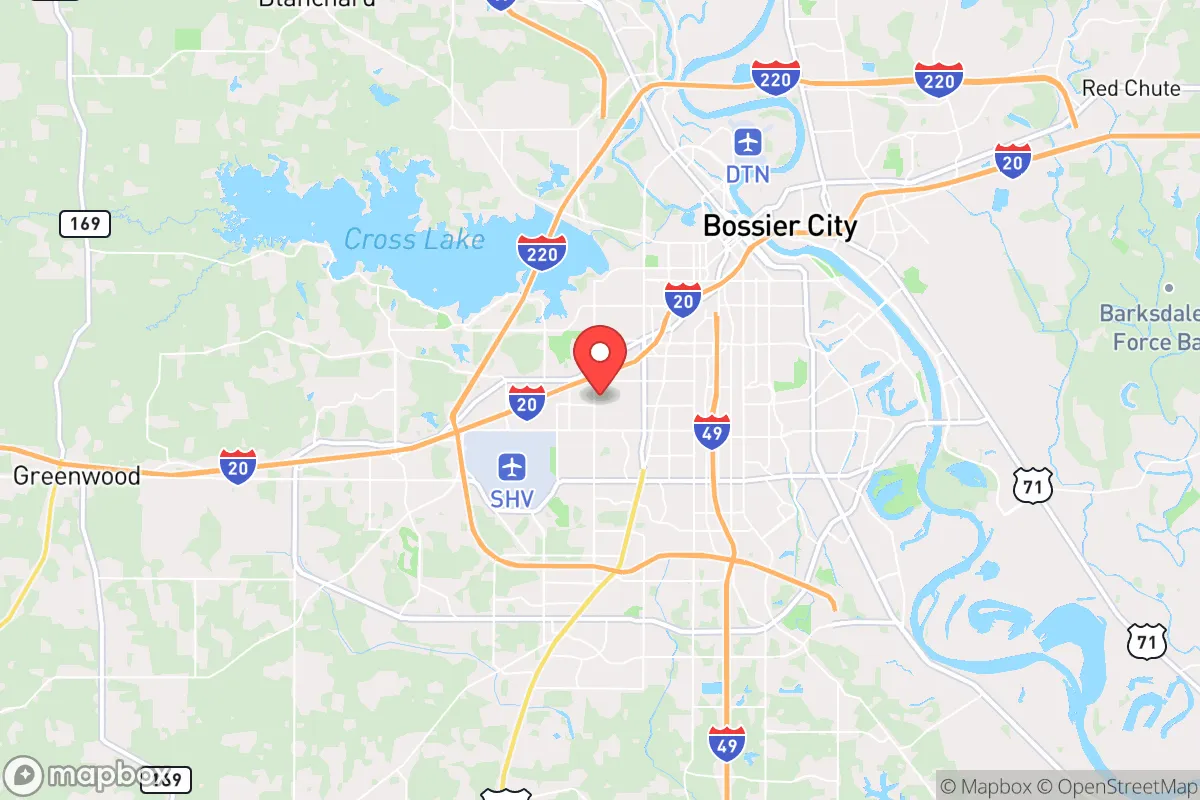
District shown is the primary district for this city’s centroid. Cities may span multiple districts.
Local Political AnalysisPolitical Analysis of Shreveport, LA
Shreveport’s political climate has shifted noticeably over the past decade, and if you’ve lived here as long as I have, you’ve felt it. The city itself leans reliably Democratic, with a Cook PVI of D+8, meaning it votes about 8 points more Democratic than the national average. But that number doesn’t tell the whole story. While Shreveport proper has trended left, the surrounding areas—places like Bossier City, Benton, and Haughton—have held firm as conservative strongholds. The real tension here isn’t between parties; it’s between a city government that’s increasingly comfortable with progressive policies and a regional culture that still values personal freedom and limited interference.
How it compares
Drive five minutes across the Red River into Bossier City, and you’re in a different political world. Bossier Parish voted over 70% for Trump in 2020, while Caddo Parish (home to Shreveport) went about 55% for Biden. That split creates a daily contrast. In Shreveport, you’ll see more city-funded initiatives around social equity and environmental programs, while Bossier keeps taxes lower and pushes back on state-level mandates. The nearby towns of Stonewall and Keithville are even more rural and conservative, often grumbling about Shreveport’s “city hall overreach.” It’s a classic urban-rural divide, but here it’s compressed into a single metro area, making the differences impossible to ignore.
What this means for residents
For folks who value keeping government out of their personal lives, Shreveport’s recent trajectory is worth watching closely. The city council has passed ordinances in recent years that expand non-discrimination protections and fund community programs tied to progressive social goals. While those sound fine on paper, the practical effect has been more bureaucracy and higher spending. Property taxes in Caddo Parish are already among the highest in the state, and some residents worry that the city’s appetite for new programs will keep pushing them up. Meanwhile, the push for “equity” in city contracting has led to complaints from small business owners who feel left out of the process. If you’re someone who prefers a light touch from local government, the trend here is concerning—and it’s why many longtime families have started looking at homes in Bossier or DeSoto parishes.
On the cultural side, Shreveport still holds onto a lot of its traditional Southern character. You’ll find strong church attendance, a deep hunting and fishing culture, and a general skepticism of federal overreach. But the city’s leadership is increasingly aligned with national Democratic priorities, which creates friction. For example, during the COVID-19 pandemic, Shreveport’s mayor imposed stricter mask and vaccine mandates than surrounding parishes, and many residents felt that was a step too far. That kind of thing sticks with people. Looking ahead, the political divide is likely to widen as younger, more progressive transplants move in for jobs at LSU Health or the growing tech sector, while conservative families continue to vote with their feet and move to the suburbs. If you’re considering a move here, just know that your experience will depend heavily on which side of the river you choose to live on.

State Political ClimatePolitical Climate in Louisiana
State Political AnalysisPolitical Environment in the State
Louisiana has long been a reliably red state in federal elections, but its political climate is far more complex than a simple partisan label suggests. The state voted for Donald Trump by nearly 19 points in 2024, continuing a 20-year trend of Republican dominance at the presidential level. However, the real story is a slow, steady shift: the state’s traditional Democratic strongholds in New Orleans and Baton Rouge are shrinking, while the conservative, evangelical-heavy rural and suburban areas are growing in influence. For a conservative considering relocation, Louisiana offers a deeply entrenched conservative culture, but with a unique blend of Cajun libertarianism and a history of corruption that can frustrate even the most patient resident.
Urban vs. rural divide
The political map of Louisiana is a textbook case of urban-rural polarization. The state’s two major metros—New Orleans and Baton Rouge—are the primary drivers of Democratic votes. New Orleans, with its large African American population and progressive enclaves like the French Quarter and Uptown, consistently delivers 70-80% of its vote to Democrats. Baton Rouge, home to Louisiana State University and a growing professional class, is more competitive but still leans blue, especially in precincts near the university and downtown. In contrast, the rest of the state is overwhelmingly red. The Acadiana region, centered around Lafayette and Lake Charles, is a Republican stronghold, fueled by oil and gas workers and a strong Catholic-evangelical base. The Florida Parishes (north of Lake Pontchartrain) and the northern half of the state—places like Shreveport, Monroe, and Alexandria—are deeply conservative, with many rural parishes voting 70-80% Republican. The most notable political outlier is Jefferson Parish, a suburban ring around New Orleans that has flipped from reliably Democratic to reliably Republican over the past two decades, driven by white flight and a growing conservative middle class. The divide is stark: drive 30 minutes outside any city center, and you’re in solid Trump country.
Policy environment
Louisiana’s policy environment is a mixed bag for conservatives. On the plus side, the state has no personal income tax on Social Security benefits, and its corporate tax rate was cut from 8% to 4% in 2022. The state also has a strong right-to-work law and is a “shall issue” state for concealed carry permits. However, the state’s sales tax is among the highest in the nation (averaging over 9.5% in many parishes), and property taxes are relatively low. Education policy is a battleground: Louisiana has a robust school choice program (the Louisiana Scholarship Program) that allows low-income students in failing schools to attend private or parochial schools, but the state’s public school system ranks near the bottom nationally. Healthcare is a sore spot—the state expanded Medicaid under the Affordable Care Act in 2016, a move many conservatives opposed, and the state’s healthcare outcomes remain poor. Election laws are moderately secure: voter ID is required, but the state has no-excuse absentee voting, which some conservatives view as a vulnerability. The state also has a unique “jungle primary” system where all candidates, regardless of party, appear on the same ballot, with the top two advancing to a general election. This system has occasionally produced moderate or even liberal candidates in conservative districts.
Trajectory & freedom
Over the past five years, Louisiana has moved in a decidedly more conservative direction on several fronts, but with notable exceptions. In 2024, the state passed a near-total abortion ban (triggered by the Dobbs decision) with no exceptions for rape or incest, a move that solidified its pro-life stance. The state also passed a “constitutional carry” law in 2024, allowing permitless concealed carry for anyone 18 or older who can legally possess a firearm. On parental rights, Louisiana passed a “Parents’ Bill of Rights” in 2023, requiring schools to notify parents of any changes to a student’s mental or physical health, including gender identity. However, the state has also seen a troubling expansion of government overreach in the name of “public health.” During COVID, Governor John Bel Edwards, a Democrat, imposed some of the longest-lasting mask mandates and business closures in the South, a move that many conservatives still resent. The state’s tax burden remains high, and the state legislature has repeatedly failed to pass meaningful tax reform, leaving Louisiana with a complex and often regressive tax code. On the whole, Louisiana is becoming more free on gun rights and parental rights, but less free on taxation and government spending.
Civil unrest & political movements
Louisiana has a history of political corruption and occasional civil unrest, but the modern flashpoints are more localized. The 2020 Black Lives Matter protests in New Orleans and Baton Rouge were significant, with several nights of property damage and clashes with police, particularly around the statue of Confederate General Robert E. Lee in New Orleans (which was later removed). The state has also seen a growing “Second Amendment sanctuary” movement, with over 30 parishes passing resolutions declaring themselves sanctuaries for gun rights. Immigration politics are relatively quiet, as Louisiana has a small foreign-born population (around 4%), but there is a vocal minority pushing for stricter enforcement. The most visible political movement in recent years has been the “Gumbo Coalition”—a loose alliance of conservative activists, oil and gas workers, and evangelical pastors who have successfully pushed for the state’s recent pro-life and pro-gun legislation. Election integrity is a hot-button issue: after the 2020 election, the state legislature passed a law requiring signature verification for absentee ballots, but efforts to eliminate no-excuse absentee voting failed. The state’s “jungle primary” system has also been criticized by some conservatives for allowing Democrats to occasionally slip through in conservative districts, as happened in the 2023 race for Attorney General.
Projection
Over the next 5-10 years, Louisiana is likely to continue its slow drift to the right, but with significant caveats. The state’s population is aging and shrinking (it lost a congressional seat after the 2020 census), and the urban centers of New Orleans and Baton Rouge are becoming more progressive, while the rural and suburban areas are becoming more conservative. The biggest wildcard is in-migration: Louisiana is not a major destination for out-of-state movers, but the ones who do come tend to be retirees from the Midwest and Northeast, who often bring more moderate or even liberal views. The state’s economy, heavily dependent on oil and gas, is vulnerable to federal climate policies, which could accelerate a shift toward a more diversified, but also more progressive, economy in cities like New Orleans. The state’s political leadership is likely to remain Republican, but the party’s internal divisions—between the business-friendly, moderate wing and the populist, evangelical wing—could lead to more infighting. For a conservative moving in now, expect a state that is solidly red on cultural issues but frustratingly blue on taxes and government spending.
For a new resident, the bottom line is this: Louisiana offers a deeply conservative culture on social issues, with strong gun rights, a robust school choice program, and a pro-life legal framework. But you’ll pay for it with high sales taxes, a mediocre public school system, and a state government that has a long history of corruption and inefficiency. If you’re willing to trade some economic freedom for cultural alignment, Louisiana can be a good fit. Just don’t expect the kind of low-tax, low-regulation environment you’d find in Texas or Florida. The state is like a stubborn old Cajun—proud, independent, and set in its ways, but not always the most efficient or forward-thinking. If that sounds like home, you’ll do fine here.
* Values derived from national, state, county, city and local statistics and may differ in a specific area. Last updated: 2026-05-01T18:08:32.000Z
Narrative content on this page is AI-generated and may contain mistakes. Verify any details that matter before acting on them.
ReloMaps may earn a commission from affiliate links at no extra cost to you.

