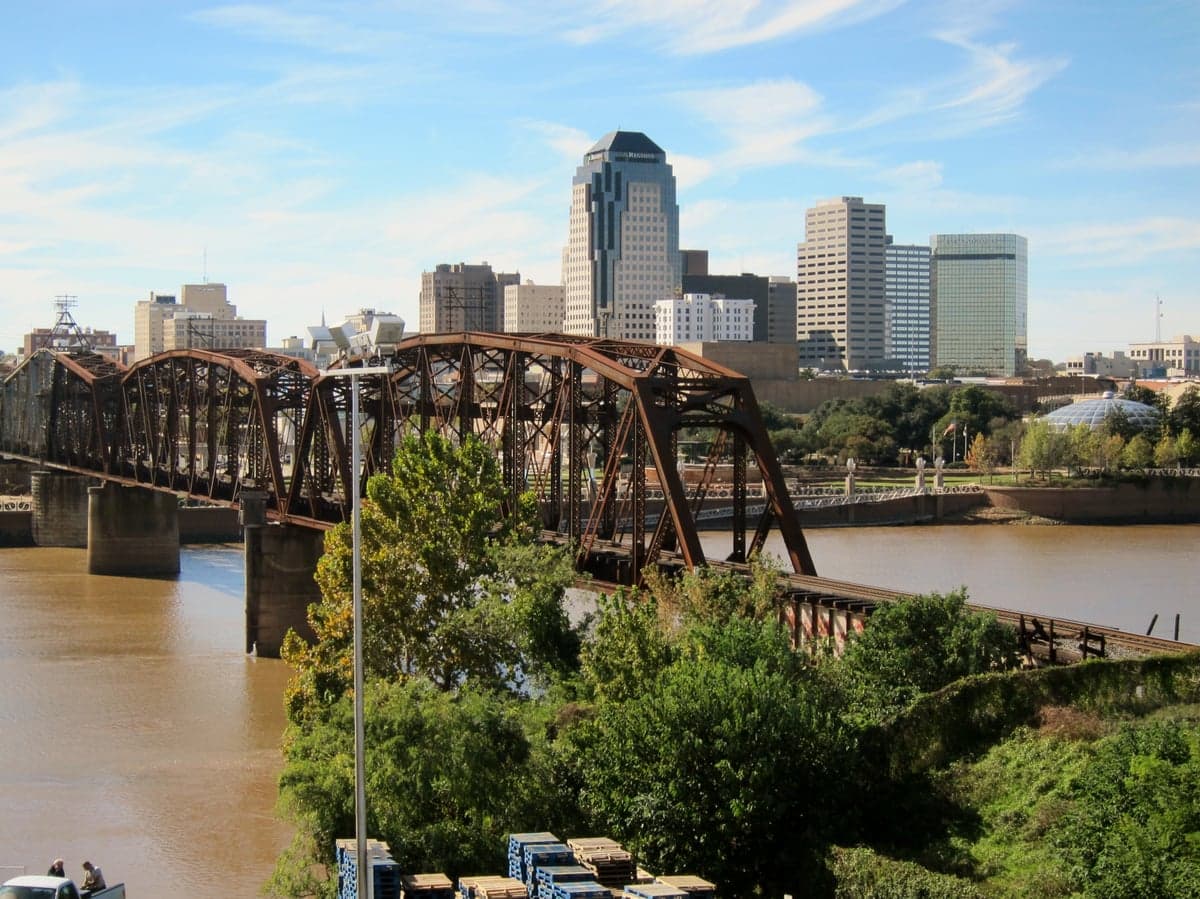
Photo: Wikipedia
Quality of Life in Shreveport, LA
Above-average quality of iife. The area offers a reasonable cost of living, decent mobility, and a mix of neighborhood amenities.
What does Quality of Life tell us?
Quality of Life blends cost of living, nearby amenities, socioeconomic signals, and neighborhood character. City-level scores represent the whole municipality; individual neighborhoods can differ.
What does this tell us?
Quality of Life blends cost of living, nearby amenities, socioeconomic signals, and neighborhood character. City-level scores represent the whole municipality; individual neighborhoods can differ.
Cost of Living
24% below national average
The Real Cost of Living in Shreveport, LA for 2026
| Tier | Individual | Family (4) |
|---|---|---|
| Survival | $16k | $29k |
| Comfortable | $35k | $51k |
| Luxury | $88k+ | $136k+ |
| Elite (Top 5%) | $144k+ | $223k+ |
95%
The Area Signal
A metric tracking the socioeconomic signals of the area.
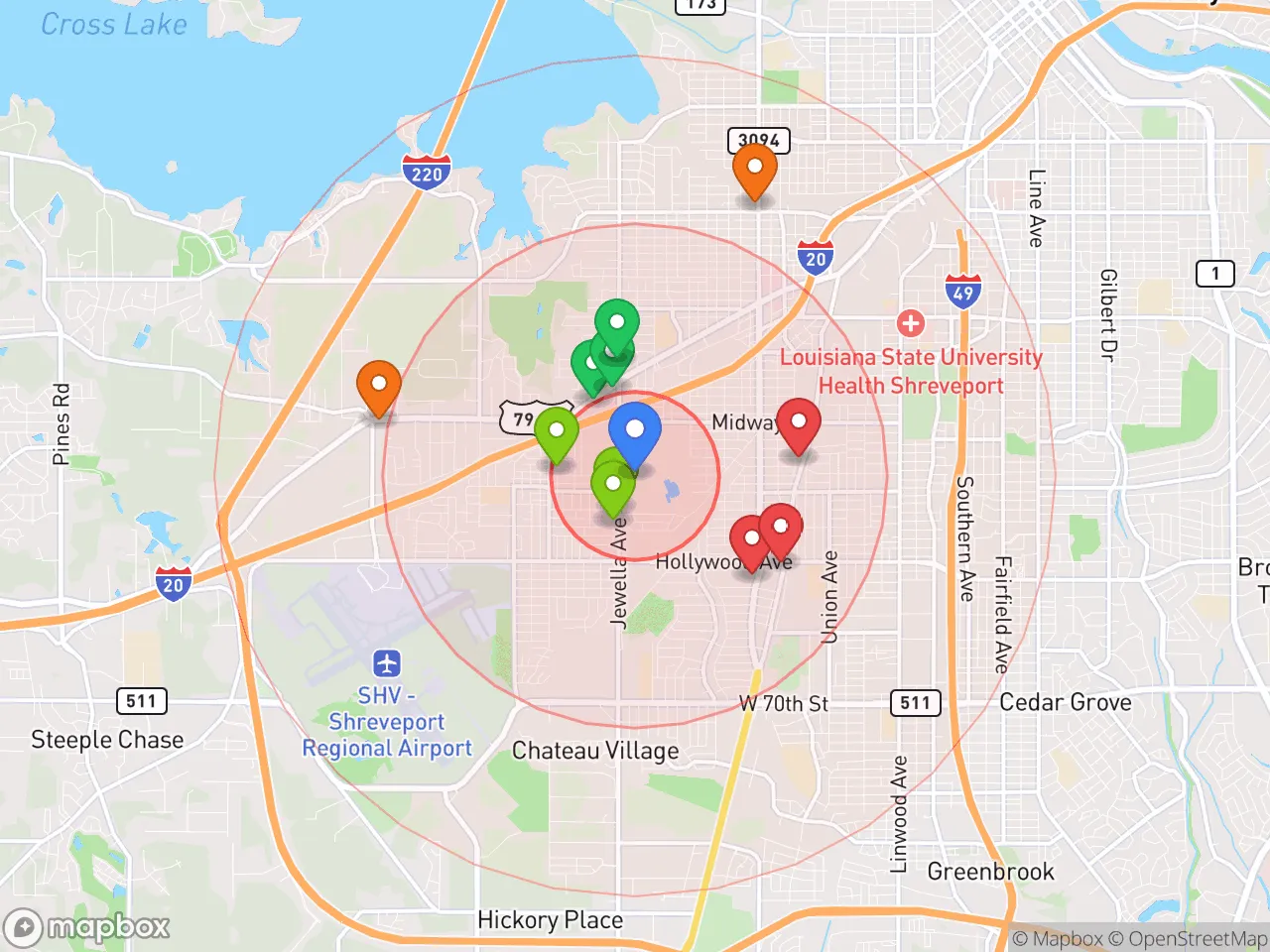
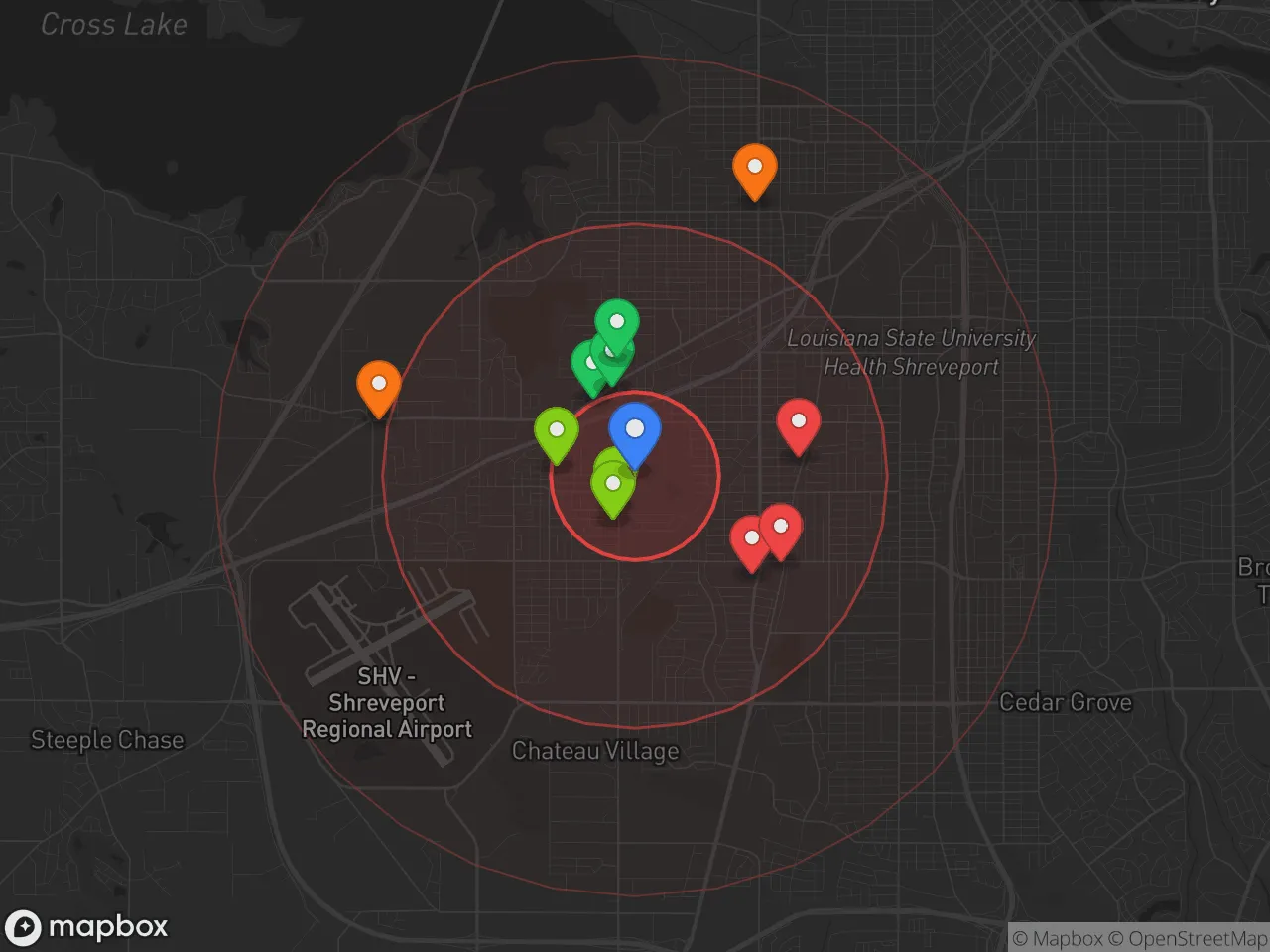
Hobbies
Explore the areaGroceries
5 within 10 miles
Gas
20 within 10 miles
Hospital
20 within 20 miles
Airport
DFW — Dallas/Fort Worth International
Post Office
USPS — Shreveport, LA
Critical Amenities
Quality-of-Life Analysis
Shreveport, Louisiana, offers a cost of living significantly below the national average, attracting a mix of working-class families, retirees, and professionals seeking affordable housing and a slower pace of life. With a cost of living index of 76 (where 100 equals the U.S. average), the city provides a notably lower financial barrier to entry compared to the national median, though median household incomes also trail the national figure. The population skews toward long-term residents, with a substantial number of households earning between $30,000 and $75,000 annually, creating a community where economic stability is often tied to local healthcare, education, and manufacturing sectors.
Cost of living and housing affordability compared to nearby cities
Shreveport’s housing market is one of the most affordable in the Ark-La-Tex region. The median home value sits at $178,100, roughly 40% below the national median, while the median rent is $980 per month—well under the national average of $1,200. For context, neighboring Bossier City has a median home value of $195,000, and Dallas, Texas (about 180 miles west), exceeds $350,000. The average commute time in Shreveport is just 18.97 minutes, far below the national average of 26.9 minutes, meaning residents spend less time in traffic and more time at home or on local errands. Utility costs are slightly above the national average due to high summer cooling demands, but overall monthly expenses for a family of four are roughly 20% lower than in comparable Southern metros like Little Rock or Jackson.
What daily life is like for families: schools, amenities, and recreation
Daily life in Shreveport centers on a mix of outdoor recreation, cultural institutions, and a modest but functional public school system. The city is home to the Shreveport-Bossier City Public School System, which includes magnet programs like Caddo Parish Magnet High School (ranked among Louisiana’s top 10), though overall district performance lags behind state averages. Private and parochial options, such as Loyola College Prep and St. Mark’s Cathedral School, serve families seeking alternatives. Amenities include the Sci-Port Discovery Center, the R.W. Norton Art Gallery, and the 400-acre Red River National Wildlife Refuge, which offers hiking and birding. The city’s entertainment scene revolves around the Louisiana Boardwalk (a shopping and dining complex in Bossier City) and the Shreveport Municipal Auditorium, host to concerts and the annual Mudbug Madness festival. Healthcare is anchored by Ochsner LSU Health Shreveport, a major regional medical center. The lack of a robust public transit system means most residents rely on cars, but the short commute times make errands and school drop-offs relatively quick.
Shreveport is best suited for individuals and families who prioritize affordability and a slower, community-oriented lifestyle over high-paying job markets or cutting-edge urban amenities. Retirees on fixed incomes, remote workers seeking low housing costs, and young families willing to navigate a school system with mixed outcomes will find the city’s low cost of living and short commutes appealing. Those accustomed to dense nightlife, rapid job growth, or top-tier public schools may find Shreveport limiting, but for residents who value financial breathing room and a close-knit feel, the city delivers a stable, low-stress daily rhythm.

Crime in Shreveport, LA
Significantly higher crime rates than 81% of comparable U.S. locations.
Violent CrimeViolent Crime Analysis
Property CrimeProperty Crime Analysis
Crime Analysis
Shreveport, Louisiana, faces a serious public safety challenge, with crime rates that significantly exceed both state and national averages. The city's violent crime rate of 1,158.4 incidents per 100,000 residents is roughly three times the national average, while property crime stands at 3,582.1 per 100,000, also well above typical benchmarks. These figures place Shreveport among the more dangerous mid-sized cities in the South, a reality that prospective residents must weigh carefully when considering relocation.
Crime in context
To understand Shreveport's crime problem, it helps to compare it to broader Louisiana and U.S. trends. The state's violent crime rate itself is elevated—around 560 per 100,000 in recent years—yet Shreveport's rate of 1,158.4 is more than double that. Property crime in the city is similarly disproportionate: Louisiana's statewide rate hovers near 2,800 per 100,000, while Shreveport's 3,582.1 is roughly 28% higher. These gaps are not random; they reflect systemic issues in the city's justice system. Caddo Parish, which encompasses Shreveport, has a history of progressive district attorneys and judges who have implemented policies such as reduced cash bail, diversion programs for violent offenders, and lenient sentencing guidelines. While these measures are often framed as rehabilitative, they directly contribute to higher recidivism and more criminals on the street, undermining public safety and victim justice. The result is a community where residents face elevated risks of both violent and property crime compared to peers in more conservative jurisdictions.
What residents experience
For those living in Shreveport, the statistical reality translates into tangible daily concerns. Violent crime—including homicide, aggravated assault, robbery, and rape—is concentrated in certain neighborhoods but can spill into commercial and residential areas citywide. Property crime, particularly vehicle theft and burglary, is a persistent nuisance, with many residents investing in security systems, steering wheel locks, and neighborhood watch participation. The city's police department, while staffed, often struggles with response times and resource allocation due to the sheer volume of calls. Residents frequently report feeling unsafe walking alone after dark or parking in poorly lit areas. The progressive judicial philosophy in Caddo Parish means that even when arrests are made, offenders may face minimal consequences, eroding trust in the system and encouraging repeat offenses. This cycle of crime and leniency creates a climate of caution that shapes daily life, from route planning to social activities.
Neighborhood-level variation is significant, however. Areas like Broadmoor, South Highlands, and parts of the Shreveport-Bossier City border tend to have lower crime rates, often due to higher income levels, better street lighting, and more active community policing. In contrast, neighborhoods such as Allendale, Cedar Grove, and the MLK District experience the highest concentrations of violent crime. Prospective residents should research specific zip codes and consult local crime maps, as a move of just a few miles can dramatically alter one's safety experience. Ultimately, Shreveport's crime landscape is a product of both socioeconomic factors and a justice system that prioritizes offender rehabilitation over public protection—a combination that demands careful consideration from anyone planning to live there.
* Values derived from national, state, county, city and local statistics and may differ in a specific area. Last updated: 2026-05-01T18:08:32.000Z
Narrative content on this page is AI-generated and may contain mistakes. Verify any details that matter before acting on them.
ReloMaps may earn a commission from affiliate links at no extra cost to you.

