
Photo: Wikipedia
Quality of Life in Sioux Falls, SD
A high quality of life with strong walkability, manageable living costs, healthy neighborhood signals, and solid amenity access.
What does Quality of Life tell us?
Quality of Life blends cost of living, nearby amenities, socioeconomic signals, and neighborhood character. City-level scores represent the whole municipality; individual neighborhoods can differ.
What does this tell us?
Quality of Life blends cost of living, nearby amenities, socioeconomic signals, and neighborhood character. City-level scores represent the whole municipality; individual neighborhoods can differ.
Cost of Living
10% below national average
The Real Cost of Living in Sioux Falls, SD for 2026
| Tier | Individual | Family (4) |
|---|---|---|
| Survival | $16k | $30k |
| Comfortable | $53k | $78k |
| Luxury | $135k+ | $209k+ |
| Elite (Top 5%) | $163k+ | $253k+ |
96%
The Area Signal
A metric tracking the socioeconomic signals of the area.
Hobbies
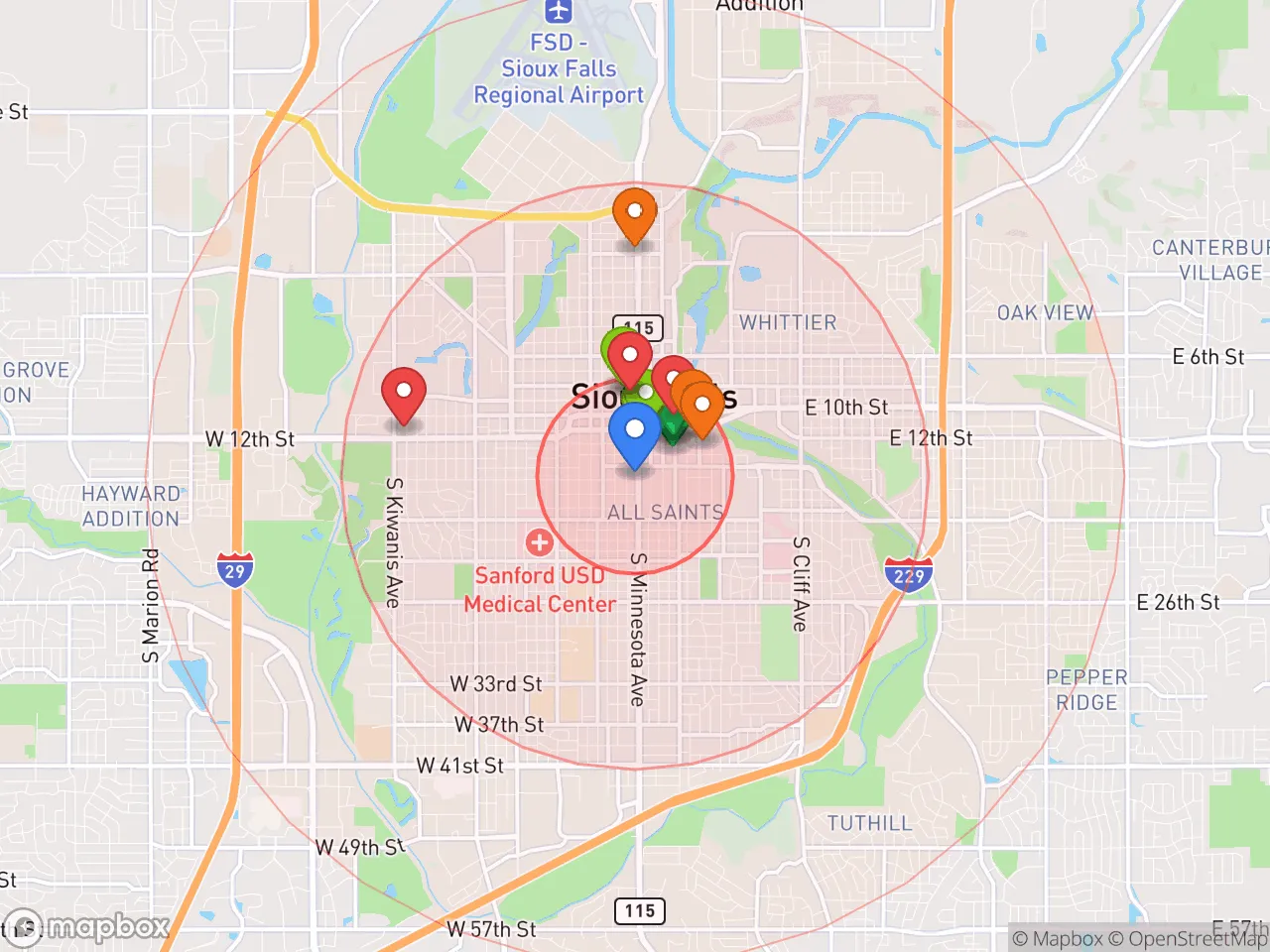
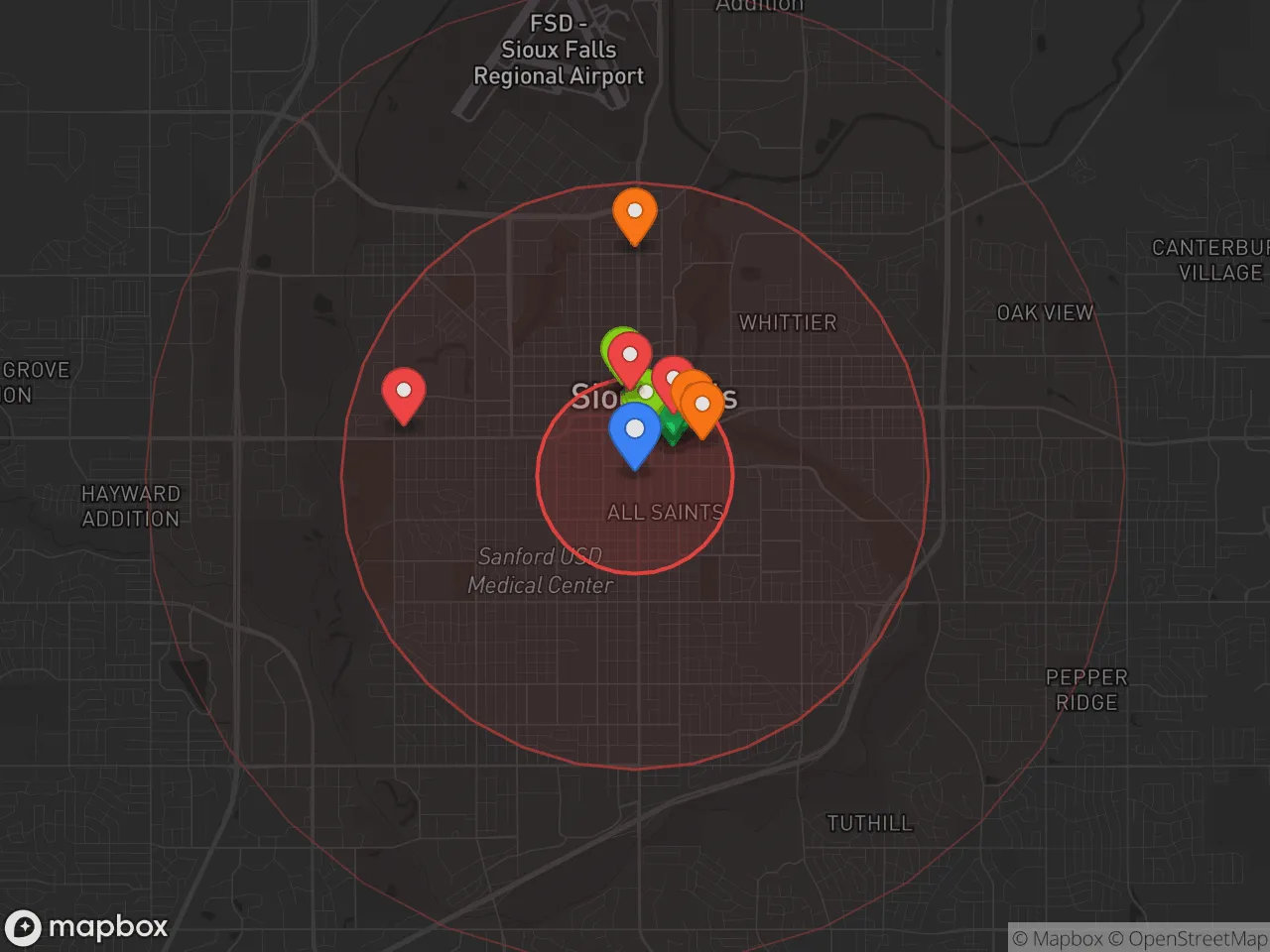
Explore the areaGroceries
6 within 10 miles
Gas
20 within 10 miles
Hospital
14 within 20 miles
Airport
MCI — Kansas City International
Post Office
USPS — Sioux Falls, SD
Critical Amenities
Quality-of-Life Analysis
Sioux Falls presents a compelling quality-of-life equation built on above-average affluence and a strong sense of community, attracting a mix of young professionals, growing families, and retirees seeking a stable, midwestern lifestyle. The city’s economy is anchored by a robust healthcare sector—led by Sanford Health and Avera Health—and a thriving financial services industry, which together create a steady demand for skilled workers. This economic stability, combined with a cost of living that remains well below the national average, draws people from higher-cost states like California, Minnesota, and Illinois, who are often surprised by the space and value their money commands here.
Cost of living and housing affordability compared to nearby cities
With a cost of living index of 90 (where 100 equals the U.S. average), Sioux Falls is notably cheaper than the national norm, and it undercuts nearby regional hubs like Omaha (index 93) and Minneapolis (index 106) by a significant margin. The median home value sits at $271,400, which is roughly $70,000 below the national median and about $150,000 less than the Minneapolis metro area. For renters, the median monthly rent of $993 is a full $300 below the U.S. average, making it one of the most affordable rental markets among cities of similar size in the Upper Midwest. The average commute of just 17 minutes further reduces daily expenses—less than half the average commute time in many large metros—meaning residents spend far less on gas and vehicle wear-and-tear. While property taxes in Minnehaha County are moderate (around 1.2% of assessed value), South Dakota’s lack of a state income tax provides an additional financial advantage that is particularly attractive to remote workers and retirees.
What daily life is like for families: schools, parks, and amenities
Daily life in Sioux Falls revolves around a well-maintained network of parks, trails, and family-oriented events. The city manages over 80 parks and 30 miles of multi-use trails, with Falls Park—a 123-acre green space centered on the Big Sioux River waterfalls—serving as the community’s signature gathering spot. The school system, led by the Sioux Falls School District, is the largest in the state and consistently performs above national averages on standardized tests, with several elementary schools earning Blue Ribbon recognition. For families, the rhythm of the week often includes weekend farmers’ markets, youth sports leagues at the Sanford Sports Complex, and low-key evenings at local breweries or the Washington Pavilion arts center. The city’s relatively low crime rate—violent crime is roughly 30% below the national average—and the short commute mean parents spend less time in traffic and more time at home or at extracurricular activities. However, winters are long and cold, with average January highs around 24°F, which can be a shock for newcomers from warmer climates.
Sioux Falls is best suited for people who value financial stability, short commutes, and a slower, family-centric pace of life over the cultural intensity and career variety of a major coastal city. Professionals in healthcare, finance, and logistics will find the strongest job markets, while remote workers and retirees benefit from the absence of state income tax and the affordable housing stock. Those who thrive here are typically comfortable with a four-season climate that includes significant snow and cold, and they appreciate a community where neighbors know each other and civic engagement is high. For anyone seeking a lower-stress, lower-cost alternative to the Twin Cities or Denver without sacrificing modern amenities, Sioux Falls offers a rare balance of economic opportunity and everyday livability.

Crime in Sioux Falls, SD
Crime rates similar to the national median for U.S. locations.
Violent CrimeViolent Crime Analysis
Property CrimeProperty Crime Analysis
Crime Analysis
Sioux Falls has a mixed safety profile, with property crime rates significantly exceeding both state and national averages while violent crime remains closer to the national median. In 2023, the city reported a violent crime rate of 364 incidents per 100,000 residents, slightly below the national average of approximately 380 per 100,000 but notably higher than the South Dakota state average of roughly 280 per 100,000. Property crime, however, is a more pressing concern, with a rate of 2,197.7 per 100,000—well above the national average of about 1,954 per 100,000 and substantially higher than the state average of roughly 1,600 per 100,000.
Crime in context
Sioux Falls' crime rates reflect a dynamic common to growing Midwestern cities: a relatively low violent crime rate paired with elevated property crime, particularly theft and vehicle break-ins. The city's violent crime rate is roughly 4% below the national average, but its property crime rate is about 12% higher. This disparity is partly driven by the city's rapid population growth—Sioux Falls added over 20,000 residents between 2020 and 2024—which strains policing resources and creates transient populations that contribute to theft. Larceny-theft alone accounts for over 70% of all property crimes in the city, with auto theft rates also trending upward since 2021. Compared to peer cities like Fargo, North Dakota (which has a violent crime rate of 330 per 100,000), Sioux Falls is slightly higher in violent crime but lower than Rapid City, which reports violent crime rates above 600 per 100,000.
What residents experience
For most residents, the day-to-day safety experience in Sioux Falls is shaped by property crime rather than violent encounters. Neighborhoods near the downtown core and along major commercial corridors like Minnesota Avenue and 41st Street see higher rates of theft from vehicles and shoplifting. Vehicle break-ins are the most commonly reported crime in the city, often targeting unlocked cars in driveways and parking lots. Violent crime, while less frequent, is concentrated in specific areas: the central and northeastern parts of the city, particularly around the intersection of 10th Street and Cliff Avenue, report higher rates of assault and robbery. Residents in the southwestern and southeastern suburbs—such as the areas around 57th Street and Louise Avenue—generally report lower crime rates, with many blocks seeing fewer than 10 incidents per year. The Minnehaha County Sheriff's Office and Sioux Falls Police Department maintain a joint crime mapping tool that allows residents to view incident data by neighborhood, which is useful for assessing specific blocks before renting or buying.
Neighborhood-level variation is significant in Sioux Falls. The historic Cathedral District and the Whittier neighborhood have higher crime densities, while newer developments like the Lake Lorraine area and the far southern suburbs near 85th Street report crime rates 40-60% below the city average. Gated communities and apartment complexes with controlled access also show lower property crime rates. For those considering relocation, checking the Sioux Falls Police Department's monthly crime reports by quadrant is recommended, as the city's rapid growth means crime patterns shift year to year. Overall, Sioux Falls is a relatively safe city for its size, but property crime vigilance—especially locking vehicles and securing outdoor items—is a practical necessity for residents.
* Values derived from national, state, county, city and local statistics and may differ in a specific area. Last updated: 2026-04-30T00:42:09.000Z
Narrative content on this page is AI-generated and may contain mistakes. Verify any details that matter before acting on them.
ReloMaps may earn a commission from affiliate links at no extra cost to you.

