
Photo: Wikipedia
Personal Sovereignty in Sioux Falls, SD
Strong independent fundamentals that actively favor personal liberty and low regulation.
What does Personal Sovereignty tell us?
Personal Sovereignty measures your capacity for self-reliance and independence with minimal government friction. Higher scores mean fewer barriers between you and the way you want to live... but it assumes you have the space you need and good neighbors.
What does this tell us?
Personal Sovereignty measures your capacity for self-reliance and independence with minimal government friction. Higher scores mean fewer barriers between you and the way you want to live... but it assumes you have the space you need and good neighbors.
State Policy
Energy independence: Importer (35% of energy produced in-state)
Personal Liberty
Homesteading

Personal Liberty Analysis
Sioux Falls offers a notably high degree of personal sovereignty compared to most of the United States, largely because South Dakota has deliberately structured its laws to minimize government intrusion into daily life. For those who view the state as a potential redoubt against federal overreach or cultural decline, the city provides a practical balance of urban infrastructure and a legal framework that respects individual autonomy. The state’s constitutional protections, low tax burden, and permissive regulatory environment create a foundation where a survivalist or prepper mindset can operate with fewer legal obstacles than in coastal or Midwestern peer cities.
Tax burden and regulatory posture: how South Dakota protects your income and property
South Dakota’s tax structure is among the most favorable in the nation for those seeking to retain control over their earnings and assets. There is no state income tax, no personal property tax on vehicles or household goods, and no inheritance or estate tax. For a single individual or family relocating from a high-tax state like California or Illinois, this can mean retaining thousands of dollars annually that would otherwise go to the state government. The regulatory posture in Sioux Falls is similarly restrained: the city does not impose rent control, and business licensing requirements are minimal compared to states like New York or Oregon. Zoning is handled at the municipal level, but the state legislature has preempted many local ordinances that could infringe on property rights, such as bans on short-term rentals or restrictions on firearm possession. The overall effect is that the government takes less of your money and stays out of more of your decisions, which aligns directly with a sovereignty-focused relocation strategy.
Self-defense and gun law specifics: constitutional carry and castle doctrine in practice
South Dakota is a constitutional carry state, meaning no permit is required to carry a concealed firearm for anyone legally allowed to possess one. Sioux Falls residents can carry openly or concealed without government permission, and the state recognizes permits from all other states. The castle doctrine is codified in state law, establishing that a person has no duty to retreat from their home, vehicle, or place of business before using deadly force against an unlawful intruder. Stand-your-ground protections extend to any place where the individual has a legal right to be. There are no magazine capacity restrictions, no assault weapon bans, and no waiting periods for firearm purchases. The city itself has no local gun ordinances that exceed state law, so the legal environment for self-defense is as permissive as anywhere in the Upper Midwest. For a prepper concerned about maintaining the ability to defend themselves and their family, Sioux Falls offers a legal framework that does not treat self-defense as a privilege to be licensed by the state.
Self-reliance and homesteading viability: lot sizes, zoning, and off-grid feasibility
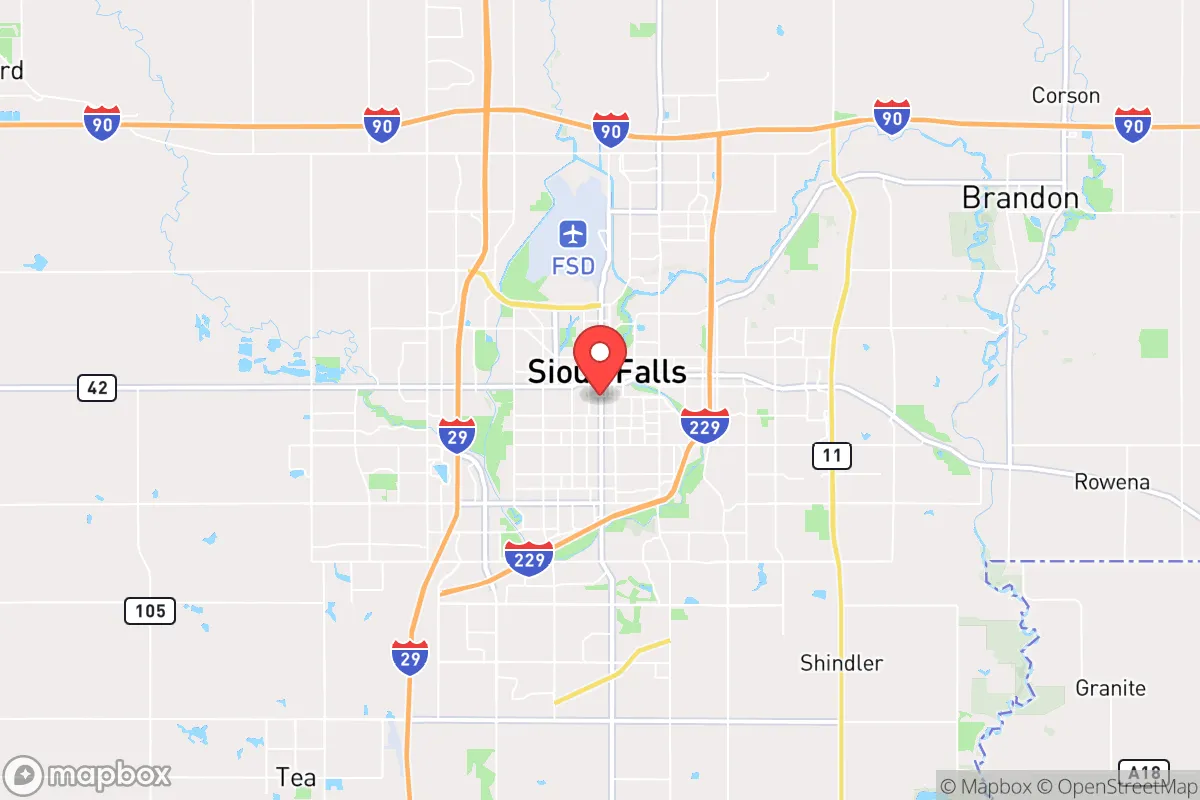
Within Sioux Falls proper, the ability to pursue serious self-reliance is limited by suburban zoning, but the surrounding Minnehaha and Lincoln counties offer significant opportunities. Standard residential lots in the city are typically one-quarter acre or smaller, with homeowners’ associations often restricting chickens, gardens, or outbuildings. However, moving just 10 to 15 minutes outside the city limits—into areas like Brandon, Hartford, or rural sections of Tea—opens up properties of one to five acres with far fewer restrictions. County zoning generally allows for small-scale livestock, large vegetable gardens, and detached workshops or storage sheds without special permits. Off-grid living is legally feasible in unincorporated areas: there are no state laws requiring connection to municipal water or power, though well and septic permits are required and enforced. Solar panels and rainwater collection are permitted, and the state has a net metering policy that allows grid-tied systems. For a family wanting to maintain a low-profile homestead within commuting distance of Sioux Falls’ hospitals and supply chains, the rural fringe provides a realistic middle ground between urban convenience and self-sufficient living.
Personal liberties: parental rights, medical autonomy, speech, and property
South Dakota has some of the strongest parental rights protections in the country. State law requires parental consent for medical treatment of minors, including vaccinations, and parents have the explicit right to direct the upbringing, education, and religious training of their children. The state does not have a vaccine mandate for school attendance, and parents can opt their children out of any required immunization for medical, religious, or personal reasons. Medical autonomy for adults is similarly robust: there is no state-level mandate for any medical procedure, and the state has passed laws prohibiting discrimination against those who decline vaccination or medical treatment. Free speech protections are strong, with no hate speech laws that criminalize political or religious expression. Property rights are reinforced by the state’s lack of a property tax on personal belongings and by laws that limit eminent domain to traditional public uses. The combination of these protections means that a family moving to Sioux Falls can expect a legal environment where the government is less likely to override parental decisions, medical choices, or property use than in states with more expansive regulatory authority.
Compared to other relocation destinations popular among those prioritizing personal sovereignty—such as Texas, Florida, or Idaho—Sioux Falls offers a lower population density, a colder climate that naturally discourages mass migration, and a state government that has consistently resisted federal overreach on issues like gun control, vaccine mandates, and land use. The trade-offs are real: winters are harsh, the local economy is less diversified than larger metros, and the city’s cultural homogeneity may feel limiting to some. But for a single individual or family whose primary concern is maximizing personal freedom while maintaining access to modern infrastructure, Sioux Falls represents one of the strongest sovereignty-to-cost ratios in the United States. The state government is not your adversary here, and that alone makes it worth serious consideration.

* Values derived from national, state, county, city and local statistics and may differ in a specific area. Last updated: 2026-04-30T00:42:09.000Z
Narrative content on this page is AI-generated and may contain mistakes. Verify any details that matter before acting on them.
ReloMaps may earn a commission from affiliate links at no extra cost to you.

