
Photo: Wikipedia
Political ClimatePolitical Climate in Sioux Falls, SD
District shown is the primary district for this city’s centroid. Cities may span multiple districts.
Inherited from parent state — no local data available.
Local Political AnalysisPolitical Analysis of Sioux Falls, SD
Sioux Falls has long been a reliably conservative stronghold, with a Cook PVI of R+15 that reflects its deep-rooted preference for limited government and personal responsibility. But if you’ve lived here as long as I have, you’ve seen the winds start to shift—slowly, quietly, but unmistakably. The city’s rapid growth has brought in folks from all over, and with them, a creeping tide of progressive ideas that would have been laughed out of town twenty years ago. While the surrounding counties—like Minnehaha and Lincoln—still vote solidly red, the city proper is starting to feel a little less like the Sioux Falls I grew up in and a little more like a smaller version of the places people moved here to escape.
How it compares
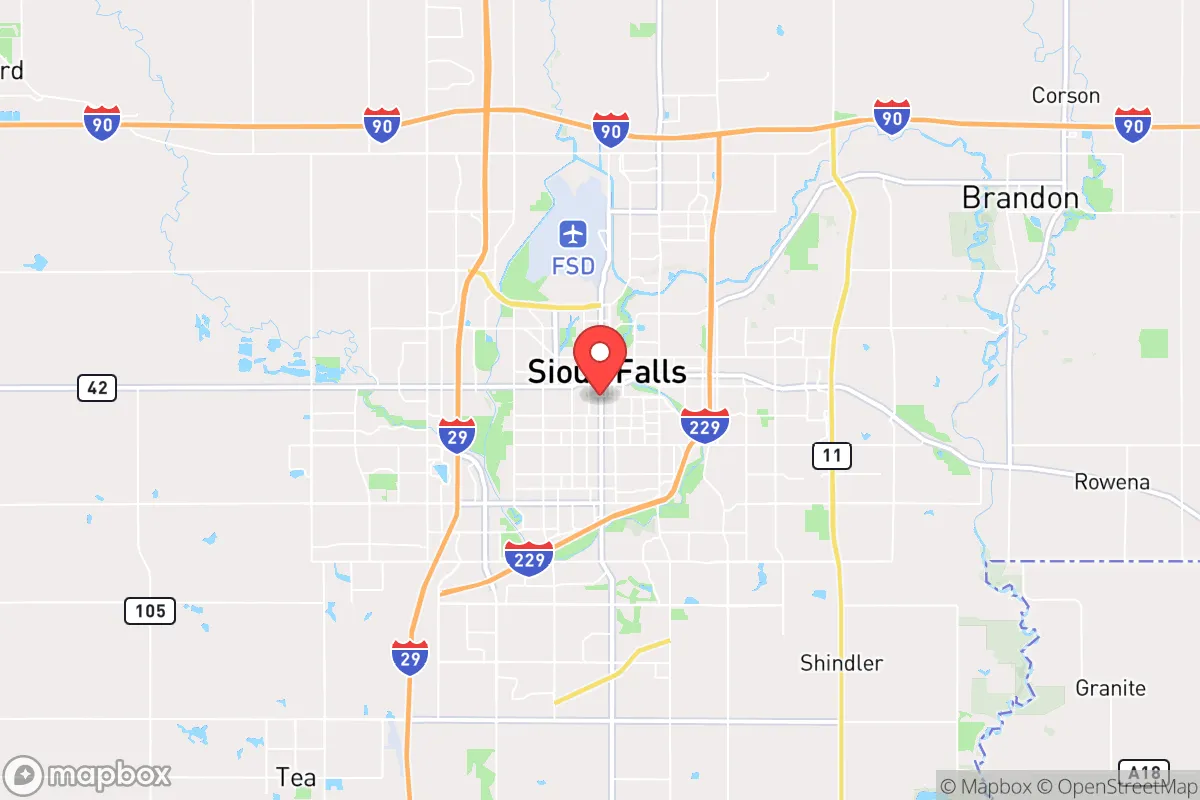
Drive thirty minutes in any direction, and you’ll find towns that haven’t budged an inch. Places like Brandon, Harrisburg, and Tea are still as conservative as they come—low taxes, few regulations, and a general distrust of anyone telling you how to live your life. But inside the city limits, especially in the downtown and near the university, you’ll hear more talk about “equity” and “inclusion” than you would have a decade ago. The contrast is stark: while the county commission stays reliably red, the city council has seen a few close races where progressive candidates nearly slipped through. It’s not a takeover yet, but it’s a warning sign for anyone who values the freedom to run their own life without government meddling.
What this means for residents
For now, the practical impact is subtle but real. You’ll notice more city-funded programs that sound nice on paper—like “diversity initiatives” or “affordable housing mandates”—but that inevitably come with strings attached and higher taxes. The school board has become a battleground, with some members pushing for curriculum changes that prioritize social agendas over academic rigor. If you’re a parent who believes you—not the government—should decide what your kids learn, that’s a red flag. The good news is that the state legislature in Pierre still leans heavily conservative, so any truly overreaching local policies usually get slapped down before they can take root. But the pressure is building, and it’s only a matter of time before a more aggressive progressive push tests those limits.
Culturally, Sioux Falls still feels like a place where you can mind your own business and live your life without a lot of bureaucratic nonsense. The gun laws are among the most permissive in the country, property taxes are reasonable, and there’s no state income tax—all things that keep the “big government” crowd at bay. But the long-term trajectory worries me. As the city grows, it attracts more people who see government as a tool for social engineering rather than a necessary evil. If you’re considering a move here, I’d say come for the low cost of living and the strong economy, but keep an eye on local elections. The character of this town is still conservative, but it’s not guaranteed to stay that way. And once you lose that freedom, it’s awfully hard to get it back.

State Political ClimatePolitical Climate in South Dakota
State Political AnalysisPolitical Environment in the State
South Dakota is a deeply conservative state, with a Republican trifecta that has held the governorship and both legislative chambers for over a decade. The state’s political DNA is rooted in a strong libertarian streak—low taxes, minimal regulation, and a fierce defense of gun rights. Over the past 20 years, the GOP’s grip has only tightened: in 2024, Donald Trump carried the state by 30 points, and Republicans hold supermajorities in both the House and Senate. The dominant coalition is a mix of rural ranchers, small-town business owners, and a growing wave of conservative transplants fleeing blue states. However, the political landscape isn’t monolithic—Rapid City and Sioux Falls are the two metros that drive the state’s lean, but they’re pulling in opposite directions, with Rapid City’s western conservatism anchoring the GOP and Sioux Falls’ suburban growth introducing a more moderate, business-friendly strain.
Urban vs. rural divide
The political map of South Dakota is a classic tale of two worlds. The eastern half, anchored by Sioux Falls (Minnehaha County), is the economic engine and the state’s most populous region. Minnehaha County voted +12 R in 2024, but that’s a far cry from the +40 to +60 margins seen in rural counties like Harding or Perkins. Sioux Falls is where you’ll find the state’s only real suburban sprawl—places like Harrisburg and Tea—which lean conservative but are more moderate on social issues like marijuana legalization and education funding. The western half, centered on Rapid City (Pennington County), is the conservative heartland. Pennington County voted +18 R in 2024, but the surrounding Black Hills counties—Lawrence, Meade, Custer—are even redder. The rural-urban divide is stark: the state’s 66 counties are overwhelmingly Republican, but the two metros (Sioux Falls and Rapid City) account for nearly 60% of the population. The political tension isn’t between left and right, but between the libertarian-leaning rural areas and the more pragmatic, growth-oriented suburbs.
Policy environment
South Dakota’s policy environment is a conservative dream, but with a few wrinkles. The state has no personal or corporate income tax, a flat 4.2% sales tax, and some of the lowest property taxes in the nation—thanks to a 2022 law that capped annual assessment increases at 3%. The regulatory posture is aggressively pro-business: no minimum wage increase since 2015, no paid family leave mandate, and a right-to-work law that keeps unions weak. Education policy is a mixed bag. The state passed a universal school choice bill in 2023, allowing education savings accounts for all students, but teacher pay remains among the lowest in the country—a fact that’s driving a quiet exodus of young families to neighboring Minnesota. Healthcare is a flashpoint: South Dakota expanded Medicaid in 2023 via a ballot initiative, overriding the legislature’s resistance, but the state still bans abortion at all stages with no exceptions for rape or incest. Election laws are tight—voter ID is required, no-excuse absentee voting was repealed in 2021, and the state has a strict 30-day residency requirement to register. For a conservative, the policy environment is mostly a win, but the Medicaid expansion and the teacher pay issue are cracks in the foundation.
Trajectory & freedom
South Dakota is becoming more free in some areas and less in others, and the trend is worth watching. On the plus side, the state passed a constitutional carry law in 2019, allowing permitless concealed carry, and in 2023, it enacted a “Second Amendment Preservation Act” that nullifies any federal gun control measures—a direct challenge to Washington. Parental rights got a boost in 2022 with a law requiring schools to notify parents of any “sexually explicit” materials and allowing them to opt their kids out. Medical autonomy took a hit, though: the 2023 ban on gender-affirming care for minors, while popular with conservatives, represents a significant expansion of government into private medical decisions. Property rights are strong—the state has no statewide zoning, and a 2021 law prohibits local governments from restricting short-term rentals like Airbnb. Taxation is trending in the right direction: the sales tax was cut from 4.5% to 4.2% in 2023, and there’s talk of eliminating it on groceries. But the real concern is the creeping influence of federal dollars—the state’s budget relies heavily on federal grants, which could bring strings attached in the future. Overall, the trajectory is toward more personal liberty, but the medical autonomy ban is a red flag for anyone who values limited government.
Civil unrest & political movements
South Dakota is remarkably stable compared to the coasts, but it’s not immune to political flashpoints. The most visible movement in recent years has been the anti-CRT (Critical Race Theory) push, which led to a 2021 law banning the teaching of “divisive concepts” in public schools—a move that sparked protests in Sioux Falls and Rapid City, but fizzled out quickly. Immigration politics are muted, but the state’s first-ever sanctuary city proposal in Brookings (home to South Dakota State University) was defeated in 2023 after a heated city council debate. The biggest flashpoint has been the Pipestone pipeline protests in 2021, where activists from the Standing Rock Sioux Tribe clashed with law enforcement over a proposed oil pipeline near the Minnesota border. The state’s response was heavy-handed—Governor Kristi Noem deployed the National Guard—and the incident left a lingering distrust between rural conservatives and tribal communities. Election integrity is a live issue: the 2022 law requiring all ballots to be hand-counted in counties under 5,000 people was challenged in court, but upheld. For a new resident, the political climate is calm, but the tribal tensions and the occasional pipeline protest are reminders that “freedom” means different things to different people.
Projection
Over the next 5-10 years, South Dakota is likely to become even more conservative, but with a growing libertarian edge. The demographic shift is key: the state is seeing a steady influx of remote workers and retirees from California, Colorado, and Minnesota, drawn by the low taxes and open spaces. These newcomers tend to be conservative but not socially rigid—they’re pro-gun, pro-business, but less enthusiastic about banning abortion or restricting medical choices. This could create a tension between the old-guard rural conservatives and the new suburban libertarians. The Sioux Falls metro is projected to grow by 20% by 2030, and that growth will likely push the state toward more pragmatic policies—think expanded school choice, more infrastructure spending, and a softer line on marijuana (medical use is already legal, and full legalization is on the ballot in 2026). The rural areas will resist, but they’re losing population. The wildcard is the federal government: if Washington tightens its grip on education or healthcare, South Dakota’s nullification laws could trigger a constitutional showdown. For someone moving in now, expect a state that’s freer on taxes and guns, but where the definition of “freedom” is being contested—especially around medical autonomy and tribal sovereignty.
For a conservative relocating to South Dakota, the bottom line is this: you’ll find a state that largely leaves you alone, with low taxes, strong gun rights, and a government that’s skeptical of federal overreach. But don’t expect a libertarian paradise—the state is willing to use its power on social issues, and the growing suburban population is slowly shifting the political center of gravity. If you’re a single individual or a parent looking for a place where your values are the norm and your wallet is respected, South Dakota is a solid bet. Just keep an eye on the medical autonomy debates and the tribal tensions—they’re the cracks in the foundation that could widen in the next decade.
* Values derived from national, state, county, city and local statistics and may differ in a specific area. Last updated: 2026-04-30T00:42:09.000Z
Narrative content on this page is AI-generated and may contain mistakes. Verify any details that matter before acting on them.
ReloMaps may earn a commission from affiliate links at no extra cost to you.

