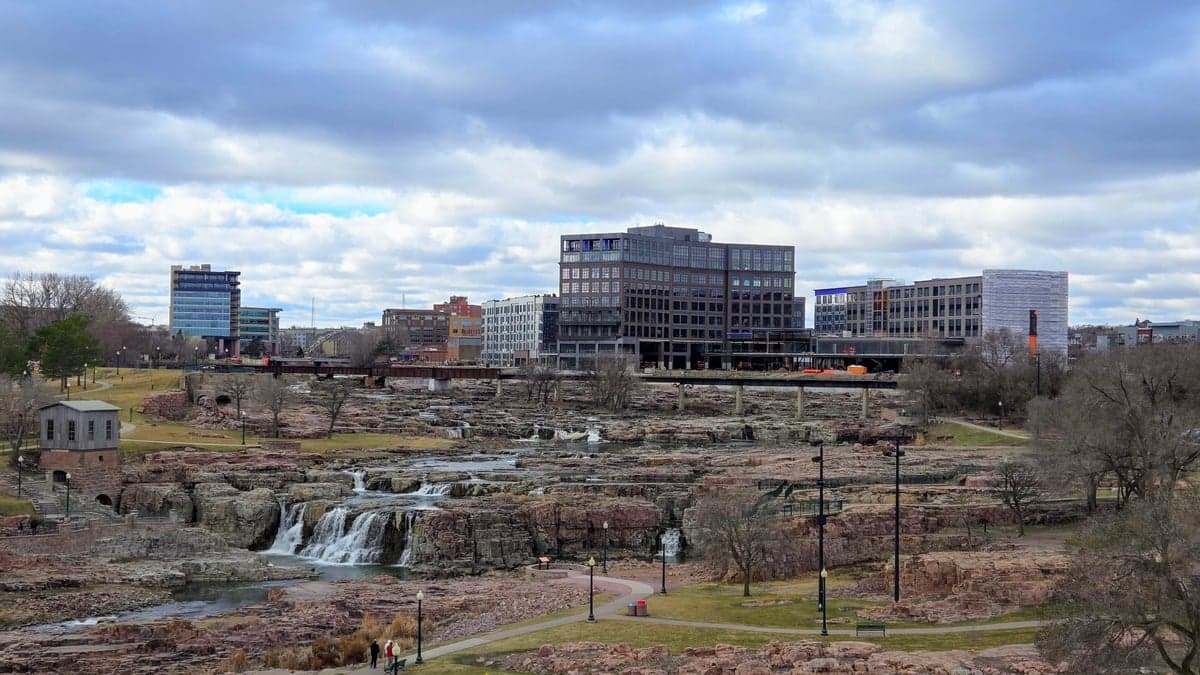
Photo: Wikipedia
Strategic Assessment of Sioux Falls, SD
Meaningful friction. Expect exposure to either population pressure, blast zones, or natural disaster risk. Consider buying a retreat property.
What does the Strategic Assessment tell us?
Our Strategic Assessment grades tactical survivability of an area. Major population centers, military targets, fallout zones, natural disasters, and border exposure all drive risk — lower exposure means a more defensible position in a crisis.
This is heavily inspired by Joel Skousen's Strategic Relocation book. Highly recommended you checkout the book ($)What does this tell us?
Our Strategic Assessment grades tactical survivability of an area. Major population centers, military targets, fallout zones, natural disasters, and border exposure all drive risk — lower exposure means a more defensible position in a crisis.
This is heavily inspired by Joel Skousen's Strategic Relocation book. Highly recommended you checkout the book ($)Strategic Pillars

Key Distances
Regional Safe Places
Below is our recommended "safe zones" in South Dakota and the surrounding area based on our strategic heuristics. For most people, it's unrealistic to live in a “safe zone” full-time due to work, family or other personal reasons. They tend to be more rural. However, many of these areas are perfect for second homes and retreat properties that double as a vacation home or even a short-term rental.
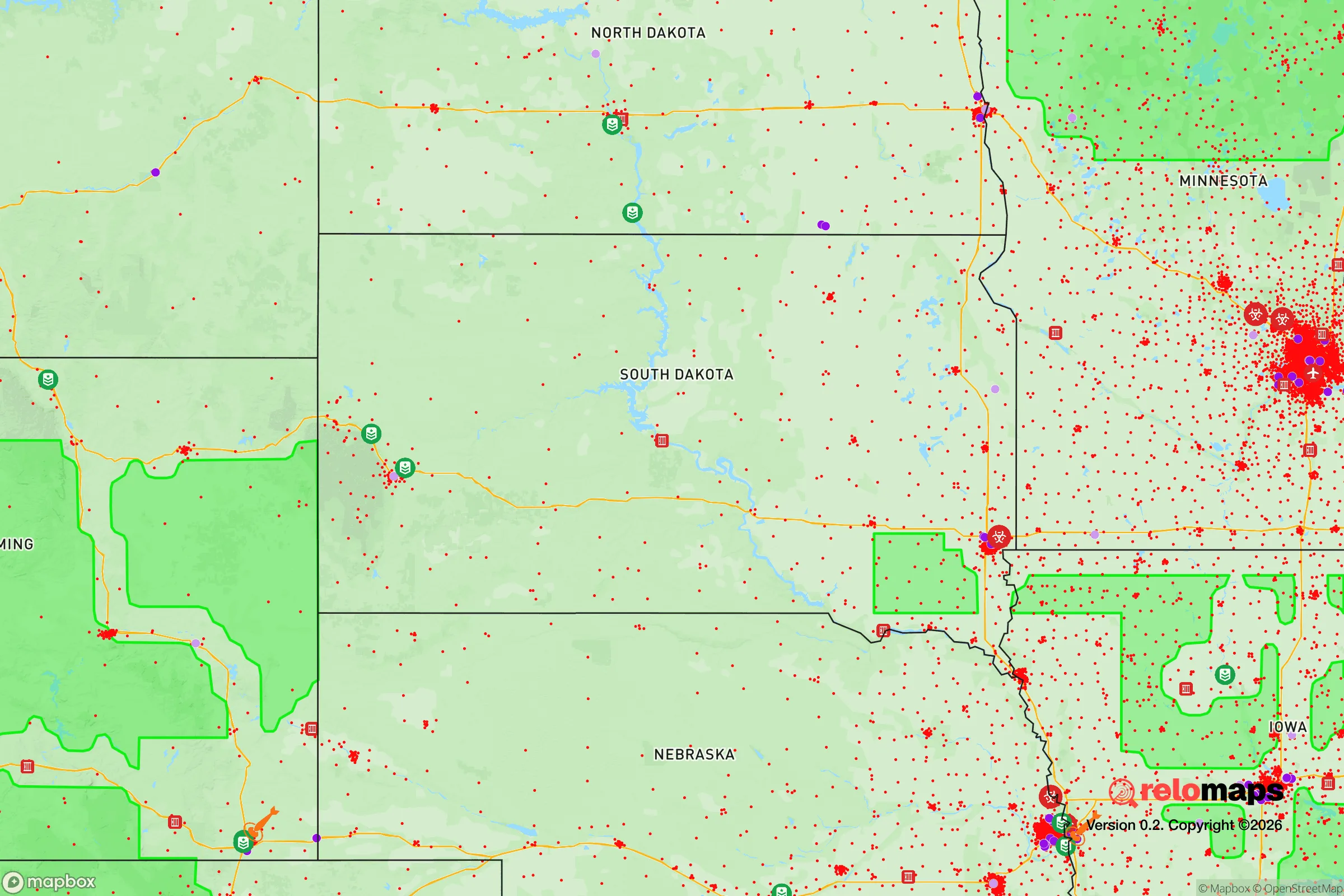


Important Note: For informational purposes only. This does not mean nothing bad ever happens in the green zones. Please use common sense. This is based on public data and modeled with AI. We tried to take a conservative approach but mistakes happen. We update this regularly as new information becomes available.
Solar Generator Recommendations
Backup power matters more here than in safer locations. We've picked three solar generators across budgets and capacity tiers — start with the budget unit if you only need a few essentials, or step up if you want to run a fridge and HVAC for days at a time.

Jackery Portable Power Station Explorer 300
Budget OptionPower on the Go: Weighing only 11 lbs, it's convenient to set up and store with book-sized foldable solar panels

BLUETTI Portable Power Station AC180
Designed for both indoor and outdoor scenarios, AC180 is highly capable as it has a robost capacity and continuous output power.

EF ECOFLOW DELTA Pro Ultra Power Station
Upgraded PickEcoFlow DELTA Pro Ultra is a whole-home energy system designed to grow with your family. Integrated with the Smart Home Panel 2, it scales to meet your evolving energy needs — keeping your home powered, intelligent, and secure through every stage of life.
We earn a commission, at no additional cost to you.
Strategic Assessment Analysis
Sioux Falls, South Dakota, offers a compelling strategic position for those prioritizing resilience, combining geographic isolation from major coastal threats with robust local infrastructure that makes it a viable long-term holding area. Its location along the Big Sioux River and at the intersection of Interstates 29 and 90 provides both water access and multiple egress routes, while its distance from nuclear targets, major ports, and dense urban corridors significantly reduces exposure to the most probable first-strike or civil unrest scenarios. For the conservative prepper or survivalist, this city represents a rare balance: enough economic activity to sustain a normal life, yet far enough from the chaos to offer a genuine buffer when things go sideways.
Geographic position and natural advantages for long-term security
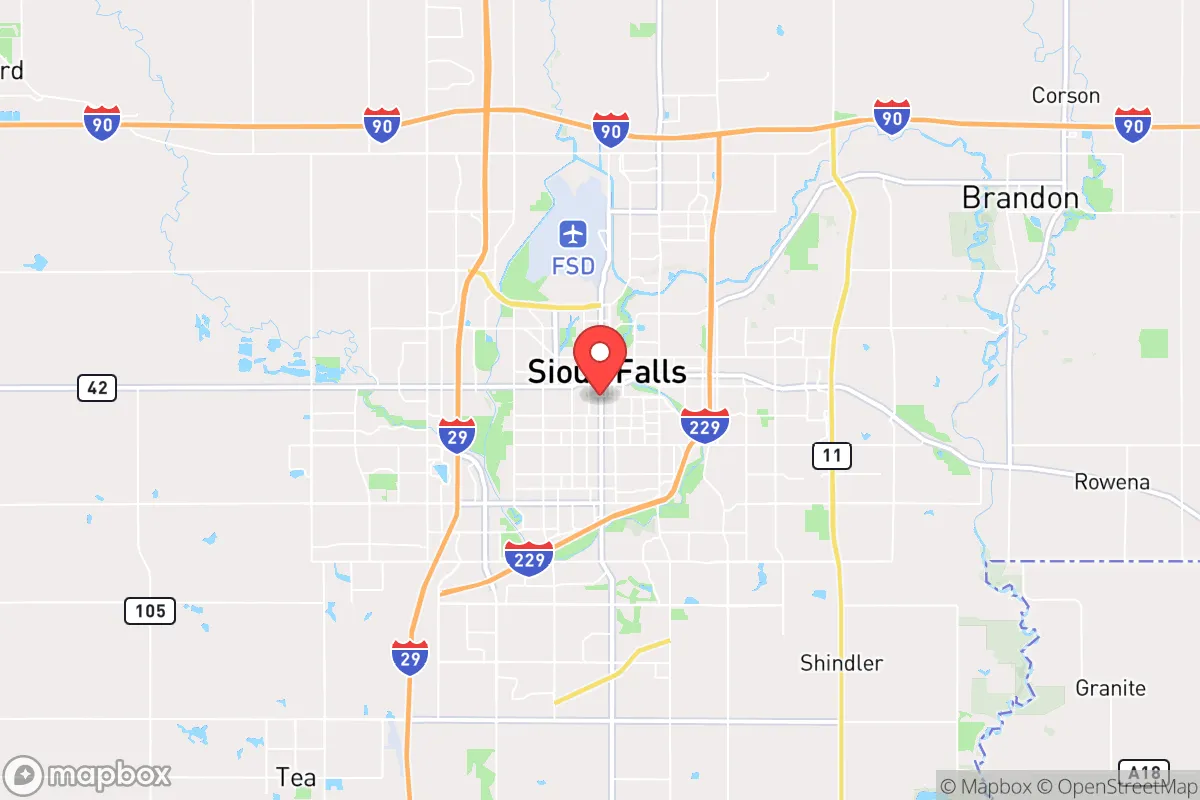
Sioux Falls sits in the southeastern corner of South Dakota, roughly 250 miles from Minneapolis, 200 miles from Omaha, and over 400 miles from Denver. This puts it well outside the blast radius and fallout zones of any major population center or military installation that would be a primary target in a conflict. The surrounding terrain is gently rolling prairie with ample farmland, meaning food production is not a theoretical exercise—it is the local economy. The Big Sioux River runs through the city, providing a surface water source that, with proper filtration, can supplement municipal supplies. The area is also part of the Sioux Falls aquifer system, which offers deep groundwater reserves less vulnerable to surface contamination than many regions. Winters are cold and dry, which can be a hardship, but cold also slows biological threats and reduces the viability of many insect-borne diseases. The lack of major fault lines, hurricane zones, or wildfire corridors means natural disaster risk is limited to occasional blizzards and tornadoes—both of which are survivable with basic preparation.
Risks, exposures, and proximity to fallout-relevant landmarks
No location is without risk, and Sioux Falls has its own set of vulnerabilities that a relocator must weigh. The city is roughly 90 miles from Ellsworth Air Force Base near Rapid City, which houses B-1B bombers and is a high-value target in any peer-level conflict. While 90 miles provides significant standoff, prevailing winds from the west could carry fallout across the state in a worst-case scenario. Additionally, the city’s growth—now over 200,000 in the metro area—means it is no longer a small town. A sudden influx of refugees from Minneapolis or Omaha during a crisis could overwhelm local resources within days. The city’s economy is heavily dependent on the Sanford Health and Avera Health systems, which are regional medical hubs; while this is a strength for healthcare access, it also makes Sioux Falls a target for those seeking medical care in a collapse, potentially straining supplies. There are no nuclear power plants within 150 miles, and the nearest major chemical or industrial facilities are in Sioux City, Iowa, about 80 miles south—a manageable distance for evacuation if needed.
Practical resilience for a relocator: food, water, energy, and defensibility
For the individual or family looking to establish a resilient foothold, Sioux Falls offers several concrete advantages. Food security is strong: South Dakota is a top producer of corn, soybeans, and beef, and the city has multiple year-round farmers' markets, bulk food co-ops, and direct relationships with local ranchers. A prepper can easily stockpile grains and proteins without relying on fragile supply chains. Water is less of a concern than in arid western states; the aquifer and river provide redundancy, though a well on private property outside city limits is the gold standard. Energy infrastructure is surprisingly robust—the city is served by Xcel Energy and Sioux Valley Energy, with a mix of coal, natural gas, and wind. The surrounding rural areas have seen significant wind farm development, which could provide decentralized power in a grid-down scenario if one has the means to tap into it. Defensibility is moderate: the city itself is flat and open, making it hard to secure without a large perimeter, but the outlying areas offer farmsteads with good sightlines, limited road access, and a culture of self-reliance. The local gun culture is strong, with few restrictions on ownership and carry, which is a practical consideration for those serious about personal and family security. The Minnehaha County Sheriff’s Office and Sioux Falls Police maintain a professional presence, but in a prolonged crisis, law enforcement will be stretched thin—neighbors and property lines will matter more than 911 calls.
The overall strategic picture for Sioux Falls is one of calculated trade-offs. It is not a bunker or a remote mountain retreat; it is a functioning mid-sized city with real economic momentum and a conservative-leaning population that largely values independence and preparedness. The risks from Ellsworth AFB and potential refugee flows are real but manageable with proper planning—such as maintaining a rural property within a 30-minute drive as a fallback position. For the relocator who wants to maintain a professional career while building a resilient lifestyle, Sioux Falls is one of the few places in the Upper Midwest that offers both. The cold winters demand serious preparation in heating, food storage, and vehicle readiness, but the low crime rate, strong community ties, and distance from the coastal chaos make it a solid anchor point for those who see the writing on the wall and want to be somewhere that still works when the system stutters.

* Values derived from national, state, county, city and local statistics and may differ in a specific area. Last updated: 2026-04-30T00:42:09.000Z
Narrative content on this page is AI-generated and may contain mistakes. Verify any details that matter before acting on them.
ReloMaps may earn a commission from affiliate links at no extra cost to you.

