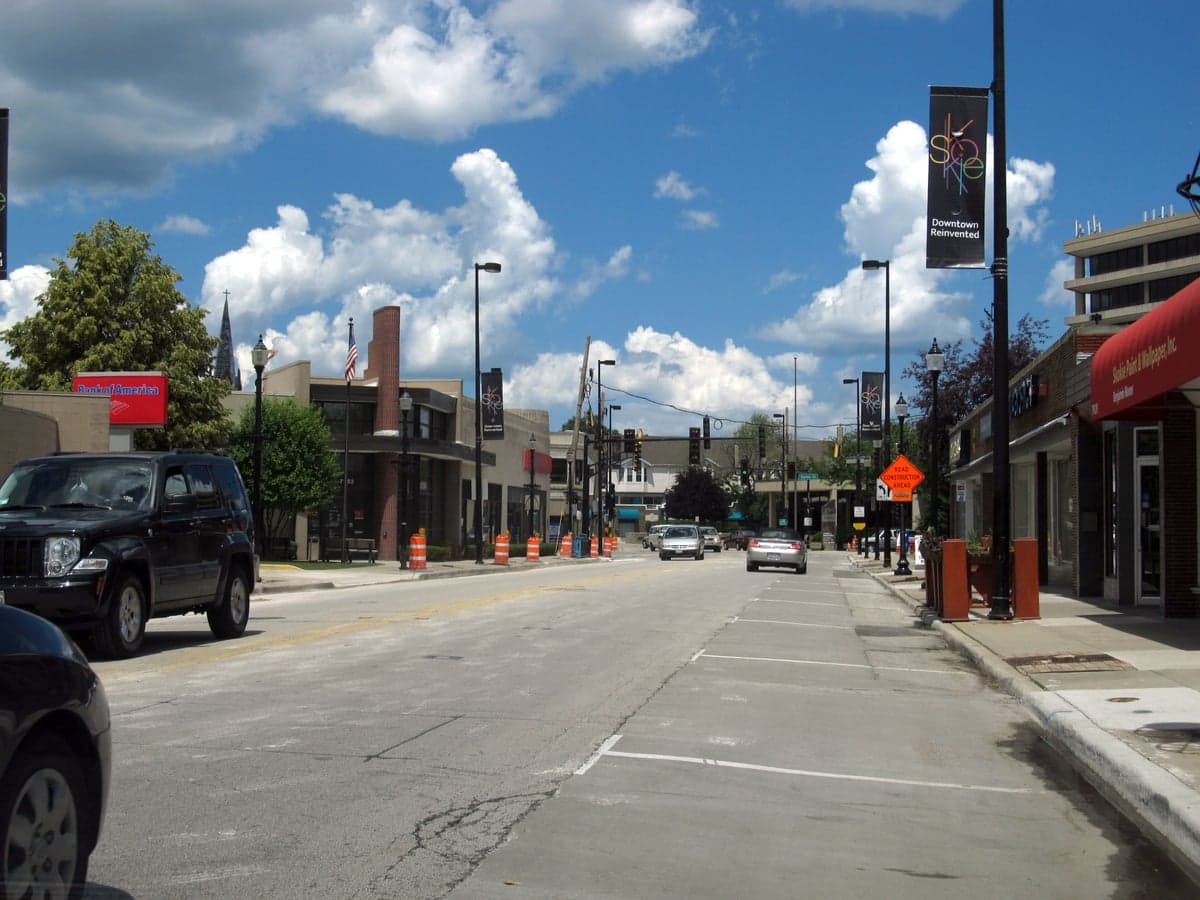
Photo: Wikipedia
Strategic Assessment of Skokie, IL
Multiple tactical vulnerabilities. Population density, target proximity, or disaster risk are likely compounding. A retreat property and exit planning is required.
What does the Strategic Assessment tell us?
Our Strategic Assessment grades tactical survivability of an area. Major population centers, military targets, fallout zones, natural disasters, and border exposure all drive risk — lower exposure means a more defensible position in a crisis.
This is heavily inspired by Joel Skousen's Strategic Relocation book. Highly recommended you checkout the book ($)What does this tell us?
Our Strategic Assessment grades tactical survivability of an area. Major population centers, military targets, fallout zones, natural disasters, and border exposure all drive risk — lower exposure means a more defensible position in a crisis.
This is heavily inspired by Joel Skousen's Strategic Relocation book. Highly recommended you checkout the book ($)Strategic Pillars

Key Distances
Regional Safe Places
Below is our recommended "safe zones" in Illinois and the surrounding area based on our strategic heuristics. For most people, it's unrealistic to live in a “safe zone” full-time due to work, family or other personal reasons. They tend to be more rural. However, many of these areas are perfect for second homes and retreat properties that double as a vacation home or even a short-term rental.
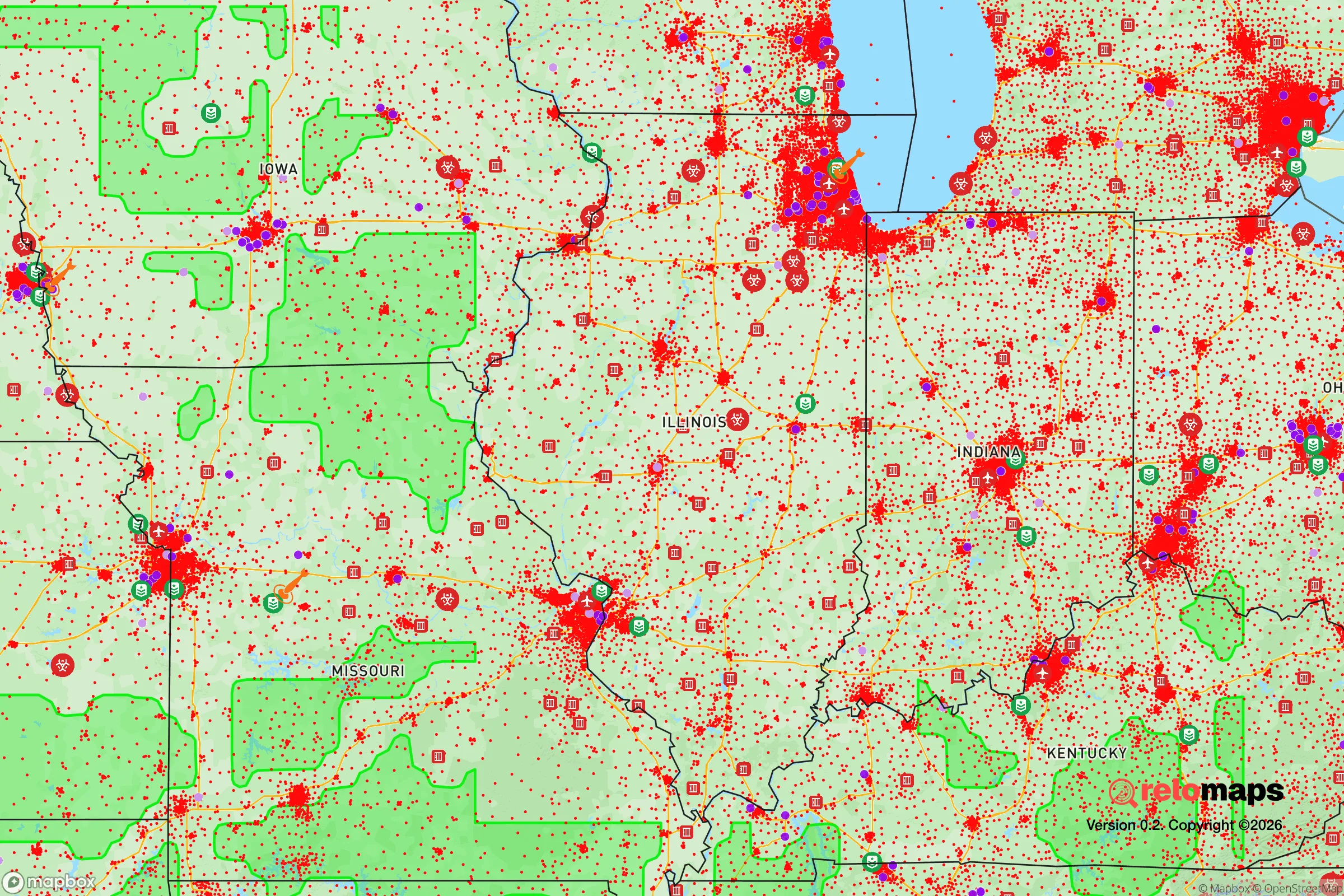
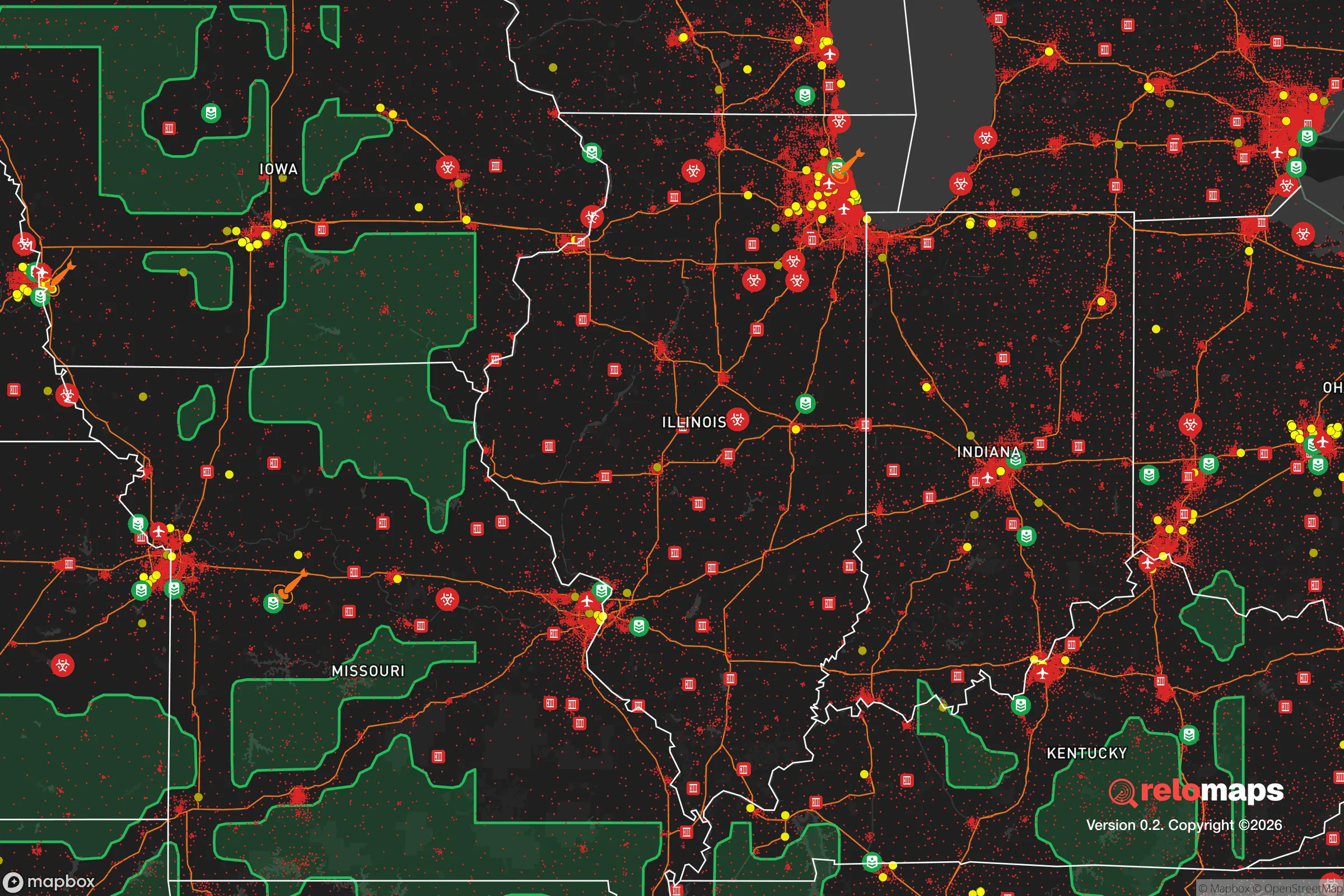


Important Note: For informational purposes only. This does not mean nothing bad ever happens in the green zones. Please use common sense. This is based on public data and modeled with AI. We tried to take a conservative approach but mistakes happen. We update this regularly as new information becomes available.
Solar Generator Recommendations
Backup power matters more here than in safer locations. We've picked three solar generators across budgets and capacity tiers — start with the budget unit if you only need a few essentials, or step up if you want to run a fridge and HVAC for days at a time.

Jackery Portable Power Station Explorer 300
Budget OptionPower on the Go: Weighing only 11 lbs, it's convenient to set up and store with book-sized foldable solar panels

BLUETTI Portable Power Station AC180
Designed for both indoor and outdoor scenarios, AC180 is highly capable as it has a robost capacity and continuous output power.

EF ECOFLOW DELTA Pro Ultra Power Station
Upgraded PickEcoFlow DELTA Pro Ultra is a whole-home energy system designed to grow with your family. Integrated with the Smart Home Panel 2, it scales to meet your evolving energy needs — keeping your home powered, intelligent, and secure through every stage of life.
We earn a commission, at no additional cost to you.
Strategic Assessment Analysis
Skokie, Illinois, presents a complex strategic picture for the conservative prepper or survivalist. Its primary advantage is its position as a resilient, well-resourced suburb of Chicago, but that proximity to a major urban center is also its most significant liability. For a relocator focused on long-term preparedness, Skokie offers strong day-to-day stability and access to critical supplies, but it sits squarely within the blast radius of a major metropolitan target, making it a high-risk, high-reward location for those who cannot or will not move to a remote rural area. The key is understanding that Skokie’s resilience is tactical, not strategic—it’s a place to hold out during a short-term crisis, not a generational survival homestead.
Geographic position and natural advantages for a survivalist
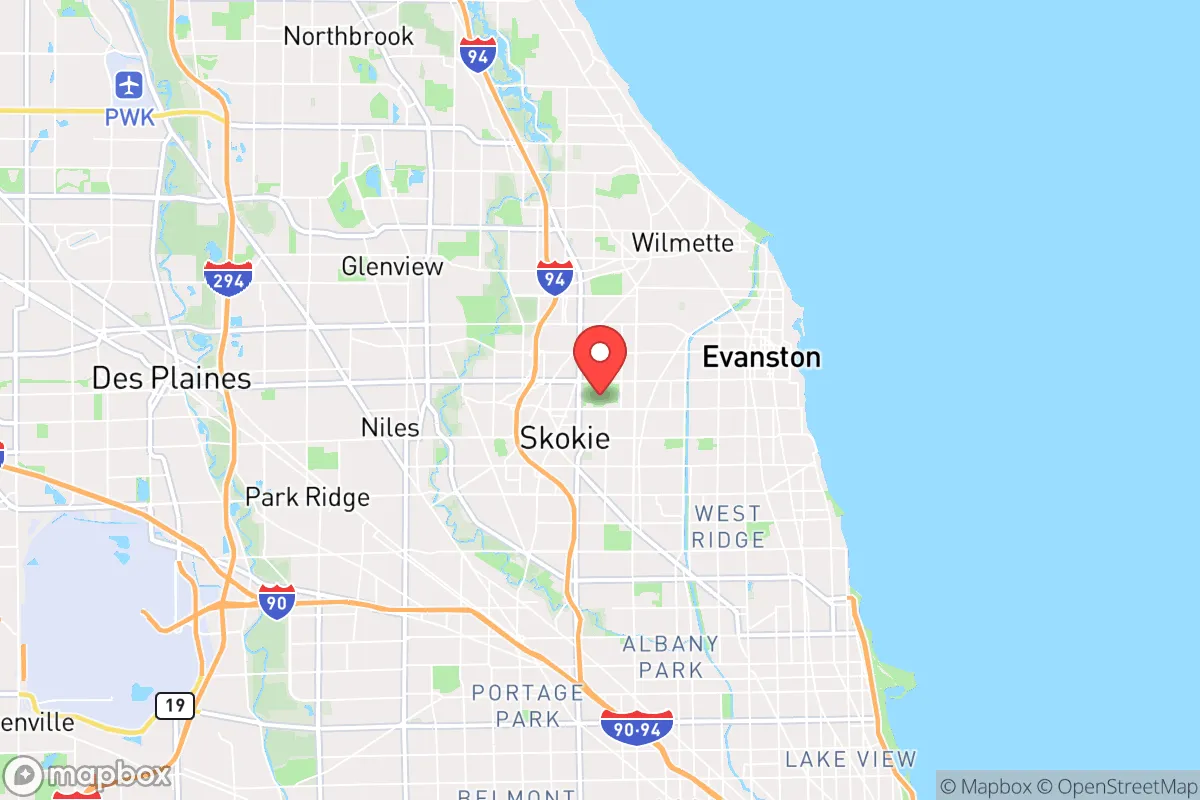
Skokie’s location is a double-edged sword. On the plus side, it sits on the western shore of Lake Michigan, which provides an essentially unlimited supply of fresh water—a critical resource that most inland suburbs lack. In a grid-down scenario, access to Lake Michigan water, even if requiring filtration and boiling, is a massive advantage over communities dependent on municipal wells or reservoirs that could be compromised. The terrain is flat and densely developed, which is poor for concealment or long-term off-grid living, but excellent for short-range visibility and establishing a defensible perimeter if you control a single block or building. The area’s natural advantages are not about wilderness survival; they are about logistical access. Skokie is a transportation hub, with direct rail and highway links to Chicago, meaning that in a pre-crisis window, you can rapidly move supplies in or out. The soil is rich glacial till, but the land is almost entirely paved or lawn, so subsistence farming is not realistic without major conversion. For a prepper, the lake is the single most valuable natural asset here, and it’s one that most residents completely overlook.
Risks, exposures, and proximity to fallout-relevant landmarks
The negatives are substantial and cannot be glossed over. Skokie is roughly 15 miles from downtown Chicago, placing it well within the primary fallout zone of any nuclear detonation aimed at the city’s financial district, O’Hare International Airport, or the Argonne National Laboratory facilities southwest of the city. The prevailing winds in the region blow from the west and southwest, meaning that fallout from a Chicago strike would likely drift directly over Skokie. Additionally, the suburb is adjacent to the Evanston campus of Northwestern University, a high-profile academic and research institution that could be a secondary target. The area is crisscrossed by major rail lines carrying hazardous materials, including crude oil from the Bakken fields and chemicals from the Gulf Coast. A derailment or sabotage event on the Union Pacific or Metra lines could create a localized toxic hazard. The concentration of population—over 65,000 people in just over 10 square miles—means that any mass casualty event, whether from a biological agent, a coordinated attack, or civil unrest, would spread rapidly. In a societal breakdown scenario, Skokie’s dense, interconnected neighborhoods would become a trap, not a refuge. The risk of being caught in a panic-driven evacuation on the Edens Expressway or Dempster Street is very real.
Practical resilience for a relocator: food, water, energy, and defensibility
For the individual or family who chooses to locate here, practical resilience requires a shift in mindset from rural self-sufficiency to urban fortification. Water is the easiest problem to solve: a good Berkey filter or a supply of purification tablets, combined with a few 55-gallon drums, gives you a month of drinking water from the lake or local taps. Food is more challenging. Skokie has a high density of grocery stores, including a large Jewel-Osco and a Whole Foods, but these will be stripped within hours of a crisis announcement. The smart play is to build a 90-day supply of shelf-stable food, stored in a basement or interior closet, and to identify local ethnic markets (such as the Patel Brothers on Oakton Street) that may have less obvious stockpiles. Energy is a weak point. The grid is reliable in normal times, but the area is prone to long-duration power outages from severe storms (derechos, blizzards). A small generator (Honda EU2200 or similar) with 10 gallons of stored fuel will keep a fridge, lights, and a radio running for a week. Solar is less effective here due to the flat terrain and frequent cloud cover, but a portable panel setup can supplement. Defensibility is the hardest factor. Skokie is a village of single-family homes and low-rise apartments, with no natural chokepoints. The best strategy is to choose a home on a corner lot with clear sightlines, or a unit in a brick building with a single stairwell entrance. Community is your force multiplier: building a network of like-minded neighbors—even if they are not preppers—who agree to watch each other’s properties and share information is more valuable than any piece of gear. The Skokie Police Department is well-funded and professional, but in a widespread crisis, they will be overwhelmed. Do not rely on them for personal security.
The overall strategic picture for a conservative relocator
Skokie is not a bug-out location. It is not a place to ride out a long-term collapse or a nuclear winter. Its strategic value is as a staging ground for the first 30 to 90 days of a crisis, leveraging its access to Lake Michigan water, dense supply chains, and strong municipal services (the village has its own water treatment plant and a well-regarded fire department). For a conservative relocator who works in Chicago or the North Shore and cannot afford to move to a rural county, Skokie offers a defensible, resource-rich base of operations—provided you have the discipline to stock up, the social skills to build a local network, and the realism to know when to leave. The moment the crisis exceeds local capacity—if the water treatment plant goes down, if the grocery stores are permanently empty, if civil order breaks down in the surrounding suburbs—your plan must include a pre-planned exodus route west or north, away from the lake and the city. Skokie is a solid B+ location for the prepared urbanite, but it is a D- for anyone hoping to go it alone or expecting the government to save them. Know your exit, know your neighbors, and treat this suburb as what it is: a well-stocked forward operating base, not a final redoubt.

* Values derived from national, state, county, city and local statistics and may differ in a specific area. Last updated: 2026-04-30T02:16:55.000Z
Narrative content on this page is AI-generated and may contain mistakes. Verify any details that matter before acting on them.
ReloMaps may earn a commission from affiliate links at no extra cost to you.

