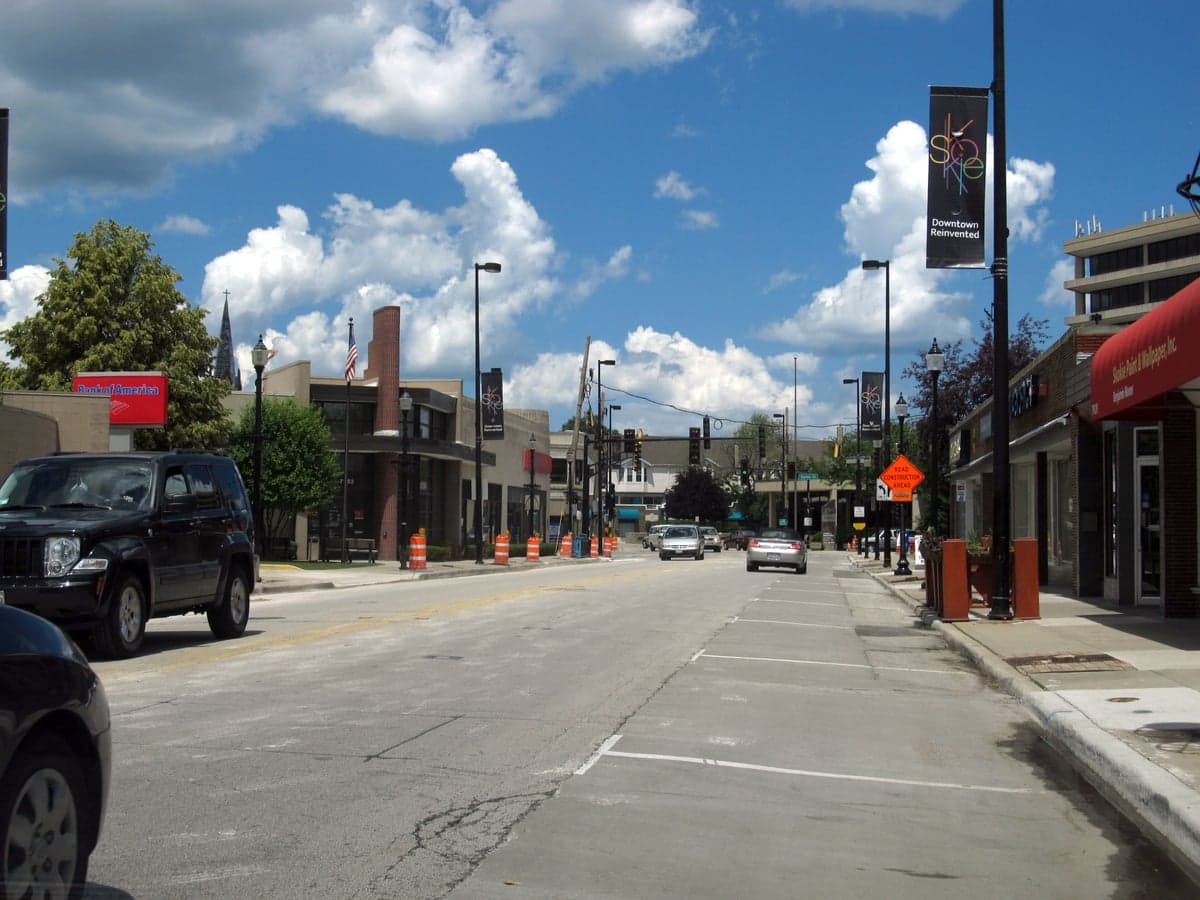
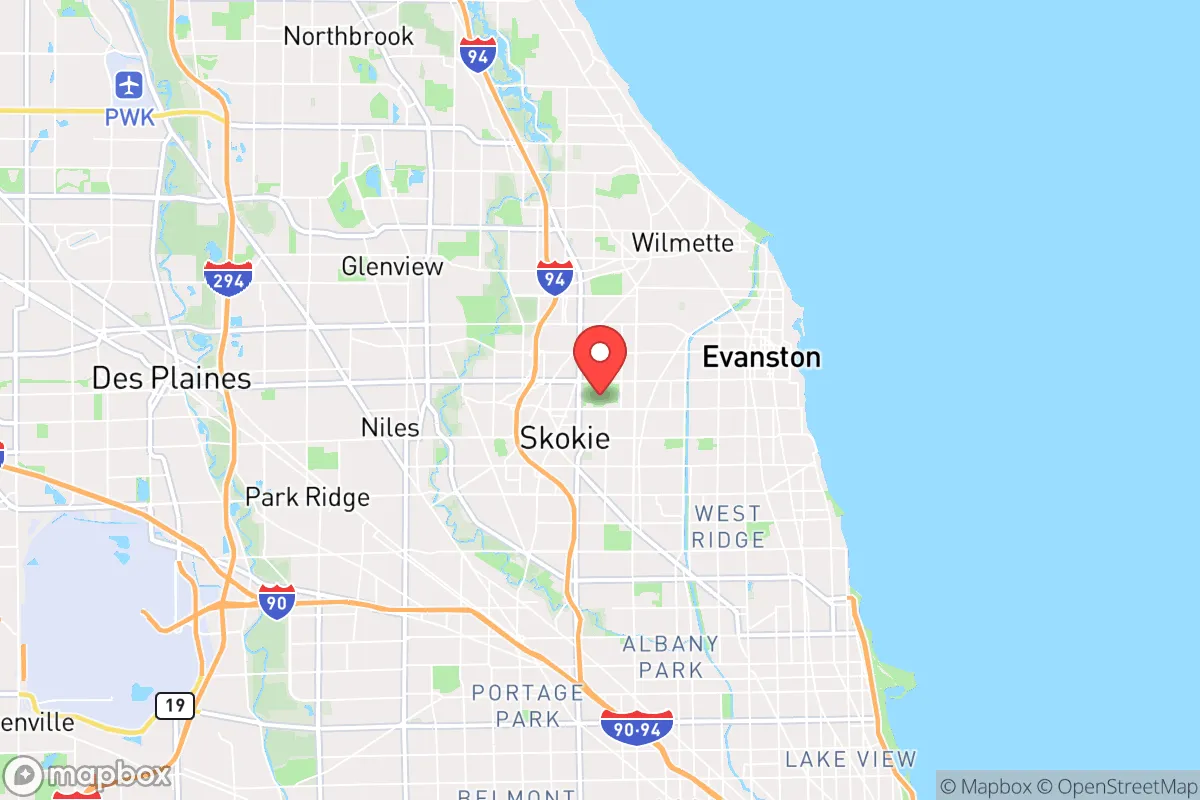
Photo: Wikipedia
Quality of Life in Skokie, IL
A high quality of life with strong walkability, manageable living costs, healthy neighborhood signals, and solid amenity access.
What does Quality of Life tell us?
Quality of Life blends cost of living, nearby amenities, socioeconomic signals, and neighborhood character. City-level scores represent the whole municipality; individual neighborhoods can differ.
What does this tell us?
Quality of Life blends cost of living, nearby amenities, socioeconomic signals, and neighborhood character. City-level scores represent the whole municipality; individual neighborhoods can differ.
Cost of Living
29% above national average
The Real Cost of Living in Skokie, IL for 2026
| Tier | Individual | Family (4) |
|---|---|---|
| Survival | $24k | $45k |
| Comfortable | $72k | $105k |
| Luxury | $158k+ | $246k+ |
| Elite (Top 5%) | $186k+ | $289k+ |
89%
The Area Signal
A metric tracking the socioeconomic signals of the area.
Hobbies
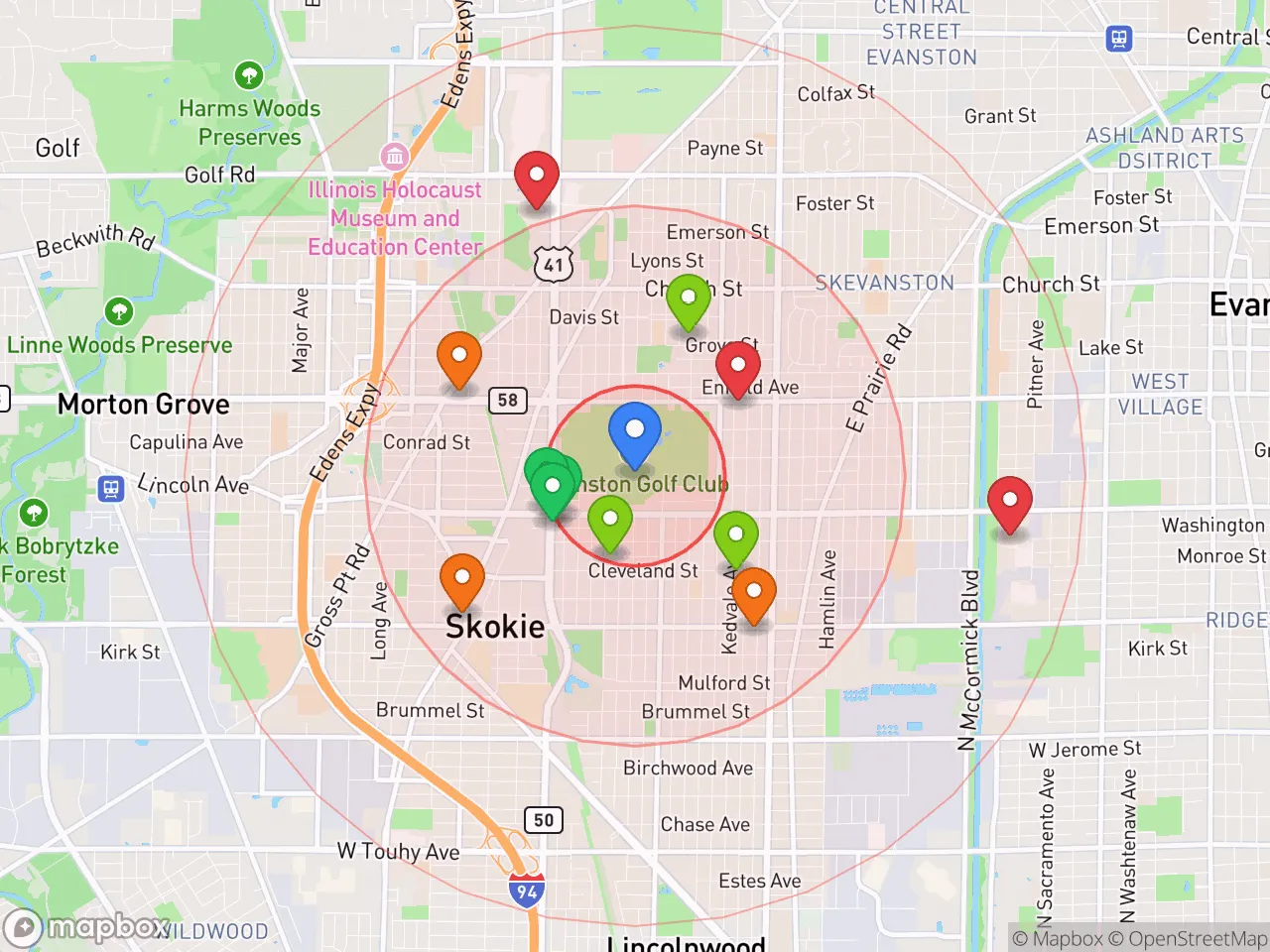
Explore the areaGroceries
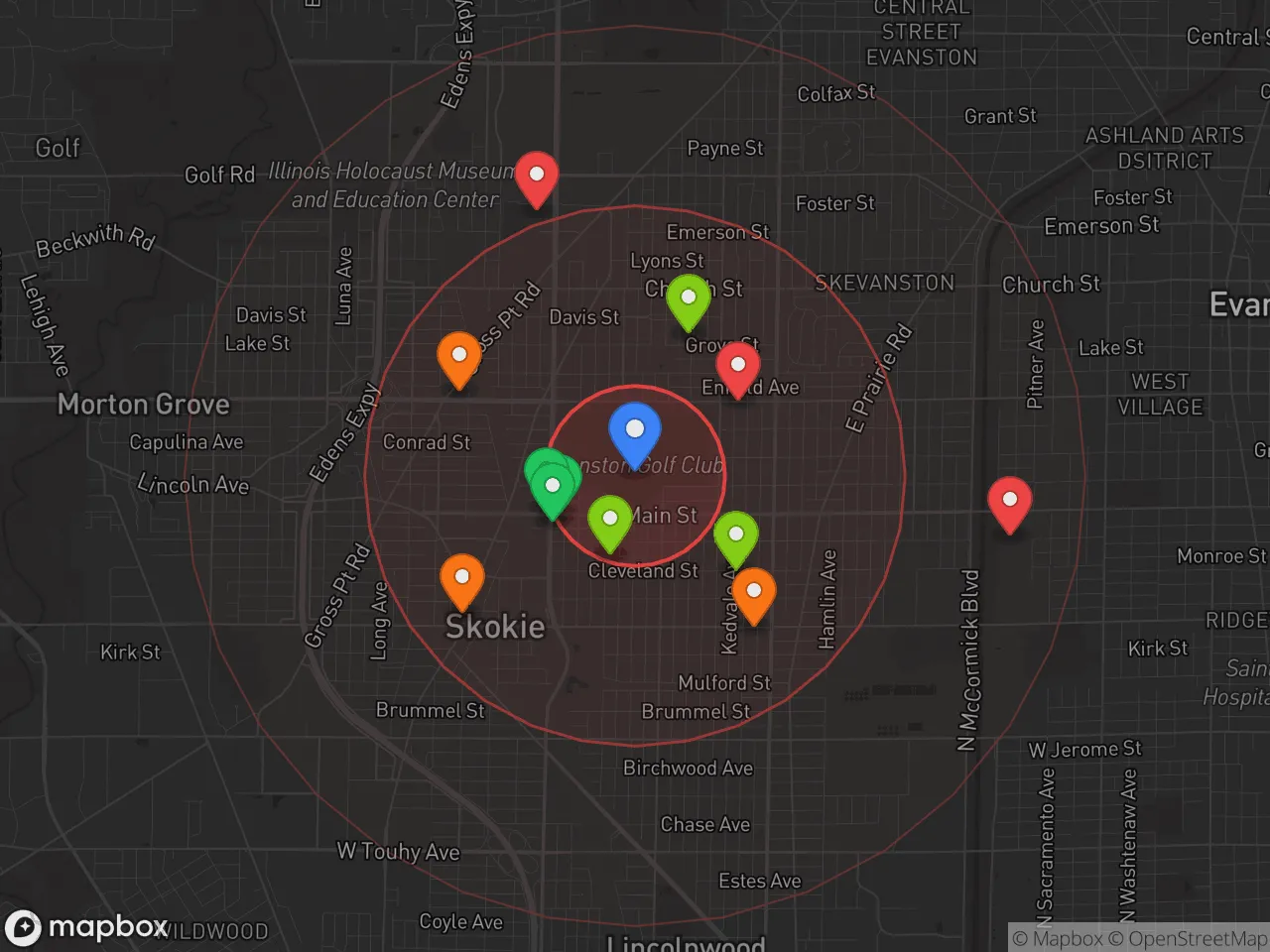
7 within 10 miles
Gas
20 within 10 miles
Hospital
20 within 20 miles
Airport
ORD — O'Hare International
Post Office
USPS — Skokie, IL
Critical Amenities
Quality-of-Life Analysis
Skokie, Illinois, presents a distinctly suburban quality of life with an affluence level that sits notably above the national average, reflected in its cost of living index of 129 (where 100 equals the U.S. average). The village attracts a diverse mix of families, young professionals, and long-term residents who value strong public schools, convenient access to Chicago, and a stable, well-maintained community environment. With a median household income that comfortably exceeds the national figure, Skokie’s population skews toward middle-to-upper-middle-class households, though the high cost of living means budgeting carefully is a practical necessity for many newcomers.
Cost of living, housing affordability, and how Skokie compares to nearby suburbs
Skokie’s cost of living is 29% above the U.S. baseline, driven primarily by housing costs that are elevated relative to the national average but remain competitive when compared to closer-in North Shore suburbs like Evanston, Wilmette, or Glenview. The median home value sits at $368,600, a figure that is roughly 10-15% lower than in neighboring Wilmette or Glenview, making Skokie a more accessible entry point for buyers seeking top-rated schools without the premium price tag of lakefront communities. Median rent is $1,491, which is notably lower than in Evanston (where two-bedroom apartments often exceed $1,800) and comparable to more distant suburbs like Niles or Morton Grove. For renters, this means a two-bedroom apartment in a well-maintained mid-century building is attainable for a household earning around $60,000 annually, though utilities and property taxes—among the highest in the nation—add significant monthly costs. The average commute of 26.9 minutes is slightly longer than the national average but shorter than many outer-ring suburbs, thanks to Skokie’s position along the CTA Yellow and Purple Lines, Metra’s Union Pacific North Line, and major highways like I-94 and I-294. This commute time makes it feasible for professionals working in downtown Chicago or the northern industrial corridor to live in Skokie without sacrificing too much daily time.
What daily life is like for families: schools, parks, and local amenities
Daily life in Skokie revolves around a robust network of public services and community amenities that cater heavily to families. The village is served by Skokie School District 73.5 and Niles Township High School District 219, both of which consistently earn above-average ratings on state assessments, with Niles North and Niles West high schools offering strong Advanced Placement programs and extracurriculars. The Skokie Park District maintains over 40 parks, including the large Emily Oaks Nature Center and the popular Skokie Sports Park, while the Skokie Public Library is a regional standout with extensive programming for children and teens. For shopping and dining, the Old Orchard shopping center provides a mix of national retailers and local restaurants, while the downtown area along Oakton Street offers a more walkable, small-town feel with ethnic eateries reflecting the village’s substantial Jewish, South Asian, and Eastern European populations. The rhythm of life is distinctly suburban: residents drive to most errands, though the CTA Yellow Line’s Skokie station provides a direct 20-minute train ride to downtown Chicago for those who prefer public transit. Crime rates are low relative to the national average, with property crime being the primary concern, and the village’s police department maintains a visible presence through community policing initiatives.
Skokie is best suited for families and professionals who prioritize strong public schools, a diverse and stable community, and convenient access to Chicago without the premium prices of the immediate North Shore. Renters and first-time homebuyers will find the housing market more attainable than in Evanston or Wilmette, though property taxes and the overall cost of living require a solid household income. Those who thrive here are likely to be people who value a quiet, well-maintained suburban environment with excellent public services, a rich cultural mix, and the ability to reach the city or O’Hare Airport in under 30 minutes. Retirees on fixed incomes may find the cost of living challenging, but for working families and professionals, Skokie offers a balanced, high-quality lifestyle that justifies its above-average expenses.

Crime in Skokie, IL
Generally safer than 70% of comparable U.S. locations.
Violent CrimeViolent Crime Analysis
Property CrimeProperty Crime Analysis
Crime Analysis
Skokie, Illinois, presents a mixed safety profile for prospective residents. While the village’s violent crime rate of 149.8 incidents per 100,000 people is notably lower than the national average, its property crime rate of 2,556.5 per 100,000 is significantly elevated. This disparity, combined with the broader context of Cook County’s progressive criminal justice policies, means that safety in Skokie requires careful, data-driven consideration rather than a simple label of “safe” or “dangerous.”
Crime in context
Skokie’s violent crime rate is roughly half the U.S. average of about 380 per 100,000, placing it in a safer tier for serious offenses like homicide and aggravated assault. However, its property crime rate is nearly double the national benchmark of roughly 1,950 per 100,000. This high property crime figure is driven largely by theft and burglary, which are common in dense suburban communities near Chicago. The village’s proximity to a major urban center, combined with the policies of Cook County State’s Attorney Kim Foxx—who has championed bail reform and reduced prosecution of low-level offenses—creates an environment where property criminals may face fewer consequences. Residents should be aware that the county’s progressive approach to justice, while intended to reduce incarceration, can result in repeat offenders cycling through the system with minimal deterrent effect.
What residents experience
Day-to-day life in Skokie is generally quiet, but property crime is a persistent annoyance. Car break-ins, package thefts, and bicycle thefts are the most common complaints reported to the Skokie Police Department. Violent crime is rare and tends to be concentrated in isolated incidents, often domestic in nature, rather than random attacks. That said, the village’s location within Cook County means that individuals arrested for property crimes in Skokie are processed through a court system that has, under progressive leadership, prioritized diversion programs and reduced cash bail. For law-abiding residents, this can translate into a sense that the justice system is not fully responsive to their safety concerns. The Skokie Police Department maintains a visible presence and a community policing model, but officers are constrained by county-level policies that limit how long suspects can be held and how aggressively low-level offenses are prosecuted.
Neighborhood-level variation
Safety in Skokie is not uniform. The eastern and southern parts of the village, which border Chicago’s West Ridge and Rogers Park neighborhoods, experience higher rates of property crime, particularly along major corridors like Dempster Street and Touhy Avenue. The western and northern sections, closer to the suburbs of Niles and Morton Grove, tend to have lower crime rates and more single-family homes with private parking, which reduces opportunistic theft. The area around the Skokie Swift (CTA Yellow Line) station and the Old Orchard shopping district sees elevated foot traffic and correspondingly higher theft reports. For the most current block-level data, prospective residents should consult the Skokie Police Department’s monthly crime maps or the village’s online crime dashboard, which provides incident-level detail by address.
* Values derived from national, state, county, city and local statistics and may differ in a specific area. Last updated: 2026-04-30T02:16:55.000Z
Narrative content on this page is AI-generated and may contain mistakes. Verify any details that matter before acting on them.
ReloMaps may earn a commission from affiliate links at no extra cost to you.

