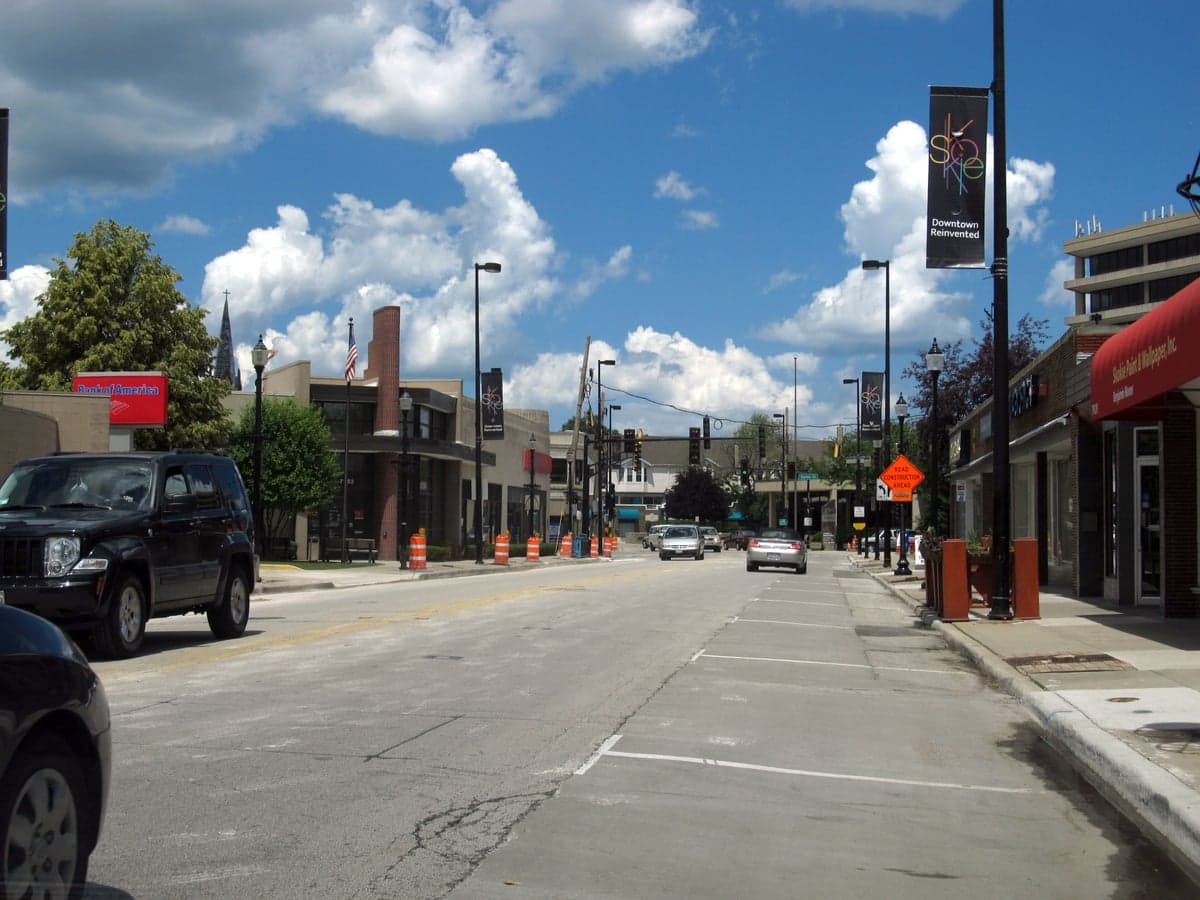
Photo: Wikipedia
Personal Sovereignty in Skokie, IL
Viable for self-reliance. Generally workable, though some barriers may limit total independence.
What does Personal Sovereignty tell us?
Personal Sovereignty measures your capacity for self-reliance and independence with minimal government friction. Higher scores mean fewer barriers between you and the way you want to live... but it assumes you have the space you need and good neighbors.
What does this tell us?
Personal Sovereignty measures your capacity for self-reliance and independence with minimal government friction. Higher scores mean fewer barriers between you and the way you want to live... but it assumes you have the space you need and good neighbors.
State Policy
Energy independence: Importer (45% of energy produced in-state)
Personal Liberty
Homesteading

Personal Liberty Analysis
Skokie, Illinois, presents a challenging environment for personal sovereignty, where state-level preemption and local governance significantly constrain individual autonomy. As a suburb of Chicago, Skokie operates under the broader legal framework of Illinois, a state with some of the most restrictive laws in the nation regarding self-defense, taxation, and personal liberties. For a conservative-leaning individual or family prioritizing self-reliance and minimal government overreach, Skokie requires careful consideration of the trade-offs between its dense suburban amenities and the erosion of personal freedoms. The area's political climate, heavily influenced by Cook County and state-level Democratic control, creates a regulatory posture that often prioritizes collective mandates over individual choice, making it a location where strategic planning for autonomy is essential rather than optional.
Tax burden and regulatory posture for residents and small businesses
Illinois imposes one of the heaviest tax burdens in the United States, and Skokie residents feel this acutely. The state's flat income tax rate of 4.95% is compounded by property taxes that are among the highest in the nation. In Skokie, effective property tax rates often exceed 2.5% of assessed home value, meaning a $400,000 home can carry an annual tax bill of over $10,000. This directly impacts a prepper's ability to allocate resources toward self-sufficiency—every dollar sent to the government is a dollar not spent on supplies, land improvements, or emergency reserves. Additionally, Cook County's sales tax rate of 10.25% on most goods further erodes purchasing power. For small business owners or those seeking side hustles, Illinois' regulatory environment is burdensome: business registration fees, licensing requirements, and compliance costs are high. The state's progressive political leadership has also enacted laws that can complicate firearm-related businesses or home-based enterprises, making it difficult to operate with the freedom found in less regulated states. The overall regulatory posture is one of active intervention, not laissez-faire, which can frustrate those who value minimal government involvement in their economic and personal lives.
Self-defense and gun law specifics in Skokie and Illinois
For anyone serious about personal sovereignty, Illinois' gun laws are a major red flag. The state requires a Firearm Owner's Identification (FOID) card to even possess firearms or ammunition, a process that involves background checks and potential delays. Concealed carry is permitted only with a license, which requires 16 hours of training and a separate application. However, the most significant restriction is the 2023 ban on "assault weapons" and high-capacity magazines, which directly impacts the ability to own common defensive rifles like the AR-15. Skokie itself has local ordinances that may further restrict firearm storage or discharge within village limits. While Illinois is a "shall issue" state for concealed carry, the process is costly and time-consuming compared to constitutional carry states. For a prepper, this means that building a robust personal armory for worst-case scenarios is legally constrained. Self-defense outside the home is also limited: Illinois has no "stand your ground" law, imposing a duty to retreat in public spaces before using deadly force. This legal framework places the burden on the individual to de-escalate or flee, rather than empowering them to defend themselves immediately. For those who view the Second Amendment as a cornerstone of personal sovereignty, Skokie's environment is restrictive and requires careful legal navigation.
Self-reliance and homesteading viability in a dense suburb
Skokie's suburban density and zoning laws make traditional homesteading or off-grid living nearly impossible. Typical lot sizes in Skokie range from 5,000 to 10,000 square feet, with most homes on small parcels that limit space for gardens, livestock, or water collection. Village zoning ordinances prohibit keeping chickens, goats, or other livestock on residential lots, and there are strict regulations on structures like sheds, greenhouses, or rainwater harvesting systems. Off-grid energy solutions, such as solar panels, are permitted but subject to homeowner association (HOA) or village approval, and net metering policies can complicate true energy independence. The water supply is municipal, meaning reliance on a centralized system vulnerable to disruption. For a prepper focused on self-reliance, Skokie offers little room for food production, water storage, or energy independence. The area's infrastructure is designed for convenience, not resilience. Those seeking to build a self-sufficient homestead would need to look to more rural parts of Illinois, such as McHenry or DeKalb counties, where acreage is available and zoning is more permissive. In Skokie, the best strategy is to focus on urban prepping—stockpiling supplies, building community networks, and securing a bug-out location elsewhere.
Personal liberties: parental rights, medical autonomy, speech, and property
Illinois has moved aggressively in recent years to centralize authority over personal decisions, which directly impacts parental rights and medical autonomy. The state mandates comprehensive sex education in public schools, and parents have limited ability to opt their children out of specific lessons. Vaccine mandates for school attendance are strict, with no philosophical exemptions, and during the COVID-19 pandemic, Illinois imposed some of the longest-lasting mask and vaccine mandates in the country. Medical autonomy for adults is also constrained: Illinois has a strong public health apparatus that can compel treatments or isolation during declared emergencies. On free speech, Skokie has a historical reputation for protecting expression—the famous 1977 Skokie Nazi march case affirmed First Amendment rights—but local ordinances on noise, signage, and public assembly can still be used to limit protest or political activity. Property rights are heavily regulated: zoning laws, historic preservation rules, and environmental regulations can restrict what homeowners can do with their land. For a conservative concerned about government overreach, these policies represent a steady erosion of the ability to make independent decisions about family, health, and property. The state's legal environment favors collective well-being over individual liberty, which can feel suffocating for those who prioritize personal sovereignty.
Overall, Skokie offers a low score for personal sovereignty compared to other areas in the Midwest. While it provides strong community services and infrastructure, the trade-off is a heavy regulatory and tax burden that limits self-reliance, self-defense, and personal autonomy. For a prepper or survivalist, Skokie is a location where you must be hyper-vigilant about legal compliance and where building true independence is difficult. Neighboring states like Indiana or Wisconsin offer far more freedom in terms of gun laws, taxes, and property rights. If relocation to Skokie is unavoidable, the strategic approach is to treat it as a temporary base—maximizing urban prepping skills, maintaining a low profile, and having a clear exit plan to a more liberty-friendly jurisdiction. For those who can choose, the surrounding rural areas of Illinois or nearby states provide a far more conducive environment for the self-reliant lifestyle that personal sovereignty demands.

* Values derived from national, state, county, city and local statistics and may differ in a specific area. Last updated: 2026-04-30T02:16:55.000Z
Narrative content on this page is AI-generated and may contain mistakes. Verify any details that matter before acting on them.
ReloMaps may earn a commission from affiliate links at no extra cost to you.

