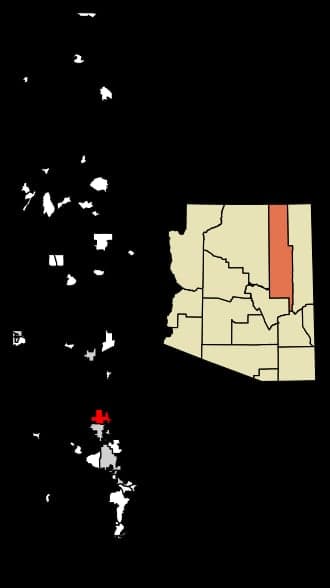
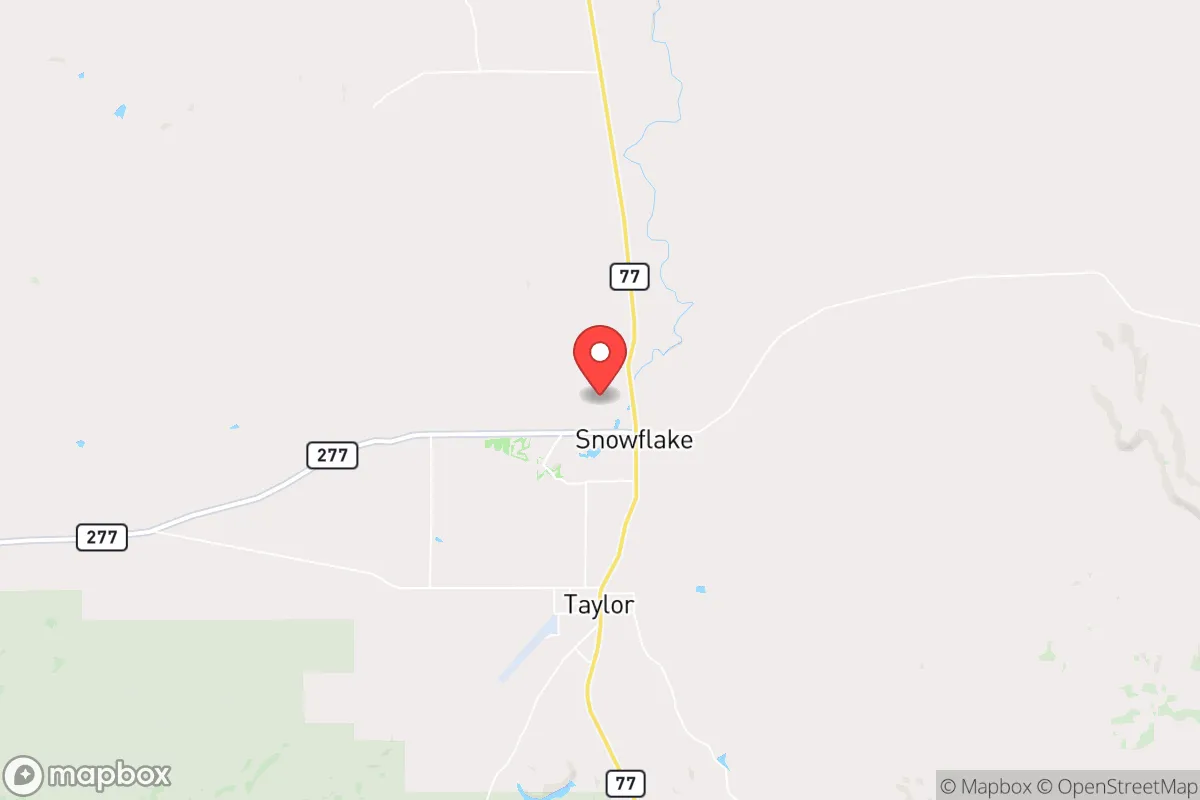
Photo: Wikipedia
Personal Sovereignty in Snowflake, AZ
Viable for self-reliance. Generally workable, though some barriers may limit total independence.
What does Personal Sovereignty tell us?
Personal Sovereignty measures your capacity for self-reliance and independence with minimal government friction. Higher scores mean fewer barriers between you and the way you want to live... but it assumes you have the space you need and good neighbors.
What does this tell us?
Personal Sovereignty measures your capacity for self-reliance and independence with minimal government friction. Higher scores mean fewer barriers between you and the way you want to live... but it assumes you have the space you need and good neighbors.
State Policy
Energy independence: Importer (20% of energy produced in-state)
Personal Liberty
Homesteading

Personal Liberty Analysis
Snowflake, Arizona, offers a notably high degree of personal sovereignty, anchored in Arizona’s strong state-level preemption laws and a local culture that prizes self-reliance. The town’s regulatory environment is light-touch, with minimal zoning interference for standard residential uses, and the surrounding Navajo County generally defers to individual property rights. For a relocation-minded individual or family seeking to maximize autonomy—whether in tax strategy, self-defense, or lifestyle choices—Snowflake presents a compelling, if not entirely frictionless, option within the broader Mountain West.
Tax burden and regulatory posture: how light is the touch?
Arizona’s tax structure is among the most favorable in the nation for those prioritizing financial sovereignty. There is no state inheritance or estate tax, and the state’s flat income tax rate is 2.5% as of 2025, with no local income tax in Snowflake. Property taxes are low, with an effective rate around 0.6% of assessed value, well below the national average. Sales tax in Snowflake is 8.35% (state plus local), which is moderate but not burdensome compared to many Western states. The regulatory posture at the town level is permissive: there is no general business license requirement for most home-based enterprises, and the town’s zoning code is sparse, focusing mainly on lot setbacks and use classifications rather than aesthetic or operational micromanagement. Navajo County’s building codes apply only to new construction and major renovations, not to existing structures or minor improvements. This creates an environment where a resident can operate a small repair shop, keep livestock, or run a home daycare with minimal bureaucratic overhead—provided they are not generating noise or traffic that draws complaints. The overall message from local governance is one of deference to individual judgment, with enforcement typically triggered only by neighbor disputes or clear public safety hazards.
Self-defense and gun law specifics: what the Second Amendment looks like here
Arizona is a constitutional carry state, meaning no permit is required to carry a concealed firearm in Snowflake for anyone legally allowed to possess a gun. The state preempts all local firearm ordinances, so Snowflake cannot impose its own restrictions on magazine capacity, ammunition types, or storage requirements. Stand-your-ground laws are fully in effect, with no duty to retreat in any place where a person is lawfully present. Castle doctrine protections extend to vehicles and occupied structures. For those who want a permit for reciprocity while traveling, Arizona issues a non-resident-friendly CCW permit with a 30-day turnaround. The local sheriff’s office in Navajo County is known for issuing permits without discretionary delays. Private firearm sales between individuals require no background check or paperwork, though federal law prohibits sales to known prohibited persons. The practical effect is that a resident can purchase a firearm from a neighbor at a weekend swap meet and carry it the same day, with no registration or waiting period. The only notable restriction is that carrying into a posted federal building or a K-12 school (without a permit) is prohibited, but these are standard limitations. For a reader prioritizing self-defense autonomy, Snowflake’s legal framework is about as permissive as it gets in the contiguous United States.
Self-reliance and homesteading viability: lot sizes, zoning, and off-grid feasibility
Snowflake’s residential lots commonly range from 0.25 to 1 acre within town limits, with larger parcels—up to 5 or 10 acres—available in the unincorporated areas just outside town. The town’s zoning code explicitly allows for small-scale livestock (chickens, goats, rabbits) on lots as small as 6,000 square feet, with no permit required for up to four animals. Horses and cattle require at least one acre. Off-grid living is legally feasible but not entirely frictionless: the town requires a connection to municipal water and sewer if available within 200 feet of the property line, but many outlying parcels are not served by utilities, allowing for private wells and septic systems. Solar panels are permitted by right, with no HOA-style aesthetic restrictions in the town code. Rainwater harvesting is legal and encouraged, with no permit needed for systems under 10,000 gallons. The county does not enforce any building code for accessory structures under 200 square feet, making it easy to erect a shed, greenhouse, or workshop without permits. The main regulatory hurdle is that any dwelling intended for year-round occupancy must meet the 2018 International Residential Code (IRC) for new construction, which adds cost for a fully off-grid home (e.g., requiring engineered septic and structural inspections). However, many residents simply buy an existing older home or a manufactured home on land, bypassing these requirements. The overall feasibility for a self-reliant lifestyle is high, especially for those willing to live just outside the town limits where county oversight is even lighter.
Personal liberties: parental rights, medical autonomy, speech, and property
Arizona has strong statutory protections for parental rights, including a law that prohibits schools from withholding information about a child’s health or well-being from parents without their consent. Snowflake’s school district, Snowflake Unified, operates with a traditional curriculum and has not adopted controversial sex education or critical race theory materials, aligning with the conservative values of the area. Medical autonomy is robust: Arizona does not require a prescription for most over-the-counter medications, and there are no state-level vaccine mandates for adults (though schools require standard childhood immunizations for attendance, with a personal belief exemption available). Telehealth and direct-primary-care models are common, allowing residents to bypass insurance bureaucracy for routine care. Free speech protections are strong, with no local noise ordinances that restrict political or religious expression beyond standard decibel limits. Property rights are protected by Arizona’s Private Property Rights Protection Act, which requires the government to compensate landowners for any regulatory taking that reduces property value by more than 20%. There is no rent control, no inclusionary zoning, and no historic preservation overlay in Snowflake. The town has no HOA requirements for most neighborhoods, though some newer subdivisions have private covenants—these are disclosed at sale and easily avoided by choosing older areas. The only notable limitation on personal liberty is that recreational marijuana is legal in Arizona, but Snowflake has opted out of allowing dispensaries within town limits, so residents must drive to Show Low (about 20 minutes) to purchase. This is a minor inconvenience for most, but it reflects the town’s preference for a more traditional social environment.
Compared to other areas in the Mountain West, Snowflake’s sovereignty profile is strongest in its combination of low taxes, permissive gun laws, and minimal zoning interference. It is less libertarian than rural Nevada or Montana in terms of off-grid building codes, but more accessible and family-oriented than those areas. For a conservative-leaning individual or family who wants a quiet, affordable, and legally unencumbered place to live—with the ability to defend themselves, raise animals, and make medical decisions without government overreach—Snowflake ranks among the top small towns in Arizona for personal autonomy. The trade-offs are the remote location (two hours from Flagstaff, three from Phoenix) and the lack of urban amenities, but for those who prioritize sovereignty, those are features, not bugs.

* Values derived from national, state, county, city and local statistics and may differ in a specific area. Last updated: 2026-08-24T17:17:43.000Z
Narrative content on this page is AI-generated and may contain mistakes. Verify any details that matter before acting on them.
ReloMaps may earn a commission from affiliate links at no extra cost to you.

