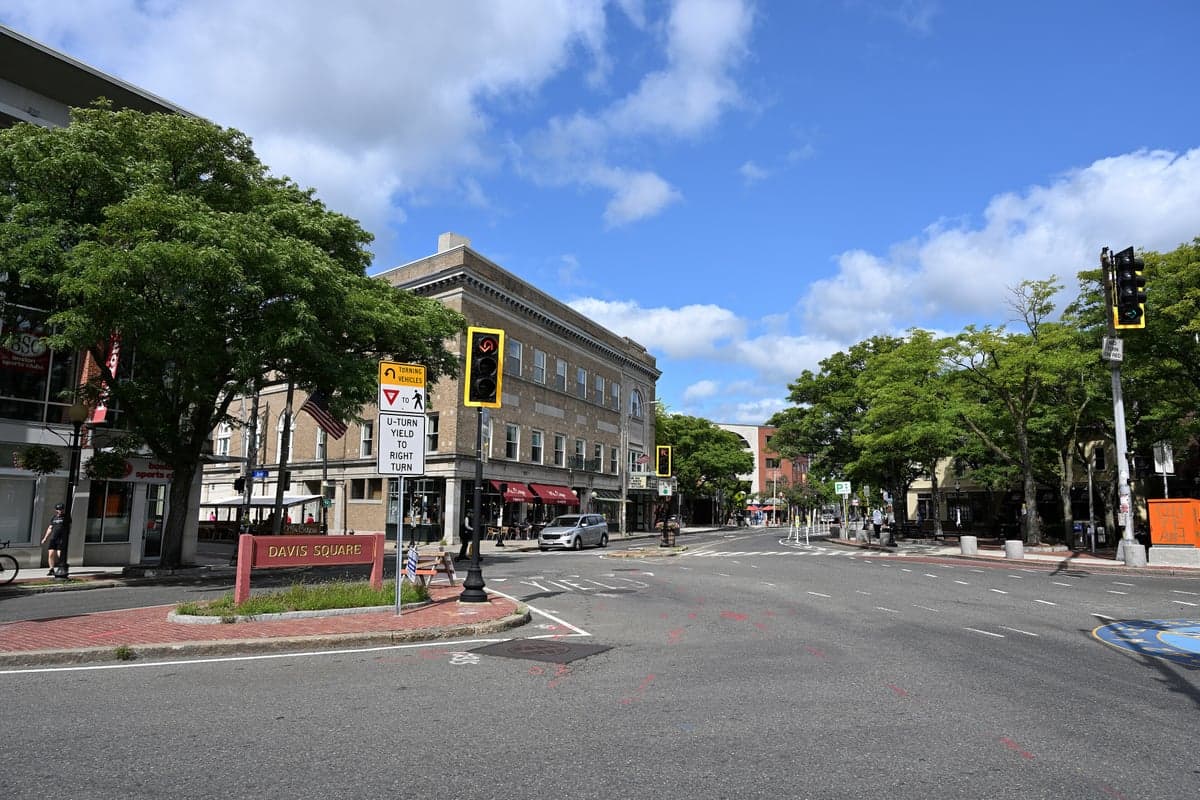
Photo: Wikipedia
Demographics of Somerville, MA
Affluence Level in Somerville, MA
An upper-middle-class area. Household wealth, education levels, and homeownership run ahead of national benchmarks.
People of Somerville, MA
Somerville, Massachusetts, is a dense, urban city of 80,549 residents that has transformed from a gritty industrial hub into one of the most educated and rapidly gentrifying municipalities in the Boston metro area. With 68.0% of adults holding a college degree, the population is predominantly white (66.1%) but retains notable ethnic diversity, including a significant Hispanic community (11.4%), a growing East/Southeast Asian population (7.1%), and a distinct Indian-subcontinent cohort (4.5%). The city’s identity is shaped by its historic immigrant working-class roots, its current status as a bedroom community for Boston and Cambridge professionals, and the ongoing tension between longtime residents and newer, wealthier arrivals.
How the city was settled and grew
Somerville’s population history begins with its separation from Charlestown in 1842, driven by the expansion of the Boston & Lowell Railroad and the establishment of brickyards, meatpacking plants, and foundries along the Mystic River. The first major wave of settlers were Irish immigrants fleeing the Great Famine in the 1840s and 1850s, who built dense tenement neighborhoods in what is now Ten Hills and Winter Hill, working in the rail yards and slaughterhouses. By the late 19th century, German and French-Canadian workers arrived to labor in the city’s expanding glassworks and furniture factories, settling in Spring Hill and Davis Square. A second major wave came between 1890 and 1920, when Italian and Portuguese immigrants poured into East Somerville and Union Square, establishing tight-knit enclaves centered on Catholic parishes and small grocery stores. These groups dominated the city’s population through the mid-20th century, with Somerville peaking at 103,908 residents in 1930 before suburbanization and deindustrialization began a long decline.
Modern era (post-1965)
The 1965 Hart-Cellar Act reshaped Somerville’s demographics by opening immigration from Asia and Latin America. Between 1970 and 1990, the city’s white population fell from roughly 95% to 80%, as older Irish and Italian families moved to suburbs like Medford and Arlington. Their places were taken by new arrivals: East Somerville and Union Square absorbed a wave of Brazilian and Central American immigrants, particularly from El Salvador and Guatemala, who worked in construction and cleaning services. The Hispanic share of the population rose to 11.4% by 2020, with many families concentrated in the lower-cost rental stock near the Mystic River. Simultaneously, the 1980s and 1990s saw an influx of East/Southeast Asian immigrants—primarily Chinese and Vietnamese—who settled in Davis Square and along the Broadway corridor, opening restaurants and small businesses. A smaller but notable Indian-subcontinent community (4.5%) grew in Spring Hill and Powder House Square, drawn by proximity to the tech and biotech jobs in Cambridge and Boston. The most dramatic shift, however, has been the post-2000 arrival of young, college-educated professionals, who have driven the college-educated share from 38% in 2000 to 68% today, pushing up housing costs and accelerating the displacement of working-class families.
The future
Somerville’s population is heading toward greater homogenization by income and education, even as its racial diversity remains relatively stable. The city’s foreign-born share (14.3%) has plateaued since 2010, as rising rents—now among the highest in Massachusetts—discourage new immigrant arrivals. The Hispanic population is aging in place but not growing rapidly, while the East/Southeast Asian and Indian communities are slowly assimilating into the broader professional class. The biggest demographic trend is the continued in-migration of white, college-educated millennials and Gen Z workers, who now dominate Davis Square, Union Square, and the newly developed Assembly Row district. Over the next 10–20 years, Somerville will likely become more economically stratified: a core of affluent professionals living near the MBTA Red Line and Green Line Extension, with working-class and immigrant families pushed to the city’s eastern edge or into neighboring Everett and Malden. The city’s population is projected to grow modestly to around 85,000 by 2035, driven by new luxury apartment construction, but the character of its neighborhoods will continue to shift toward a more uniform, high-income profile.
For a conservative-leaning individual or family considering a move, Somerville offers a dense, walkable urban environment with excellent transit access to Boston’s job centers, but at a steep price. The city is becoming a place where economic opportunity is abundant for the highly educated, while longtime working-class communities are being priced out. New arrivals should expect a politically progressive, highly educated social environment, with limited space for traditional family structures or conservative values in local governance. The bottom line: Somerville is a city in transition from its immigrant-industrial past to a future as a professional-class enclave, and anyone moving in now should be prepared for high costs, rapid change, and a culture that rewards education and urban amenities over affordability or tradition.

* Values derived from national, state, county, city and local statistics and may differ in a specific area. Last updated: 2026-05-01T07:51:02.000Z
Narrative content on this page is AI-generated and may contain mistakes. Verify any details that matter before acting on them.
ReloMaps may earn a commission from affiliate links at no extra cost to you.

