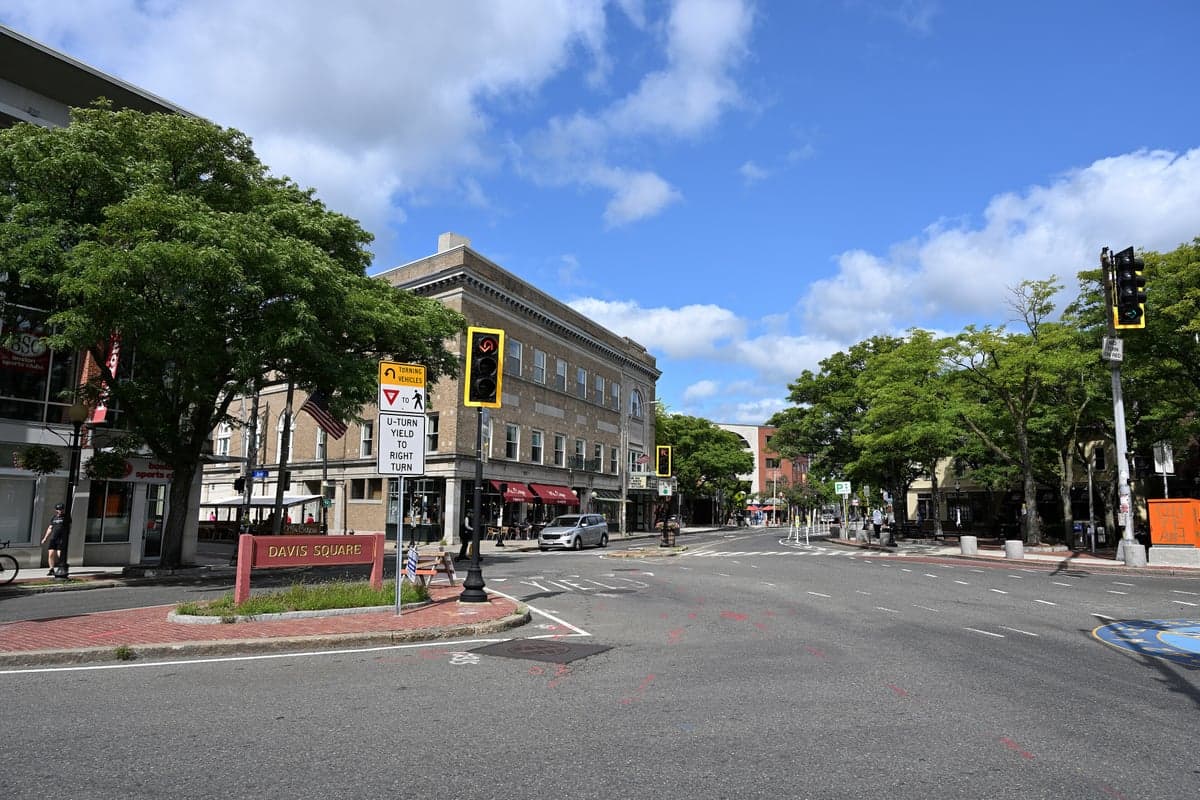
Photo: Wikipedia
Political ClimatePolitical Climate in Somerville, MA
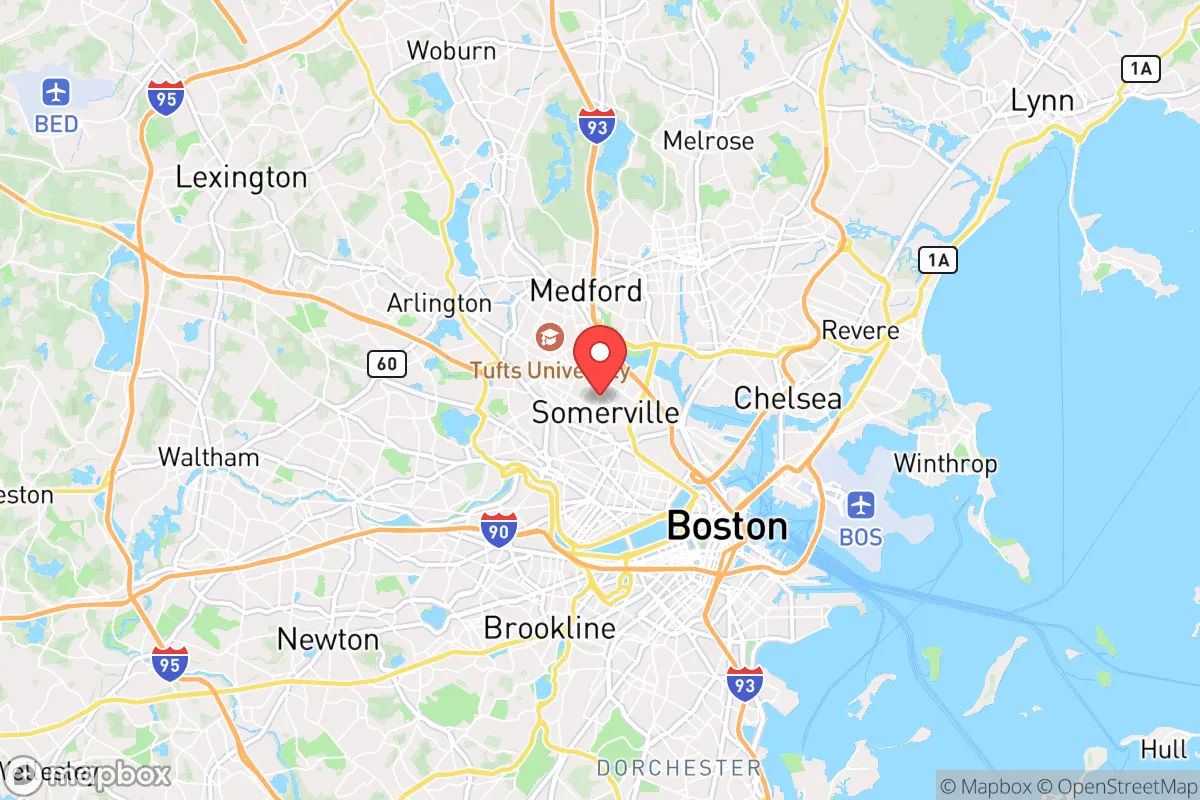
District shown is the primary district for this city’s centroid. Cities may span multiple districts.
Local Political AnalysisPolitical Analysis of Somerville, MA
Look, I’ve lived in Somerville my whole life, and I’ll tell you straight: this place is about as deep blue as it gets. The Cook PVI is D+34, which means Democrats have a 34-point advantage over Republicans in presidential elections. That’s not just a lean—it’s a lock. In 2024, Kamala Harris took Somerville with over 85% of the vote, while Donald Trump barely cracked 12%. It wasn’t always this extreme. Back in the 1980s and 1990s, Somerville was a working-class, largely Irish and Italian immigrant town where you’d find plenty of conservative-leaning union voters. But over the last 20 years, as Boston’s tech and biotech boom pushed young professionals and academics into the city, the political center of gravity shifted hard left. Now, you’re looking at a place where even moderate Democrats get side-eyed at the local coffee shop.
How it compares
If you want to see the contrast, just drive 10 minutes west to Medford or 15 minutes north to Malden. Medford’s still blue, but it’s more of a D+15 kind of place—you’ll see a few Trump signs in yards, and the local city council has some actual debates. Malden’s similar, with a growing Asian immigrant population that tends to be more fiscally conservative. But Somerville? It’s surrounded by Cambridge (D+40) and Boston proper (D+35), so it’s in a bubble. The only real outlier nearby is the town of Winchester, about 20 minutes north, which leans Republican by about 5 points—mostly due to its older, wealthier, and more suburban base. But even Winchester’s shifting left as young families move in. The whole region is trending the same direction, just at different speeds.
What this means for residents
For someone who values personal freedoms and limited government, living in Somerville can feel like a constant battle. The city council has been pushing a laundry list of progressive policies that touch every part of daily life. In 2023, they passed a rent control ordinance that caps annual increases at 3%—sounds good on paper, but it’s led to landlords selling off properties or converting them to condos, shrinking the rental supply and driving up prices for everyone else. Then there’s the push for a citywide “green zone” that would ban gas-powered leaf blowers and restrict car idling. It’s not just about the environment; it’s about the government telling you how to maintain your own yard. And don’t get me started on the school committee’s 2024 vote to eliminate advanced placement classes at Somerville High School, citing “equity concerns.” That’s a direct hit on parents who want their kids to have a shot at competitive colleges. The tax burden is also heavy—property taxes have risen 18% since 2020, and the city just approved a new 0.5% meals tax to fund a universal basic income pilot program. It’s a lot of small cuts that add up to a big loss of personal choice.
What really sets Somerville apart, though, is the cultural pressure to conform. You can’t have a casual conversation at a Davis Square bar without someone bringing up the latest city council vote or a new zoning proposal. The local newspaper, the Somerville Times, is basically a mouthpiece for progressive causes. And the annual “Fluff Festival” in Union Square—celebrating the invention of marshmallow fluff—has become a platform for political activism, with booths on climate change and racial justice. It’s not that these issues aren’t important; it’s that there’s no room for dissent. If you’re a conservative or even a libertarian, you learn to keep your mouth shut at the PTA meeting or the neighborhood block party. The long-term trend? I don’t see it reversing. As long as the biotech and tech sectors keep pumping high-income, college-educated transplants into the area, Somerville will only get bluer. My advice: if you’re thinking of moving here, come for the great food and the T access, but be ready to live in a place where your vote—and your voice—won’t count for much.

State Political ClimatePolitical Climate in Massachusetts
State Political AnalysisPolitical Environment in the State
Massachusetts has long been one of the most reliably Democratic states in the nation, with a partisan lean that has only deepened over the past two decades. In the 2024 presidential election, the state gave Joe Biden a 32-point margin, and every single one of its 11 congressional districts is held by a Democrat. The dominant coalition is a mix of urban progressives in Boston, Cambridge, and Somerville, combined with well-educated suburbanites in places like Newton and Lexington who prioritize social liberalism and government-led solutions. The trajectory over the last 10-20 years has been a steady march leftward, with the state’s once-robust moderate Republican presence—think former Governors Bill Weld and Mitt Romney—now reduced to a handful of local offices and a rump of conservative voters concentrated in the central and western parts of the state.
Urban vs. rural divide
The political map of Massachusetts is a textbook case of the urban-rural chasm. The Boston metro area, including Cambridge, Somerville, and Brookline, is the engine of the state’s progressive politics, routinely delivering 80-90% Democratic margins. These cities are home to elite universities, tech hubs, and a dense concentration of young professionals who drive the state’s leftward tilt on everything from housing policy to criminal justice reform. In contrast, the rural and exurban areas tell a different story. Western Massachusetts towns like Pittsfield and North Adams lean Democratic but with much narrower margins, while the central part of the state—places like Worcester County’s Holden and Paxton, and the South Coast’s Fall River and New Bedford—have pockets of conservative voters who feel increasingly alienated. The most Republican-leaning county in the state is Barnstable County on Cape Cod, but even there, the GOP edge is modest, typically around 5-10 points. The divide isn’t just about geography; it’s about culture and economics, with rural residents often feeling that Boston’s policies on taxes, energy, and land use are imposed on them without local input.
Policy environment
Massachusetts’ policy environment is a case study in progressive governance, with a tax structure, regulatory posture, and social agenda that reflect the priorities of its dominant urban coalition. The state has a flat income tax rate of 5% (recently increased from 5% to 9% for income over $1 million via the “Millionaire’s Tax” ballot question in 2022), a sales tax of 6.25%, and property taxes that vary widely but average around 1.1% of assessed value—moderate by national standards but high for the region. The regulatory environment is dense: strict environmental rules, rent control in Boston and Cambridge, and a building code that makes new construction expensive. Education policy is a standout, with Massachusetts consistently ranking first in K-12 outcomes, but the system is heavily centralized, with state mandates on curriculum, testing, and teacher certification that leave little room for local innovation. Healthcare is dominated by the state’s near-universal coverage model, which predates the ACA and includes an individual mandate. Election laws are among the most liberal in the country: no-excuse mail-in voting, same-day registration, and automatic voter registration are all in place, making it easy to vote but raising concerns about election integrity among conservatives. The state also has a “sanctuary” law (the 2017 “Safe Communities Act”) that limits local law enforcement cooperation with federal immigration authorities.
Trajectory & freedom
Over the past five years, Massachusetts has become demonstrably less free in several key areas, particularly for those who value personal liberty in the traditional sense. The most significant contraction came in 2024 with the passage of the “Massachusetts Gun Safety Act,” which expanded the state’s already strict gun laws to ban the sale of “assault weapons” (defined broadly), limit magazine capacity to 10 rounds, and require a license for ammunition purchases. This law, combined with a 2023 “red flag” order expansion, has made Massachusetts one of the most restrictive states for gun owners. On parental rights, the 2022 “Parental Rights in Education” bill was defeated, and the state instead passed a law requiring school districts to adopt policies that affirm a student’s gender identity without parental notification—a direct blow to family autonomy. Medical freedom took a hit with the 2021 COVID-19 vaccine mandate for healthcare workers, which remains in effect, and the state’s strict abortion laws, which codified Roe v. Wade in 2020 and expanded access to include late-term abortions. Property rights are constrained by the state’s powerful “Chapter 40B” law, which allows developers to override local zoning to build affordable housing, often in suburban areas that resist density. On the tax front, the 2022 Millionaire’s Tax was a clear signal that the state sees high earners as a revenue source, not a constituency to attract. The only area where freedom has expanded is in marijuana legalization, which was approved by voters in 2016 and has created a thriving retail market.
Civil unrest & political movements
Massachusetts has a long history of political activism, but the last decade has seen a sharp uptick in organized movements on both sides. The left is highly visible: Black Lives Matter protests in Boston in 2020 were large and sustained, leading to the removal of a statue of Christopher Columbus in the North End and the renaming of several schools. The “Defund the Police” movement had real traction in Boston, where the city council voted to cut the police budget by $12 million in 2020 (though most was later restored). On the right, the “Massachusetts Fiscal Alliance” and “MassResistance” have been active, but their influence is limited. The most visible flashpoint for a new resident would be the immigration politics. The state’s sanctuary law has made it a magnet for migrants, and the city of Boston has seen a surge in homeless encampments and shelter strain, particularly in the Roxbury and Dorchester neighborhoods. In 2023, Governor Maura Healey declared a state of emergency over the migrant crisis, citing a lack of shelter space, and the state has been busing migrants to suburban hotels, sparking local backlash in towns like Dedham and Woburn. Election integrity controversies have been muted, but the 2020 and 2024 elections saw no major fraud allegations, largely because the state’s mail-in voting system was well-established. Secession or nullification rhetoric is virtually nonexistent; Massachusetts is firmly within the national Democratic coalition.
Projection
Looking ahead 5-10 years, the trajectory is clear: Massachusetts will continue to move left, driven by demographic shifts and in-migration patterns. The state’s population is aging and slowly declining, but the Boston metro area is attracting young, educated professionals from across the country and the world, who tend to be more progressive. The rural and exurban areas that provide the state’s modest conservative base are shrinking, both in population and political influence. The state’s tax and regulatory environment will likely become even more burdensome: expect a push for a wealth tax, further gun restrictions, and expanded rent control. The one wild card is the housing crisis—if the state fails to build enough housing, it could drive out the very professionals it relies on, potentially moderating some policies. But for now, the political machine in Boston is firmly in control, and there’s no sign of a realignment. A new resident moving in now should expect to find a state where government is deeply involved in daily life, from the cost of housing to the rules around parenting and self-defense.
For a conservative-leaning individual or family considering a move to Massachusetts, the bottom line is this: you will be living in a state where your political views are in the minority, and where state policy will often conflict with your values on taxes, guns, education, and family autonomy. The trade-offs are real—world-class schools, top-tier healthcare, and a vibrant economy—but they come at the cost of personal freedom in many traditional areas. If you’re looking for a place where your vote matters and your voice is heard, Massachusetts is not that place. But if you can tolerate the political climate for the economic and cultural opportunities, it’s possible to carve out a life, especially in the more conservative pockets of the state like the Berkshires or the South Coast. Just know that the state’s direction is set, and it’s not turning back.
* Values derived from national, state, county, city and local statistics and may differ in a specific area. Last updated: 2026-05-01T07:51:02.000Z
Narrative content on this page is AI-generated and may contain mistakes. Verify any details that matter before acting on them.
ReloMaps may earn a commission from affiliate links at no extra cost to you.

