Photo: Wikipedia
Demographics of Charleston County
Affluence Level in Charleston County
An upper-middle-class area. Household wealth, education levels, and homeownership run ahead of national benchmarks.
People of Charleston County
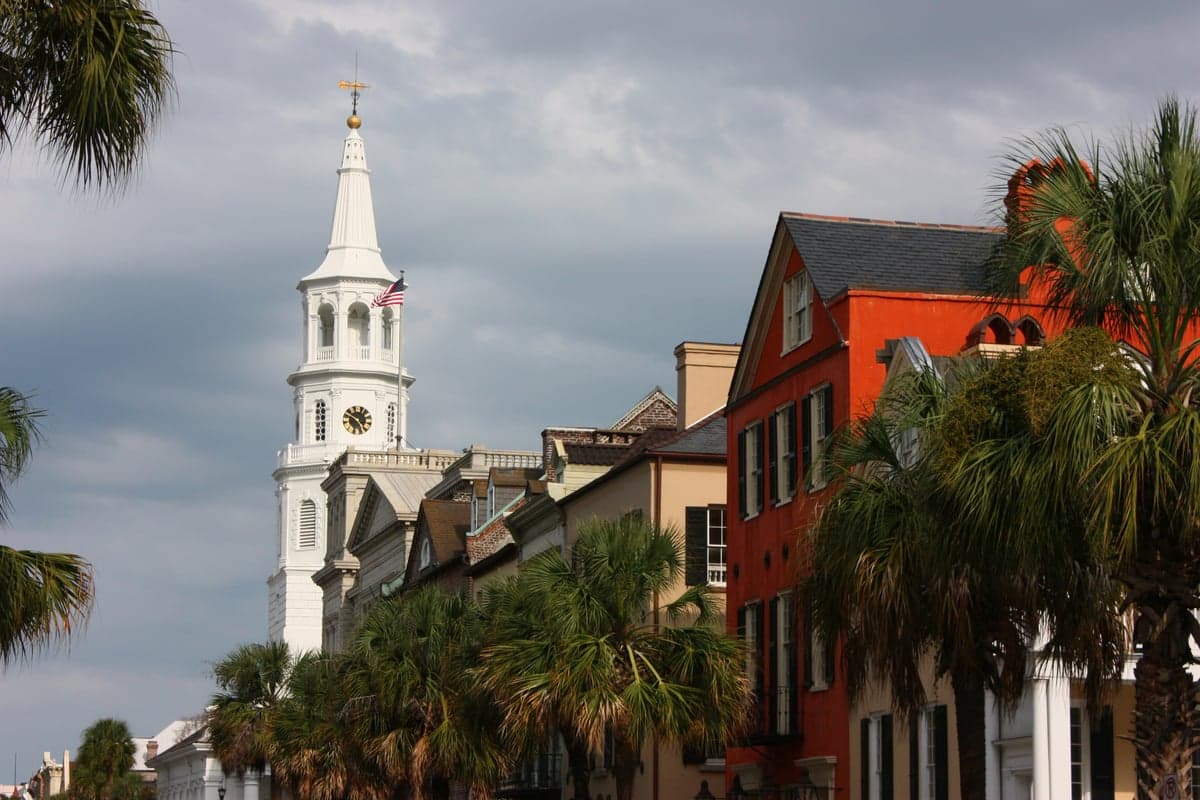
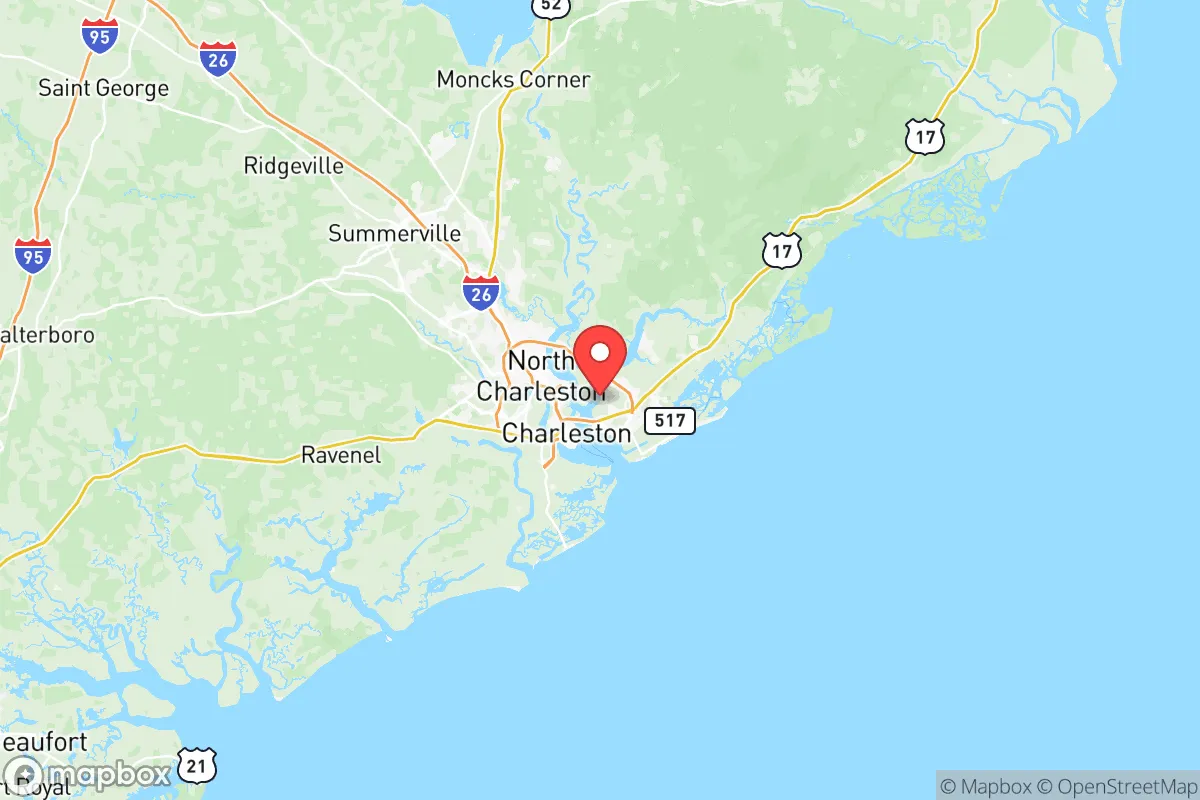
Charleston County today is a place of deep historical roots and modern reinvention, home to 414,711 residents who reflect a layered story of migration, industry, and cultural persistence. The county is 64.3% White, 23.5% Black, 7.0% Hispanic, and 1.2% East/Southeast Asian, with a small Indian-subcontinent population of 0.5% and a foreign-born share of just 3.7%—well below the national average. Nearly half of adults hold a college degree, and the population is concentrated in the historic urban core of Charleston, the suburban towns of Mount Pleasant and Summerville, and the rural stretches of Hollywood and Ravenel, creating a distinctive blend of old Southern aristocracy, Gullah Geechee heritage, and newcomer affluence.
Settlement & growth (pre-1960)
The human history of Charleston County begins long before European arrival. The region was originally inhabited by the Kiawah, Etiwan, and Sewee peoples, who lived along the coast and rivers for thousands of years. Spanish explorers attempted settlement in the 16th century, but it was the English who established the first permanent colony in 1670 at Albemarle Point, later moving to the current Charleston peninsula in 1680. The Lords Proprietors of Carolina recruited settlers from Barbados and England, bringing with them a plantation economy based on rice, indigo, and enslaved African labor.
By the 18th century, Charleston had become the wealthiest city in the American colonies, built on the backs of enslaved Africans who comprised the majority of the population. The enslaved were primarily from the rice-growing regions of West Africa—Senegal, Gambia, Sierra Leone, and Angola—and their knowledge of tidal rice cultivation made the Lowcountry economy possible. Their descendants, known today as Gullah Geechee people, maintained distinct language, foodways, and crafts in rural communities like McClellanville and Awendaw well into the 20th century.
After the American Revolution, the county saw an influx of French Huguenots fleeing religious persecution, who settled in Charleston proper and along the Cooper River. German and Swiss immigrants arrived in the mid-1700s, establishing farms in the St. John's Berkeley area. The Irish came in waves during the 1840s potato famine, working as dockhands and laborers in the port city. By 1860, Charleston County had a population that was roughly 60% enslaved Black, 30% White, and 10% free Black—one of the most African-influenced populations in the United States.
The Civil War and Reconstruction shattered the plantation economy. Freedmen and women established independent communities like Mount Pleasant's Old Village and the rural settlement of Huger, where they farmed small plots and worked as fishermen and oystermen. The Great Migration (1910–1970) saw tens of thousands of Black residents leave Charleston County for northern industrial cities like New York, Philadelphia, and Chicago, reducing the Black population share from a majority to a minority by 1960. Meanwhile, the early 20th century brought a small wave of Jewish immigrants from Eastern Europe, who established a vibrant community in downtown Charleston around St. Philip Street.
World War II and the Cold War transformed the county's economy. The Charleston Naval Base and Shipyard, established in 1901, expanded massively during the 1940s and 1950s, drawing White and Black workers from across the rural South. The construction of the Savannah River Site in nearby Aiken County in the 1950s also pulled workers into the broader region. Suburbanization began in earnest in the 1950s, with West Ashley (the area west of the Ashley River) developing as the first major bedroom community for Charleston's growing middle class.
Modern era (post-1965)
The 1965 Hart-Cellar Act had a relatively muted effect on Charleston County compared to gateway cities like New York or Los Angeles. The foreign-born population remains low at 3.7%, but the character of immigration has shifted. The most significant post-1965 change has been the growth of the Hispanic population, which rose from negligible levels in 1970 to 7.0% today. These immigrants—primarily from Mexico and Central America—arrived to work in construction, landscaping, hospitality, and agriculture. They have concentrated in Summerville and the North Charleston area, where affordable housing and proximity to construction jobs drew families. A smaller but notable community of East/Southeast Asian immigrants—primarily Vietnamese and Filipino—settled in Mount Pleasant and Charleston proper, often working in the medical and hospitality sectors.
The most dramatic demographic shift since 1965 has been domestic in-migration from the Rust Belt and Northeast. Beginning in the 1980s and accelerating sharply after 2010, retirees, remote workers, and young professionals from New York, New Jersey, Ohio, and Pennsylvania have flooded into Charleston County, drawn by the mild climate, lower taxes, and coastal lifestyle. This wave has transformed Mount Pleasant from a sleepy fishing village into a sprawling suburb of 90,000 residents, and has pushed development into Daniel Island, a master-planned community built on former plantation land. The county's population grew by over 25% between 2010 and 2020, one of the fastest rates in the Southeast.
This in-migration has reshaped the county's racial and economic geography. The White population share has held steady at 64.3%, but the character of that population has changed—newcomers tend to be wealthier, more educated, and more politically moderate than the native-born White population. The Black population, which was 35% in 1990, has declined to 23.5% as gentrification in downtown Charleston and West Ashley has pushed long-time Black residents to outlying areas like Hollywood and Ravenel. The Gullah Geechee communities of McClellanville and Awendaw have seen their land sold to developers and second-home buyers, threatening a cultural heritage that dates back 300 years.
The future
Charleston County is likely to continue growing at a rapid pace, with projections suggesting a population of 500,000 by 2040. The foreign-born share will probably rise slowly, as the Hispanic and East/Southeast Asian communities grow through both immigration and natural increase, but the county will remain predominantly native-born. The biggest demographic force will be continued domestic in-migration from high-cost, high-tax states, which will further shift the county's cultural identity toward a more national, less distinctly Southern character.
The county is not homogenizing so much as tribalizing into distinct enclaves. Mount Pleasant and Daniel Island are becoming overwhelmingly White, wealthy, and newcomer-dominated. North Charleston and Summerville are more diverse, with growing Hispanic and Black populations. The rural areas—Hollywood, Ravenel, McClellanville—remain predominantly Black and native-born, but are under intense development pressure. The Gullah Geechee communities face an existential threat from rising property taxes and land sales, and their cultural survival is uncertain.
For the Indian-subcontinent population (0.5%) and East/Southeast Asian communities (1.2%), growth will likely come from the medical and tech sectors, as the Medical University of South Carolina and the growing tech scene in Charleston attract skilled professionals. These groups will remain small but influential, concentrated in the more affluent suburbs.
What kind of place is Charleston County becoming? It is a rapidly gentrifying, increasingly affluent, and culturally bifurcated region—a place where historic Black communities are being displaced, where newcomers are reshaping the political and social landscape, and where the old Lowcountry identity is being overlaid with a national, suburban, and service-economy character. For someone moving in now, the county offers economic opportunity and natural beauty, but also a sense of a place in transition, where the past is both preserved and priced out of reach.

* Values derived from national, state, county, city and local statistics and may differ in a specific area. Last updated: 2026-05-13T17:05:01.000Z
Narrative content on this page is AI-generated and may contain mistakes. Verify any details that matter before acting on them.
ReloMaps may earn a commission from affiliate links at no extra cost to you.

