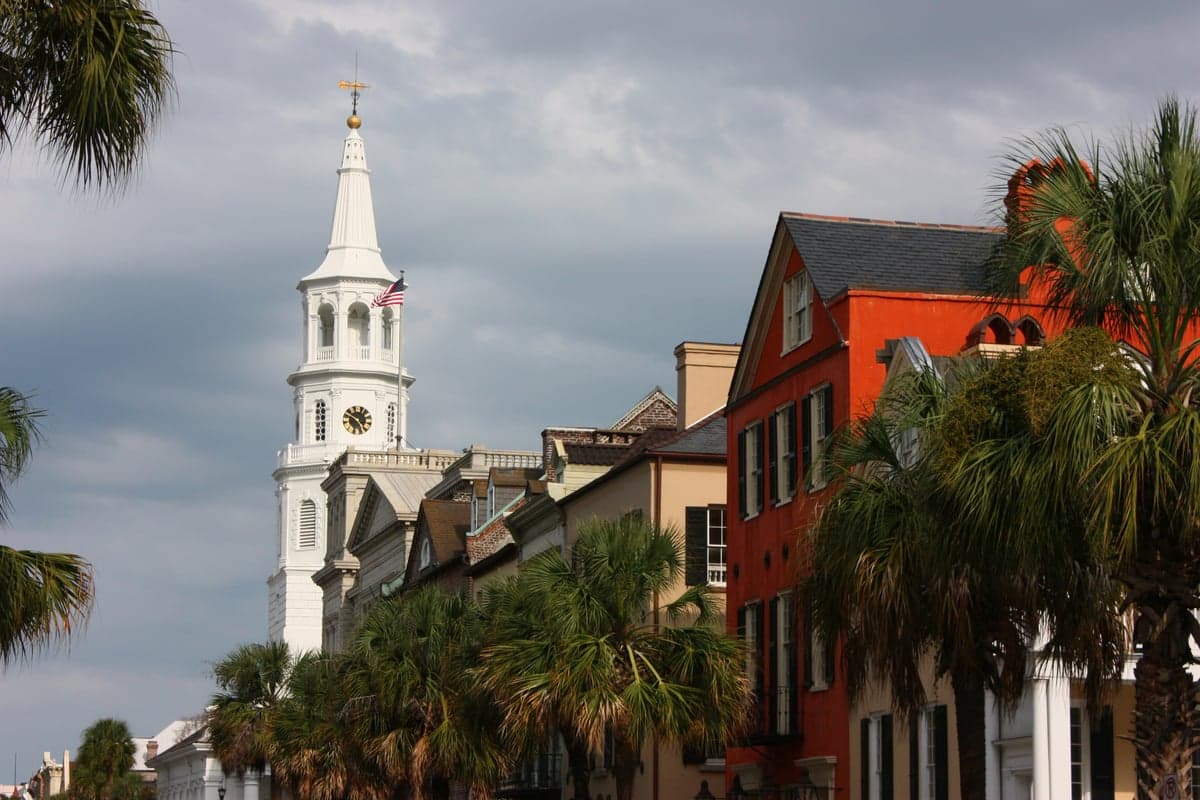
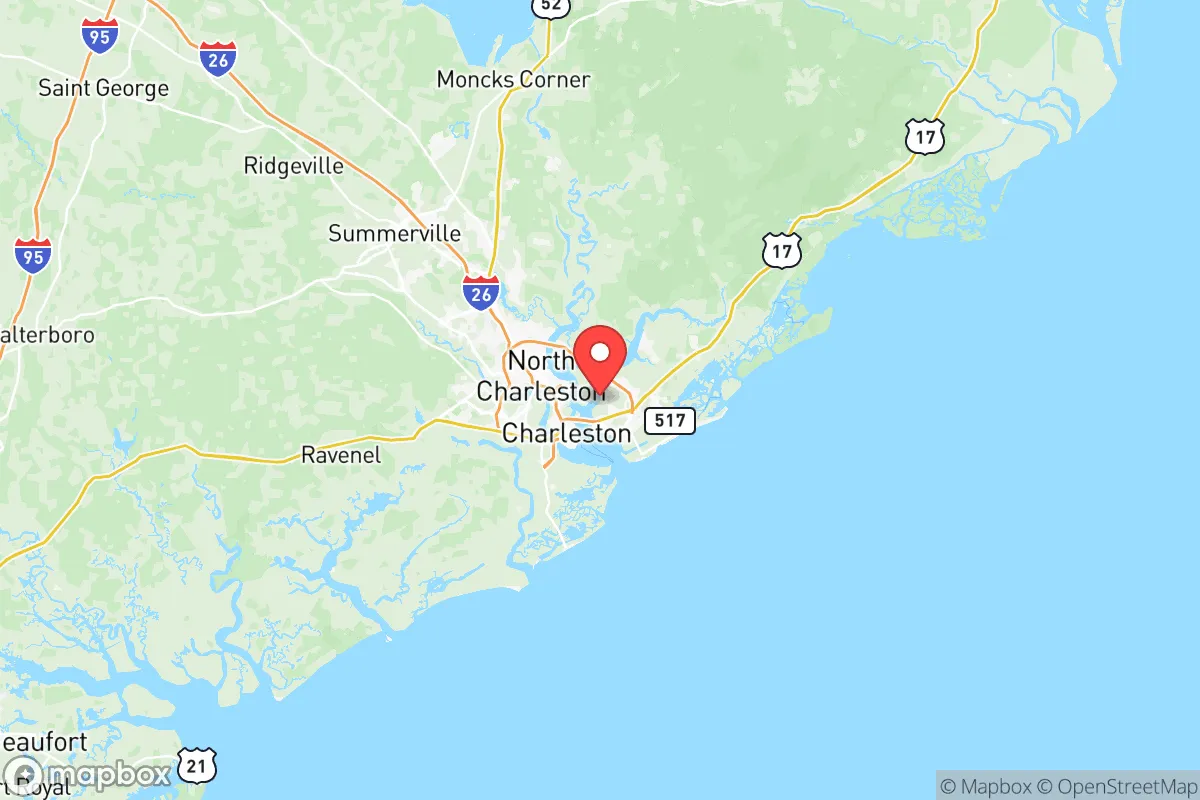
Photo: Wikipedia
Quality of Life in Charleston County
A livable area that tracks near national norms for affordability, walkability, and neighborhood health.
What does Quality of Life tell us?
Quality of Life measures an area by evaluating factors like cost of living, nearby amenities, country club access, airport proximity, socioeconomic signals and neighborhood character. For large states, this is a general average — quality of life can vary dramatically between metro areas, suburbs, and rural communities within the same state.
What does this tell us?
Quality of Life measures an area by evaluating factors like cost of living, nearby amenities, country club access, airport proximity, socioeconomic signals and neighborhood character. For large states, this is a general average — quality of life can vary dramatically between metro areas, suburbs, and rural communities within the same state.
Cost of Living
42% above national average
65%
The Real Cost of Living in Charleston County for 2026
| Tier | Individual | Family (4) |
|---|---|---|
| Survival | $24k | $45k |
| Comfortable | $88k | $129k |
| Luxury | $152k+ | $236k+ |
| Elite (Top 5%) | $224k+ | $347k+ |
Quality-of-Life Analysis
Charleston County, South Carolina, offers one of the most dramatic quality-of-life spectrums in the Southeast, ranging from the dense, historic urban core of Charleston proper to quiet, unincorporated rural stretches near the Francis Marion National Forest. The county draws a diverse mix: young professionals and creatives gravitate to the walkable peninsula and its surrounding suburbs, while families seeking acreage and lower taxes often settle in the northern and western rural pockets. With a cost of living index of 142 (42% above the national average) and a median home value of $450,800, the county presents a clear trade-off between access to coastal amenities and the affordability of inland living.
Largest town(s) & population centers
The dominant population center is the city of Charleston, whose historic peninsula anchors the county's economy and culture. Daily life here is defined by walkable neighborhoods, a robust food and tourism scene, and a commute averaging just under 25 minutes — though traffic on the Ravenel Bridge and I-26 can stretch that significantly during peak season. Mount Pleasant, the county's largest suburb with over 90,000 residents, offers a more family-oriented lifestyle with top-rated schools, extensive shopping at Towne Centre, and direct beach access to Sullivan's Island and Isle of Palms. North Charleston, the third-largest city, provides a more industrial and working-class character, with the Charleston International Airport, Boeing's assembly plant, and the Tanger Outlets anchoring employment and commerce. West Ashley, an unincorporated area west of the Ashley River, functions as a bedroom community with a mix of older subdivisions and newer developments along Savannah Highway, appealing to commuters who want proximity to downtown without the premium price tag.
Smaller towns & rural pockets
Beyond the urbanized core, Charleston County contains several distinct smaller communities. Folly Beach and Isle of Palms are barrier island towns that cater to beach-oriented lifestyles, with Folly retaining a laid-back surfer vibe and Isle of Palms leaning more upscale and residential. McClellanville, a historic fishing village about 45 minutes north of downtown, offers a completely different pace: shrimping docks, live oaks draped in Spanish moss, and a population under 600. Ravenel and Hollywood, both in the county's rural western corridor, are unincorporated areas where residents trade urban amenities for larger lots, lower property taxes, and proximity to hunting and equestrian properties. The Awendaw area, hugging the Francis Marion National Forest, is the county's most sparsely populated quadrant, with few services and a strong emphasis on outdoor recreation like kayaking the Sewee Outpost and hiking the Palmetto Trail.
Cost & lifestyle range
The cost of living in Charleston County varies sharply by location. At the high end, Mount Pleasant and Isle of Palms command median home values well above the county's $450,800 average, with many properties exceeding $700,000. Renters in these areas pay a premium, with median rent at $1,506 countywide but often $1,800+ for a two-bedroom near the beach. At the lower end, North Charleston and the rural communities of Ravenel and Hollywood offer more attainable housing, with home values often 20-30% below the county median. The trade-off is clear: lower-cost areas have longer commutes, fewer dining and entertainment options, and less access to the county's top-rated schools. The average commute of 24.9 minutes masks this disparity — a resident of McClellanville may drive 45 minutes to a downtown job, while a Mount Pleasant worker might reach the peninsula in 15 minutes outside of rush hour.
Who thrives in Charleston County depends entirely on which slice of the spectrum they choose. Young professionals and empty-nesters with flexible budgets flourish in the historic peninsula and beach towns, where walkability and cultural density justify the high housing costs. Families seeking good schools and suburban amenities find their fit in Mount Pleasant and West Ashley. Those who prioritize space, privacy, and a slower pace — and who can tolerate a longer commute or remote work — are well served by the rural communities of McClellanville, Awendaw, and Ravenel. The county's strength is that it offers a genuine choice, not a one-size-fits-all proposition, but the price of entry for the most desirable locations continues to rise.

Crime in Charleston County
Crime rates similar to the national median for U.S. locations.
Violent CrimeViolent Crime Analysis
Property CrimeProperty Crime Analysis
Crime Analysis
Charleston County presents a mixed safety picture: its violent crime rate of 370.4 incidents per 100,000 residents sits notably above the national average, while property crime at 1,632.5 per 100,000 also exceeds U.S. benchmarks. The county's overall safety is heavily influenced by the policies of its elected officials, particularly the Ninth Circuit Solicitor's Office, which oversees prosecutions in Charleston and Berkeley counties. Progressive-leaning judicial and prosecutorial approaches in this circuit have drawn criticism for prioritizing offender rehabilitation over public safety, contributing to a perception that repeat offenders face insufficient consequences.
Crime in context
Charleston County's violent crime rate of 370.4 per 100,000 is roughly 6% higher than the national average of about 350 per 100,000 and significantly above South Carolina's state rate of 492 per 100,000. Property crime in the county, at 1,632.5 per 100,000, is about 15% higher than the national average of roughly 1,420 per 100,000. These figures place Charleston County in a middle tier among South Carolina's 46 counties—less dangerous than counties like Marion or Marlboro, but notably more dangerous than safer upstate areas such as Greenville County (violent crime rate around 280 per 100,000) or the suburban enclaves of Beaufort County. The gap between Charleston County and safer neighboring jurisdictions like Mount Pleasant (violent crime rate approximately 180 per 100,000) highlights how local governance and policing strategies directly shape outcomes.
What residents experience
Residents in Charleston County face a crime landscape that varies dramatically by neighborhood and municipality. The city of Charleston itself, with its historic downtown and tourist-heavy areas, sees concentrated property crime—particularly vehicle break-ins and thefts from parked cars near King Street and the Market. North Charleston, the county's second-largest city, consistently reports the highest violent crime numbers, including aggravated assaults and robberies, driven in part by socioeconomic stressors and a higher density of rental properties. In contrast, the suburban towns of Mount Pleasant and Summerville enjoy violent crime rates roughly half the county average, benefiting from well-funded police departments and community-oriented policing. The town of James Island falls somewhere in between, with moderate property crime but low violent crime. Residents in unincorporated areas of the county, such as the rural stretches near Ravenel or Hollywood, report fewer incidents overall but face longer emergency response times.
Neighborhood-level variation and judicial impact
The starkest safety divide in Charleston County is between its affluent coastal suburbs and its urban core. Mount Pleasant, with a population exceeding 90,000, recorded just 12 violent crimes per 10,000 residents in 2023, while North Charleston reported nearly 45 per 10,000. This disparity is not accidental: Mount Pleasant's town council has consistently funded police at levels 20-30% above the county average, while North Charleston has struggled with budget constraints and a higher proportion of Section 8 housing. The Ninth Circuit Solicitor's Office, led by a progressive prosecutor who has emphasized diversion programs and reduced sentences for nonviolent offenders, has been a point of contention. Critics argue that this approach has emboldened repeat property criminals, particularly in areas like West Ashley and downtown Charleston, where residents report seeing the same individuals cycling through the system. For families considering relocation, the safest bets remain Mount Pleasant, Summerville's Flowertown district, and the gated communities of Daniel Island, where private security supplements public policing.
* Values derived from national, state, county, city and local statistics and may differ in a specific area. Last updated: 2026-05-13T17:05:01.000Z
Narrative content on this page is AI-generated and may contain mistakes. Verify any details that matter before acting on them.
ReloMaps may earn a commission from affiliate links at no extra cost to you.

