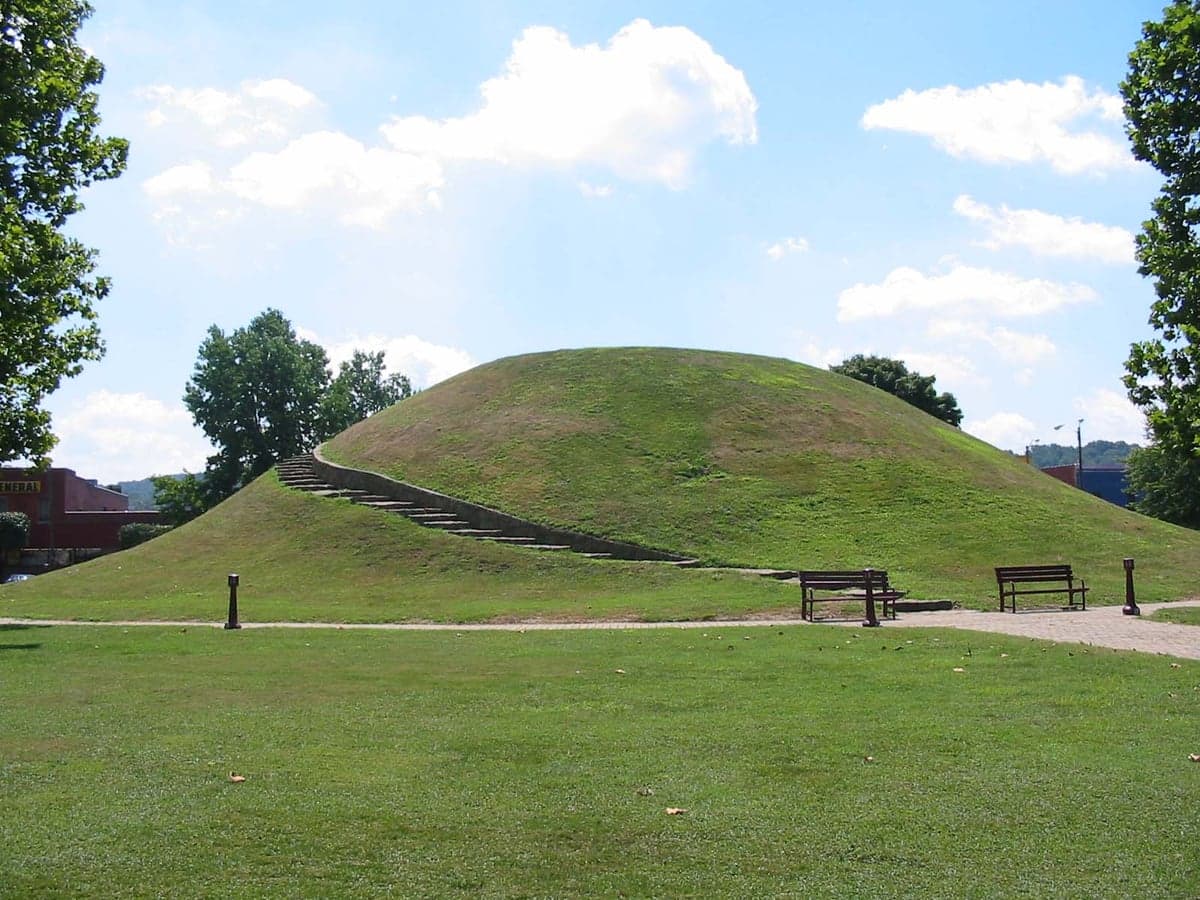
Photo: Wikipedia
Political ClimatePolitical Climate in South Charleston, WV
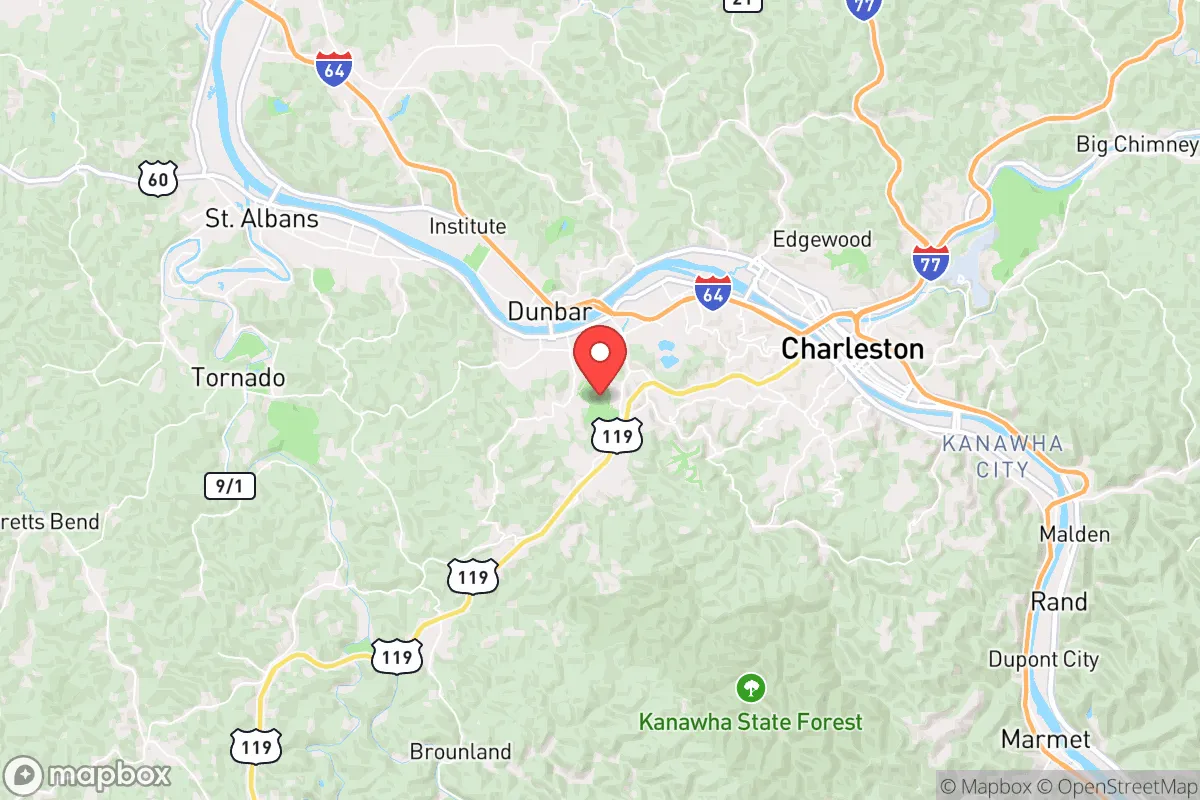
District shown is the primary district for this city’s centroid. Cities may span multiple districts.
Local Political AnalysisPolitical Analysis of South Charleston, WV
South Charleston is about as solidly conservative as it gets in West Virginia, and that's not changing anytime soon. The Cook PVI rating of R+22 tells you everything you need to know about the political DNA here—this isn't a purple area or a swing district; it's a place where Republican candidates routinely win by double digits, and the local culture reflects that. If you look at the voting trends over the last decade, you'll see the shift away from the old-school Democrat machine that used to run things in Kanawha County. Now, it's a straight-ticket Republican stronghold, and the trajectory is only getting more conservative as younger families move in from the more liberal-leaning parts of the state and the old union ties fade further into the rearview mirror.
How it compares
Drive ten minutes north into downtown Charleston, and you'll feel the difference immediately. The capital city has a noticeable progressive tilt—more government employees, more out-of-state transplants, and a city council that's been flirting with woke policies like defunding police proposals and sanctuary city rhetoric. South Charleston, by contrast, is where people who work in Charleston but don't want to live under that nonsense choose to settle. Compare it to nearby St. Albans or Nitro, and you'll find similar conservative values, but South Charleston has a stronger small-business, blue-collar backbone that keeps the politics grounded. The surrounding Kanawha County as a whole leans red, but South Charleston is the anchor of that conservatism—less tolerant of the tax-and-spend nonsense you see in Morgantown or the eastern panhandle. If you're looking for a place where your Second Amendment rights aren't a debate and your property taxes aren't funding pet projects, this is it.
What this means for residents
For the people who live here, the political climate means a government that mostly stays out of your way. You won't see mask mandates or business shutdowns being enforced by local officials—the city council and mayor have consistently pushed back against state-level overreach when it comes to personal freedoms. Property taxes are reasonable, zoning is minimal, and there's no appetite for the kind of progressive social engineering that's ruining bigger cities. The school board is conservative, so you're not going to have critical race theory or gender ideology shoved down your kids' throats. That said, there's a growing concern among longtime residents about the state-level push for more centralized control—things like the governor's occasional flirtation with vaccine mandates or the slow creep of federal dollars into local programs. The general feeling is: we're doing fine on our own, and we don't need bureaucrats in Charleston or Washington telling us how to live. The long-term trajectory depends on keeping that independent spirit alive as the state's population ages and younger people with different ideas move in.
One thing that sets South Charleston apart culturally is its no-nonsense approach to community life. There's no pretense here—people wave at each other, the VFW hall is still a gathering spot, and the local diners are where real conversations happen, not coffee shops with $7 lattes. The city has a strong sense of personal responsibility, and that extends to politics: you're expected to vote, to know your neighbors, and to speak up if something feels off. The biggest policy distinction you'll notice is the city's hands-off approach to business regulation—permits are easy, fees are low, and the local government actually listens when business owners say a new rule would hurt them. If you're coming from a place where the government treats you like a child, South Charleston will feel like a breath of fresh air. Just don't expect it to stay that way if the progressive wave that's washing over the rest of the country ever makes it past the Kanawha River.

State Political ClimatePolitical Climate in West Virginia
State Political AnalysisPolitical Environment in the State
West Virginia is one of the most reliably Republican states in the nation, with a partisan lean of roughly +39 points for the GOP in the 2024 presidential election, a shift that has accelerated dramatically over the past two decades. The state was once a Democratic stronghold, voting for Bill Clinton in 1992 and 1996, but the cultural and economic realignment that began in the 2000s—driven by the collapse of the coal industry and a growing distrust of the national Democratic Party’s environmental and social policies—has turned it into a deep-red bastion. Today, the dominant coalition is a mix of rural conservatives, working-class voters who feel abandoned by the left, and a growing number of out-of-state transplants seeking lower taxes and fewer regulations. The trajectory over the last 10-20 years has been a steady march rightward, with every statewide office now held by Republicans and a supermajority in the legislature.
Urban vs. rural divide
The political map of West Virginia is starkly divided between its few small urban centers and the vast, deeply conservative rural landscape. The state’s largest city, Charleston, remains a Democratic-leaning island, driven by government workers, union members, and a small but vocal progressive activist class. In the 2024 election, Kanawha County (home to Charleston) voted for Donald Trump by only about 12 points, a far cry from the 50-60 point margins seen in rural counties. Morgantown, home to West Virginia University, is another blue dot, with Monongalia County voting for Trump by just 6 points in 2024, thanks to the influence of faculty, students, and younger professionals. Huntington and Wheeling are more mixed but trending red, as their industrial bases have shrunk and retirees and remote workers move in. The real action is in the rural counties: Mingo, Logan, McDowell, and Wyoming in the southern coalfields routinely deliver 70-80% of their votes to Republicans, a flip from the 1990s when they were reliably Democratic. The divide is less about income and more about culture and economics—rural voters see the GOP as the party of gun rights, energy jobs, and traditional values, while urbanites lean left on social issues and environmental regulation.
Policy environment
West Virginia’s policy environment is among the most conservative in the country, with a focus on low taxes, minimal regulation, and cultural traditionalism. The state has no personal income tax on Social Security benefits, and the corporate net income tax rate is a flat 6.5%, though the state is currently phasing out the personal income tax entirely—a move that began with a 21% across-the-board cut in 2023, with further reductions tied to revenue triggers. Property taxes are among the lowest in the nation, capped by the state constitution at 1.5% of assessed value for most classes. Education policy is a battleground: Governor Jim Justice signed the Hope Scholarship program in 2021, a universal school choice voucher that allows parents to use state education funding for private school, homeschooling, or tutoring. This has been a major draw for conservative families fleeing progressive school districts in other states. On healthcare, West Virginia expanded Medicaid under the Affordable Care Act in 2014, but the state has resisted further federal overreach, with no state-run insurance exchange and a strong push for telehealth deregulation. Election laws are tight: voter ID is required, early voting is limited to 10 days, and absentee voting requires an excuse. The state also passed a constitutional amendment in 2018 declaring that there is no right to abortion, and a near-total ban was enacted in 2022 with no exceptions for rape or incest—only for the life of the mother. This is a state that takes a hard line on personal responsibility and limited government, though the heavy reliance on federal coal subsidies and Social Security benefits creates a tension with the rhetoric of self-reliance.
Trajectory & freedom
West Virginia is becoming more free in several key areas, particularly on gun rights, parental rights, and taxation, but there are warning signs of creeping government overreach in other domains. In 2023, the legislature passed a constitutional carry law, allowing any adult who can legally possess a firearm to carry it openly or concealed without a permit—a major expansion of Second Amendment rights. The same year, the Parental Bill of Rights (HB 2004) was signed, requiring schools to notify parents of any medical or mental health services offered to their children and to obtain consent before any changes to a student’s gender identity or pronouns. This has been a rallying point for conservative families moving from states like Virginia or Maryland. On property rights, the state passed a landowner liability protection law in 2022, shielding property owners from lawsuits if someone is injured while hunting, fishing, or hiking on their land for free—a boon for outdoor recreation and rural landowners. However, the state’s heavy reliance on federal funding (over 40% of the budget comes from Washington) creates a vulnerability: if the federal government tightens strings on that money, West Virginia’s freedom could be compromised. Additionally, the state’s medical marijuana program, passed in 2017 but only fully operational by 2023, is tightly controlled and does not allow home cultivation, which some see as an unnecessary restriction on personal autonomy. The trajectory is toward more individual liberty on guns and education, but the state’s economic dependence on federal dollars remains a long-term concern.
Civil unrest & political movements
West Virginia has a history of labor unrest, but modern political movements are more focused on cultural and election integrity issues. The 2018 teachers’ strike was a massive, statewide work stoppage that shut down schools for nine days, driven by low pay and rising healthcare costs. While it was led by unions, it had broad public support and was a rare moment of cross-partisan anger at the state government. More recently, the 2020 election integrity movement has been strong, with groups like the West Virginia Voter Integrity Project pushing for stricter voter rolls and audits. There have been no major sanctuary city movements—in fact, the state passed a law in 2020 requiring local law enforcement to cooperate with federal immigration authorities, and there are no sanctuary jurisdictions. The Second Amendment Sanctuary movement has been very active: over 40 of the state’s 55 counties have passed resolutions declaring themselves sanctuaries for gun rights, and the state legislature has repeatedly blocked any attempts at red flag laws. Flashpoints for a new resident would include the occasional protest at the state capitol in Charleston over abortion rights or education policy, but these are small and typically dwarfed by the annual West Virginia Coal Festival in Madison, which celebrates the state’s energy heritage. The political culture is one of deep skepticism of federal authority, but it’s expressed more through voting and legislation than through street protests.
Projection
Over the next 5-10 years, West Virginia is likely to become even more conservative, driven by two demographic trends: the continued out-migration of younger, more liberal-leaning residents to cities like Charlotte or Columbus, and the in-migration of conservative retirees and remote workers from high-tax states like New York, New Jersey, and California. The state’s population has been declining since 2010, but the people leaving are disproportionately young and educated, while those arriving are often older and more politically aligned with the GOP. This will likely push the state further right on cultural issues, with potential new laws restricting transgender healthcare for minors, expanding school choice, and possibly eliminating the state income tax entirely. However, the economic dependence on federal funding—especially for healthcare and infrastructure—will remain a vulnerability. If the federal government imposes new conditions on that money, West Virginia may face a choice between its principles and its budget. For a new resident moving in now, expect to find a state that is deeply conservative, welcoming to families who value gun rights and school choice, but with a limited job market outside of healthcare, education, and energy. The political climate is stable and predictable, with little risk of sudden leftward shifts, but the state’s long-term economic viability is the real question.
For someone choosing West Virginia as a relocation destination, the bottom line is this: you’ll find a state that respects your right to own guns, educate your kids as you see fit, and keep more of your money, but you’ll also face a limited economy and a heavy reliance on federal dollars. The political climate is firmly conservative and likely to stay that way, making it a safe bet for those fleeing progressive policies in other states. Just be prepared for a slower pace of life, fewer job opportunities, and a culture that values self-reliance over government handouts—even if the state itself can’t quite quit those federal checks.
* Values derived from national, state, county, city and local statistics and may differ in a specific area. Last updated: 2026-04-23T06:05:34.000Z
Narrative content on this page is AI-generated and may contain mistakes. Verify any details that matter before acting on them.
ReloMaps may earn a commission from affiliate links at no extra cost to you.

