Photo: Wikipedia
Demographics of Bon Homme County
Affluence Level in Bon Homme County
A middle-class area roughly in line with national averages across income, home values, education, and employment.
People of Bon Homme County
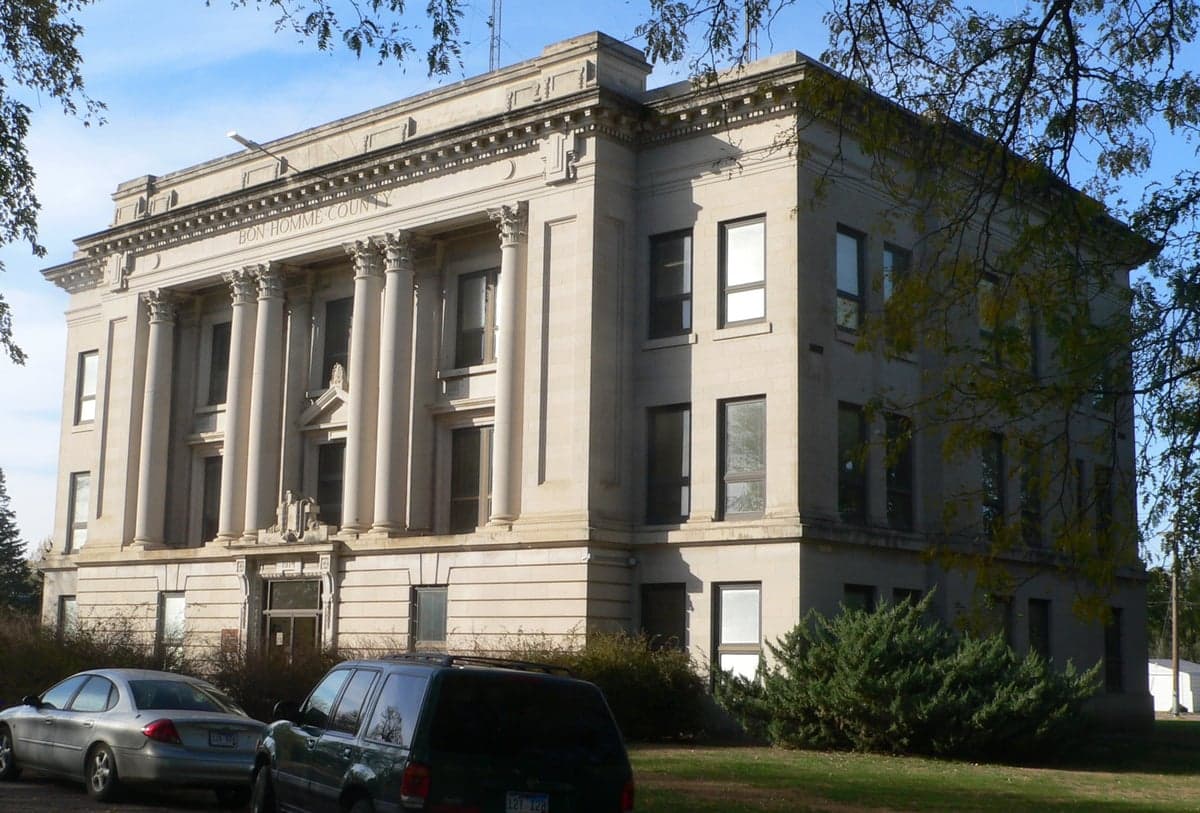
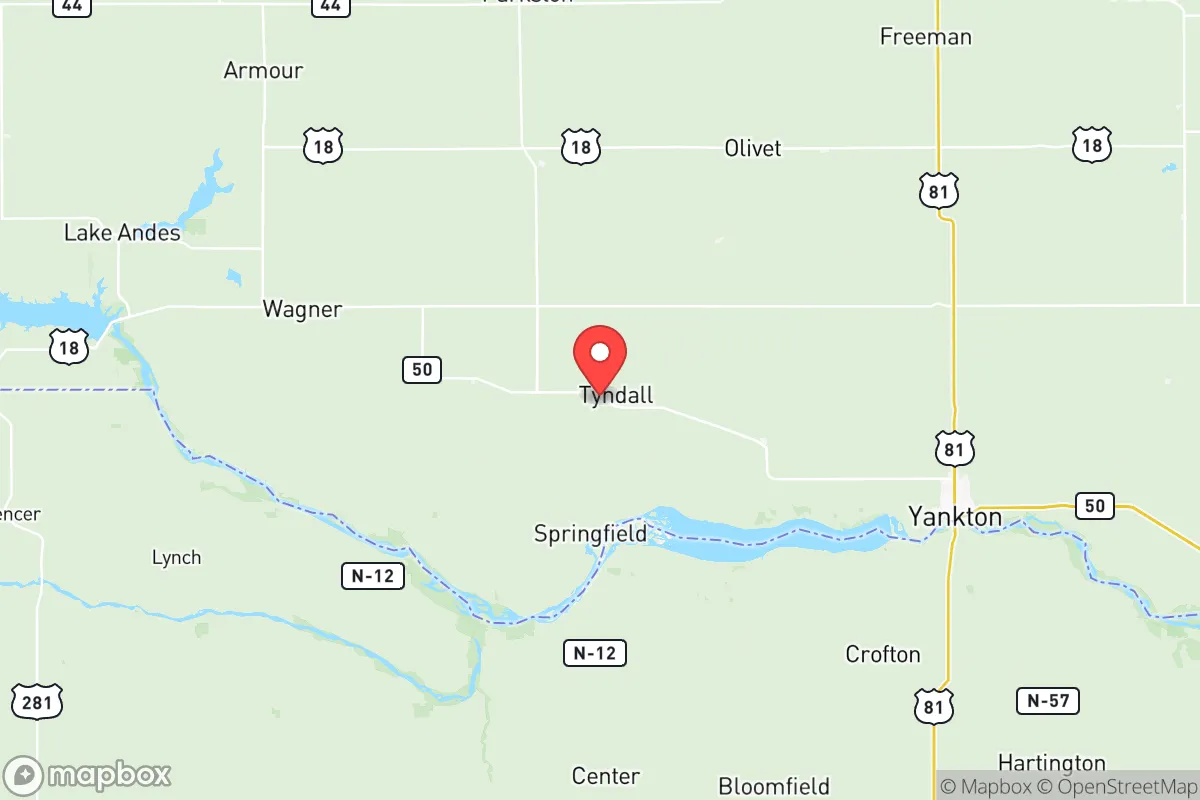
Bon Homme County, South Dakota, is home to 7,024 residents, a population shaped by waves of European immigration and a slow, steady decline that has defined its character for decades. The county is overwhelmingly white (86.5%) with a tiny foreign-born population of just 0.4%, reflecting its deep roots in 19th-century settlement rather than modern immigration. Its identity is rural, agricultural, and predominantly of German and Czech heritage, with a conservative social fabric that prizes self-reliance and community. The county seat, Tyndall, and the largest town, Scotland, serve as the primary hubs for this tight-knit population.
Settlement & growth (pre-1960)
Before European settlement, the area that is now Bon Homme County was part of the traditional territory of the Yankton Sioux (Nakota) people, who lived along the Missouri River and its tributaries. The Lewis and Clark expedition passed through the region in 1804, noting the abundant game and the river's strategic importance. The U.S. government formally acquired the land through the Louisiana Purchase in 1803, but it remained largely untouched by non-Native settlement until the 1850s.
The first permanent European settlers arrived in the late 1850s and early 1860s, drawn by the promise of cheap land under the Homestead Act of 1862. These early pioneers were primarily of German and Czech (Bohemian) origin, seeking agricultural opportunities and religious freedom. They established the county's first towns: Tyndall (founded 1879), named after a British physicist, and Scotland (founded 1879), named by settlers from Scotland but quickly populated by Germans and Czechs. The county was officially organized in 1862, and its name—French for "good man"—was chosen by early French fur traders who had passed through.
A second, larger wave of German and Czech immigrants arrived between 1880 and 1910, drawn by railroad expansion and the promise of fertile farmland along the Missouri River. These settlers established the towns of Avon (founded 1883), Springfield (founded 1879), and Tabor (founded 1871). Springfield, in particular, became a center for Czech culture, with its St. Wenceslaus Catholic Church serving as a community anchor. The county's population peaked at 11,994 in 1910, driven by the agricultural boom and the arrival of the Chicago, Milwaukee, St. Paul and Pacific Railroad.
The decades following World War I brought stagnation. The Dust Bowl of the 1930s hit the Great Plains hard, and Bon Homme County lost population as farms consolidated and young people moved to cities. By 1960, the population had fallen to 9,229, a decline of over 20% from its peak. The county's economy remained tied to corn, soybeans, and livestock, with little industrial diversification.
Modern era (post-1965)
The 1965 Hart-Cellar Act, which reshaped U.S. immigration, had virtually no impact on Bon Homme County. The county's foreign-born population today is just 0.4%, one of the lowest rates in the nation. Unlike many rural counties that saw an influx of Hispanic or Asian immigrants in the late 20th century, Bon Homme remained overwhelmingly white and native-born. The small Hispanic population (2.3%) and Black population (1.9%) are largely the result of domestic migration—workers drawn to the county's meatpacking plants or agricultural jobs—rather than international immigration.
Domestic out-migration has been the dominant demographic force since 1960. Young adults leave for college or jobs in larger cities like Sioux Falls or Yankton, and few return. The county's population fell from 9,229 in 1960 to 7,024 in 2020, a decline of 24%. The towns of Avon (population 590) and Tabor (population 423) have seen their schools consolidate and main streets shrink. Springfield, once a thriving river town, now has a population of 1,915, sustained partly by the South Dakota Human Services Center, a state-run psychiatric facility that is one of the county's largest employers.
The county's racial composition has shifted slightly. The white share fell from over 98% in 1990 to 86.5% in 2020, while the Hispanic share rose from 0.5% to 2.3%. The Black population, nearly nonexistent before 2000, now stands at 1.9%, concentrated in Scotland and Tyndall, where a small number of families work in agriculture or local services. The Asian population (0.1%) and Indian subcontinent population (0.0%) are negligible. The county's college-educated share is just 20.1%, well below the national average of 33%, reflecting the limited white-collar job market.
The future
Bon Homme County's population is projected to continue its slow decline. The median age is 44.3, significantly higher than the national median of 38.8, and the birth rate is below replacement level. Without significant in-migration, the county will likely lose another 10-15% of its population by 2040, with the smallest towns—Tabor and Avon—facing the greatest risk of becoming unincorporated. The county's cultural identity will remain overwhelmingly German-Czech and conservative, as the small Hispanic and Black populations are too few to alter the dominant social fabric.
There is no sign of a reversal. The county lacks the job growth, housing stock, or amenities to attract the remote workers or retirees who have revived some rural counties. The nearest interstate highway is 40 miles away, and the largest city, Sioux Falls (population 200,000), is a 90-minute drive. For those who stay, the appeal is low cost of living, strong community ties, and a slower pace of life. For those who leave, the pull is opportunity elsewhere.
Bon Homme County is becoming a quieter, older, and more homogeneous place—a rural enclave where the descendants of 19th-century German and Czech settlers remain, but their numbers dwindle with each passing decade. For a conservative-leaning individual or family moving in now, the county offers a stable, predictable community with deep roots, but little demographic dynamism or growth. It is a place to settle, not to build a future from scratch.

* Values derived from national, state, county, city and local statistics and may differ in a specific area. Last updated: 2026-05-28T04:16:40.000Z
Narrative content on this page is AI-generated and may contain mistakes. Verify any details that matter before acting on them.
ReloMaps may earn a commission from affiliate links at no extra cost to you.

