Photo: Wikipedia
Political ClimatePolitical Climate in Bon Homme County
Showing state-level results — no local-only data available.
Local Political AnalysisPolitical Analysis of Bon Homme County
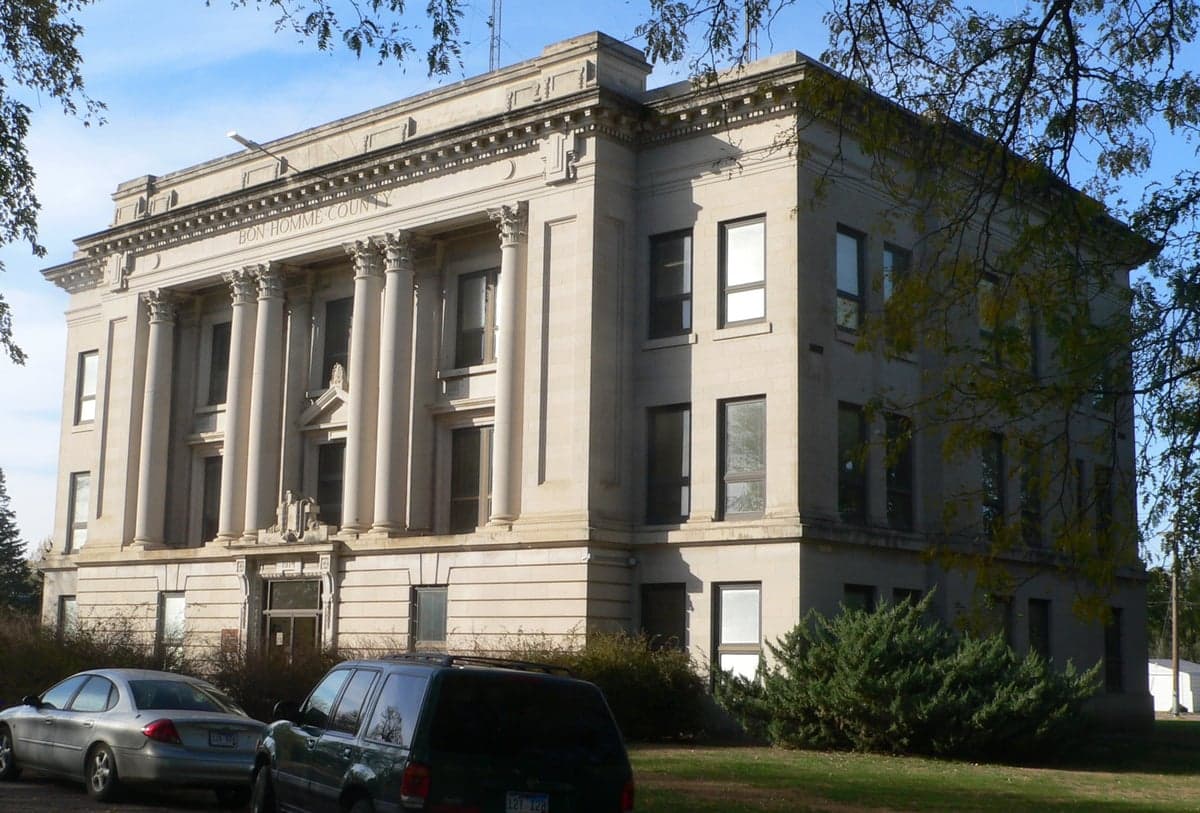
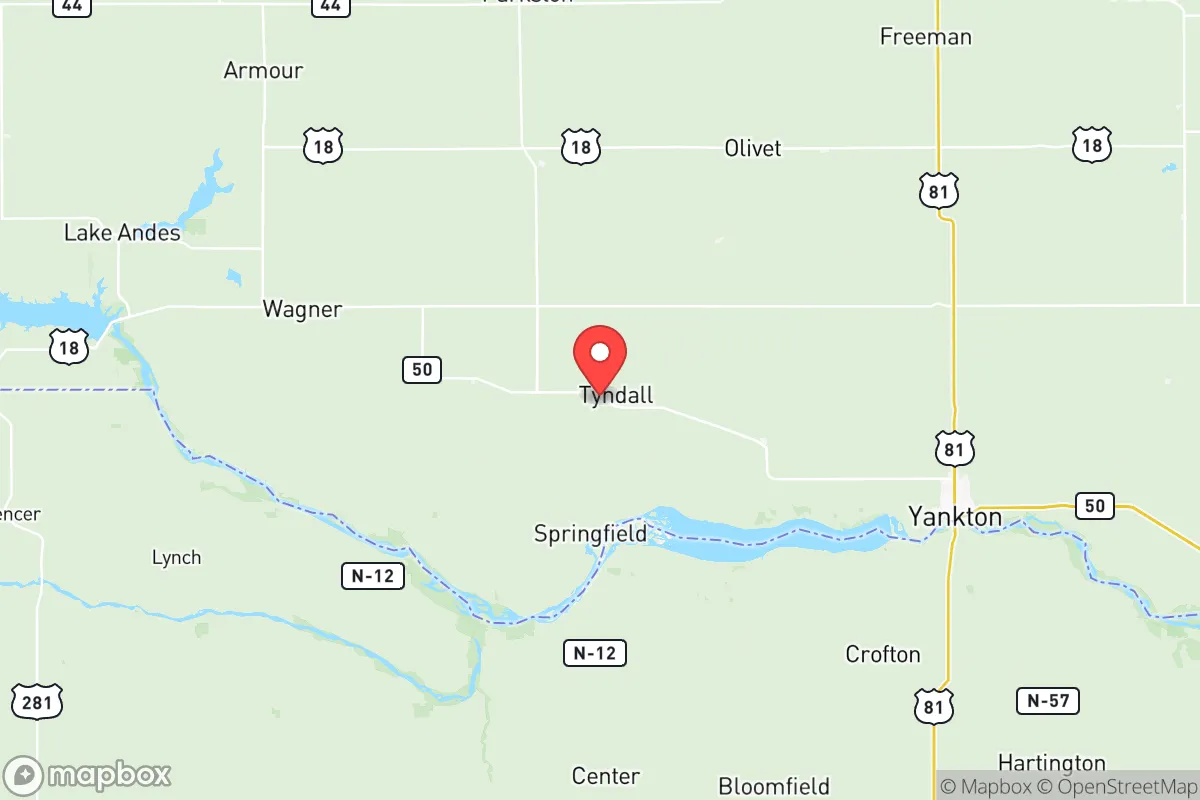
Bon Homme County is about as reliably conservative as it gets in South Dakota, and that’s saying something. The Cook PVI here is R+15, which is identical to the state’s overall rating, but the real story is in the local culture and voting patterns. You won’t find much political drama in this corner of the state—folks here have voted Republican in every presidential election since 2000, often by margins of 65% or more. The county seat, Tyndall, and the largest town, Scotland, are solidly red, with precincts routinely delivering 70-75% of the vote to GOP candidates. The only real exception is Springfield, which has a small but noticeable blue-leaning pocket, likely tied to the state-run care facility and a handful of younger transplants. Even there, though, the overall tilt is still conservative—just not as overwhelmingly so.
How it compares
When you stack Bon Homme County against the rest of South Dakota, the political landscape is remarkably similar, but the county feels more insulated from the progressive trends creeping into places like Sioux Falls or Rapid City. The state as a whole has a Cook PVI of R+15, same as the county, but the difference is in the texture. In Bon Homme, you don’t see the same kind of suburban drift toward moderate or even left-leaning positions that you might in Minnehaha County. The local Republican Party here is old-school—think limited government, low taxes, and a healthy skepticism of federal overreach. That’s not just rhetoric; it’s how people live. The county commission, school board, and city councils in Tyndall and Scotland are all dominated by conservatives who prioritize local control over state mandates. Compare that to the state legislature, where you occasionally see bills that nibble at property rights or gun freedoms—Bon Homme’s representatives, like Republican state senator Jean Hunhoff, are consistently among the most reliable votes against any expansion of government power.
What this means for residents
For someone living here, the political climate means you can generally trust that your local government isn’t going to meddle in your daily life. Property taxes are low, zoning is minimal, and there’s no real appetite for the kind of progressive social engineering you’d find in more urban areas. The downside? If you’re hoping for big federal grants or state-funded programs, you’ll be disappointed—the county’s conservative ethos means a lean budget and a “we’ll figure it out ourselves” attitude. That’s fine for most folks, but it can be a shock if you’re moving from a place where the government handles everything. The real concern, though, is the long-term trend. As South Dakota’s population grows and diversifies, there’s pressure from outside to adopt more progressive policies—like stricter environmental regulations or expanded gun control. Bon Homme County has resisted that so far, but it’s something to keep an eye on. The 2024 election saw a slight uptick in Democratic votes in Springfield and a few rural precincts, which is a yellow flag for anyone who values the current level of personal freedom.
Culturally, Bon Homme County is a place where the Second Amendment isn’t debated—it’s assumed. You’ll see pickup trucks with NRA stickers and “Don’t Tread on Me” flags flying alongside American flags. The local schools in Tyndall and Scotland still teach traditional values, and there’s no push for critical race theory or gender ideology in the curriculum. That’s a stark contrast to what you’d find in some parts of the state, like Brookings or Vermillion, where the university influence has shifted the culture leftward. If you’re looking for a place where the government stays out of your business and your neighbors share your values, Bon Homme County is about as close to that ideal as you’ll find in South Dakota. Just don’t expect it to stay that way forever—the winds of change are blowing, and it’s up to the people here to hold the line.

State Political ClimatePolitical Climate in South Dakota
State Political AnalysisPolitical Environment in the State
South Dakota is about as reliably red as a state gets, with a Cook PVI of R+15 that has only deepened over the past two decades. The dominant coalition is a mix of rural conservatives, libertarian-leaning ranchers, and a growing number of out-of-state transplants fleeing blue states, all united by a shared distrust of federal overreach. Over the last 10-20 years, the state has shifted from a quiet, moderate Republicanism to a more assertive, freedom-first posture, driven largely by the influx of newcomers to places like Rapid City and Sioux Falls who are explicitly seeking lower taxes and fewer regulations.
Urban vs. rural divide
The political map is stark but not surprising. The eastern corridor, anchored by Sioux Falls (Minnehaha County) and Brookings, is the state's most moderate region, with Sioux Falls itself trending slightly more purple as it grows. Minnehaha County voted about 55% for Trump in 2024, down from 60% in 2020, reflecting the influx of younger professionals and service-sector workers. Meanwhile, the western half of the state—places like Rapid City (Pennington County), Sturgis, and Spearfish—is deeply conservative, with Pennington County hitting 62% for Trump. The rural counties in between, like Harding and Jones, routinely deliver 80-85% Republican margins. The real outlier is Oglala Lakota County on the Pine Ridge Reservation, which votes 70-80% Democrat, but its population is small and its influence on statewide elections is minimal. The divide isn't just urban vs. rural—it's also east vs. west, with the Black Hills region being the most culturally and politically conservative part of the state.
Policy environment
South Dakota's policy environment is a dream for anyone who values limited government. There is no state income tax, no corporate income tax, and no personal property tax on vehicles or business inventory. The sales tax is 4.5%, and local options can push it to 6.5% in places like Sioux Falls, but that's still low by national standards. The state has a constitutional amendment requiring a two-thirds supermajority in the legislature to raise taxes, which has kept spending in check. On education, the state passed a school choice expansion in 2023 allowing education savings accounts for special needs students, and there's a growing push for universal ESAs. Healthcare is a mixed bag: the state did expand Medicaid under the 2022 ballot measure, but the legislature has resisted further expansion of government-run options. Election laws are among the most secure in the nation—voter ID is required, same-day registration is not allowed, and the state uses paper ballots with post-election audits. There's no mail-in voting unless you have a valid excuse, and ballot drop boxes are limited. This is a state that takes election integrity seriously.
Trajectory & freedom
South Dakota is becoming more free, not less, and the trend is accelerating. In 2023, Governor Kristi Noem signed a law banning COVID-19 vaccine mandates by private employers, a direct response to federal overreach. The state also passed a "Parents' Bill of Rights" in 2022, requiring schools to get parental consent before teaching about sexuality or gender identity, and allowing parents to opt their kids out of any curriculum they find objectionable. On gun rights, South Dakota is a constitutional carry state with no permit required for concealed carry, and in 2024, the legislature passed a law prohibiting the enforcement of any future federal gun bans within state borders—a clear nullification stance. Property rights were strengthened with a 2023 law limiting the use of eminent domain for carbon pipelines, a direct shot at the Summit Carbon Solutions project that had been pushing through private land. The only area where freedom has been curtailed is medical autonomy: the state banned nearly all abortions in 2022 with a trigger law, and there's no legal access to medical marijuana dispensaries (though a 2020 ballot measure passed, it was gutted by the legislature and remains tied up in court). Overall, the trajectory is toward more personal liberty, especially in the realms of education, health choices, and self-defense.
Civil unrest & political movements
South Dakota is remarkably stable compared to the coasts. The most visible flashpoint in recent years was the 2021-2022 protests over the Summit Carbon Solutions pipeline, where landowners in counties like Brown and Spink organized against the use of eminent domain for a private project. This was a rare instance of bipartisan anger, with ranchers and environmentalists finding common ground. There have been no major left-wing protests in Sioux Falls or Rapid City, though the Pine Ridge Reservation has seen occasional demonstrations over tribal sovereignty and police brutality. Immigration politics are a non-issue here—the state has a tiny foreign-born population (about 4%), and there are no sanctuary policies. Election integrity controversies are minimal; the 2020 and 2022 elections were certified without major disputes, and the state's Republican secretary of state has been praised for transparency. The most organized political movement on the right is the "Liberty Caucus" within the state legislature, which pushes for further tax cuts, school choice, and nullification of federal overreach. On the left, the only real activism comes from tribal groups and a small environmental lobby opposing mining in the Black Hills. A new resident would notice a general lack of political tension in daily life—people disagree, but they don't riot about it.
Projection
Over the next 5-10 years, South Dakota will likely become even more conservative, but with a twist. The in-migration from California, Colorado, and Minnesota is accelerating, especially to Rapid City and the Black Hills, where housing prices have doubled since 2020. These newcomers are not liberals—they're fleeing high taxes and crime, and they're voting for the same freedom-first policies that drew them here. The demographic shift is actually reinforcing the state's conservatism, not diluting it. The biggest wildcard is the growing influence of the tribal vote, particularly if the Pine Ridge and Rosebud reservations see more investment and population growth. But even then, the tribal population is small and geographically isolated. The real pressure point will be water rights and land use, as the Ogallala Aquifer depletion and pipeline battles intensify. Expect more legislation limiting corporate use of eminent domain and protecting private property. The state's tax structure is unlikely to change—there's no appetite for an income tax, and the sales tax may even be reduced if the economy stays strong. By 2030, South Dakota will be a model of what a free state looks like: low taxes, minimal regulation, strong property rights, and a culture that values personal responsibility over government solutions.
For someone moving here now, the bottom line is this: you're choosing a state that is actively fighting to stay free, and it's winning. You won't find the political chaos of a swing state or the overreach of a blue state. What you will find is a place where your vote actually counts, your taxes stay low, and your rights are protected by a legislature that takes those protections seriously. Just be prepared for cold winters and a housing market that's getting tight—especially in Rapid City and Sioux Falls. But if you value freedom over convenience, South Dakota is one of the last best places to plant your flag.
* Values derived from national, state, county, city and local statistics and may differ in a specific area. Last updated: 2026-05-28T04:16:40.000Z
Narrative content on this page is AI-generated and may contain mistakes. Verify any details that matter before acting on them.
ReloMaps may earn a commission from affiliate links at no extra cost to you.

