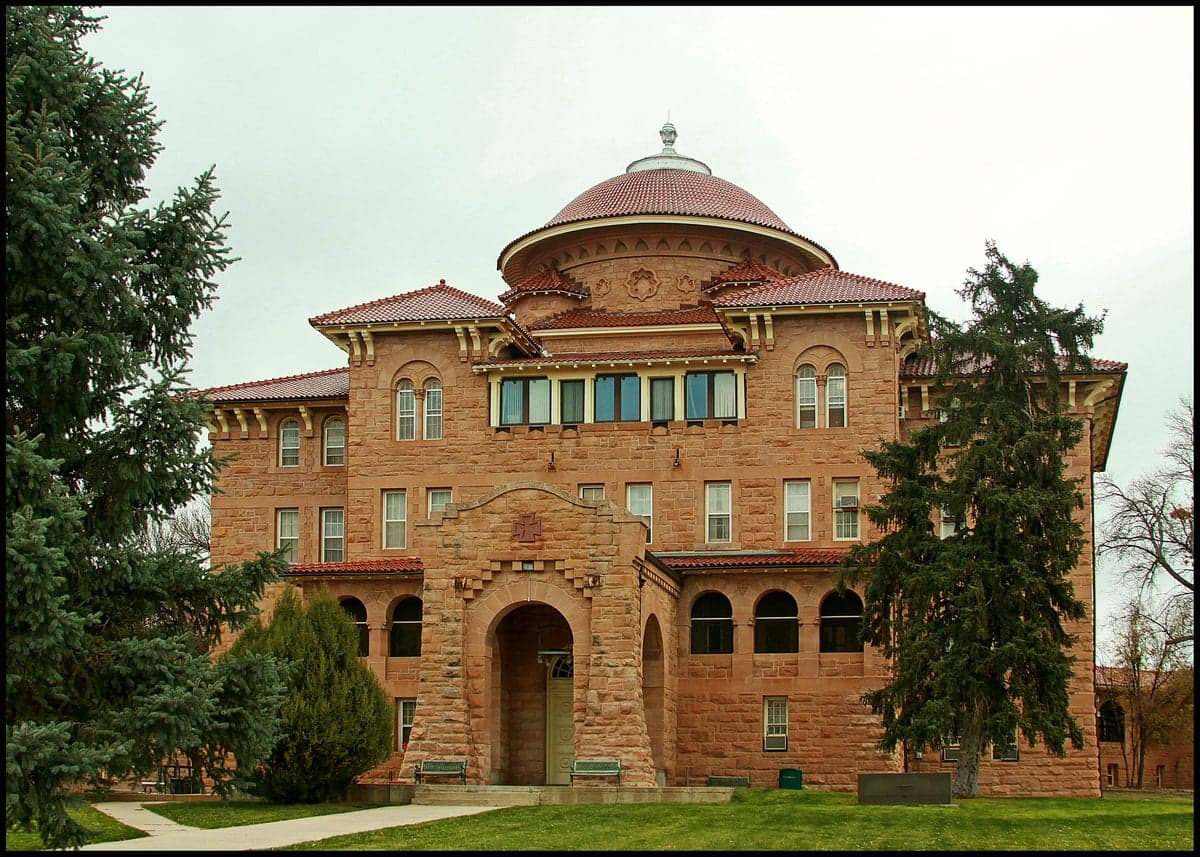
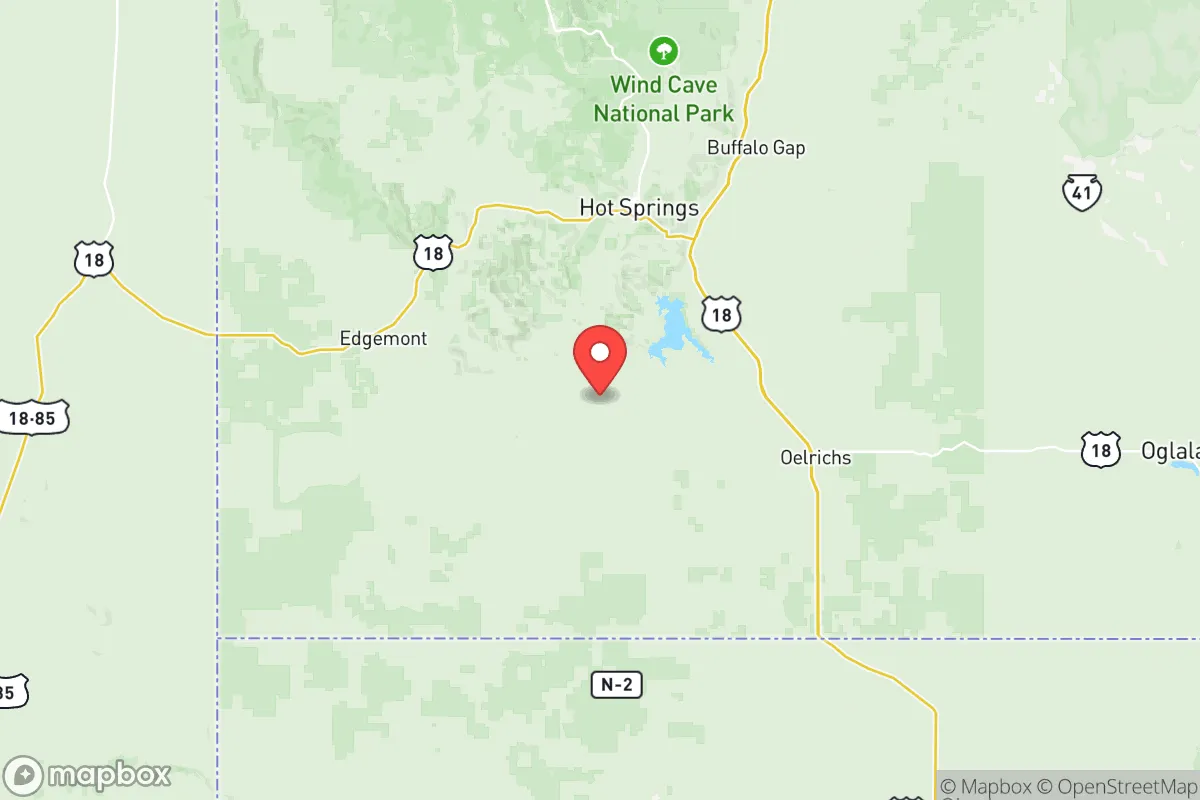
Photo: Wikipedia
Find The Best Places To Live in Fall River County
PRO TIP! You can paste a Zillow or Redfin link to get info on that property.
Best Places to Live in Fall River County
Cities & Towns in Fall River County
Cities in Fall River County
What It's Like Living in Fall River County, SD
Fall River County feels like a place where the Old West still echoes, but with a quiet, practical rhythm that suits people who value space and solitude over constant activity. With a population just over 7,100 spread across towns like Hot Springs, Edgemont, and Oelrichs, plus wide-open ranchland in between, this is a corner of South Dakota where you can still buy a home for a median of $176,300 and keep your monthly expenses well below the national average. The kind of person who thrives here is self-reliant, comfortable with long drives to the nearest big-box store, and more interested in a good fishing hole than a nightclub scene.
Daily Rhythm in a County of Ranches and Hot Springs
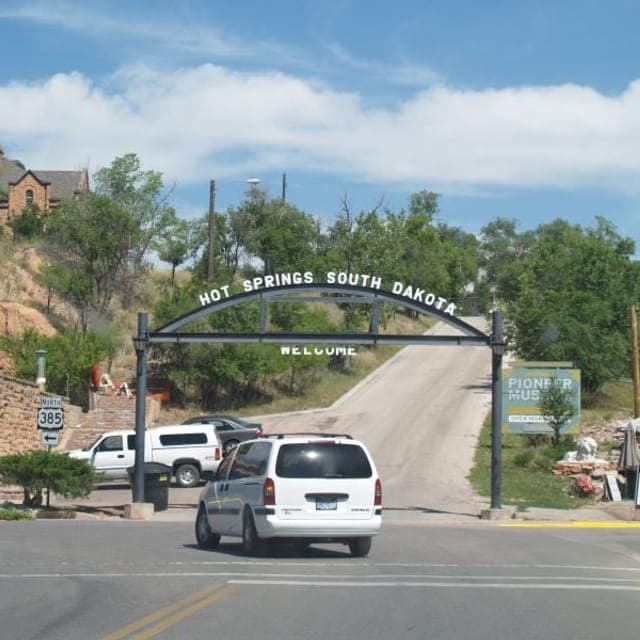
Life in Fall River County moves at a pace that can feel jarring to someone coming from a metro area. The average commute clocks in at just over 20 minutes, but that's mostly because getting anywhere—work, school, the grocery store—requires a drive. In Hot Springs, the county seat and largest town, mornings often start with coffee at a local diner like the Wrangler Cafe, followed by a day that might include work at the VA hospital, a local ranch, or one of the small businesses that line the main street. Edgemont, about 25 miles west, is even quieter, with a population under 800 and a downtown that feels like a movie set for a Western. Oelrichs and Smithwick are essentially wide spots in the road, where your nearest neighbor might be a mile away and the post office doubles as a community hub.
Weekends here are spent outdoors when the weather cooperates. The Angostura Recreation Area near Hot Springs is a magnet for boaters and campers, while the Black Hills National Forest stretches into the northern part of the county, offering hiking and hunting. In winter, the pace slows further—snow can shut down back roads, and the median age of 54.5 means a significant portion of the population is retired or semi-retired, content to hunker down. Shopping is limited to essentials; for anything beyond basic groceries or hardware, residents drive an hour north to Rapid City or south to Chadron, Nebraska.
Sports, Community, and the Things That Bring People Together
High school sports are the main event here. Hot Springs High School football and basketball games draw crowds that fill the bleachers on Friday nights, and the rivalry with Edgemont High School is genuine—these are communities where everyone knows the quarterback's family and the coach's day job. There are no professional or college sports teams in the county, so the Bison and the Moguls (Edgemont's team) are as big as it gets. The Fall River County Fair in Hot Springs is the social highlight of the summer, featuring rodeo events, 4-H livestock shows, and a carnival that feels like it hasn't changed in 40 years—which is exactly why locals love it.
For entertainment beyond sports, the Mammoth Site in Hot Springs is a genuine draw—an active paleontological dig where visitors can see Ice Age fossils still in the ground. It's the kind of attraction that surprises out-of-towners and gives locals a point of pride. The Evans Plunge mineral springs pool has been operating since 1890, offering warm-water swimming year-round. Bars like the Buffalo Room in Hot Springs serve as informal community centers where you can hear local gossip and maybe catch a cover band on a Saturday night. The cultural vibe is distinctly Western and conservative, with a heavy emphasis on hunting, fishing, and land stewardship.
Pros and Cons of Living in Fall River County
The upsides are tangible for the right person. A cost of living index of 70 (30 percent below the national average) means your money goes far. The median income of $61,056 is modest, but with home values at $176,300, homeownership is achievable for most working families. The violent crime rate of 293.7 per 100,000 is higher than the national average, but residents will tell you that number is skewed by incidents concentrated in a few areas—most of the county feels safe, and people rarely lock their doors in the smaller towns. The outdoor access is exceptional, with the Black Hills, Angostura Reservoir, and the Fall River itself offering trout fishing, hiking, and hunting that rivals anywhere in the region.
The downsides are real and worth weighing. Only 22.2 percent of adults hold a college degree, which reflects a limited white-collar job market—most employment is in healthcare, education, agriculture, or small retail. The median age of 54.5 means the county skews older, and younger families sometimes struggle to find peers for their kids. Winters can be harsh, with stretches of subzero temperatures and wind that makes the plains feel empty in a way that's either peaceful or isolating, depending on your temperament. Healthcare is adequate for routine needs, but specialists require a drive to Rapid City. If you crave cultural diversity, fine dining, or a vibrant nightlife, this is not the place. But if you want affordable land, quiet nights, and a community where people still wave at passing cars, Fall River County delivers exactly that.

* Values derived from national, state, county, city and local statistics and may differ in a specific area. Last updated: 2026-10-13T16:20:22.000Z
Narrative content on this page is AI-generated and may contain mistakes. Verify any details that matter before acting on them.
ReloMaps may earn a commission from affiliate links at no extra cost to you.

