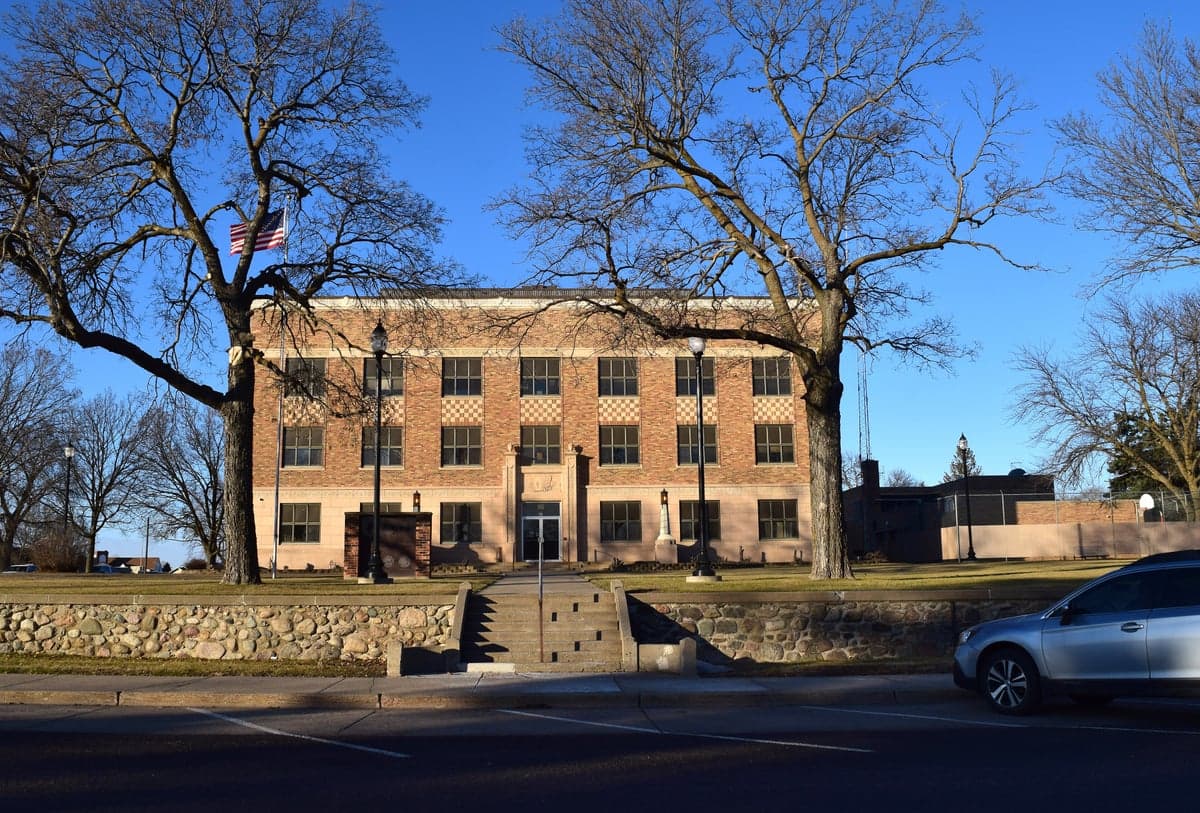
Photo: Wikipedia
Demographics of Lake County
Affluence Level in Lake County
A middle-class area roughly in line with national averages across income, home values, education, and employment.
People of Lake County
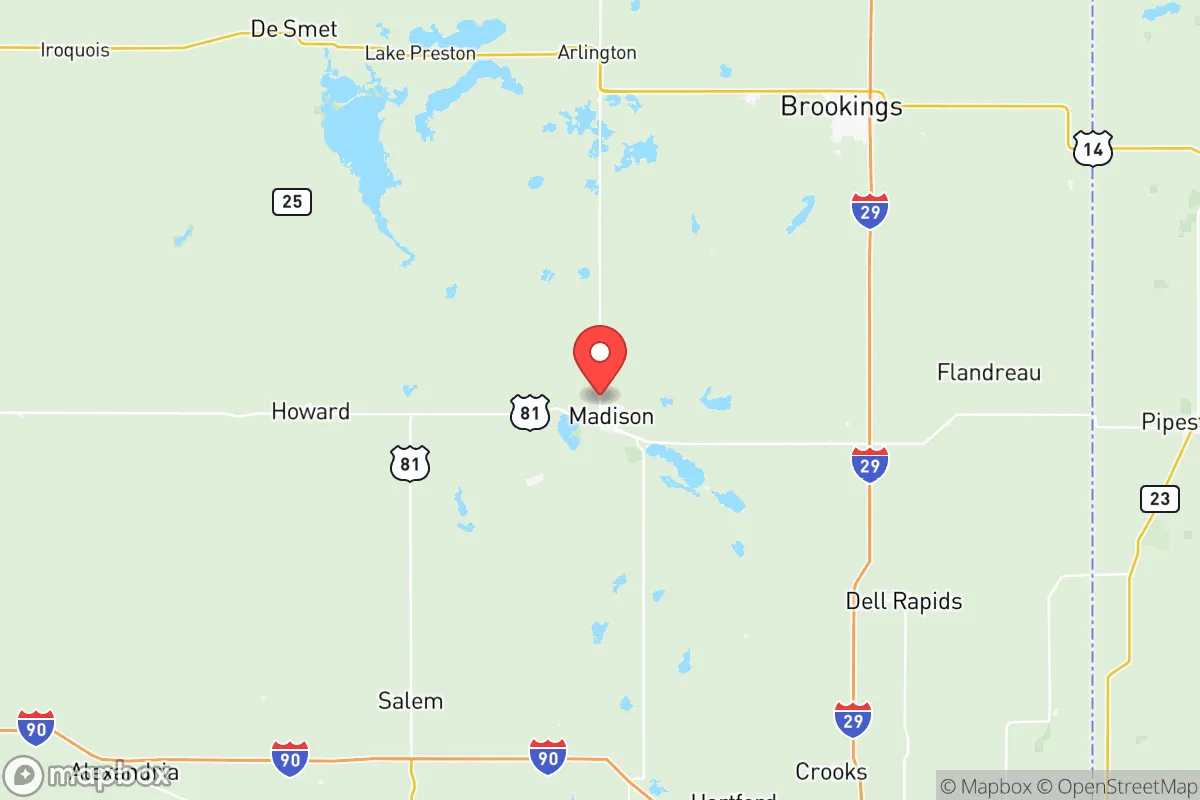
Today, Lake County, South Dakota, is a predominantly white, rural community of 11,052 residents, anchored by the county seat of Madison and the smaller town of Wentworth. The population is notably stable and homogeneous, with 89.7% identifying as white, a foreign-born share of just 1.8%, and a Hispanic population of 5.1% that represents the largest minority group. The county’s identity is shaped by its deep Scandinavian and German roots, a strong agricultural economy, and the presence of Dakota State University in Madison, which gives the area a modest college-town character and a college-educated rate of 34.7%.
Settlement & growth (pre-1960)
The land that became Lake County was originally part of the traditional territory of the Dakota (Sioux) people, specifically the Sisseton and Wahpeton bands, who used the region for hunting and seasonal camps along the area’s numerous glacial lakes. The United States acquired the area through the 1803 Louisiana Purchase, but significant American settlement did not begin until after the 1858 Yankton Treaty, which opened eastern Dakota Territory to white homesteaders, and the subsequent 1862 Homestead Act.
The first major wave of settlers arrived in the 1870s and 1880s, drawn by the promise of 160-acre homesteads on the fertile prairie. These early pioneers were overwhelmingly of Northern European stock. Norwegian immigrants, many fleeing land scarcity and religious pressures in their homeland, formed the largest single group, settling in and around the newly platted town of Madison (founded 1873) and the rural townships to the north and west. German immigrants from Russia (often called Volga Germans) also arrived in significant numbers during the 1880s, establishing farming communities near Wentworth and Nunda. A smaller contingent of Swedish and Danish families settled near Lake Herman and Brant Lake, drawn by the familiar lake-dotted landscape that reminded them of their homelands. The railroad’s arrival in Madison in 1880 accelerated growth, turning the town into a regional trade and processing center for wheat, oats, and livestock.
By 1900, the county’s population had reached roughly 8,000, and the ethnic character was firmly set: Norwegian and German Lutheran, with a strong work ethic centered on family farms and small-town commerce. The early 20th century saw little new immigration. The Dust Bowl and Great Depression of the 1930s hit the region hard, causing a modest out-migration of farm families to California and the Pacific Northwest. World War II brought a brief economic boost from increased agricultural demand, but the post-war decades saw a slow, steady decline in the farm population as agricultural consolidation reduced the number of family operations. The founding of Dakota State College (now Dakota State University) in Madison in 1881 provided a stabilizing influence, drawing a small but steady stream of students and faculty from across the upper Midwest, but the county’s overall population remained flat through the 1950s.
Modern era (post-1965)
The 1965 Hart-Cellar Act, which dramatically reshaped American immigration, had almost no direct impact on Lake County. The county’s foreign-born population remains at just 1.8% in 2026, a figure that has barely budged since the 1960s. The small number of immigrants who have arrived since 1965 are primarily Hispanic laborers, drawn by work in the region’s dairy operations and meatpacking plants, particularly in the Madison area. This Hispanic population, now 5.1% of the county, is largely of Mexican origin and has formed a small but visible community, with families concentrated in lower-cost rental housing on Madison’s south side and in mobile home parks near the industrial corridor along Highway 34.
Domestic migration has been the more significant demographic force since 1965, though it has been modest in scale. The county has experienced a slow but steady out-migration of young adults seeking jobs in larger cities like Sioux Falls (45 miles east) and the Twin Cities. This loss has been partially offset by in-migration of retirees and second-home buyers drawn to the recreational opportunities of the county’s many glacial lakes, particularly Lake Herman, Lake Madison, and Brant Lake. These new residents, often from Minnesota and Iowa, have built lake homes and seasonal cabins, contributing to a small but noticeable shift in the county’s housing stock and property values. The East/Southeast Asian population (0.5%) and Indian subcontinent population (0.1%) are almost entirely composed of international students and faculty at Dakota State University, a group that is transient and does not form a permanent enclave.
Suburbanization has been limited. Madison, with a population of roughly 6,500, remains the county’s only real town; the rest of the population is scattered across farms and small unincorporated communities like Winfred and Chester. The county has not experienced the suburban sprawl seen in Minnehaha County to the east, and its rural character remains largely intact.
The future
Lake County’s population is projected to remain stable or decline slightly over the next 10-20 years. The county is not homogenizing further—it is already one of the most homogeneous counties in South Dakota—but it is also not tribalizing into distinct ethnic enclaves. The Hispanic community, while growing slowly, is small enough to be largely assimilated into the broader social fabric, with many second-generation children attending Madison High School and participating in mainstream community life. The East/Southeast Asian and Indian populations at the university will continue to be transient, with most graduates leaving for jobs in larger cities.
The most significant demographic trend is aging. The county’s median age is above the state average, and the out-migration of young adults means that the population is slowly graying. In-migration of retirees to the lakes will continue, but this group is unlikely to change the county’s cultural identity in any dramatic way. The agricultural base will continue to consolidate, with fewer but larger farms, and the local economy will remain heavily dependent on Dakota State University and the healthcare sector centered at Madison Community Hospital.
For someone moving into Lake County now, the area offers a stable, safe, and culturally cohesive environment with strong schools, low crime, and a deeply rooted sense of place. It is not a place of rapid demographic change or cultural friction. The county will likely look very similar in 2046 as it does today: predominantly white, rural, and conservative, with a small but integrated Hispanic minority and a transient university population. The kind of person who will thrive here is someone who values predictability, community ties, and a slower pace of life, and who is comfortable in a setting where nearly everyone shares a similar background and worldview.

* Values derived from national, state, county, city and local statistics and may differ in a specific area. Last updated: 2026-05-28T01:10:31.000Z
Narrative content on this page is AI-generated and may contain mistakes. Verify any details that matter before acting on them.
ReloMaps may earn a commission from affiliate links at no extra cost to you.

