Photo: Wikipedia
Political ClimatePolitical Climate in Lake County
Showing state-level results — no local-only data available.
Local Political AnalysisPolitical Analysis of Lake County
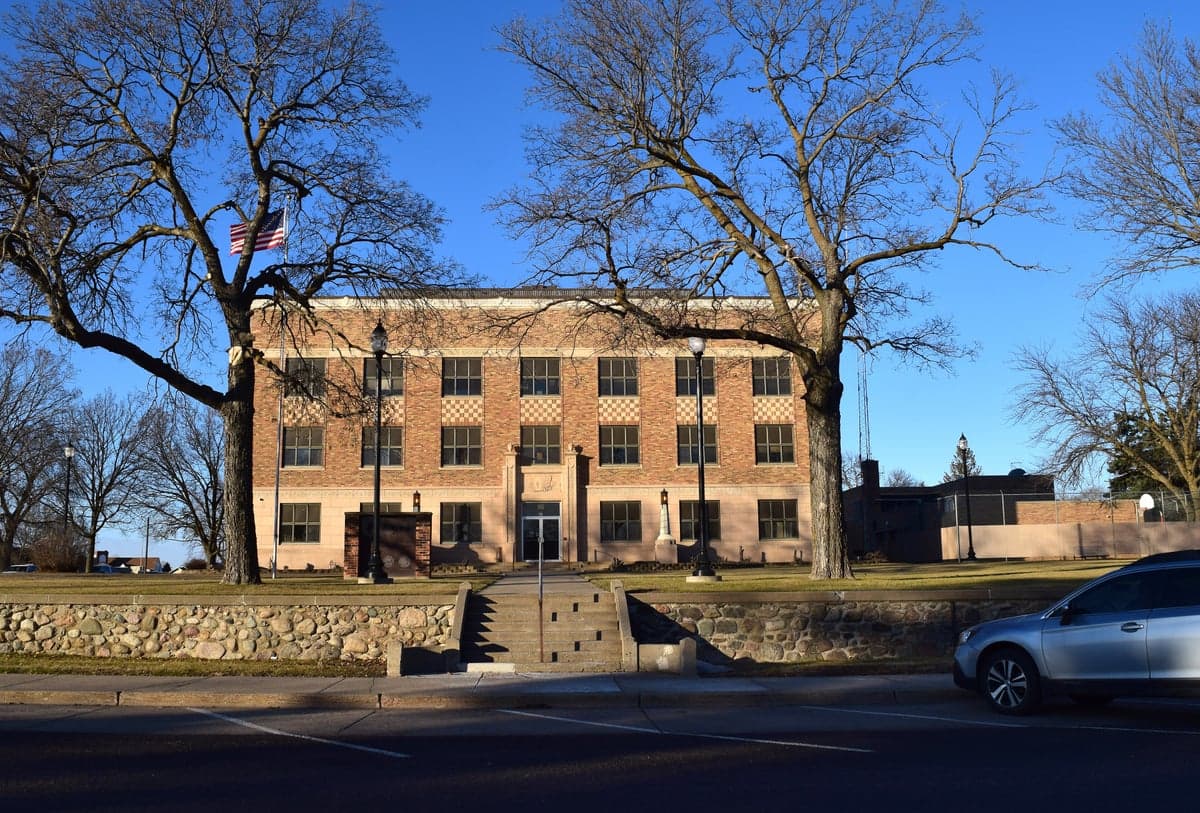
Lake County, South Dakota, is a rock-ribbed conservative stronghold that has only gotten redder in recent years. With a Cook Partisan Voting Index (PVI) of R+15, it mirrors the state’s overall R+15 rating, but the local flavor is distinct—think less about the moderate conservatism of Sioux Falls and more about the no-nonsense, small-government ethos of the prairie. The county has shifted about 3 points to the right since 2016, driven by a growing distrust of federal overreach and a desire to keep local control over schools, land use, and personal freedoms. If you’re looking for a place where the government stays out of your business, this is it—but the cracks are starting to show in a few precincts.
How it compares
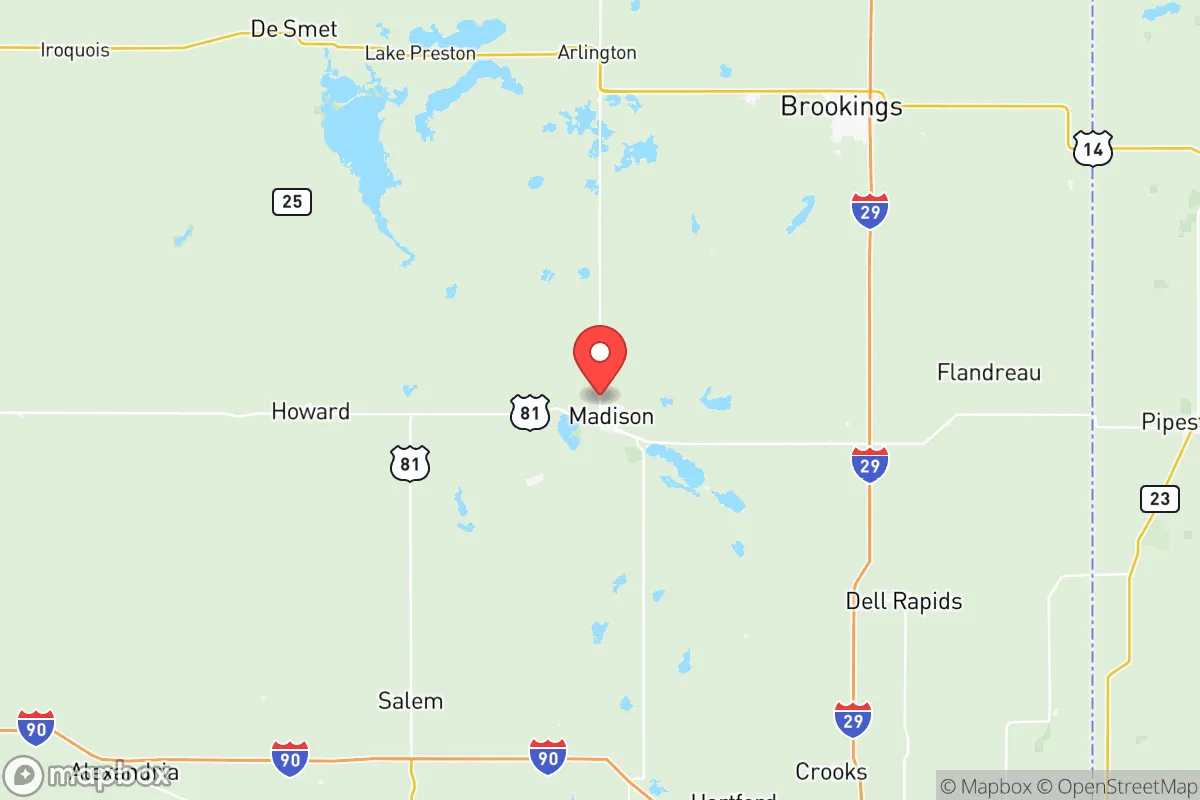
On paper, Lake County and South Dakota share the same PVI, but the comparison gets interesting when you zoom in. The county seat, Madison, is the political anchor—it’s reliably red, but not as deep red as the surrounding farm country. In the 2024 presidential race, Madison’s precincts voted about 58% Republican, while rural towns like Wentworth and Nunda hit 70% or higher. The real outlier is Chester, a small town near the county’s eastern edge, where a mix of newer residents and commuters to Sioux Falls has nudged it slightly more purple—still red, but with a noticeable 5-7% Democratic vote share that wasn’t there a decade ago. Statewide, South Dakota’s rural counties are even more conservative than Lake, but Lake’s proximity to the state’s liberal-leaning college towns (like Brookings) means it sees a bit more ideological friction. The state legislature has been pushing bills to protect gun rights and cut property taxes, and Lake County residents are all for it—but there’s a growing worry that state-level mandates, like vaccine requirements or energy regulations, could start trampling local autonomy.
What this means for residents
For folks living here, the political climate means a lot of freedom—but also a need to stay vigilant. You won’t find mask mandates or heavy-handed zoning laws in Lake County; the county commission has a track record of pushing back against state and federal overreach, like when they opposed a proposed wind farm that would have forced easements on private land. That said, the recent influx of people from more progressive states (mostly retirees and remote workers) has started to shift the conversation in Madison. There’s been a quiet push for more “diversity initiatives” in the local school district, which has some long-time residents worried about curriculum creep and the erosion of parental rights. The county’s Republican Party is still dominant, but the internal fights are getting sharper—between traditional conservatives who want to keep government small and a newer faction that’s more focused on cultural battles. If you value your Second Amendment rights and don’t want the government telling you how to run your farm or raise your kids, Lake County is still a safe bet. But keep an eye on those Madison city council meetings—that’s where the real fights are brewing.
Culturally, Lake County is a place where the local 4-H fair is a bigger deal than any election, and neighbors still help each other with harvest. The policy distinctions from the rest of South Dakota are subtle but real: the county has a higher property tax rate than some neighboring areas (thanks to a school bond passed in 2019), but it also has a lower sales tax burden. The biggest red flag for a conservative moving here would be the slow creep of progressive ideas into the county’s institutions—like the Madison Public Library hosting a “drag story hour” last year, which sparked a heated recall effort against a library board member. That effort failed, but it showed the community is still willing to fight for its values. For now, Lake County remains a place where you can live your life without much government interference, but the battle to keep it that way is far from over.

State Political ClimatePolitical Climate in South Dakota
State Political AnalysisPolitical Environment in the State
South Dakota is about as reliably Republican as a state gets, with a Cook Partisan Voting Index of R+15 and a political culture that has only hardened in its conservative convictions over the past two decades. The dominant coalition is a blend of rural traditionalists, small-government libertarians, and a growing number of out-of-state transplants fleeing blue states, all united by a deep skepticism of federal overreach and a preference for local control. Over the last 10-20 years, the state has shifted from a more moderate, farm-belt Republicanism to a sharper, more ideologically consistent conservatism, driven by in-migration to places like Rapid City and Sioux Falls and a backlash against COVID-era mandates.
Urban vs. rural divide
The political map of South Dakota is starkly divided between its two small metro areas and the vast, deeply red rural expanse. Sioux Falls (Minnehaha County) is the state's liberal-leaning anchor, though even there, the tilt is only about D+2 to D+4 in presidential elections—hardly a progressive stronghold. The city's growth, fueled by finance, healthcare, and tech jobs, has brought in a younger, more diverse population that votes more Democratic, but the surrounding suburbs like Brandon and Harrisburg are reliably conservative. Rapid City (Pennington County) is a swingier area, often voting within a few points of the national average, thanks to a mix of military families from Ellsworth Air Force Base, tourism workers, and a growing number of remote workers. The real red meat is in the rural counties: Harding County in the northwest routinely votes 85-90% Republican, and the Missouri River counties like Lyman and Gregory are similarly deep red. The divide isn't just about population density—it's about culture. Rural voters see the metros as increasingly disconnected from agricultural and ranching values, while metro voters view rural areas as resistant to economic diversification. This tension plays out in the legislature, where rural representatives often outmaneuver Sioux Falls on issues like land use and school funding.
Policy environment
South Dakota's policy environment is a conservative dream, built on low taxes, minimal regulation, and a fierce defense of individual liberty. There is no state income tax, and the state sales tax is 4.5%, with local options pushing it to around 6.5% in Sioux Falls. Property taxes are moderate, and the state has no estate or inheritance tax. The regulatory posture is aggressively pro-business: occupational licensing is minimal, and the state has a "right-to-work" law that weakens union influence. On education, the state has leaned into school choice, with a robust voucher-like program (the "South Dakota Education Savings Account") passed in 2023 that allows parents to use state funds for private or homeschool expenses. Healthcare is a mixed bag: the state expanded Medicaid in 2023 after years of resistance, but the system remains market-driven, with no state-level mandates for insurance coverage beyond federal requirements. Election laws are among the most secure in the nation: voter ID is required, same-day registration is not allowed, and the state uses paper ballots with auditable trails. There is no early voting by mail except for absentee with an excuse, which keeps election integrity high and fraud extremely low.
Trajectory & freedom
South Dakota has been on a trajectory of increasing personal freedom over the last five years, particularly in response to perceived government overreach during the pandemic. In 2021, Governor Kristi Noem signed SB 189, which prohibited mask mandates in schools and public buildings, and HB 1054, which banned vaccine passports. The state also passed a near-total ban on abortion in 2022 (trigger law) with no exceptions for rape or incest, reflecting a strong pro-life stance. On gun rights, South Dakota is a constitutional carry state (permitless carry for adults 18+), and in 2023, it passed HB 1089, which prohibits local governments from enforcing federal gun laws that conflict with state law—a direct challenge to federal overreach. Property rights were strengthened with SB 201 (2022), which limits the use of eminent domain for carbon pipelines, a major issue given the ongoing fight over the Summit Carbon Solutions pipeline. Parental rights were codified in HB 1105 (2023), requiring schools to notify parents of any curriculum changes related to sexuality or gender identity. The only area where freedom has arguably contracted is in medical autonomy: the state has strict limits on telehealth for abortion pills and has resisted legalizing medical marijuana beyond a limited CBD program, though recreational marijuana was rejected by voters in 2022.
Civil unrest & political movements
South Dakota is not a hotbed of civil unrest, but it has seen its share of organized political movements, particularly around land use and tribal sovereignty. The Keystone XL pipeline protests in 2016-2017 drew national attention, with activists from the Standing Rock Sioux Tribe and allies clashing with law enforcement in Fort Pierre and along the pipeline route. That movement has since evolved into a broader fight against carbon capture pipelines, with ranchers and environmentalists forming an unusual alliance to oppose eminent domain for private gain. On the right, the South Dakota Freedom Caucus has become a powerful force in the legislature, pushing for further tax cuts, school choice expansion, and nullification of federal gun laws. Immigration politics are relatively quiet, as the state has a tiny foreign-born population (about 3%), but there have been flashpoints over refugee resettlement in Sioux Falls, where some residents have opposed the city's role as a refugee hub. Election integrity is a live issue: the state's Republican secretary of state has been a vocal advocate for voter ID and against mail-in voting, and there have been no major fraud scandals. The most visible flashpoint for a new resident would likely be the ongoing debate over the Summit Carbon Solutions pipeline, which has divided rural communities and led to heated county commission meetings across the eastern part of the state.
Projection
Over the next 5-10 years, South Dakota is likely to become more conservative, not less, driven by two forces: continued in-migration from blue states and the out-migration of younger, more liberal residents to larger metros. The state's population is growing at about 1% annually, with most newcomers settling in Sioux Falls and Rapid City, but these are often families and remote workers who are fleeing high taxes and crime in places like California, Illinois, and Minnesota—they are not bringing progressive politics with them. The rural areas will continue to bleed population, but their political influence will remain outsized thanks to the state's legislative map, which gives equal weight to each county. The biggest wildcard is the carbon pipeline fight: if the state's eminent domain laws are further tightened, it could slow industrial development and preserve the rural character that conservatives value. Expect more legislation on school choice, further tax cuts (possibly eliminating the sales tax on groceries), and continued resistance to federal mandates on everything from environmental regulations to gun control. The state's political trajectory is one of steady, incremental conservatism, with no signs of a blue shift.
For someone moving to South Dakota, the bottom line is this: you are coming to a state where the government largely stays out of your life, taxes are low, and your rights are protected by law. You will find a culture that values self-reliance, community, and a healthy skepticism of authority. The trade-offs are real—limited healthcare options in rural areas, harsh winters, and a slower pace of life—but if you value freedom over convenience, this is one of the best places in the country to plant roots. Just be prepared for the occasional county commission meeting to get heated over a pipeline.
* Values derived from national, state, county, city and local statistics and may differ in a specific area. Last updated: 2026-05-28T01:10:31.000Z
Narrative content on this page is AI-generated and may contain mistakes. Verify any details that matter before acting on them.
ReloMaps may earn a commission from affiliate links at no extra cost to you.

