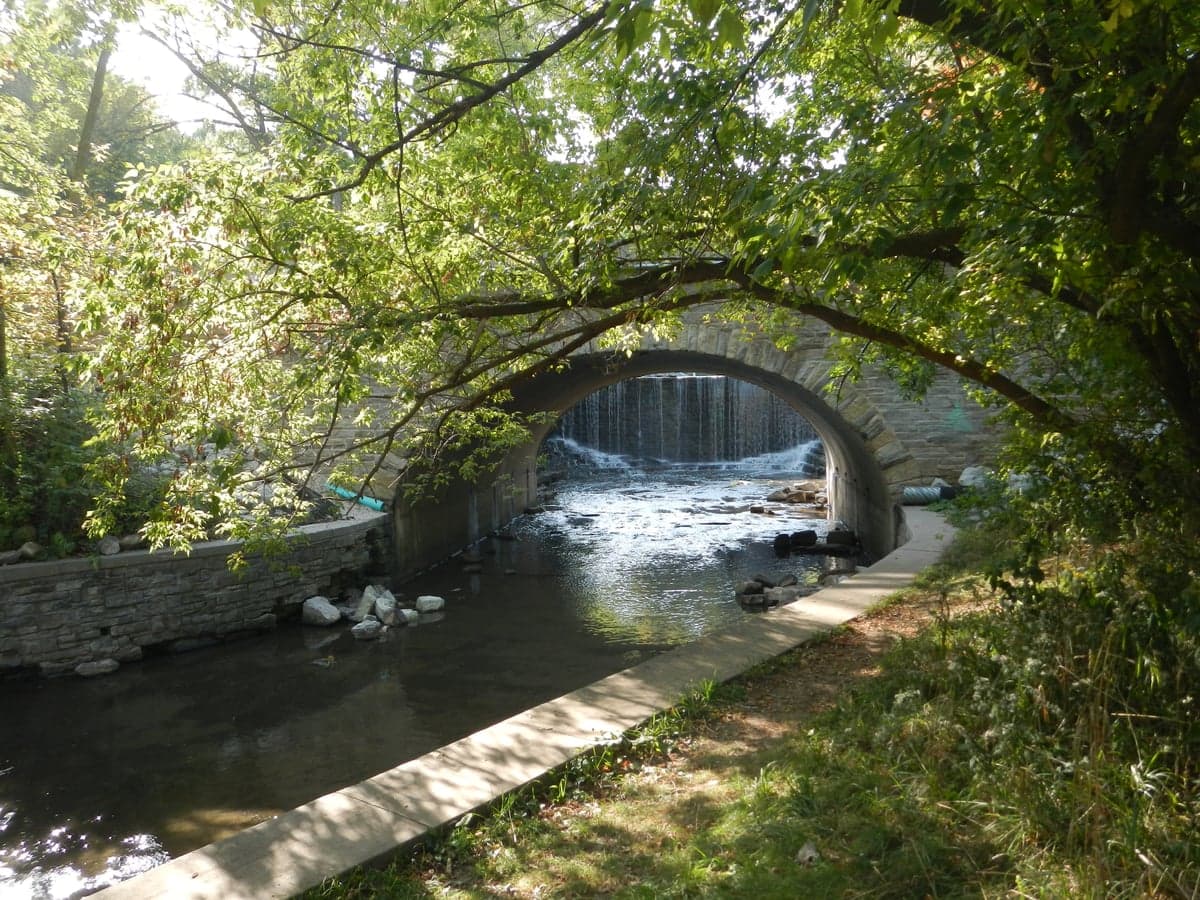
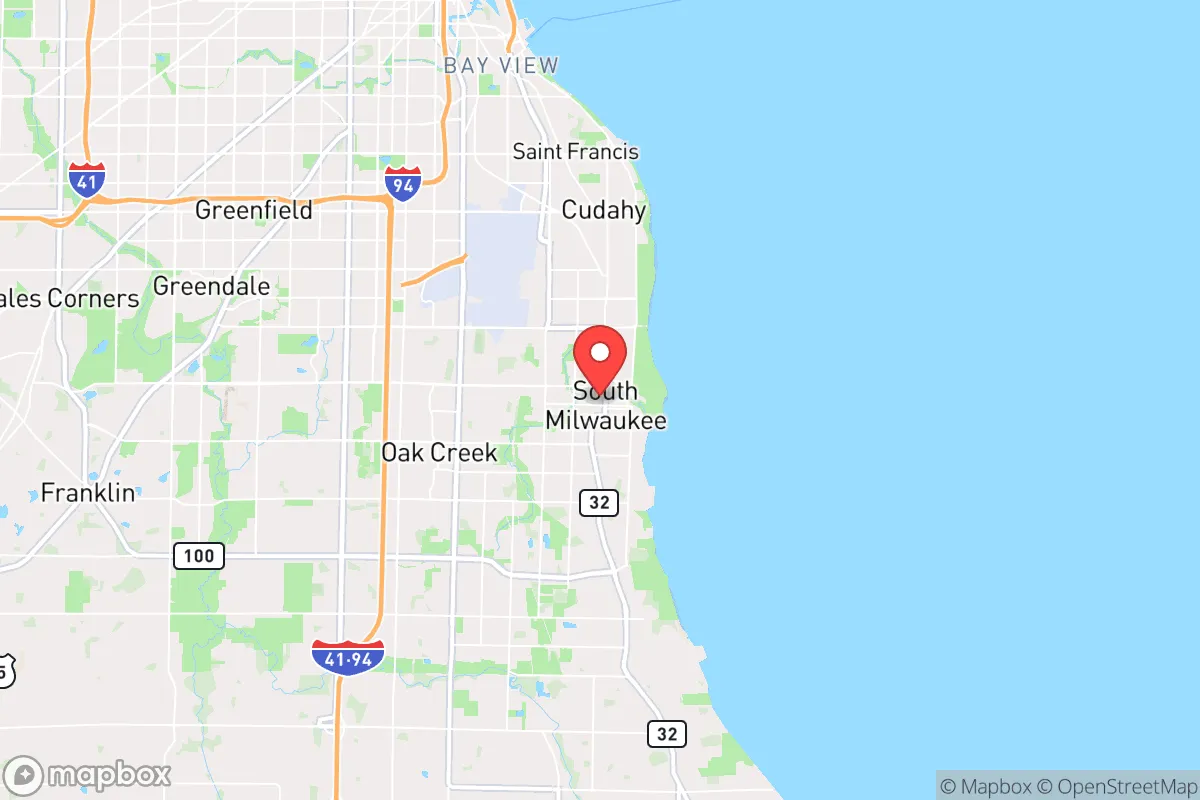
Photo: Wikipedia
Personal Sovereignty in South Milwaukee, WI
Moderate friction. Expect trade-offs in some aspect of personal liberty and independence.
What does Personal Sovereignty tell us?
Personal Sovereignty measures your capacity for self-reliance and independence with minimal government friction. Higher scores mean fewer barriers between you and the way you want to live... but it assumes you have the space you need and good neighbors.
What does this tell us?
Personal Sovereignty measures your capacity for self-reliance and independence with minimal government friction. Higher scores mean fewer barriers between you and the way you want to live... but it assumes you have the space you need and good neighbors.
State Policy
Energy independence: Importer (15% of energy produced in-state)
Personal Liberty
Homesteading

Personal Liberty Analysis
South Milwaukee offers a mixed bag for those prioritizing personal sovereignty, where the state-level constraints of Wisconsin’s regulatory environment clash with a local culture that still values self-reliance and community independence. For a conservative-leaning individual or family looking to minimize government overreach, this small city of roughly 21,000 along Lake Michigan provides a baseline of autonomy that is neither as restrictive as neighboring Illinois nor as permissive as states like Texas or Montana. The key trade-off here is access to Great Lakes resources and a relatively affordable housing stock against a state government that has steadily expanded its reach into taxation, gun rights, and medical mandates over the past decade.
Tax burden and regulatory posture: what you pay for the right to be left alone
Wisconsin’s tax burden ranks in the middle of the pack nationally, but South Milwaukee residents face a cumulative load that can feel heavy for those accustomed to low-tax states. The state income tax is progressive, ranging from 3.54% to 7.65% for top earners, and property taxes in Milwaukee County average around 2.2% of assessed home value—one of the higher rates in the Midwest. For a median home priced near $200,000 in South Milwaukee, that translates to roughly $4,400 annually in property taxes alone, before factoring in state and local sales taxes of 5.6% combined. The regulatory posture at the city level is moderate: zoning is conventional, building permits are required for most structural changes, and the city enforces standard nuisance ordinances. However, Wisconsin’s prevailing wage laws and strict contractor licensing can add friction for anyone attempting to build or renovate independently. Compared to rural Wisconsin counties, South Milwaukee’s tax and regulatory environment is denser, but it remains far less intrusive than what you’d find in Madison or Milwaukee proper.
Self-defense and gun law specifics: where Wisconsin stands on the right to keep and bear arms
Wisconsin is a shall-issue state for concealed carry, meaning that as long as you pass a background check and complete a training course, the state must issue a permit—no discretionary denial by local officials. This is a solid foundation for self-defense rights, but there are notable limitations. Open carry is legal without a permit for anyone 18 or older who can legally possess a firearm, though local ordinances in some municipalities, including South Milwaukee, have historically attempted to restrict it in public parks or buildings—always check current city code. The state preempts local gun laws, so South Milwaukee cannot ban carry outright, but it can regulate discharge within city limits, which effectively limits defensive firearm use to inside the home or on private property. Magazine capacity is not restricted by state law, and there is no universal background check requirement for private sales, which preserves a degree of privacy in transactions. However, Wisconsin does have a 48-hour waiting period for handgun purchases and requires a permit to carry concealed, which some sovereignty-minded individuals view as an unnecessary bureaucratic hurdle. Stand-your-ground laws are not explicitly codified in Wisconsin statute; instead, the state relies on castle doctrine and a duty-to-retreat standard outside the home, which can complicate self-defense claims in public spaces. For preppers, the lack of a red-flag law (as of 2026) is a positive, though such legislation has been proposed repeatedly in the state legislature.
Self-reliance and homesteading viability: lot sizes, zoning, and off-grid feasibility
South Milwaukee is a dense, older suburb with typical lot sizes ranging from 5,000 to 8,000 square feet—enough for a substantial garden and small livestock like chickens, but not for larger homesteading operations. The city’s zoning code permits backyard chickens with a permit and limits on flock size, but prohibits goats, pigs, or any livestock considered agricultural. For those seeking true self-reliance, this is a significant constraint. Off-grid feasibility is low: the city requires connection to municipal water and sewer, and solar panel installation is allowed but must comply with building codes and utility interconnection agreements that effectively prevent full grid disconnection. Rainwater collection is not explicitly prohibited, but Wisconsin’s water rights laws are complex, and large-scale cistern systems may trigger permitting. The growing season in southeastern Wisconsin runs about 150 days, with cold winters that limit year-round food production without heated greenhouses. For a serious prepper, South Milwaukee is better viewed as a base for building skills and community networks rather than a location for full homesteading. The real opportunity lies in the surrounding rural areas of Racine or Walworth counties, where 5- to 10-acre parcels are still affordable and zoning is far more permissive.
Personal liberties: parental rights, medical autonomy, speech, and property
Wisconsin has a mixed record on parental rights. The state does not have a comprehensive parental bill of rights, but it does allow for homeschooling with minimal regulation—no prior approval, no standardized testing requirements, and no mandated curriculum beyond a general educational program. This is a strong point for families wanting to opt out of government schooling. Medical autonomy is more concerning: Wisconsin has maintained COVID-era emergency powers that allowed for vaccine mandates in healthcare settings, and the state medical board retains broad authority over alternative medicine practitioners. Informed consent laws for vaccines are weak, and religious exemptions are not guaranteed for all mandates. On speech, Wisconsin is generally protective, with no hate speech laws that criminalize expression, though local ordinances in Milwaukee County have occasionally tested the limits of public assembly rights. Property rights are solid in theory, but eminent domain has been used aggressively for development projects in the region, and the state’s DNR has broad authority over wetland and shoreline use, which can restrict what you do on your own land near Lake Michigan or the Root River. For those who value maximum personal liberty, South Milwaukee is a compromise: you get significant freedom in education and speech, but face real constraints on medical choice and property use.
Overall, South Milwaukee offers a baseline level of personal sovereignty that is workable for those willing to navigate Wisconsin’s state-level restrictions, but it is not a haven for the truly autonomy-minded. Compared to rural northern Wisconsin or states like Idaho or New Hampshire, the regulatory overhead is higher, the tax burden is heavier, and the ability to live off-grid or fully armed is more limited. However, for a conservative individual or family who values community stability, access to Lake Michigan resources, and proximity to Milwaukee’s job market without living in the city proper, South Milwaukee provides a reasonable middle ground—just don’t expect the kind of sovereign freedom you’d find in a low-regulation, low-tax state. The real strategic play here is to use South Milwaukee as a launchpad: build your skills, network with like-minded locals, and keep an eye on property in the surrounding counties where the government footprint is lighter and the land is more forgiving.

* Values derived from national, state, county, city and local statistics and may differ in a specific area. Last updated: 2026-04-21T10:36:34.000Z
Narrative content on this page is AI-generated and may contain mistakes. Verify any details that matter before acting on them.
ReloMaps may earn a commission from affiliate links at no extra cost to you.

