Photo: Wikipedia
Demographics of South Padre Island, TX
Affluence Level in South Padre Island, TX
A middle-class area roughly in line with national averages across income, home values, education, and employment.
People of South Padre Island, TX
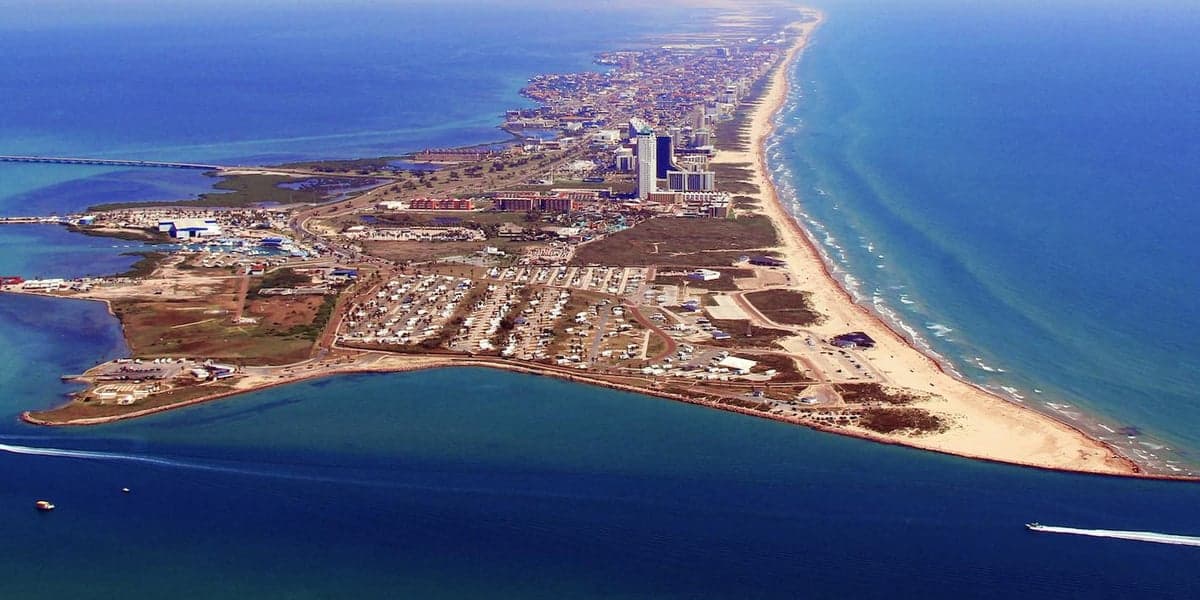
South Padre Island, Texas, is a small, densely built barrier-island resort city of 2,852 residents, where the population is overwhelmingly White (76.2%) and college-educated (52.5%), with a notable Hispanic minority (14.8%) and a small but present Black (5.6%) and Indian-subcontinent (1.8%) community. The city’s identity is shaped by its dual role as a spring-break destination and a quiet, year-round residential enclave for retirees, second-home owners, and tourism-industry workers. Unlike mainland border towns, South Padre Island’s population is less transient and more property-owning, with a foreign-born share of just 5.7% — well below the Texas average. The island’s human history is a story of late development, tourism-driven migration, and a gradual shift from seasonal to permanent residency.
How the city was settled and grew
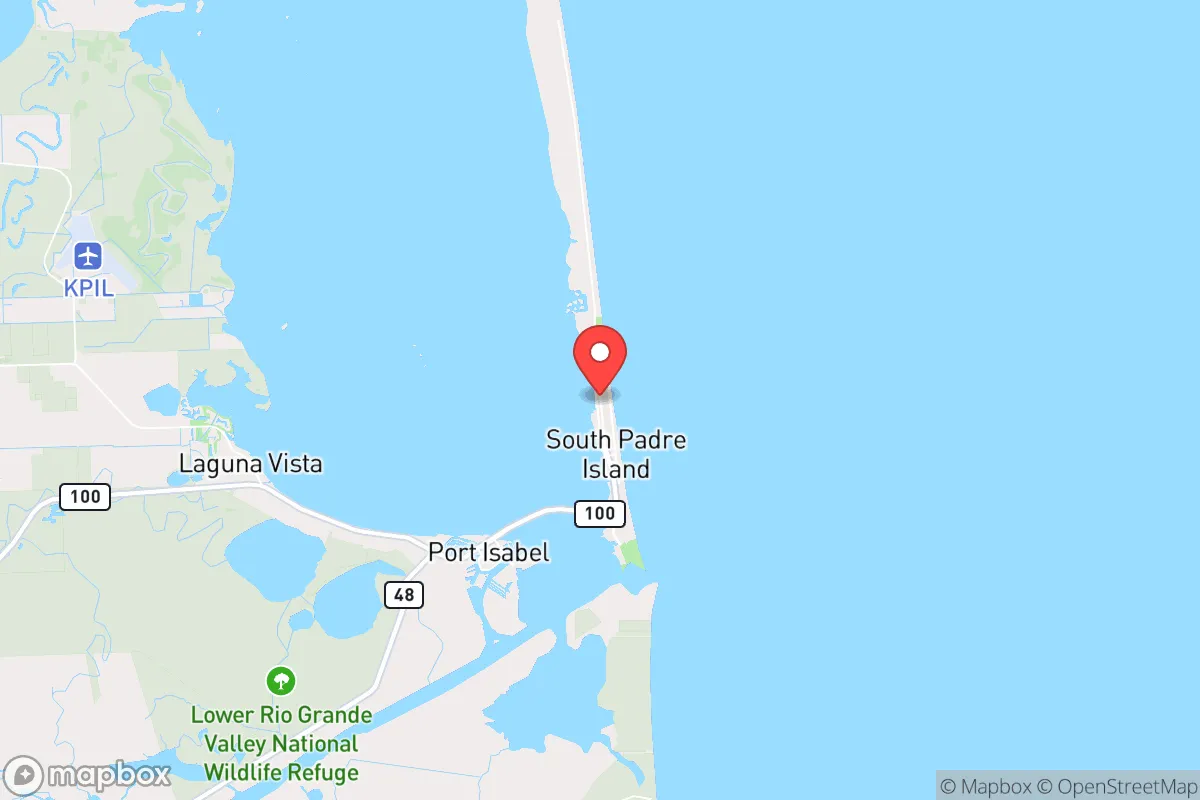
South Padre Island was not settled by Spanish colonists or 19th-century ranchers; it remained largely uninhabited sand dunes and tidal flats until the mid-20th century. The first permanent structures appeared in the 1920s, when a handful of fishing camps and modest beach houses were built near what is now Island Park, the oldest residential pocket on the island. The construction of the Queen Isabella Causeway in 1954 — connecting the island to Port Isabel on the mainland — triggered the first real wave of settlement. During the 1950s and 1960s, developers subdivided the southern end of the island into lots, attracting middle-class Anglo families from the Rio Grande Valley and winter visitors from the Midwest. These early residents built simple cottages and small motels in the area now known as Gulf Boulevard, the island’s main commercial spine. The population remained tiny — under 500 — through the 1970s, with most homes used seasonally.
Modern era (post-1965)
The 1965 Immigration and Nationality Act had little direct effect on South Padre Island, as the city never developed a large immigrant labor base. Instead, the modern population boom came from domestic tourism and retirement migration. The 1980s and 1990s saw a surge in condominium and hotel construction, particularly in the Beachfront Condo Corridor stretching from the southern tip north to about Saxton Boulevard. This area attracted affluent retirees and second-home buyers from Texas, the Midwest, and Canada — overwhelmingly White and college-educated. Meanwhile, the service workforce — housekeepers, restaurant staff, construction laborers — began commuting from the mainland, especially from the Hispanic-majority communities of Port Isabel and Brownsville. A small but stable Black population (5.6%) settled primarily in the Laguna Vista area on the bay side, drawn by lower property costs and proximity to the island’s hospitality jobs. The Indian-subcontinent community (1.8%), largely professionals in healthcare and hospitality management, concentrated in the newer Bayside Residences district, built in the 2000s. The East/Southeast Asian population (0.0%) is essentially absent, reflecting the island’s limited economic draw for that demographic.
The future
South Padre Island’s population is projected to grow slowly, constrained by limited developable land and strict building-height ordinances. The city is not homogenizing into a single demographic block; rather, it is developing distinct enclaves. The Beachfront Condo Corridor will likely remain overwhelmingly White and affluent, while the bay-side neighborhoods — Laguna Vista and Bayside Residences — are becoming more ethnically diverse, with modest increases in Hispanic and Black homeownership. The Indian-subcontinent share (1.8%) is stable, driven by a few family-owned hotel and medical practices, but not expanding rapidly. The foreign-born share (5.7%) is unlikely to rise significantly, as the island lacks the industrial or agricultural jobs that attract large immigrant populations. Over the next 10–20 years, the population will likely age in place, with the 65+ cohort growing as younger families find the island’s housing costs prohibitive. The city’s character will remain that of a small, property-owning resort community — increasingly expensive, increasingly seasonal, and demographically stable.
For a conservative-leaning individual or family considering relocation, South Padre Island offers a low-crime, high-amenity environment with a population that is predominantly White, college-educated, and politically moderate-to-conservative. The city is not a melting pot but a series of distinct residential zones, each with its own demographic profile. New arrivals will find a place where property values are rising, community involvement is high, and the pace of change is slow — a deliberate, insular island community that values stability over growth.

* Values derived from national, state, county, city and local statistics and may differ in a specific area. Last updated: 2026-04-15T06:31:11.000Z
Narrative content on this page is AI-generated and may contain mistakes. Verify any details that matter before acting on them.
ReloMaps may earn a commission from affiliate links at no extra cost to you.

