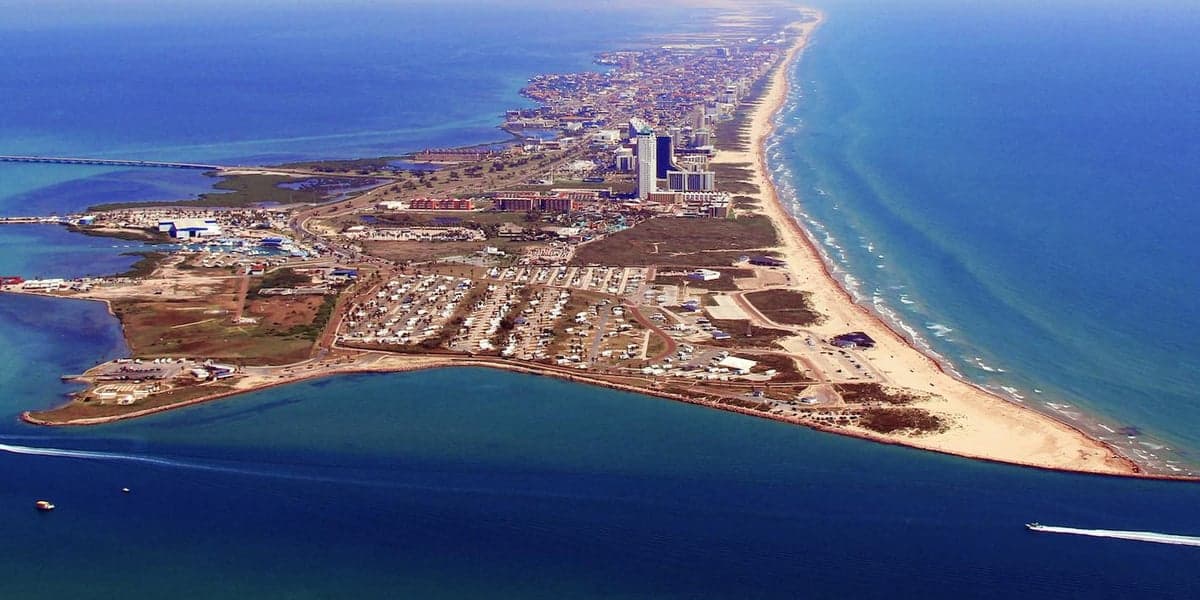
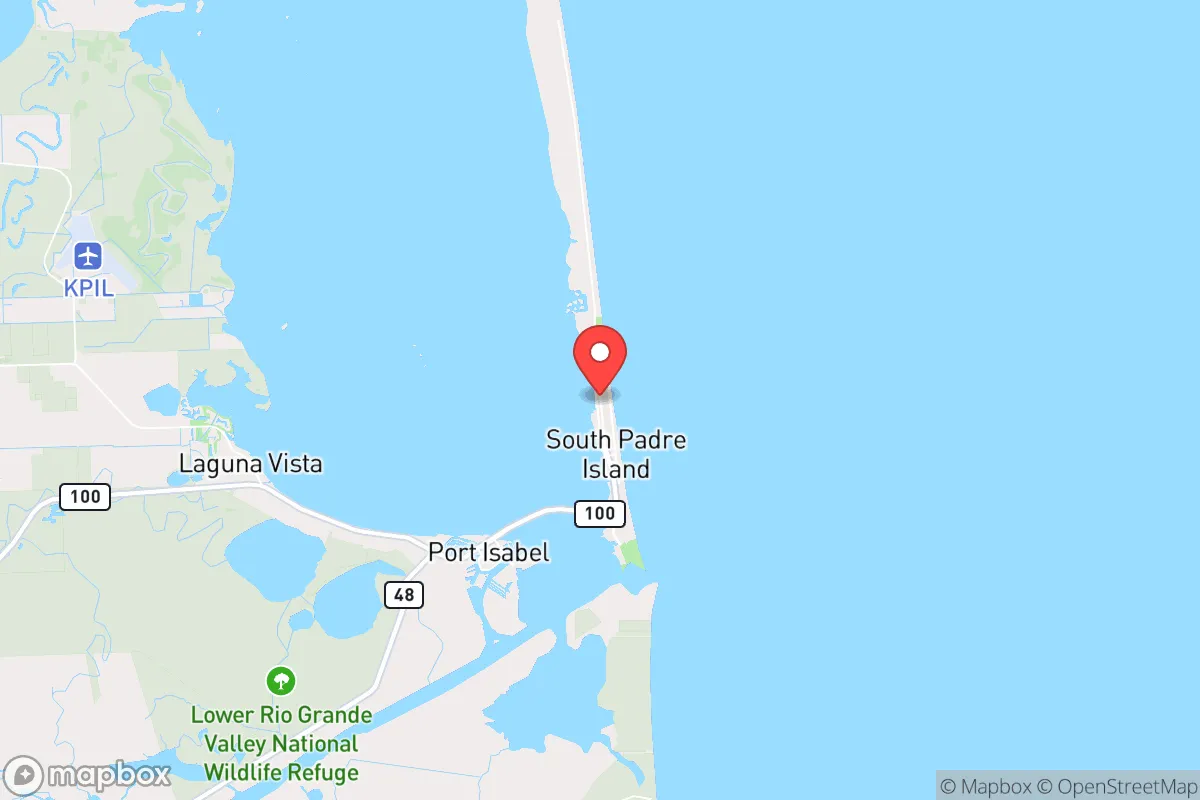
Photo: Wikipedia
Political ClimatePolitical Climate in South Padre Island, TX
District shown is the primary district for this city’s centroid. Cities may span multiple districts.
Local Political AnalysisPolitical Analysis of South Padre Island, TX
South Padre Island, Texas, has long been a bit of a political outlier in the deep-red Rio Grande Valley, and that’s becoming more pronounced. The Cook PVI rating of EVEN tells you everything you need to know: this is a true swing area, where the national average meets a local mix of libertarian-leaning beach culture and a growing progressive influence from tourism and seasonal residents. For decades, the island was a quiet, conservative-leaning place where folks just wanted to be left alone to fish, surf, and run their small businesses. But over the last five to ten years, you’ve seen a real shift—more coastal development, more short-term rentals, and a creeping sense that the government is getting too cozy with telling people how to live their lives.
How it compares
Drive 30 minutes inland to Brownsville or Harlingen, and you’re in solidly Republican territory—those areas vote +15 to +20 points red in most elections. The contrast is stark. On the island, you’ll find a mix of retirees from the Midwest who brought their conservative values, but also a younger, transient crowd from places like Austin and Houston who push for more regulations on everything from beach driving to vacation rentals. The surrounding Cameron County is reliably Democratic, but that’s more about the border population and union influence than any progressive ideology. What’s happening on South Padre is different: it’s a battle between the old guard who want minimal government interference—no noise ordinances, no restrictions on where you can park your RV—and a newer wave that wants to turn the island into a mini-Portland with bike lanes, plastic bag bans, and stricter building codes. That’s the real concern here: the erosion of personal freedoms under the guise of “sustainability” or “quality of life.”
What this means for residents
If you’re a long-time resident or someone considering a move here, the political climate directly affects your daily life. Property taxes are already climbing as the county tries to fund more infrastructure for the growing tourist economy, and there’s constant pressure from the city council to impose new fees on beach access or limit the number of days you can rent out your home. The local school board and city elections are where the rubber meets the road—these are the folks deciding whether you can still drive on the beach or if you’ll need a permit to park near your own house. The shift towards progressive ideology is concerning because it often comes with more rules, more oversight, and less trust in residents to make their own choices. You see it in the push for “affordable housing” mandates that actually drive up costs, or in the talk about banning single-use plastics that just makes life harder for small businesses. It’s a slow creep, but it’s real.
Culturally, South Padre still has that laid-back, saltwater-in-your-veins vibe, but the policy battles are getting sharper. The island’s economy depends on tourism, and that means a constant tension between keeping things open and free versus catering to the loudest voices in the room. The near-term outlook is uncertain: if the progressive wave continues, you could see more restrictions on everything from jet skis to beach bonfires. But if the conservative, live-and-let-live crowd stays engaged, the island might hold onto its character. Either way, it’s a place where your vote really counts—and where the fight over personal freedom is happening one city council meeting at a time.

State Political ClimatePolitical Climate in Texas
State Political AnalysisPolitical Environment in the State
Texas remains a solidly Republican state, but the margin has tightened noticeably over the past decade. In 2024, Donald Trump carried the state by roughly 9 points, down from 11 points in 2020 and 16 points in 2012. The dominant coalition is still conservative, anchored by suburban families, rural voters, and the oil-and-gas economy, but explosive growth in the blue-leaning metros of Austin, Dallas, Houston, and San Antonio is slowly shifting the map. The 10-to-20-year trajectory shows a state that is still red, but with a growing purple streak that worries many longtime residents.
Urban vs. rural divide
The political geography of Texas is stark. The vast rural and exurban areas—places like Lubbock, Amarillo, and the Permian Basin—vote Republican by 30 to 50 points. These are the heart of the state’s conservative identity. Meanwhile, the major urban cores are deep blue. Austin (Travis County) voted +52 for Biden in 2020, and El Paso (El Paso County) voted +37 for Biden. The real battleground is the fast-growing suburban ring around these cities. Collin County (north of Dallas) voted +15 for Trump in 2024, down from +24 in 2016. Fort Bend County (southwest of Houston) flipped from red to blue between 2016 and 2020 and is now a Democratic stronghold. The divide isn’t just about cities versus farms—it’s about which suburbs are holding the line and which are turning.
Policy environment
Texas has no state income tax, which remains a massive draw for conservatives fleeing high-tax states like California and New York. Property taxes are high to compensate—averaging about 1.6% of home value—but the overall tax burden is still lower than most blue states. The regulatory posture is business-friendly: no state-level OSHA, minimal zoning in many areas, and a right-to-work law that keeps unions weak. On education, the state has expanded school choice through vouchers and charter schools, though the 2023 push for a universal ESA program failed in the House due to rural Republican opposition. Healthcare policy is limited: Texas did not expand Medicaid under the ACA, and the state has some of the strictest abortion laws in the nation (SB 8, the Heartbeat Act, and the near-total ban after Dobbs). Election laws have tightened: SB 1 (2021) restricted mail-in voting, added ID requirements, and banned 24-hour and drive-through voting. For a conservative, the policy environment is largely favorable, but the property tax burden and the ongoing fight over school funding are real concerns.
Trajectory & freedom
On personal liberty, Texas has been a mixed bag. The good news for gun owners: permitless carry (HB 1927) became law in 2021, allowing most adults to carry a handgun without a license. The state also passed a Second Amendment Sanctuary law in 2021, prohibiting state agencies from enforcing federal gun laws that violate the Texas Constitution. On parental rights, the 2023 session saw the passage of the READER Act, which restricts sexually explicit content in school libraries and gives parents more control over curriculum. However, the state has also expanded government power in ways that alarm libertarians. The 2021 law banning mask mandates and vaccine passports (SB 968) was a win for medical freedom, but the state’s aggressive use of the death penalty and its strict drug laws (possession of even small amounts of marijuana can still lead to jail time) are areas where the government remains heavy-handed. The biggest freedom concern for many is property rights: the use of eminent domain for private pipelines and the lack of statewide zoning have led to situations where homeowners have little say over what gets built next door. Overall, Texas is freer than most states, but the trend is toward more government intervention in local land use and education.
Civil unrest & political movements
Texas has seen its share of political flashpoints. The 2020 Black Lives Matter protests in Austin were large and occasionally violent, leading to a backlash that helped fuel the 2021 passage of a law increasing penalties for rioting and blocking highways. Immigration politics are a constant source of tension. Governor Abbott’s Operation Lone Star has deployed state troopers and National Guard to the border, and the state has bused thousands of migrants to New York City, Chicago, and Denver. The “sanctuary city” ban (SB 4) remains in effect, requiring local law enforcement to cooperate with federal immigration authorities. Secession rhetoric has grown louder on the far right, with the Texas Nationalist Movement gaining some traction, but it remains a fringe position. Election integrity remains a hot-button issue: the 2020 election saw lawsuits over drive-through voting in Harris County (Houston), and the 2022 primaries were marked by purges of voter rolls. A new resident will notice the political polarization in everyday life—yard signs, bumper stickers, and conversations at the grocery store are more charged than in most states.
Projection
Over the next 5 to 10 years, Texas will continue to shift leftward at the margins, but it will remain a Republican-controlled state for the foreseeable future. The key factor is in-migration: roughly 1,000 people move to Texas every day, and while many are conservatives from California, a significant number are younger, college-educated professionals who lean left. The suburbs of Dallas and Houston are the battlegrounds—if Tarrant County (Fort Worth) flips blue, the entire state could become competitive. The Republican Party is likely to respond by doubling down on cultural issues (abortion, guns, immigration) to turn out the rural base, while the Democratic Party will focus on the suburbs and the growing Hispanic population, which is still conservative on social issues but increasingly voting Democratic. For someone moving in now, expect a state that is still deeply conservative in its laws and culture, but with a growing progressive minority that will make politics more contentious. The property tax issue will likely force a shift toward a consumption tax or a state income tax within a decade, which would be a major change.
Bottom line for a new resident: Texas offers low taxes, strong gun rights, and a business-friendly environment, but the political climate is becoming more polarized and the state’s long-term trajectory is uncertain. If you’re a conservative looking for a place where your values are still the majority, the suburbs of Fort Worth, San Antonio, or Lubbock are safer bets than Austin or Houston. Pay attention to local school board races and county commissioner elections—that’s where the real fight over the future of Texas is happening.
* Values derived from national, state, county, city and local statistics and may differ in a specific area. Last updated: 2026-04-15T06:31:11.000Z
Narrative content on this page is AI-generated and may contain mistakes. Verify any details that matter before acting on them.
ReloMaps may earn a commission from affiliate links at no extra cost to you.

