Personal Sovereignty in Southlake, TX
Strong independent fundamentals that actively favor personal liberty and low regulation.
What does Personal Sovereignty tell us?
Personal Sovereignty measures your capacity for self-reliance and independence with minimal government friction. Higher scores mean fewer barriers between you and the way you want to live... but it assumes you have the space you need and good neighbors.
What does this tell us?
Personal Sovereignty measures your capacity for self-reliance and independence with minimal government friction. Higher scores mean fewer barriers between you and the way you want to live... but it assumes you have the space you need and good neighbors.
State Policy
Energy independence: Net exporter (220% of energy produced in-state)
Personal Liberty
Homesteading

Personal Liberty Analysis
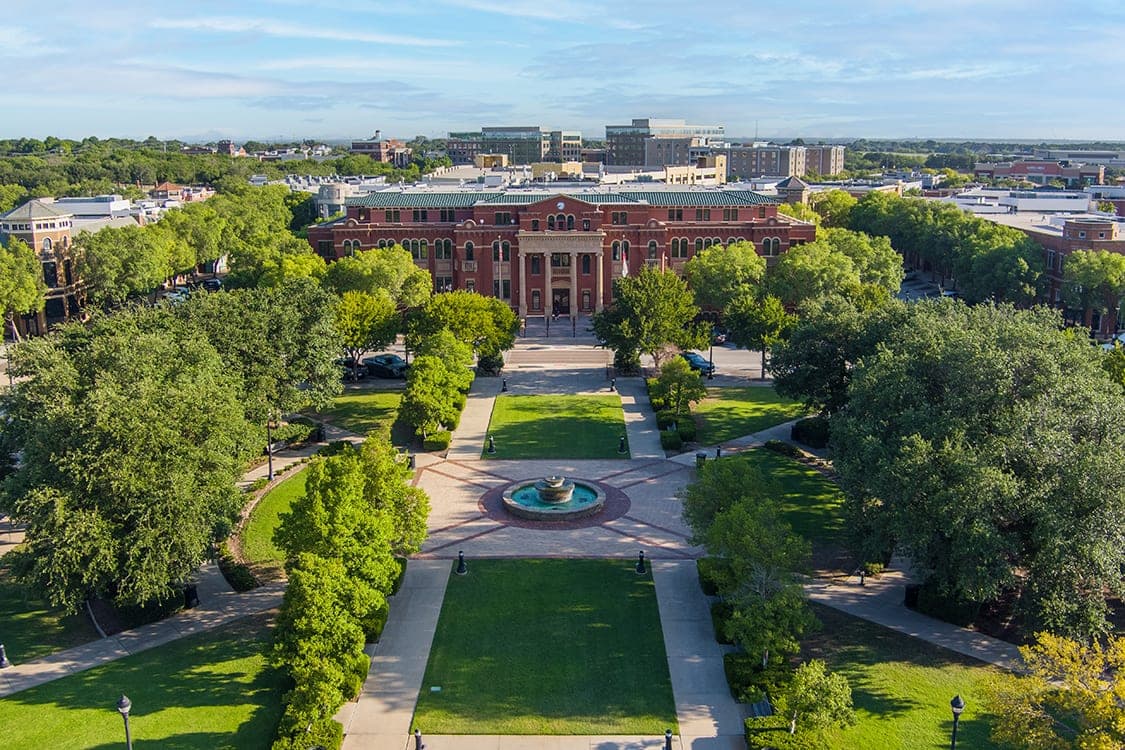
Southlake, Texas, offers a notably high degree of personal sovereignty compared to most of the United States, but it is not a libertarian free-for-all. The city operates within the broader framework of Texas state law, which strongly preempts local ordinances on everything from firearms to property rights, creating a legal environment where individual autonomy is the default rather than the exception. However, Southlake’s status as a wealthy, master-planned suburb means that homeowners’ associations (HOAs) and city zoning codes impose a layer of community-level governance that a survivalist or prepper must carefully evaluate. The net result is a place where your personal freedoms are robust against state and federal overreach, but your ability to live entirely off-grid or without neighborly oversight is significantly constrained.
Tax burden and regulatory posture: How Texas state law protects your wallet and choices
The single most impactful factor for personal sovereignty in Southlake is the absence of a state income tax. Texas’s constitutional prohibition on a personal income tax means every dollar you earn is yours to keep, save, and invest in your own preparedness—whether that’s land, supplies, or training. This is a stark contrast to high-tax states where the government effectively takes a cut of your labor before you can allocate it to your own security. Property taxes in Southlake are high, typically around 2.1% to 2.3% of assessed value, but this is a localized trade-off for top-tier schools and infrastructure. The regulatory posture at the state level is equally favorable: Texas has a strong tradition of limited government, with minimal business licensing requirements and no state-level building codes that would prevent you from reinforcing your home or constructing a storm shelter. The city of Southlake itself is generally business-friendly, but its zoning code is strict—no heavy industry, no large-scale farming, and no commercial activity in residential areas without a specific permit. For the prepper, this means you can run a home-based business (like a firearms training consultancy) with relative ease, but you cannot operate a small farm stand or repair shop from your garage without jumping through city hoops.
Self-defense and gun law specifics: What the Second Sanctuary status means for daily carry and storage
Texas is a constitutional carry state, and Southlake fully embraces that. As of 2021, any law-abiding adult 21 or older can carry a handgun openly or concealed without a permit, and the city has no local ordinances restricting that right. Southlake is also a designated “Second Amendment Sanctuary” city, meaning its local government has formally resolved to oppose any state or federal infringements on the right to keep and bear arms. In practical terms, this means you can carry in most public spaces, including parks and sidewalks, though private businesses and the city’s own municipal buildings (like city hall) can post 30.06 or 30.07 signs to prohibit concealed or open carry. The police department is known for being pro-Second Amendment, and there are no magazine capacity restrictions or “assault weapon” bans at the state or local level. For the survivalist, this is a critical advantage: you can stockpile firearms and ammunition without fear of local confiscation, and you can train on your own property as long as you’re not discharging a firearm within city limits (which is prohibited except at a licensed range). The nearest public range is about 20 minutes away in Fort Worth, so daily practice requires a short drive, but the legal framework for self-defense is as strong as it gets in any major suburban area.
Self-reliance and homesteading viability: Lot sizes, zoning, and off-grid feasibility in a master-planned suburb
This is where Southlake’s sovereignty profile gets complicated for the serious prepper. The city is almost entirely composed of subdivisions with HOAs, and typical lot sizes range from one-quarter acre to one-half acre. There are no large agricultural parcels within city limits, and the zoning code explicitly prohibits livestock, poultry, and beekeeping in most residential areas. Growing a substantial vegetable garden is allowed, but HOAs often have strict rules about garden aesthetics—no visible fencing, no compost piles, and no structures like greenhouses without prior approval. Off-grid living is effectively impossible: the city requires connection to municipal water and sewer, and solar panels are allowed but must be installed in a way that is not visible from the street (per HOA covenants). Rainwater collection is legal under Texas state law (HB 3391), but HOAs can restrict the size and placement of barrels. For the survivalist seeking true self-reliance, Southlake is not the place. You will be dependent on the grid, on municipal services, and on your neighbors’ compliance with HOA rules. However, the surrounding areas—like unincorporated Denton County or rural Johnson County—offer larger lots (1-5 acres) with no HOA, where you can build a proper homestead with chickens, a well, and a septic system. Many Southlake residents who prioritize self-reliance buy a secondary property in those areas while keeping their primary residence in the city for work and school access.
Personal liberties: Parental rights, medical autonomy, speech, and property protections
Texas has become a national leader in protecting parental rights, and Southlake’s school district (Carroll ISD) has been at the center of that fight. The state’s 2023 law (HB 900) requires schools to notify parents of any instructional materials that might be considered sexually explicit, and Southlake’s school board has been aggressively conservative, pushing for curriculum transparency and parental opt-out rights. For parents concerned about government overreach into their children’s education, this is a strong positive. Medical autonomy is more mixed: Texas has banned nearly all abortions (trigger law after Dobbs) and has strict vaccine mandates for school children (though medical and religious exemptions are available). The state does not have a general “right to try” law for experimental treatments, but it does allow for the use of ivermectin and hydroxychloroquine under certain conditions. Free speech is robustly protected under the Texas Religious Freedom Restoration Act and the state’s anti-SLAPP laws, which make it difficult for the government or private entities to silence political or religious expression. Property rights are protected by the Texas Property Code, which limits the power of HOAs to foreclose on your home for minor violations—though they can still fine you. The key takeaway: Southlake offers strong protections for traditional conservative values, but the HOA structure means you have traded some individual property autonomy for community aesthetics and property values.
Overall, Southlake provides a high baseline of personal sovereignty relative to blue-state suburbs, but it is not a haven for the rugged individualist. The state-level protections—no income tax, constitutional carry, parental rights, and property rights—are excellent. The city-level reality is that you are living in a highly regulated, HOA-dominated community where self-reliance is limited to financial independence and legal autonomy, not physical off-grid capability. For the strategic relocator who wants a safe, conservative community with strong schools and legal protections, Southlake is a top-tier choice. For the prepper who wants to build a self-sufficient compound, look 30 minutes west to the rural counties. The smartest approach is to use Southlake as your base for work and education while securing a secondary property for true self-reliance—a strategy that leverages the best of both worlds.

* Values derived from national, state, county, city and local statistics and may differ in a specific area. Last updated: 2026-04-20T14:03:28.000Z
Narrative content on this page is AI-generated and may contain mistakes. Verify any details that matter before acting on them.
ReloMaps may earn a commission from affiliate links at no extra cost to you.

