Political ClimatePolitical Climate in Southlake, TX
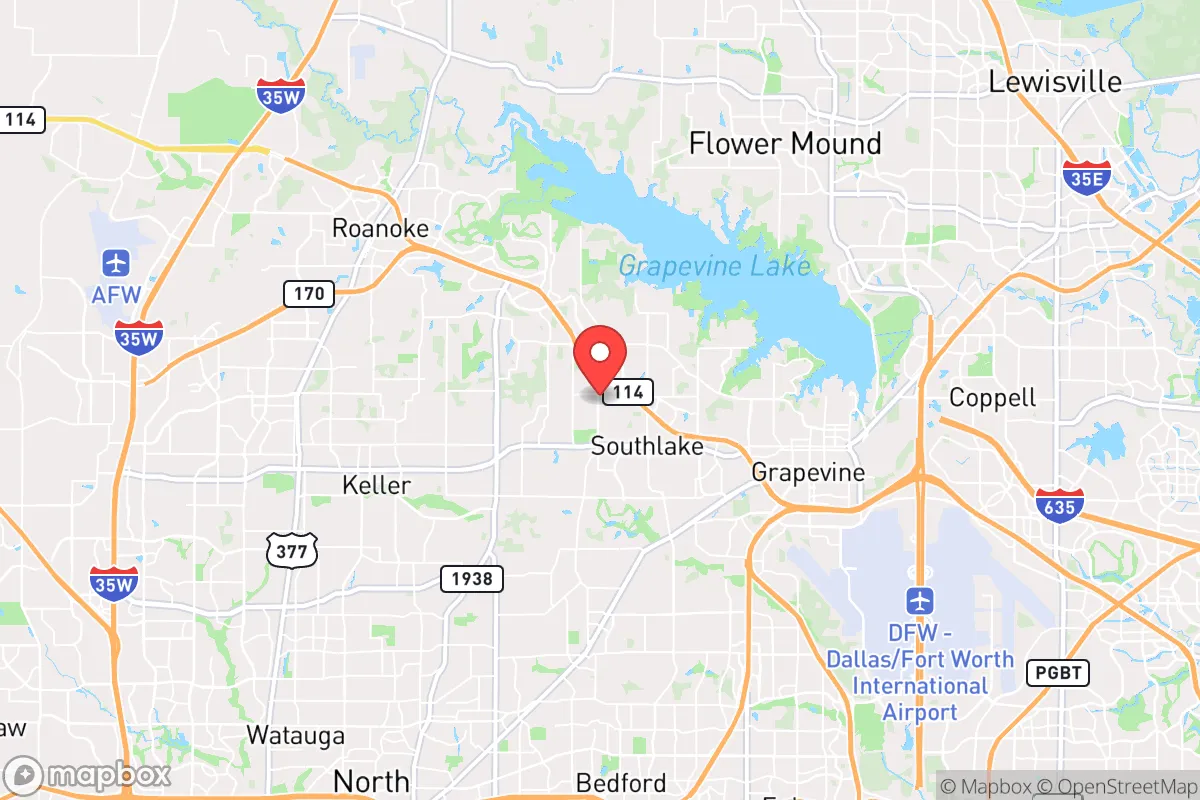
District shown is the primary district for this city’s centroid. Cities may span multiple districts.
Local Political AnalysisPolitical Analysis of Southlake, TX
Southlake has long been a reliably conservative stronghold, and that hasn't changed much at the ballot box—the area carries a Cook PVI of R+7, meaning it votes about seven points more Republican than the national average. But if you've lived here as long as I have, you know the real story isn't just about election results; it's about a quiet but persistent shift in the local culture and school board politics that has a lot of longtime residents watching closely. The trajectory isn't a sudden leftward lurch, but more of a slow creep toward progressive priorities that would have been unthinkable a decade ago, especially in areas like curriculum and local ordinances.
How it compares
Compared to nearby cities, Southlake still stands out as a conservative anchor. Drive ten minutes east to Grapevine, and you'll find a more moderate, business-friendly atmosphere that leans slightly left of Southlake. Head south to Fort Worth, and the contrast is even starker—Tarrant County as a whole has been trending purple, with Fort Worth proper electing more progressive city council members in recent cycles. Even neighboring Keller, once a rock-ribbed conservative suburb, has seen school board races become battlegrounds over critical race theory and gender ideology. Southlake's R+7 rating keeps it firmly in the red column, but the margin has narrowed slightly from where it was in the 2000s, when you could practically predict every local race by the precinct map. The real worry isn't that Southlake will turn blue overnight—it's that the incremental normalization of progressive ideas in schools and city hall could erode the community's character over the next decade.
What this means for residents
For families and individuals who moved here specifically for the conservative values and strong property rights, the current climate means staying vigilant. The most visible battleground has been the Carroll Independent School District, where debates over library books, parental rights, and transgender policies have drawn national attention. School board meetings have become tense, with a vocal minority pushing for policies that prioritize ideological conformity over academic excellence and parental control. On the city level, Southlake has resisted the kind of zoning and housing mandates that some state legislators are pushing—like density increases and affordable housing quotas—which many see as government overreach into local decision-making. For now, the city council remains conservative, but the pressure is mounting from regional planning bodies and state-level progressive advocacy groups. If you value limited government and local control, you'll want to keep an eye on who's running for school board and city council, because those races have become the front lines of a larger cultural fight.
Culturally, Southlake still feels like a place where you can raise a family without constant political noise, but that's changing. The town's identity has always been wrapped up in its top-rated schools, high property values, and a sense of community where neighbors look out for each other. What's different now is the growing divide between residents who want to preserve that traditional, freedom-oriented culture and those who see Southlake as a place to import the same progressive policies that have failed in larger cities. The long-term outlook depends on whether the conservative majority stays engaged and organized. If history is any guide, Southlake's political DNA is resilient, but it's not immune to the broader trends reshaping the Dallas-Fort Worth suburbs. The next few election cycles will tell us whether this remains a place where personal liberty and local control are the default—or whether we're in for a slow, grinding shift toward the kind of top-down governance that so many of us moved here to escape.

State Political ClimatePolitical Climate in Texas
State Political AnalysisPolitical Environment in the State
Texas remains a solidly Republican state, but the margin has tightened noticeably over the past two decades. In 2004, George W. Bush carried the state by 23 points; in 2024, Donald Trump won it by roughly 9 points. The dominant coalition is still conservative—pro-business, pro-gun, and skeptical of federal overreach—but rapid in-migration from blue states and explosive growth in the urban core are slowly reshaping the electorate. The long arc shows a state that is still red, but with a deepening purple streak in its biggest cities.
Urban vs. rural divide
The political map of Texas is a study in contrasts. The vast rural and exurban counties—places like Lubbock, Amarillo, and the Permian Basin around Midland—vote Republican by 40 to 60 points. These areas are the engine of the state’s conservative majority. Meanwhile, the major metros tell a different story. Harris County (Houston) flipped blue in 2018 and has stayed there, with Beto O’Rourke and later candidates winning it by 5-10 points. Dallas County went from red to blue in the same cycle, and Travis County (Austin) is now one of the most liberal jurisdictions in the South, voting Democratic by 40+ points. Bexar County (San Antonio) is trending blue but remains more moderate. The suburbs are the real battleground: Collin County (north of Dallas) was once a GOP stronghold but has shifted from +30 R to +10 R in a decade, while Fort Bend County (southwest of Houston) flipped blue in 2018 and is now reliably Democratic. The urban-rural divide is stark, and the growth is overwhelmingly in the blue-trending metros.
Policy environment
Texas’s policy environment is defined by its absence of a state income tax, a regulatory posture that favors business, and a legal system that caps non-economic damages in lawsuits. Property taxes are high—among the top 10 in the nation—to compensate for no income tax, but the 2023 property tax reform package (SB 2 and SB 3) cut school property tax rates by roughly 15 cents per $100 valuation and raised the homestead exemption to $100,000. Education policy is a flashpoint: the state funds schools through a complex Robin Hood system that redistributes property tax revenue from wealthy districts to poor ones, and the 2023 school voucher fight (SB 8) failed in the House, leaving the issue unresolved. Healthcare is a mixed bag: Texas has the highest uninsured rate in the country (around 17%), and the state has refused Medicaid expansion under the ACA. Election laws tightened in 2021 with SB 1, which banned drive-through voting, added ID requirements for mail ballots, and restricted early voting hours—a move conservatives saw as securing election integrity and progressives saw as suppression. The state’s constitutional carry law (HB 1927, 2021) allows permitless carry of handguns, and the Heartbeat Act (SB 8, 2021) bans abortion after roughly six weeks, enforced through private civil lawsuits.
Trajectory & freedom
On balance, Texas has become more free in several key areas over the last five years, but there are warning signs. The 2021 permitless carry law expanded gun rights significantly, and the 2023 property tax cuts reduced the burden on homeowners. Parental rights were strengthened with the 2023 law banning gender-transition procedures for minors (SB 14) and requiring school library transparency (HB 900). Medical autonomy took a hit with the abortion ban, but conservatives see that as protecting life, not restricting freedom. On the other hand, the state’s response to COVID—including prolonged business closures in some cities and mask mandates in Austin and Dallas—showed how local governments can overreach. The 2023 law banning COVID vaccine mandates by private employers (HB 7) was a corrective. The biggest threat to freedom is likely the growing power of local blue cities to impose their own regulations—like Austin’s paid sick leave ordinance or Houston’s non-discrimination ordinances—which the state legislature has repeatedly preempted. The trajectory is toward more state-level preemption of local control, which conservatives generally support as a check on progressive city councils.
Civil unrest & political movements
Texas has seen its share of political flashpoints. The 2020 Black Lives Matter protests in Austin and Houston were large and occasionally violent, leading to property damage and a police funding debate. The 2021 winter storm blackouts sparked protests over grid reliability, and the 2022 Uvalde school shooting reignited gun control debates. On the right, the “Texas Nationalist Movement” pushes for secession, though it has no real political power. Immigration politics are front and center: Governor Abbott’s Operation Lone Star has bused migrants to northern cities, and the state’s 2023 law (SB 4) making illegal entry a state crime is currently tied up in court. Sanctuary city bans (SB 4, 2017) remain in effect. Election integrity remains a hot topic—the 2020 audit of Harris County found no widespread fraud, but the 2021 voting law was passed anyway. A new resident would notice the heavy police presence at the border, the constant political ads on TV, and the fact that local news in Dallas and Houston covers both statehouse fights and city council battles intensely.
Projection
Over the next 5-10 years, Texas will likely remain Republican at the state level, but the margin will continue to shrink. The in-migration from California, New York, and Illinois is bringing more Democratic voters, but many of those movers are fiscally conservative and socially moderate—they’re not all progressives. The key battleground will be the suburbs of Dallas, Houston, San Antonio, and Austin. If those suburbs continue to shift left, Texas could become a swing state by 2032. The state legislature will likely continue to pass preemption laws to limit the power of blue cities, and property tax reform will remain a perennial issue. The biggest wildcard is the border: if the federal government doesn’t secure it, Texas will continue to act unilaterally, which could either energize the conservative base or alienate moderates. For someone moving in now, expect a state that is still broadly conservative but increasingly polarized, with a growing urban-rural divide that will define politics for the next decade.
Bottom line for a new resident: Texas offers a low-tax, pro-business, gun-friendly environment with strong parental rights and a conservative legal system. But the politics are getting more contentious, and the blue cities are pushing back against state control. If you value local control and limited government, you’ll want to choose your county carefully—Collin County or Montgomery County are safer bets than Travis County or Harris County. The state is still a net positive for freedom, but the fight over its direction is just getting started.
* Values derived from national, state, county, city and local statistics and may differ in a specific area. Last updated: 2026-04-20T14:03:28.000Z
Narrative content on this page is AI-generated and may contain mistakes. Verify any details that matter before acting on them.
ReloMaps may earn a commission from affiliate links at no extra cost to you.

