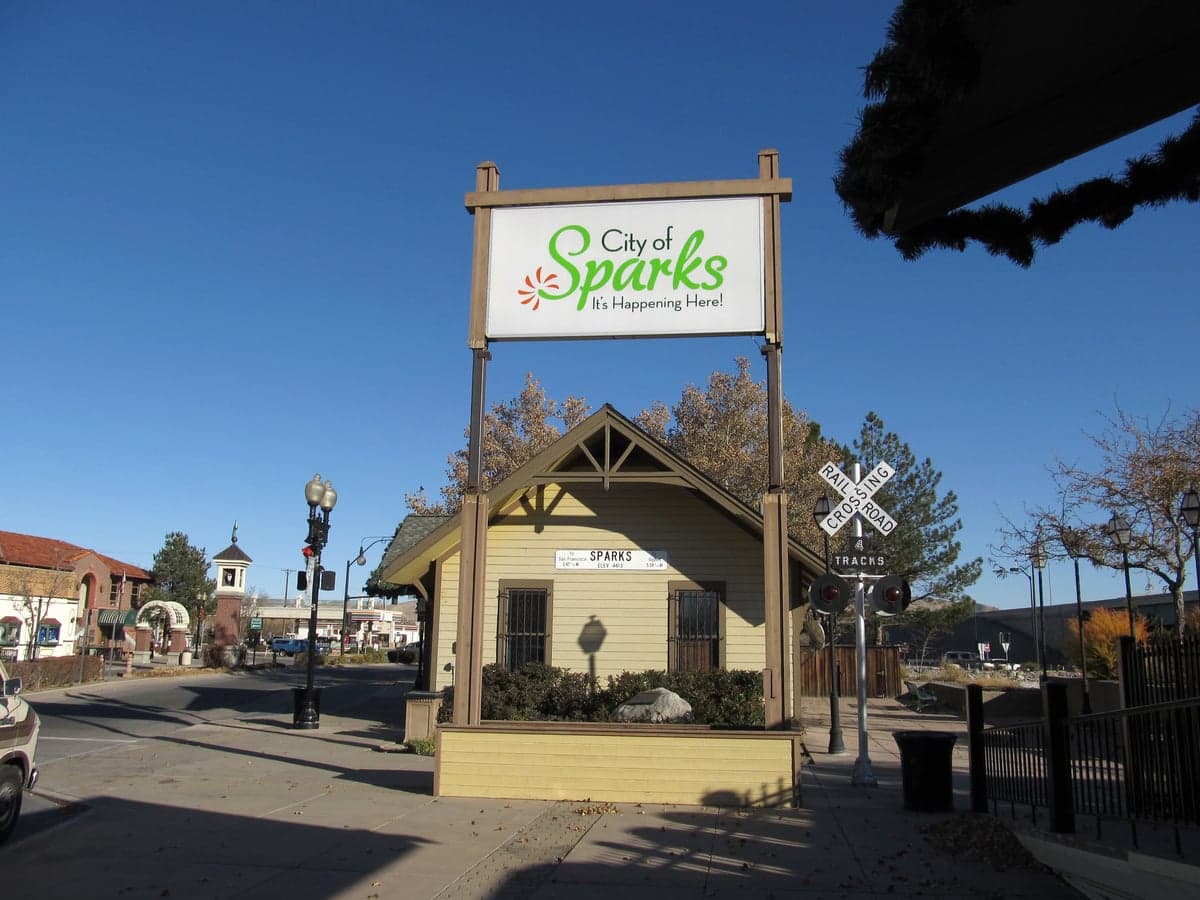
Photo: Wikipedia
Personal Sovereignty in Sparks, NV
Viable for self-reliance. Generally workable, though some barriers may limit total independence.
What does Personal Sovereignty tell us?
Personal Sovereignty measures your capacity for self-reliance and independence with minimal government friction. Higher scores mean fewer barriers between you and the way you want to live... but it assumes you have the space you need and good neighbors.
What does this tell us?
Personal Sovereignty measures your capacity for self-reliance and independence with minimal government friction. Higher scores mean fewer barriers between you and the way you want to live... but it assumes you have the space you need and good neighbors.
State Policy
Energy independence: Importer (15% of energy produced in-state)
Personal Liberty
Homesteading

Personal Liberty Analysis
Sparks, Nevada, offers a notably high degree of personal sovereignty compared to much of the urban West, functioning as a practical enclave where state-level protections for individual rights often override local impulses toward regulation. As a satellite of Reno in Washoe County, Sparks benefits from Nevada’s constitutional carry, low state income tax, and a political culture that, while mixed, leans more libertarian than its coastal counterparts. For a survivalist or prepper mindset, the key question is whether Sparks’ municipal ordinances and county-level enforcement create friction with state-level freedoms—and the answer is largely favorable, though not without specific caveats regarding water rights and building codes.
Tax burden and regulatory posture: How Nevada’s fiscal structure supports autonomy
Nevada’s absence of a state income tax is the single most impactful factor for personal sovereignty in Sparks. This means your labor and investments are not subject to state-level confiscation, leaving more capital for self-reliance projects, land acquisition, or emergency reserves. The state sales tax in Washoe County is approximately 8.265%, which is moderate, but there is no state-level property tax on personal property like vehicles or business equipment. Property taxes are capped by the state constitution at a maximum of 3% annual increase on existing homes, providing predictability. Sparks itself does not impose a local income tax or a business license fee on most home-based enterprises, which is critical for anyone running a side hustle or small-scale homesteading operation. The regulatory posture at the city level is generally permissive for low-impact activities like backyard chickens, small workshops, and rainwater collection—though you must check specific zoning for agricultural uses. The state’s right-to-work laws and minimal business licensing further reduce bureaucratic friction, making Sparks a place where the government’s footprint on daily economic life is relatively light.
Self-defense and gun law specifics: Constitutional carry and local enforcement realities
Nevada is a constitutional carry state, meaning that as of 2023, any person legally allowed to possess a firearm may carry it openly or concealed without a permit. This is a bedrock sovereignty issue for preppers and those concerned with personal security. Sparks does not have its own firearm ordinances that exceed state law—no magazine capacity bans, no assault weapon restrictions, and no waiting periods beyond the federal background check. The city’s police department has publicly stated they do not enforce federal firearm regulations they consider unconstitutional, though this is a policy stance, not a law. Washoe County does have a “red flag” law (Extreme Risk Protection Order) on the books, passed at the state level in 2019, which allows courts to temporarily seize firearms from individuals deemed a danger. This is a point of concern for sovereignty-minded residents, as it relies on subjective testimony and can be abused by bad actors. However, enforcement in Sparks is less aggressive than in Reno or Las Vegas, and the local sheriff’s office has a reputation for being pro-Second Amendment. For practical self-defense, the ability to carry without a permit and the absence of local storage mandates mean you can maintain readiness without government oversight.
Self-reliance and homesteading viability: Lot sizes, zoning, and off-grid feasibility
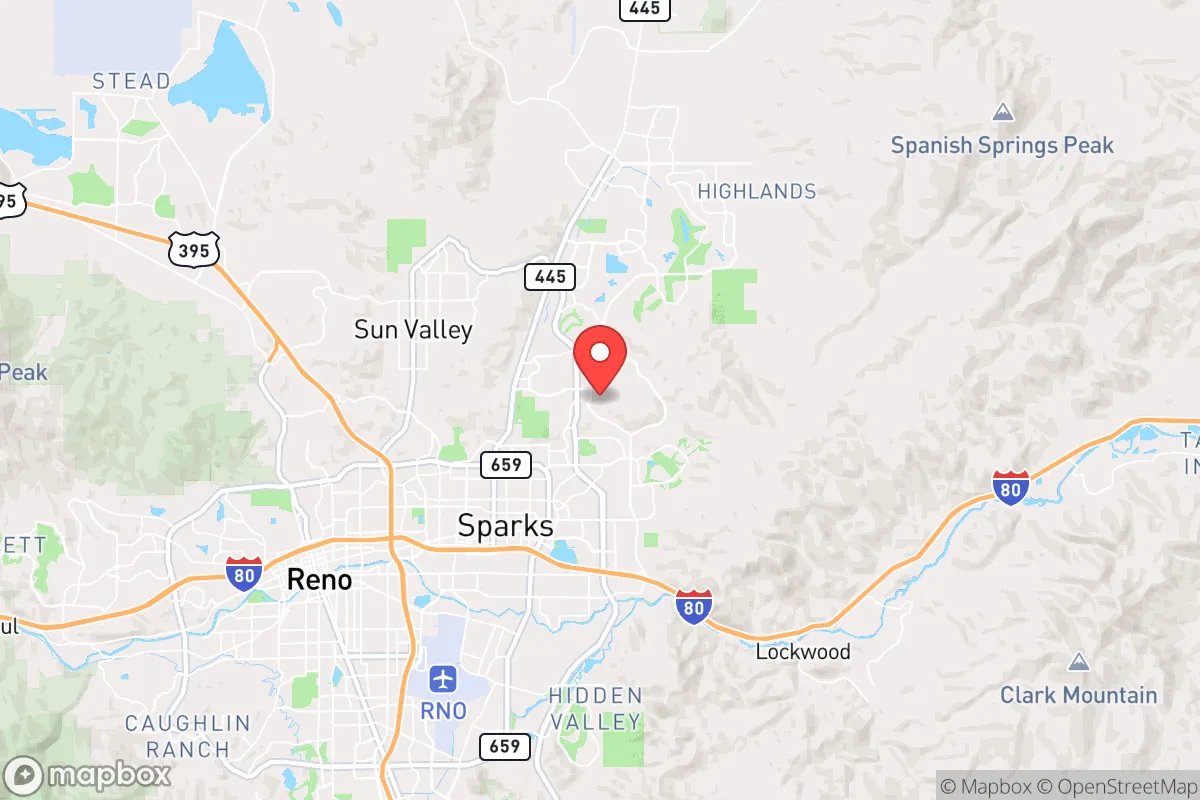
Within Sparks city limits, typical residential lots range from 5,000 to 10,000 square feet, which limits large-scale homesteading but allows for substantial gardening, small livestock (chickens, rabbits, and in some zones, goats), and rainwater catchment systems. The city’s zoning code permits accessory dwelling units (ADUs) and detached workshops, which can serve as secure storage or emergency shelters. Off-grid living is legally constrained within city limits—Sparks requires connection to municipal water and sewer for habitable structures, and solar panels must be grid-tied unless you secure a special variance. However, the unincorporated areas of Washoe County just outside Sparks, such as Spanish Springs or the Lemmon Valley area, offer larger parcels (1 to 5 acres) where well water, septic systems, and full off-grid solar setups are permitted. The county’s building codes are less restrictive than those in California or Oregon, and there is no county-level ban on composting toilets or greywater systems for non-potable use. For a prepper, the smart play is to buy just outside city limits to avoid Sparks’ municipal water mandate while still having access to its infrastructure. The Truckee River runs through the area, providing a reliable water source, but water rights are fully appropriated—you cannot simply drill a well without a permit, and new wells are difficult to obtain in the valley floor. This is the single biggest constraint on true self-reliance in the region.
Personal liberties: Parental rights, medical autonomy, speech, and property
Nevada has strong protections for parental rights in education, including a law that requires schools to notify parents of any medical or mental health services provided to minors and to obtain parental consent for most non-emergency care. Sparks’ school district, Washoe County School District, has generally complied with these laws, though some parents report friction over curriculum transparency. Medical autonomy is mixed: Nevada allows medical marijuana and has legalized recreational cannabis, which some see as a liberty issue, but the state also has vaccine mandates for school attendance and no religious exemption for childhood immunizations. This is a red flag for those prioritizing medical freedom. Speech protections are robust under Nevada’s state constitution, and Sparks has no local ordinances restricting political speech, signage, or assembly beyond standard time-place-manner rules. Property rights are strong—Nevada is a “Dillon’s Rule” state, meaning local governments only have powers explicitly granted by the state, which limits Sparks’ ability to impose rent control, inclusionary zoning, or excessive fees. However, the city does have a nuisance ordinance that can be used against “unsightly” properties, which could be a concern for those who want to store supplies or vehicles visibly. Overall, Sparks provides a legal environment where a family can homeschool, own firearms, run a home business, and speak freely without significant government interference—provided they stay within the bounds of state-level health mandates.
In the broader landscape of personal sovereignty, Sparks ranks well above the national average for a mid-sized city, but it is not a libertarian utopia. The state’s red flag law, vaccine mandates, and water rights restrictions are real limitations that a serious prepper must account for. Compared to cities in California, Oregon, or Washington, Sparks offers dramatically more freedom in terms of taxation, gun rights, and property use. Compared to rural Idaho or Montana, it falls short on off-grid feasibility and medical autonomy. For a conservative-leaning individual or family who wants urban infrastructure with a high degree of personal control, Sparks is a strong contender—just be prepared to navigate the water and health mandates with careful planning. The city’s overall trajectory is toward moderate growth and regulatory stability, which is a net positive for those seeking long-term sovereignty in a volatile national climate.

* Values derived from national, state, county, city and local statistics and may differ in a specific area. Last updated: 2026-04-23T04:11:06.000Z
Narrative content on this page is AI-generated and may contain mistakes. Verify any details that matter before acting on them.
ReloMaps may earn a commission from affiliate links at no extra cost to you.

