Photo: Wikipedia
Demographics of Springfield, SD
Affluence Level in Springfield, SD
A middle-class area roughly in line with national averages across income, home values, education, and employment.
People of Springfield, SD
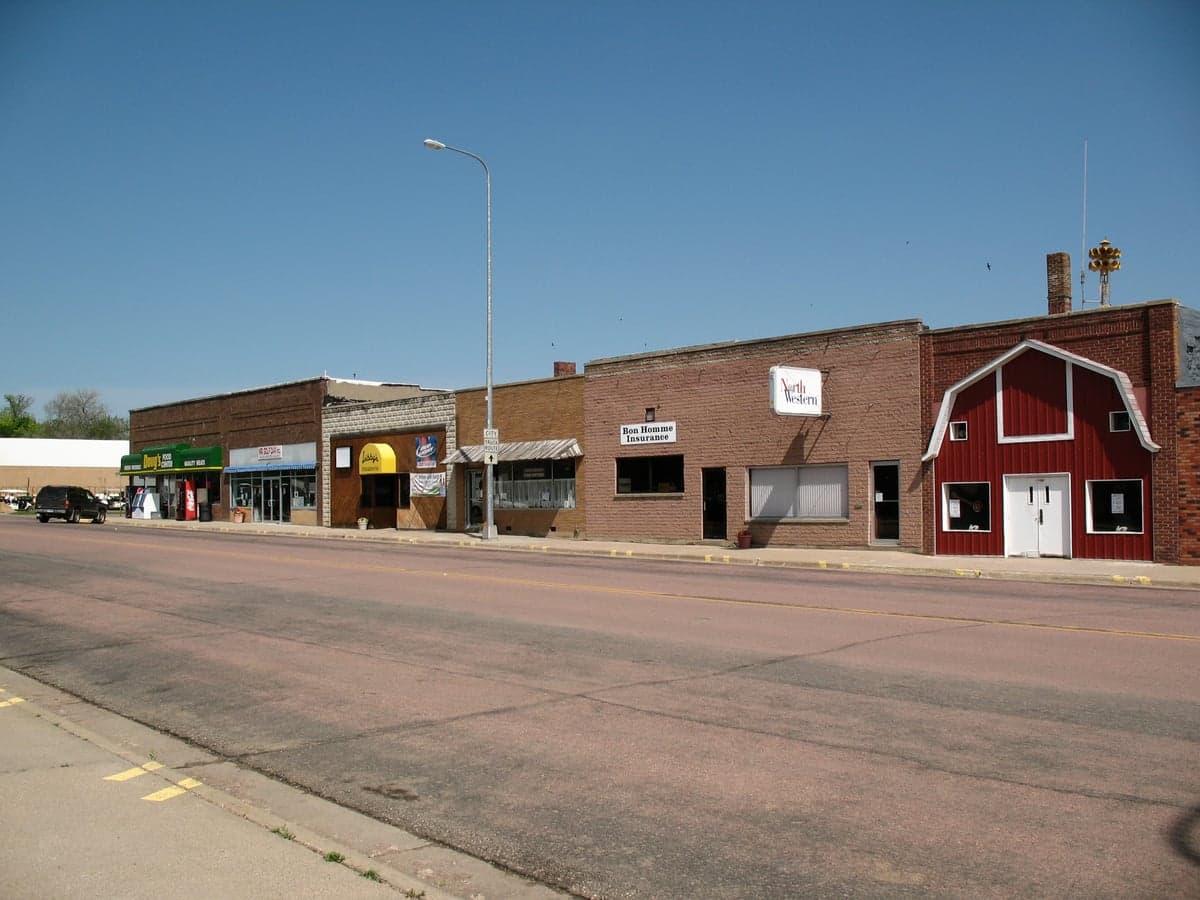
The people of Springfield, South Dakota, today number 2,073 and form a predominantly white, working-class community with a notable Native American presence and small but growing Hispanic and Black populations. The city’s character is shaped by its role as a regional service hub for Bon Homme County, with a population density that feels small-town intimate rather than suburban. Distinctive markers include a strong sense of local pride tied to the nearby Missouri River and a demographic profile that is older and less college-educated than state averages—only 8.5% of adults hold a bachelor’s degree or higher. The foreign-born share is minimal at 1.3%, making Springfield a place where nearly all residents are native-born and where community ties run deep across generations.
How the city was settled and grew
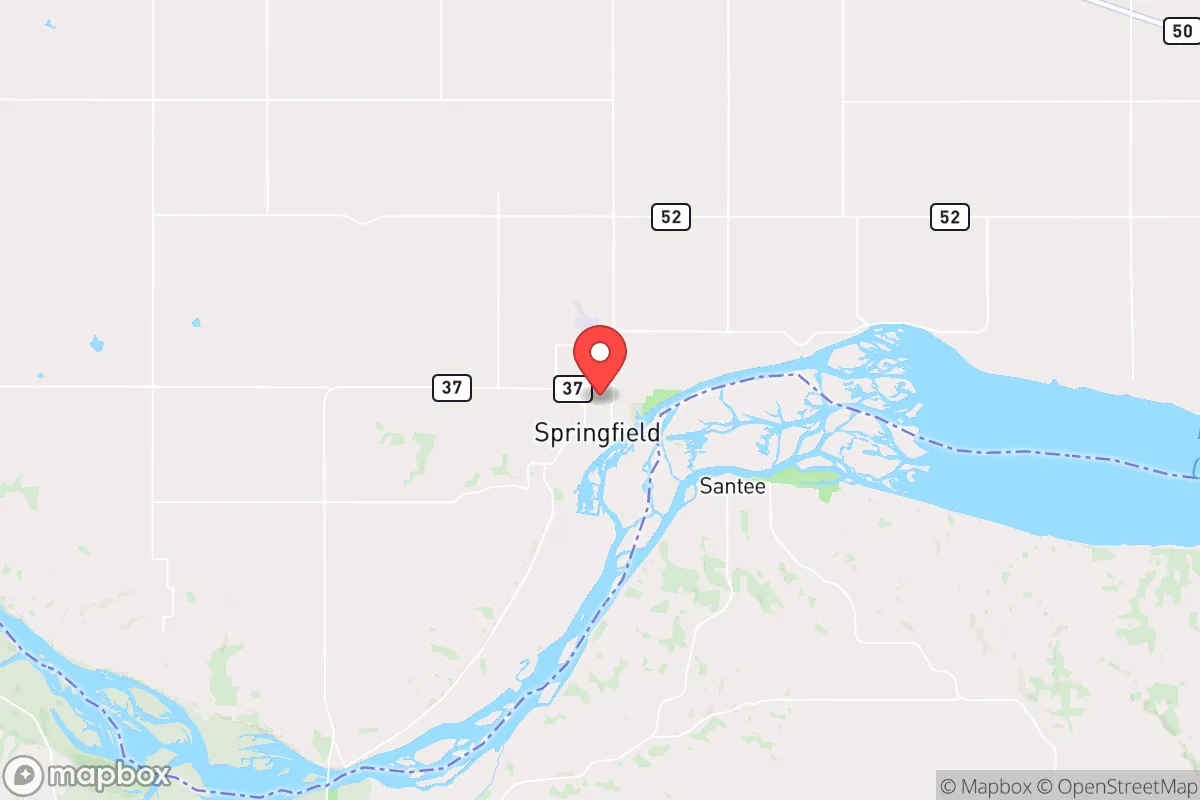
Springfield was founded in 1871 as a river port on the Missouri River, drawing its first wave of settlers—primarily German, Czech, and Scandinavian immigrants—who were attracted by the promise of fertile farmland and the economic opportunities of steamboat traffic. The city’s original core, now known as Old Town Springfield, was built along the riverfront by these early European homesteaders, who established grain elevators, general stores, and a ferry service that connected the area to Nebraska. A second wave arrived in the 1880s with the extension of the Chicago, Milwaukee & St. Paul Railroad, which spurred the development of Railroad Addition, a neighborhood just east of the original plat where Irish and German railroad workers settled. By the early 1900s, Springfield had become a modest agricultural trade center, with the population hovering around 1,000. The city’s growth remained steady but slow through the mid-20th century, as the decline of river transport and the rise of larger regional centers like Yankton limited expansion. Notably, the construction of the Fort Randall Dam in the 1950s brought a temporary influx of construction workers and Army Corps of Engineers personnel, many of whom stayed and settled in the Hillcrest Addition, a post-war subdivision on the city’s west side.
Modern era (post-1965)
After the 1965 Hart-Cellar Act, Springfield saw virtually no new immigration—the foreign-born share remains under 2%—so the city’s demographic shifts have been driven entirely by domestic migration and natural change. The most significant post-1965 development was the expansion of the Yankton Sioux Tribe’s presence in the area, as tribal members moved into Springfield for employment at the nearby Fort Randall Casino and the Indian Health Service clinic. This migration concentrated in the Southside neighborhood, near the intersection of Highway 37 and 4th Street, where a small but stable Native American community now lives. The 1990s and 2000s brought a modest influx of Hispanic workers, primarily employed in agriculture and meatpacking at the nearby Tyson Foods plant in Dakota City, Nebraska. These families settled in the East End, a lower-cost area along Main Street where rental housing is more available. The Black population, at 6.0%, is largely composed of families who moved from larger Midwestern cities like Sioux Falls and Omaha for lower housing costs and quieter living, and they are dispersed throughout the city with no single concentrated neighborhood. The Asian population remains negligible at 0.2%, and there is no recorded Indian subcontinent population. The white share has dropped from an estimated 85% in 1990 to 62.0% today, driven primarily by the growth of the Hispanic and Black populations, as well as an aging white cohort that is not being replaced by younger white families.
The future
Springfield’s population is heading toward greater diversity, but the pace is slow and the city is not tribalizing into distinct ethnic enclaves. The Hispanic and Black shares are expected to continue growing gradually, as younger families from these groups move in for affordable housing and entry-level jobs, while the white population will likely continue to age and shrink. The Native American community is stable but not expanding rapidly, as tribal members often commute to jobs in Yankton or Sioux Falls. The city is not homogenizing—rather, it is becoming slightly more diverse in a measured, organic way, with most groups integrating into existing neighborhoods rather than forming separate enclaves. The Hillcrest Addition and Old Town remain predominantly white and older, while the East End and Southside are becoming more mixed. Over the next 10-20 years, Springfield will likely remain a small, working-class community with a slowly diversifying population, but it will not experience the rapid demographic change seen in larger South Dakota cities like Sioux Falls or Rapid City. The foreign-born share will probably stay below 3%, as the city lacks the job base or housing stock to attract significant international migration.
For someone moving in now, Springfield is becoming a slightly more diverse, still affordable small town where community ties remain strong but the economy is limited. The city offers a quiet, low-cost lifestyle with a growing Hispanic and Black presence, but the dominant culture remains white and working-class. New residents should expect a place where most people know each other, where change comes slowly, and where the biggest demographic story is the gradual aging of the white population rather than any sudden influx of newcomers.

* Values derived from national, state, county, city and local statistics and may differ in a specific area. Last updated: 2026-05-01T05:54:21.000Z
Narrative content on this page is AI-generated and may contain mistakes. Verify any details that matter before acting on them.
ReloMaps may earn a commission from affiliate links at no extra cost to you.

