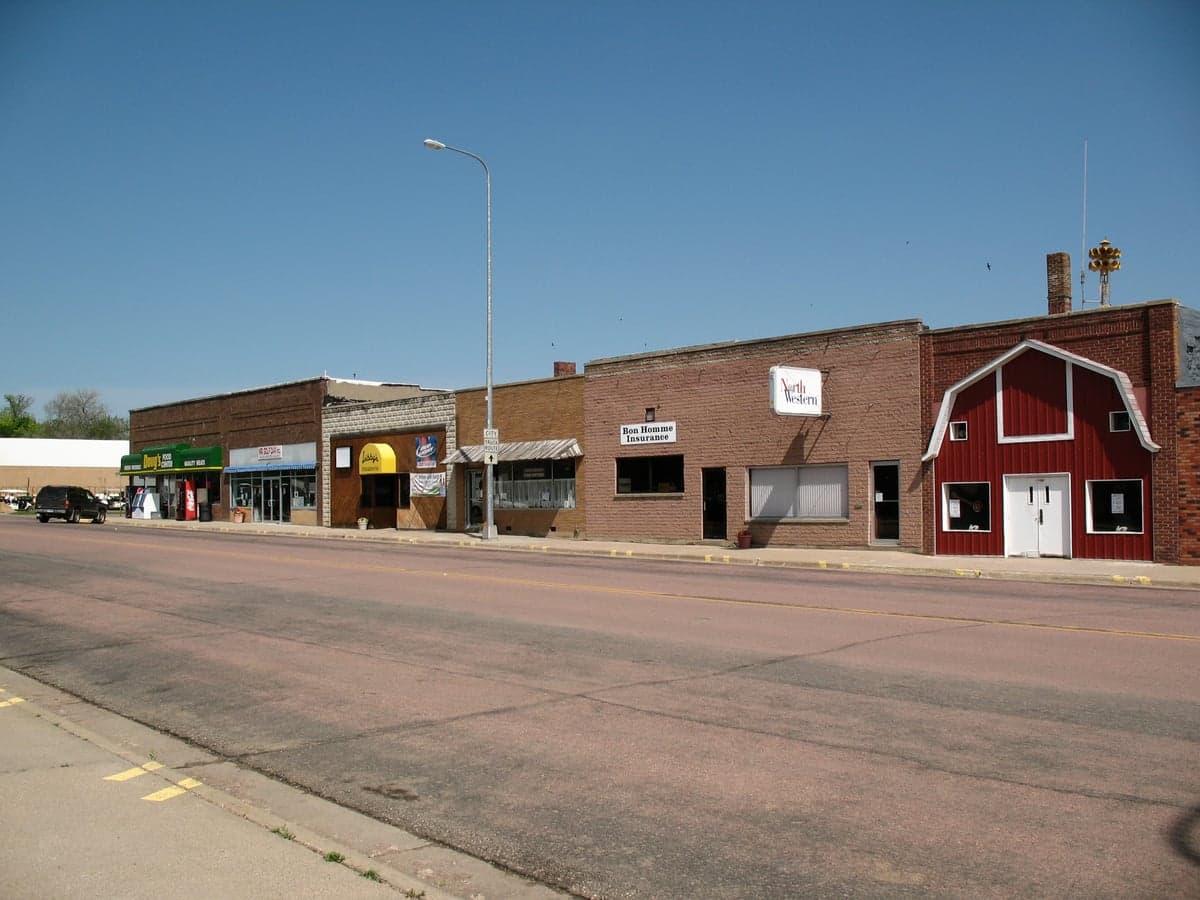
Photo: Wikipedia
Political ClimatePolitical Climate in Springfield, SD
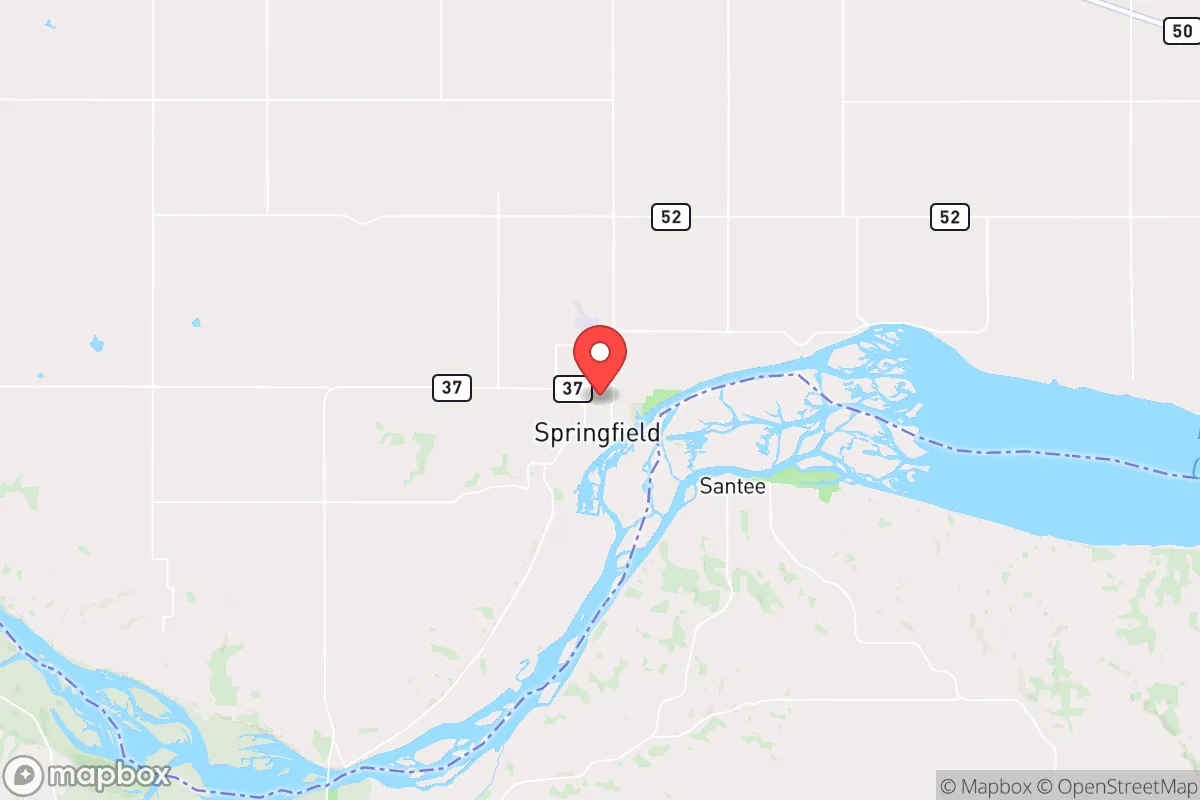
District shown is the primary district for this city’s centroid. Cities may span multiple districts.
Inherited from parent state — no local data available.
Local Political AnalysisPolitical Analysis of Springfield, SD
Springfield, South Dakota, is about as solidly conservative as it gets, with a Cook PVI of R+15 that tells you exactly where the heart of this community beats. I’ve lived here long enough to remember when the political lean was more of a quiet, common-sense conservatism—folks just wanted to be left alone to work their land and raise their families. These days, that sentiment has hardened into a pretty firm resistance against any kind of government overreach, especially when it comes to personal freedoms and property rights. The trajectory here isn’t shifting left; if anything, the local mood has grown more skeptical of outside influence, whether it’s from Pierre or Washington D.C., and that’s a trend I don’t see reversing anytime soon.
How it compares
Compared to the rest of the state, Springfield sits right in the conservative heartland. You drive twenty miles east to Yankton, and you’ll find a slightly more moderate vibe—still red, but with a few more folks who lean independent or even vote Democrat in local races. Head west toward the Missouri River towns like Chamberlain, and the politics are similar, though you’ll notice a stronger libertarian streak out there. The real contrast is with places like Sioux Falls or Brookings, where you see more progressive energy creeping in—things like diversity initiatives or climate action plans that would get laughed out of a town hall meeting here. In Springfield, the R+15 rating isn’t just a number; it’s a reflection of a community that values local control and doesn’t trust big government solutions. We’ve watched other parts of the country embrace policies that restrict personal choice, and it’s made us dig in our heels even harder.
What this means for residents
For the people living here, this political climate means a lot of practical freedom in daily life. You’re not going to see heavy-handed zoning rules telling you what you can do with your property, and the tax burden stays relatively low because the local government isn’t trying to fund a bunch of social programs. School board meetings are straightforward—parents have a real say, and curriculum decisions tend to focus on basics and local values rather than national trends. That said, there’s a growing concern among longtime residents about the slow creep of progressive ideology through state-level mandates or federal funding strings. We’ve seen it happen in other rural communities: a grant here, a regulation there, and suddenly you’re dealing with rules that don’t fit the way people actually live. So far, Springfield has held the line, but it takes constant vigilance. The biggest worry I hear from neighbors is that one day, some outside authority will try to tell us how to run our farms, our schools, or our churches, and that’s a fight nobody here is willing to lose.
Culturally, Springfield still feels like a place where the Second Amendment is a given, not a debate, and where local businesses don’t have to navigate a maze of red tape just to stay open. There’s a strong sense of self-reliance here—people take care of their own problems without calling for a government handout. The policy distinctions that matter most are the ones that protect that way of life: low property taxes, minimal business regulations, and a school system that answers to parents, not bureaucrats. If you’re looking for a place where you can live your life without someone in an office telling you how to do it, this is it. Just don’t expect any sympathy for progressive experiments—those days are long gone, if they ever existed at all.

State Political ClimatePolitical Climate in South Dakota
State Political AnalysisPolitical Environment in the State
South Dakota has long been one of the most reliably Republican states in the nation, with a partisan lean of roughly +26 points in the 2024 presidential election, but the real story is the quiet, steady consolidation of that dominance over the past two decades. The state’s political coalition is built on a foundation of rural, agricultural, and small-town voters who prioritize limited government, gun rights, and traditional values, with the conservative stronghold stretching from the Missouri River eastward. Over the last 10-20 years, the GOP has tightened its grip as Democrats have all but collapsed outside of a few small pockets, and the state’s population growth—driven largely by conservative-leaning transplants from California, Minnesota, and Illinois—has only reinforced the rightward tilt. If you’re looking for a place where the political culture matches a pre-2010s American conservatism, South Dakota is about as close as it gets, but even here, you’ll find subtle shifts worth watching.
Urban vs. rural divide
The political map of South Dakota is a textbook study in the urban-rural split, but with a twist: even the “urban” areas are conservative by national standards. Sioux Falls, the state’s largest city and economic engine, leans Republican but is the most competitive ground in the state—Minnehaha County went +12 for Trump in 2024, down from +18 in 2020, as younger professionals and some out-of-state newcomers have nudged it slightly purple. Rapid City and surrounding Pennington County are reliably red, voting +20 or more for the GOP, driven by a strong military and ranching presence. The real contrast is between the eastern third of the state—where Brookings (home to South Dakota State University) and Vermillion (University of South Dakota) show occasional blue streaks in local races—and the vast, deeply conservative rural expanse. Counties like Harding, Perkins, and Jones routinely deliver 85-90% Republican margins, while the nine tribal counties in the western part of the state (like Shannon and Todd) vote overwhelmingly Democratic, though their turnout is low and they have little statewide influence. The practical takeaway: if you live in Sioux Falls, you’ll encounter some political diversity; anywhere else, you’re in solid red territory.
Policy environment
South Dakota’s policy environment is a conservative wish list, and it’s been largely stable for decades. There is no state income tax, no corporate income tax, and no personal property tax on vehicles or business equipment—a structure that attracts retirees and remote workers alike. The sales tax is 4.5% (with local add-ons up to 2%), and property taxes are moderate, though they’ve crept up with rising home values in Sioux Falls and Rapid City. Education policy is decentralized: school choice is limited to charter schools (only a handful exist) and homeschooling is lightly regulated, with no state-mandated curriculum or testing for homeschoolers. Healthcare is a mixed bag—the state did expand Medicaid in 2023 via a ballot initiative (a rare progressive win), but the legislature has resisted further expansion of government-run programs. Election laws are among the most secure in the nation: voter ID is required, same-day registration is not allowed, and mail-in voting requires an excuse. The state also passed a 2022 law banning transgender athletes from girls’ sports and a 2023 law restricting gender-affirming care for minors, both of which have held up in court. For a conservative, the policy environment is a major draw—low taxes, light regulation, and cultural alignment.
Trajectory & freedom
On the freedom front, South Dakota has been moving in a decidedly positive direction over the last five years, with a few cautionary notes. The state has expanded gun rights significantly: in 2021, Governor Kristi Noem signed a permitless carry law (also known as constitutional carry), allowing any law-abiding adult to carry a concealed firearm without a permit. In 2023, the legislature passed a “Second Amendment Preservation Act” that prohibits state enforcement of any future federal gun bans—a direct challenge to federal overreach. Parental rights have also been strengthened: a 2022 law requires school districts to adopt policies allowing parents to opt their children out of any curriculum they find objectionable, and a 2023 law banned “critical race theory” and “divisive concepts” in K-12 classrooms. On the medical front, the state has resisted COVID-19 mandates aggressively—Noem never issued a statewide mask mandate or lockdown, and a 2021 law banned vaccine passports. However, there are two areas of concern: property rights have been tested by the 2023 “carbon pipeline” controversy, where the legislature initially passed a bill allowing eminent domain for private carbon capture pipelines (later vetoed by Noem after public outcry), and the state’s 2024 law banning TikTok on government devices was seen by some as a free speech overreach. Overall, the trajectory is toward more personal liberty, but the pipeline fight showed that corporate interests can still threaten individual property rights.
Civil unrest & political movements
South Dakota has seen remarkably little civil unrest compared to other states, but there have been notable flashpoints. The most visible was the 2020-2021 controversy over the Mount Rushmore fireworks display, which Noem held despite federal COVID-19 guidance—a symbolic stand that drew both praise and protest. The Dakota Access Pipeline protests in 2016-2017 largely bypassed South Dakota (they were centered in North Dakota), but the state did see smaller solidarity demonstrations in Sioux Falls and Rapid City. More recently, the carbon pipeline issue (Summit Carbon Solutions’ proposed CO2 pipeline) has become a major grassroots movement, with landowners in counties like Brown, Spink, and Beadle organizing against eminent domain for private gain—a rare instance of conservative property rights activists clashing with the state’s pro-business establishment. On the left, there is a small but vocal activist presence in Sioux Falls and Brookings, focused on abortion access and transgender rights, but they have little legislative success. Immigration politics are quiet—South Dakota has a very small foreign-born population (about 4%), and there are no sanctuary cities. Election integrity is not a major controversy here; the state uses paper ballots and has strong ID laws, and there have been no significant fraud allegations. For a new resident, the political atmosphere is calm and civil, with most disagreements happening at the local level over land use and school boards.
Projection
Looking ahead 5-10 years, South Dakota is likely to become more conservative, not less, driven by two key factors: in-migration and demographic inertia. The state is growing at about 1.5% annually, with most newcomers coming from blue states like California, Minnesota, and Illinois—and they’re moving here specifically for the low taxes and cultural alignment. Sioux Falls will continue to grow and may become slightly more purple at the local level, but the rural areas will remain deeply red, and the state legislature will stay firmly in GOP hands. The biggest wildcard is the carbon pipeline issue: if the state allows eminent domain for private pipelines, it could erode trust in the legislature and spark a property rights backlash that might shift some rural voters toward libertarian or third-party candidates. However, the overall trajectory is clear: South Dakota will remain a top destination for conservatives seeking freedom from government overreach, with policy likely to continue expanding gun rights, school choice, and parental authority. The one area to watch is healthcare—Medicaid expansion may lead to pressure for more government involvement, but the legislature will resist. For someone moving in now, expect to find a state that is stable, safe, and increasingly aligned with traditional conservative values, with the only real friction coming from corporate interests versus individual rights.
For a conservative individual or family considering relocation, South Dakota offers a rare combination of low taxes, strong gun rights, parental control in education, and a political culture that respects personal freedom. The practical takeaway is that you’ll find a welcoming environment for traditional values, but you should pay attention to local land-use battles (especially around pipelines and renewable energy projects) and be prepared for cold winters. If you’re looking for a place where the government stays out of your life and your children’s education, South Dakota is one of the best bets in the country—just know that even here, you’ll need to stay engaged to protect those freedoms from corporate and federal encroachment.
* Values derived from national, state, county, city and local statistics and may differ in a specific area. Last updated: 2026-05-01T05:54:21.000Z
Narrative content on this page is AI-generated and may contain mistakes. Verify any details that matter before acting on them.
ReloMaps may earn a commission from affiliate links at no extra cost to you.

