Photo: Wikipedia
Demographics of Springfield, TN
Affluence Level in Springfield, TN
A middle-class area roughly in line with national averages across income, home values, education, and employment.
People of Springfield, TN
The people of Springfield, Tennessee today form a notably diverse and working-class community of 18,985 residents, characterized by a near-even tripartite split between White (48.6%), Hispanic (24.9%), and Black (20.4%) populations. With only 17.3% holding a college degree and a foreign-born share of 10.8%—nearly double the state average—Springfield is a city where manufacturing and logistics jobs anchor a blue-collar identity, and where distinct ethnic neighborhoods have emerged within a historically small-town Southern framework. The city’s human history is one of successive waves: early Scots-Irish and English settlers, post-Civil War Black communities, and a rapid Hispanic influx since 2000 that has reshaped the demographic landscape.
How the city was settled and grew
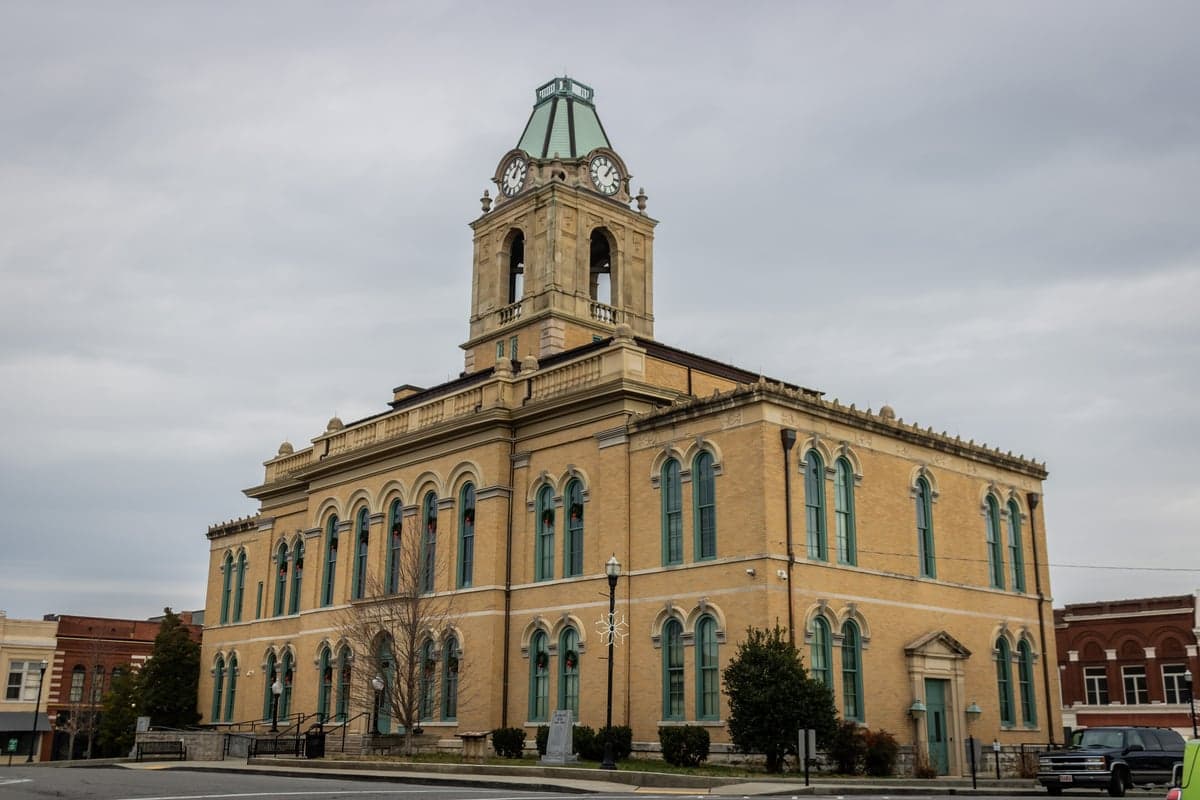
Springfield was founded in 1798 as the seat of Robertson County, drawing its first permanent settlers—primarily Scots-Irish and English farmers—via land grants awarded to veterans of the Revolutionary War and the War of 1812. These early families established homesteads along the Red River valley, with the original town plat centered around the present-day Springfield Square, where a courthouse and commercial district anchored a rural trading economy. By the mid-19th century, tobacco and livestock farming dominated, and the population remained overwhelmingly White and native-born. After the Civil War and Reconstruction, freedmen and their descendants formed a distinct Black community concentrated in what is now the East Springfield neighborhood, near the railroad corridor that ran along present-day Highway 49. This area became the heart of Springfield’s African American life, with churches, schools, and small businesses serving a population that grew to roughly 25% of the city by 1900. The early 20th century brought no major immigrant waves; Springfield remained a sleepy agricultural county seat until the post-World War II era, when a modest manufacturing base—textile mills and a tire plant—began drawing rural White and Black workers from surrounding counties into new subdivisions like Hillcrest and Oakwood.
Modern era (post-1965)
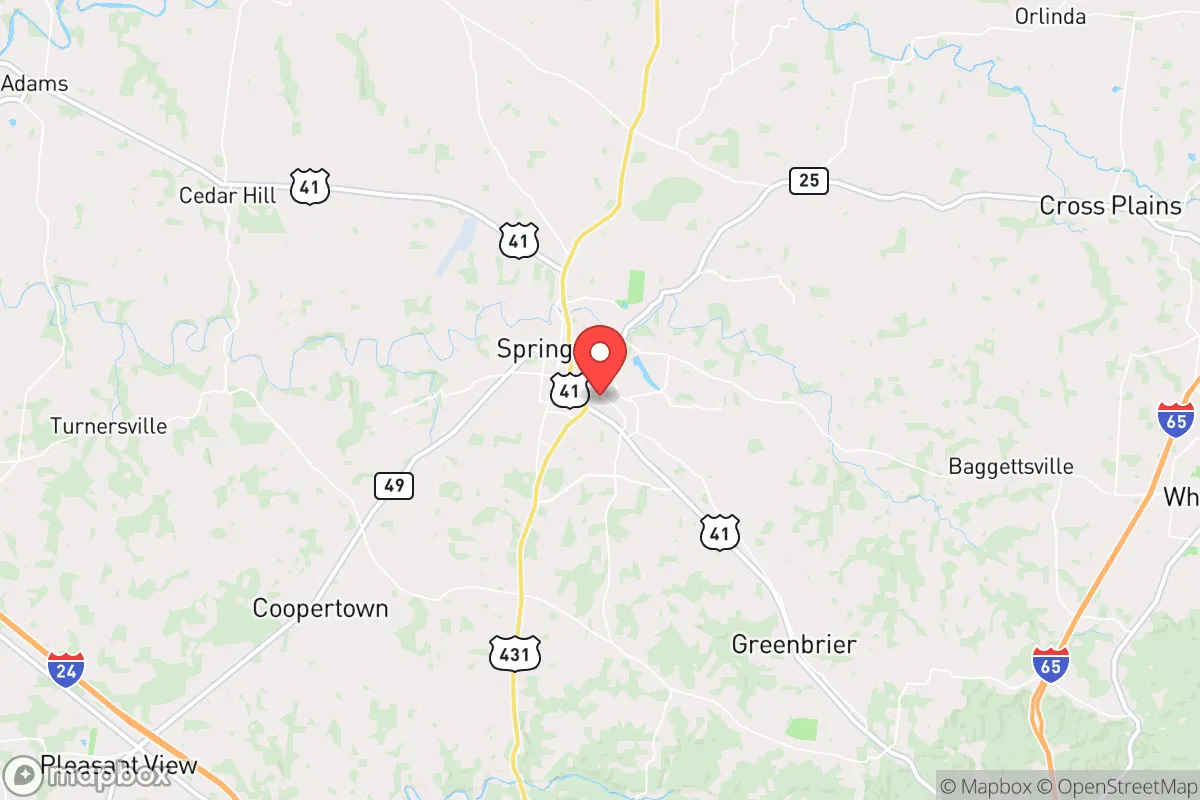
The 1965 Hart-Celler Act had little immediate effect on Springfield; the city’s foreign-born population remained below 1% through the 1980s. The transformative shift began in the late 1990s and accelerated after 2000, driven by the expansion of manufacturing and distribution centers—including a large Electrolux plant and several automotive parts suppliers—that recruited heavily from Mexican and Central American labor networks. Hispanic families settled primarily in the North Springfield corridor along U.S. 41 and in the West End near the industrial parks, forming tight-knit enclaves with Spanish-language churches, tiendas, and soccer leagues. By 2020, the Hispanic share had surged to 24.9%, making Springfield one of the most Hispanic cities in Middle Tennessee outside Nashville. The Black population, which had held steady at around 20-22% since the 1970s, remained concentrated in East Springfield and in newer subdivisions like Greenbrier Pike, though some middle-class Black families moved to integrated areas near the high school. The White share, which was over 80% as recently as 1990, dropped to 48.6% by 2024, reflecting both Hispanic in-migration and White flight to outlying rural areas and bedroom communities like Cross Plains. The East/Southeast Asian population remains negligible at 0.7%, and the Indian-subcontinent share is 0.0%—Springfield has not attracted the professional-class Asian immigration seen in Nashville’s suburbs.
The future
Springfield’s population is trending toward a tri-ethnic equilibrium, with the Hispanic share likely to continue rising slowly as family reunification and births outpace White out-migration. The city is not homogenizing; rather, it is tribalizing into distinct residential enclaves—North Springfield and West End remain heavily Hispanic, East Springfield remains predominantly Black, and the newer subdivisions along Highway 76 and Memorial Boulevard are majority White. The foreign-born share (10.8%) may plateau as the initial wave of Hispanic migration matures and second-generation families assimilate linguistically and economically, though continued industrial recruitment could sustain modest new arrivals. The college-educated share (17.3%) is unlikely to rise sharply unless Springfield attracts white-collar employers or becomes a commuter suburb for Nashville (about 30 miles south), which would require significant highway improvements. The Black and White shares are projected to remain stable, as both groups have low in-migration and aging populations.
For someone moving in now, Springfield is a city where you can find distinct, self-contained ethnic communities within a small-town footprint—a place where the working-class character is strong, the cost of living is low, and the demographic future is one of slow diversification rather than rapid change. The city’s identity is no longer that of a homogeneous Southern county seat, but of a multiethnic blue-collar hub where each wave of settlement has left its mark on specific neighborhoods.

* Values derived from national, state, county, city and local statistics and may differ in a specific area. Last updated: 2026-05-01T08:51:19.000Z
Narrative content on this page is AI-generated and may contain mistakes. Verify any details that matter before acting on them.
ReloMaps may earn a commission from affiliate links at no extra cost to you.

