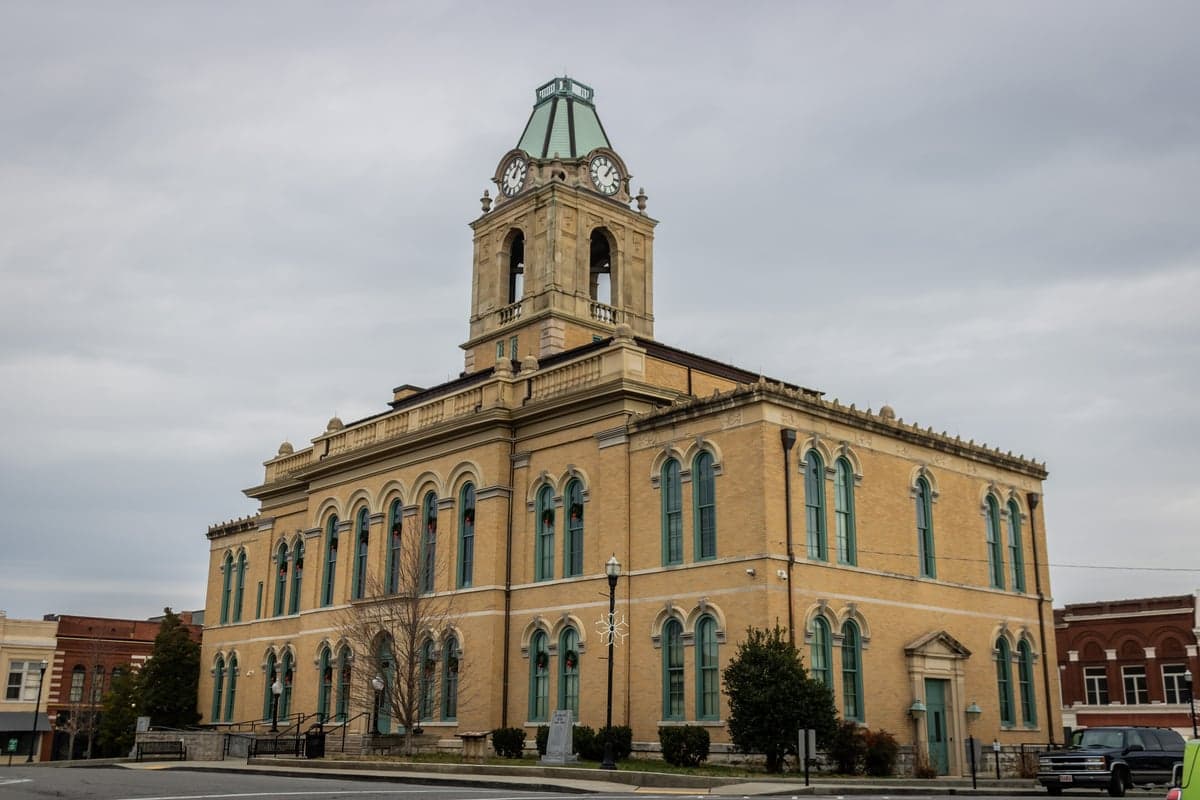
Photo: Wikipedia
Political ClimatePolitical Climate in Springfield, TN
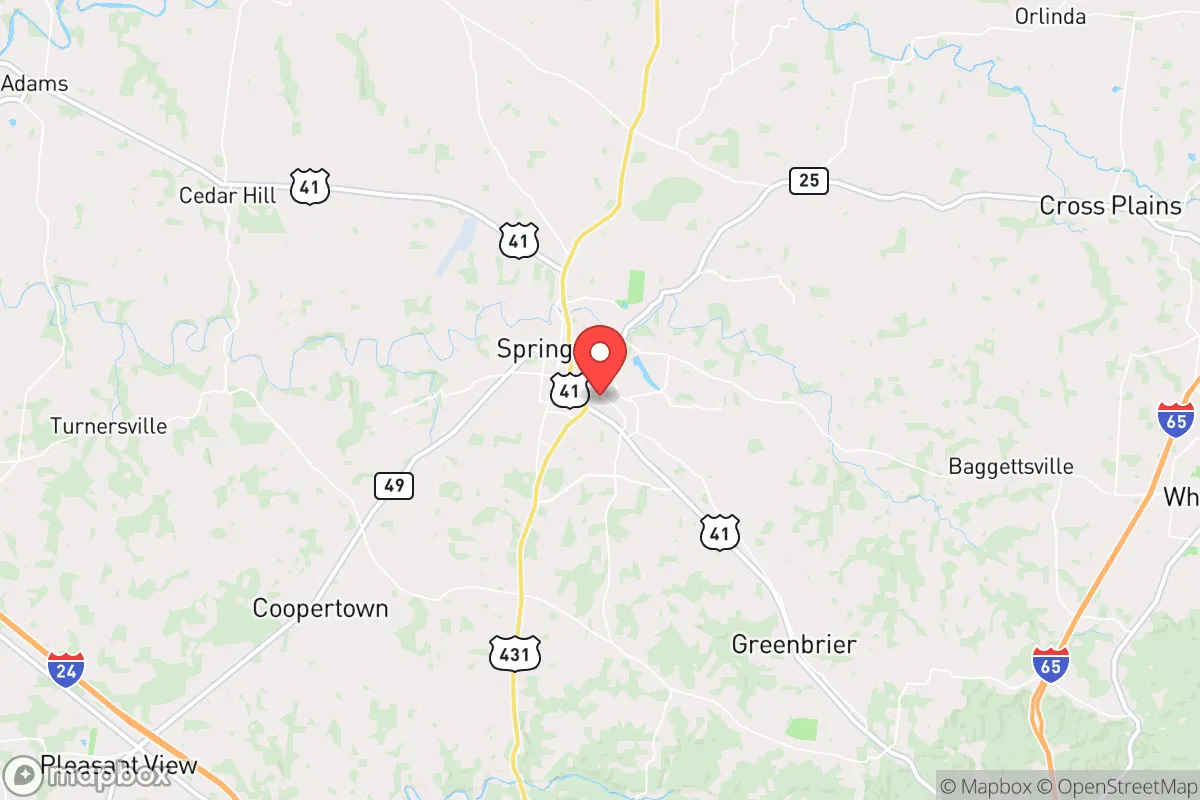
District shown is the primary district for this city’s centroid. Cities may span multiple districts.
Local Political AnalysisPolitical Analysis of Springfield, TN
Springfield, Tennessee, is about as solidly conservative as it gets, with a Cook PVI of R+10 that tells you the political lean here isn’t just a habit—it’s a way of life. For decades, this town has voted reliably Republican, and the surrounding Robertson County has only deepened that trend, with local elections often decided in primaries rather than general contests. But if you’ve been around long enough, you’ve noticed a subtle shift: the old-school, live-and-let-live conservatism that kept government small and personal freedoms wide is now being tested by an influx of folks from Nashville and its liberal orbit, bringing with them a push for more progressive policies that feel like a slow creep toward overreach.
How it compares
Drive 30 minutes south to Nashville, and you’re in a completely different world—a deep-blue city where the local government has embraced everything from sanctuary city stances to heavy-handed zoning that tells property owners what they can and can’t do with their land. Springfield, by contrast, still feels like the last bastion of common sense in the region. Neighboring towns like White House and Greenbrier lean conservative too, but they’re closer to the Davidson County line and feel the pressure more acutely, with school boards and county commissions occasionally flirting with woke curriculum or tax hikes that mirror Nashville’s playbook. Springfield’s rural roots and strong church community have kept it more insulated, but the warning signs are there: new subdivisions are bringing in families who voted for progressive candidates in the last cycle, and the county’s rapid growth means the old guard is being outnumbered.
What this means for residents
For the average Springfield resident, the political climate means you can still enjoy a lot of freedom that’s vanishing elsewhere. No mask mandates, no heavy-handed business closures, and property taxes that haven’t been jacked up to fund pet projects. But the threat of government overreach is real—there’s been chatter about expanding the local school board’s authority to push diversity initiatives, and the county commission has debated stricter noise ordinances that would clamp down on backyard gatherings and hunting on private land. If you value your Second Amendment rights, Springfield is still a safe haven, but the encroachment from Nashville’s influence means you have to stay vigilant. The local sheriff’s office is pro-2A and doesn’t enforce state-level red flag laws aggressively, but that could change if the county flips in the next decade.
On the cultural front, Springfield has held onto its small-town character, with the annual Robertson County Fair and the historic downtown square serving as reminders of a time when community meant looking out for each other without the government telling you how. The biggest policy distinction is the lack of a city income tax and a general resistance to adopting Nashville-style transit or housing mandates. But the long-term trajectory is concerning: as more people flee the blue policies of Nashville, they bring their voting habits with them. If you’re considering a move here, know that the political climate is still friendly to traditional values, but it’s not immune to the progressive tide. Keep an eye on local school board races and county commission meetings—that’s where the real fight for Springfield’s soul is happening right now.

State Political ClimatePolitical Climate in Tennessee
State Political AnalysisPolitical Environment in the State
Tennessee has been a reliably red state for decades, but the nature of that conservatism has shifted significantly over the past 10-20 years. The state’s overall partisan lean is now solidly Republican, with Donald Trump winning by 30 points in 2024, a margin that has widened from 26 points in 2020 and 15 points in 2016. The dominant coalition today is a mix of rural and suburban voters who have pushed the state legislature and governor’s office into aggressively conservative territory on taxes, guns, education, and cultural issues. However, the fast-growing metro areas of Nashville and Memphis are becoming more Democratic, creating a growing urban-rural split that will shape the state’s future.
Urban vs. rural divide
The political map of Tennessee is starkly divided. The state’s three major metros — Nashville (Davidson County), Memphis (Shelby County), and Knoxville (Knox County) — each tell a different story. Nashville has become a deep blue island, with Joe Biden winning Davidson County by 38 points in 2020 and Kamala Harris likely performing similarly in 2024. The city’s explosive growth has attracted a wave of out-of-state transplants, many from California and New York, who have shifted local politics leftward on issues like transit, housing, and policing. Memphis remains reliably Democratic but is losing population, while Knoxville is a conservative stronghold that has held steady. The real action is in the suburban ring counties around Nashville — Williamson, Rutherford, and Wilson — which have moved from reliably red to competitive or even purple. Williamson County, once a GOP fortress, voted for Trump by only 12 points in 2020, down from 30 points in 2012. Meanwhile, rural West Tennessee and Middle Tennessee counties like Weakley, Carroll, and Macon remain deeply red, often voting 70-80% Republican. The divide isn’t just geographic — it’s cultural, with urban voters prioritizing growth and diversity while rural voters focus on tradition and limited government.
Policy environment
Tennessee’s policy environment is among the most conservative in the nation, and it has gotten more so in recent years. The state has no income tax on wages, a major draw for relocators, and its sales tax is high (around 9.5% average) but regressive. Property taxes are low, especially outside the major metros. The regulatory posture is business-friendly, with right-to-work laws and minimal zoning restrictions in most rural areas. On education, the state passed a universal school voucher program in 2024, allowing any family to use public funds for private or homeschool expenses — a major win for school choice advocates. Healthcare policy is more mixed: Tennessee did not expand Medicaid under the Affordable Care Act, leaving a coverage gap for low-income adults, but the state has also pushed for more market-based reforms like direct primary care and association health plans. Election laws have tightened: the state now requires photo ID to vote, limits early voting days, and has purged inactive voters from rolls. Abortion is heavily restricted, with a near-total ban after six weeks (with exceptions for rape, incest, and life of the mother), and the state has a trigger law that would ban it entirely if Roe v. Wade were overturned — which it was. For conservatives, this is a policy environment that largely aligns with their values, though the high sales tax and limited healthcare access are trade-offs.
Trajectory & freedom
Tennessee is becoming more free in several key areas, but there are warning signs. On gun rights, the state passed permitless carry in 2021, allowing any law-abiding adult to carry a handgun without a permit — a clear expansion of Second Amendment freedom. On parental rights, the state enacted a law in 2023 requiring schools to notify parents of any changes to a student’s mental, emotional, or physical health, effectively banning classroom discussions of gender identity without parental consent. This was followed by a 2024 law banning transgender athletes from female sports and restricting gender-affirming care for minors. On speech, the state has taken a strong stance against critical race theory in schools and has banned diversity, equity, and inclusion (DEI) programs in public universities. However, there are concerning trends. The state’s COVID-era emergency powers were used to impose mask mandates and business closures, though the legislature has since reined in the governor’s ability to issue long-term emergency orders. Property rights have been tested by the expansion of eminent domain for private development projects, particularly in Nashville. And while taxes are low, the state’s reliance on sales tax means low-income families pay a higher percentage of their income than the wealthy. Overall, Tennessee is moving in a freedom-friendly direction on cultural and Second Amendment issues, but economic freedom is more mixed.
Civil unrest & political movements
Tennessee has seen its share of political flashpoints. In 2023, the Nashville Covenant School shooting sparked massive protests at the state capitol, with thousands of activists demanding gun control measures. The Republican supermajority responded by passing a bill to allow armed teachers in schools, a move that further polarized the debate. The same year, the expulsion of two Democratic state representatives — Justin Jones and Justin Pearson — for leading a gun control protest on the House floor became a national story, highlighting the intense partisan divide. Immigration politics are less visible here than in border states, but the legislature has passed laws requiring local law enforcement to cooperate with ICE and banning sanctuary cities. There is no serious secession or nullification movement in Tennessee, though some rural counties have passed symbolic resolutions asserting local control over federal mandates. Election integrity has been a hot topic since 2020, with the state creating a new election integrity unit and passing laws to tighten absentee ballot rules. For a new resident, the most visible flashpoint is likely the ongoing debate over Nashville’s growth and its cultural clash with the rest of the state — you’ll see “Don’t California My Tennessee” bumper stickers and hear locals grumble about out-of-state influence.
Projection
Over the next 5-10 years, Tennessee will likely become more politically divided, but the state’s overall conservative trajectory will hold. The key demographic shift is the continued influx of migrants from blue states into the Nashville and Knoxville suburbs. These newcomers tend to be more moderate or even liberal on social issues, which could flip Williamson County to purple or even blue by 2030. However, the state legislature is gerrymandered to protect Republican supermajorities, and rural areas are not losing population fast enough to change the statewide balance. The real battle will be over the state’s cultural direction: expect more fights over school curriculum, transgender rights, and gun laws. The state’s economy will continue to attract conservative-leaning families and businesses, but the cost of living in Nashville is rising fast, pushing some to smaller cities like Clarksville, Murfreesboro, or Chattanooga. For someone moving in now, expect to find a state that is still deeply red but with growing pockets of blue that will make local politics more contentious. The state will remain a leader in school choice and gun rights, but healthcare access and infrastructure will be ongoing challenges.
Bottom line for a new resident: Tennessee offers a low-tax, culturally conservative environment that aligns well with traditional values, especially on education and Second Amendment issues. But don’t expect a monolithic experience — the politics of Nashville or Memphis are very different from those of a small town like Cookeville or Dyersburg. If you’re moving here for freedom, you’ll find it in the rural and suburban areas, but be prepared for the culture war to be a constant presence, especially in the state legislature. The state is trending in the right direction for conservatives, but the fight over its future is far from over.
* Values derived from national, state, county, city and local statistics and may differ in a specific area. Last updated: 2026-05-01T08:51:19.000Z
Narrative content on this page is AI-generated and may contain mistakes. Verify any details that matter before acting on them.
ReloMaps may earn a commission from affiliate links at no extra cost to you.

