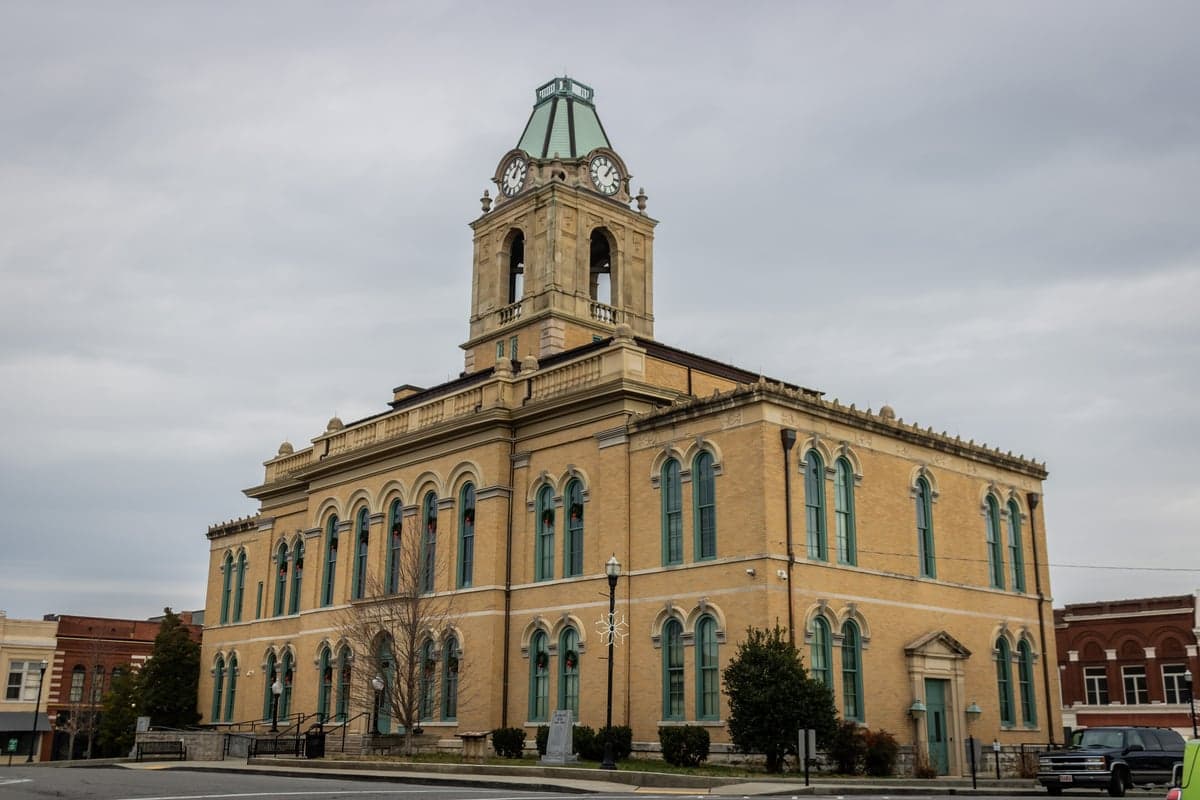
Photo: Wikipedia
Personal Sovereignty in Springfield, TN
Viable for self-reliance. Generally workable, though some barriers may limit total independence.
What does Personal Sovereignty tell us?
Personal Sovereignty measures your capacity for self-reliance and independence with minimal government friction. Higher scores mean fewer barriers between you and the way you want to live... but it assumes you have the space you need and good neighbors.
What does this tell us?
Personal Sovereignty measures your capacity for self-reliance and independence with minimal government friction. Higher scores mean fewer barriers between you and the way you want to live... but it assumes you have the space you need and good neighbors.
State Policy
Energy independence: Importer (25% of energy produced in-state)
Personal Liberty
Homesteading

Personal Liberty Analysis
Springfield, Tennessee, offers a notably high degree of personal sovereignty, particularly when viewed through a survivalist or prepper lens. The local culture and state-level legal framework prioritize individual autonomy over collective mandates, making it a viable relocation option for those seeking to minimize government overreach. While no location is a perfect fortress against federal or state encroachment, Springfield’s combination of low regulatory density, strong self-defense protections, and permissive land-use policies creates an environment where a self-reliant lifestyle is not just tolerated but actively supported. For single individuals and parents concerned about the erosion of personal freedoms nationwide, this Robertson County seat represents a strategic foothold in a state that consistently ranks among the most liberty-oriented in the country.
Tax burden and regulatory posture: How Tennessee’s fiscal policies protect your autonomy
Tennessee’s tax structure is a cornerstone of personal sovereignty here, and Springfield benefits directly from it. The state has no personal income tax on wages, which means every dollar you earn stays in your pocket—no state-level confiscation of your labor. Sales tax is the primary revenue source, with a combined state and local rate in Robertson County around 9.75%, but this is a consumption-based model you can partially control by your spending habits. Property taxes are also relatively low; the effective rate in Robertson County hovers near 0.6% of assessed value, significantly below the national average. For a prepper mindset, this low fixed-cost burden means less of your resources are siphoned to fund programs you may not support, freeing up capital for land, supplies, and infrastructure. On the regulatory side, Tennessee is a right-to-work state with minimal business licensing hurdles, and Springfield’s local government generally avoids the kind of zoning overreach seen in Nashville’s urban core. There are no county-level building codes that mandate expensive, state-approved materials for outbuildings or sheds, which is a practical advantage for anyone looking to construct a workshop, root cellar, or secure storage without bureaucratic delays. The state’s overall regulatory posture is one of restraint, and that ethos is reflected in Springfield’s day-to-day governance.
Self-defense and gun law specifics: What the Second Sanctuary status means for your family
Tennessee is a constitutional carry state, meaning no permit is required to carry a handgun, openly or concealed, for anyone legally allowed to possess a firearm. Springfield sits in Robertson County, which has formally declared itself a Second Amendment Sanctuary—a symbolic but meaningful stance that signals local law enforcement’s reluctance to enforce any future federal overreach on firearms. For parents, this means you can train your children in firearm safety and marksmanship on your own property without fear of local ordinances restricting that right. The state also has strong Stand Your Ground and Castle Doctrine laws, with no duty to retreat in any place you are lawfully present. This legal framework gives a survivalist household a clear, defensible position: if someone threatens your life or property, you are not required to flee before using deadly force. Additionally, Tennessee does not require registration of firearms, and there are no state-level magazine capacity bans or restrictions on specific weapon types like AR-15s. For a family preparing for uncertain times, this means you can stockpile and train with the same equipment used by professionals, without worrying about a shifting legal landscape. The only notable limitation is that private firearm sales between individuals are legal, but you must be aware of federal prohibitions on selling to prohibited persons—a reasonable boundary that doesn’t infringe on lawful commerce.
Self-reliance and homesteading viability: Lot sizes, zoning, and off-grid feasibility in Springfield
Springfield’s rural character makes it a strong candidate for homesteading and off-grid living, especially compared to the restrictive suburbs of Nashville just 30 miles south. Many residential lots in the county are available in 1- to 5-acre parcels, and agricultural zoning allows for larger tracts up to 20 acres or more without special permits. The county’s zoning code does not prohibit rainwater collection systems, composting toilets, or solar panel installations, though you should check with the local building department for any electrical grid-tie requirements if you plan to sell power back. Livestock—chickens, goats, even a few head of cattle—are generally permitted on parcels over one acre, with no county-wide ban on roosters or bees. For a prepper family, this means you can realistically aim for a semi-self-sufficient setup: a garden, a small orchard, a backup water supply, and a solar array to keep critical appliances running during grid outages. The local climate supports a long growing season (zone 7a), and the soil in Robertson County is fertile loam, suitable for staple crops like corn, beans, and squash. One practical consideration: the county does enforce septic system permits, so you cannot simply dig a pit latrine without approval, but these permits are straightforward and inexpensive. Overall, Springfield offers a realistic path to reducing dependency on supply chains and municipal services, which is a core tenet of the sovereignty-minded lifestyle.
Personal liberties: Parental rights, medical autonomy, speech, and property protections
Tennessee has been at the forefront of protecting parental rights in education and healthcare. State law requires schools to obtain parental consent before administering any medical or mental health services, and parents have the right to opt their children out of any curriculum they find objectionable. This is a concrete protection for families who want to control what their children are exposed to, whether that involves sex education, critical race theory, or other controversial topics. On medical autonomy, Tennessee does not have a state-level vaccine mandate for adults, and while some employers may require them, the state has passed laws limiting vaccine mandates for government contractors and public employees. For a prepper, this means you can make your own healthcare decisions without state coercion, including choosing alternative treatments or stocking emergency medications. Free speech is robustly protected under the Tennessee Constitution, and there are no state-level hate speech laws that could be used to silence political dissent. Property rights are also strong: Tennessee has a relatively low rate of eminent domain abuse, and the state’s “private property rights” act requires governments to prove a clear public use before taking land. For a survivalist, this means your bug-out location or homestead is less likely to be seized for a bike path or a corporate development project. The only notable caveat is that the state does have a “red flag” law? No—Tennessee does not have a red flag law, which is a significant positive for those concerned about temporary gun confiscation orders. This combination of protections makes Springfield a place where you can live according to your own values without constant legal friction.
In the broader context of American personal sovereignty, Springfield, Tennessee, ranks well above the median. It lacks the extreme libertarian permissiveness of a place like rural Idaho or Alaska, but it also avoids the heavy-handed regulation of coastal states. The trade-off is that you are still within the federal system, subject to federal taxes and interstate commerce rules, but the state and local governments here are aligned with a philosophy of minimal interference. For a single individual or a parent looking to build a resilient, self-reliant life in a community that respects your right to make your own choices, Springfield offers a solid foundation. It is not a utopia—no place is—but it is a strategic location where the legal and cultural environment supports, rather than undermines, your personal sovereignty. If your goal is to live free, prepare for uncertainty, and raise your family without government overreach, this is a place worth serious consideration.

* Values derived from national, state, county, city and local statistics and may differ in a specific area. Last updated: 2026-05-01T08:51:19.000Z
Narrative content on this page is AI-generated and may contain mistakes. Verify any details that matter before acting on them.
ReloMaps may earn a commission from affiliate links at no extra cost to you.

