
Photo by Ian Hutchinson on Unsplash
Political ClimatePolitical Climate in St Clair Shores, MI
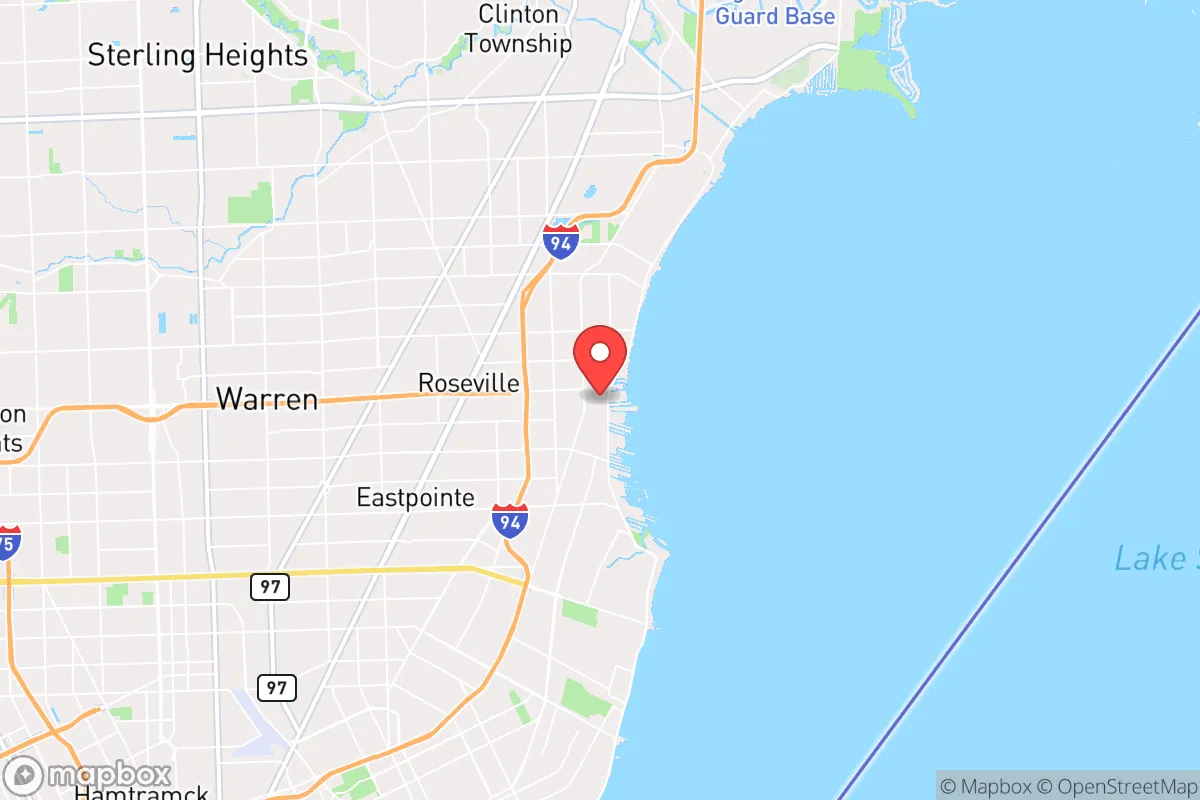
District shown is the primary district for this city’s centroid. Cities may span multiple districts.
Local Political AnalysisPolitical Analysis of St Clair Shores, MI
St Clair Shores has long been a reliably conservative community, and that hasn’t changed much despite the broader shifts in Macomb County. The Cook PVI of R+3 tells you the baseline: this is a place where Republican candidates can expect to win by a few points in most elections, but it’s not a deep-red stronghold like some of the rural townships north of here. What you’ll notice is that the local politics are still rooted in the kind of common-sense, live-and-let-live conservatism that used to be the norm across the whole region. People here value their Second Amendment rights, they’re skeptical of big government mandates, and they don’t take kindly to being told how to run their households or their businesses.
How it compares
If you drive a few miles west into Warren or Center Line, you’ll find a more mixed political landscape—those areas have seen a slow but steady drift toward the left, especially in local school board races and city council elections. But St Clair Shores has held the line better than most. Compare it to Grosse Pointe Woods just to the south, which is more of a moderate-to-liberal enclave, or to the city of Detroit itself, where progressive policies have been the norm for decades. The contrast is stark. In St Clair Shores, you still see “Don’t Tread on Me” flags on boats in the marinas, and the local Republican club is active and vocal. The surrounding communities like Harrison Township and Mount Clemens lean more purple, but St Clair Shores remains a place where conservative candidates can count on a solid base of support. The real concern among longtime residents is that the progressive wave washing over other parts of Macomb County—especially in the school districts—could eventually lap onto our shores if we’re not careful.
What this means for residents
For the average person living here, the political climate translates into a few concrete realities. First, property taxes are relatively low compared to neighboring Oakland County, and there’s less appetite for new bond proposals or millages that would fund what some see as unnecessary government programs. Second, the local police department is well-funded and community-oriented, which keeps crime rates low and gives residents a sense of security that you don’t get in cities where defunding movements have taken hold. Third, the school board elections are still competitive, but the conservative majority has kept curriculum decisions focused on basics and local control, rather than importing the kind of divisive social agendas you see in districts like Ann Arbor or Ferndale. That said, there’s a growing unease about state-level mandates—like the push for electric vehicle mandates and energy regulations—that feel like they’re being imposed from Lansing without much regard for how they’ll affect working families here. The sense is that if we don’t stay engaged, we could lose the character that makes St Clair Shores a great place to raise a family.
Culturally, St Clair Shores still feels like a blue-collar lake town with a conservative backbone. The annual Memorial Day parade is a big deal, and the VFW posts are active. You won’t find many “Black Lives Matter” signs in yards, but you will see plenty of support for local veterans and first responders. The biggest policy distinction is probably the city’s stance on property rights and zoning—there’s a strong resistance to high-density development and the kind of “smart growth” initiatives that often come with progressive planning agendas. The long-term worry is that as younger, more liberal families move in from Detroit and the inner suburbs, the political balance could tip. But for now, St Clair Shores remains a place where a conservative can feel at home, where the government mostly stays out of your business, and where the biggest political fights are still about keeping it that way.

State Political ClimatePolitical Climate in Michigan
State Political AnalysisPolitical Environment in the State
Michigan is a classic battleground state that has shifted from reliably blue to a true purple, with a strong conservative undercurrent in its vast rural and exurban areas that is increasingly pushing back against the progressive dominance of its largest cities. Over the last 20 years, the state has gone from being a Democratic stronghold in presidential races to flipping for Trump in 2016, then narrowly for Biden in 2020, and then swinging hard back to the right in 2024 with Trump winning by a decisive margin. The real story is the growing political chasm between the liberal, union-heavy southeast and the rest of the state, which is becoming more conservative and more vocal every cycle.
Urban vs. rural divide
The political map of Michigan is a tale of two worlds. The entire political gravity of the left is concentrated in the southeast corner, primarily in Wayne County (Detroit), Washtenaw County (Ann Arbor), and Oakland County (the wealthy northern suburbs of Detroit). These three counties alone can deliver over 1.5 million Democratic votes, making it nearly impossible for a Republican to win statewide without massive turnout elsewhere. Meanwhile, the rest of the state—from the Upper Peninsula down through the western side and into the thumb—is deeply red. Ottawa County (Holland/Grand Haven) is one of the most reliably conservative counties in the Midwest, and Kent County (Grand Rapids) has been trending redder as the city’s suburbs grow. The real battlegrounds are the "blue wall" suburbs like Macomb County (north of Detroit), which flipped hard for Trump in 2024 after being a classic Reagan Democrat stronghold. The rural-urban divide is so stark that a drive from downtown Detroit to the northern lower peninsula feels like crossing into a different country politically.
Policy environment
Michigan’s policy environment is a mixed bag that reflects its split personality. On the tax front, the state has a flat income tax of 4.25%, which is moderate, but property taxes can be high, especially in the better school districts. The regulatory posture is heavily influenced by the state’s auto industry legacy, meaning environmental and labor regulations are stricter than in neighboring Indiana or Ohio. Education policy is a major flashpoint: the state has a robust school choice system with charter schools and a long-standing voucher-like program for low-income students, but the teachers’ unions remain powerful and have fought tooth and nail against any expansion of parental rights in curriculum. Healthcare is dominated by the big systems like Beaumont and Henry Ford, and the state expanded Medicaid under Obamacare, which is a sore point for conservatives. Election laws have been a rollercoaster: after 2020, the Democratic legislature and governor passed a raft of voting changes that made absentee voting easier and added ballot drop boxes, which many conservatives view as a security risk. The state also has a "red flag" law on the books, passed in 2023, which allows for temporary seizure of firearms from individuals deemed a threat by a judge—a major concern for gun owners.
Trajectory & freedom
The trajectory of freedom in Michigan is concerning for conservatives, as the state has seen a clear expansion of government overreach in recent years. The most alarming trend is the erosion of Second Amendment rights: in 2023, the Democratic trifecta passed universal background checks, safe storage requirements, and the aforementioned red flag law, all without a single Republican vote. Parental rights have taken a hit as well, with the state’s Department of Education pushing gender identity policies that allow students to change their names and pronouns without parental notification—a policy that has sparked massive school board protests in places like Northville and Rochester Hills. Medical autonomy took a blow with the state’s strict COVID-19 mandates, which were among the longest-lasting in the nation, and the governor’s use of emergency powers without legislative approval is still a fresh wound. On the positive side, the state has no personal property tax on business equipment, which helps small manufacturers, and it’s a right-to-work state (though that law was repealed in 2023 by the Democratic legislature, a major loss for worker freedom). Property rights are generally respected, but environmental regulations on land use in coastal areas are stringent.
Civil unrest & political movements
Michigan has been a hotbed of political activism on both sides. The most visible flashpoint was the 2020 lockdown protests at the state capitol in Lansing, where thousands of armed citizens gathered to oppose the governor’s stay-at-home orders—an event that drew national attention and was a precursor to the broader "parents’ rights" movement. The "Wolverine Watchmen" militia group was involved in a foiled plot to kidnap the governor, which has been used by the left to paint all conservative activism as extremist, but the reality is that the vast majority of the protests were peaceful and lawful. On the left, the "Detroit Will Breathe" movement and Black Lives Matter protests in 2020 were large and sometimes violent, leading to property damage in downtown Detroit. Immigration politics are less of a flashpoint than in border states, but Dearborn (the largest Arab-American community in the US) has become a political battleground, with many residents shifting to the right in 2024 over foreign policy and cultural issues. Election integrity remains a live issue: the 2020 results in Detroit’s absentee ballot counting process were heavily scrutinized, and while no widespread fraud was proven, the lack of transparency has left many conservatives deeply skeptical of the state’s election system.
Projection
Looking ahead 5-10 years, Michigan is likely to become even more polarized, but the trend lines favor conservatives if they can hold the line. The key demographic shift is the continued exodus of young, liberal-leaning people from Detroit to the suburbs and out of state, while conservative-leaning retirees and remote workers are moving into the western and northern parts of the state, drawn by lower costs and natural beauty. The 2024 election showed that the Democratic coalition is fraying, with significant defections among Arab-American voters in Dearborn and working-class voters in Macomb County. However, the state’s political future hinges on the suburbs of Detroit: if places like Oakland County continue to trend left, the state will remain competitive for Democrats. The biggest wildcard is the state’s independent redistricting commission, which has drawn fairer maps and could keep the state legislature competitive. For a conservative moving in, expect a state that will continue to swing wildly between red and blue, with policy battles over guns, education, and taxes raging every election cycle.
Bottom line for a new resident: Michigan offers a lot of freedom in its rural and suburban areas—low crime, good schools in conservative districts, and a strong sense of community—but you’ll need to be politically engaged to protect those freedoms. The state government in Lansing is currently controlled by Democrats, and they are actively pushing policies that restrict gun rights and parental authority. If you’re moving here, choose your county carefully: Ottawa County or Livingston County will feel like a conservative haven, while Washtenaw County or Wayne County will feel like a progressive enclave. The state’s future is up for grabs, and your vote will matter more here than almost anywhere else in the country.
* Values derived from national, state, county, city and local statistics and may differ in a specific area. Last updated: 2026-04-24T07:43:40.000Z
Narrative content on this page is AI-generated and may contain mistakes. Verify any details that matter before acting on them.
ReloMaps may earn a commission from affiliate links at no extra cost to you.

