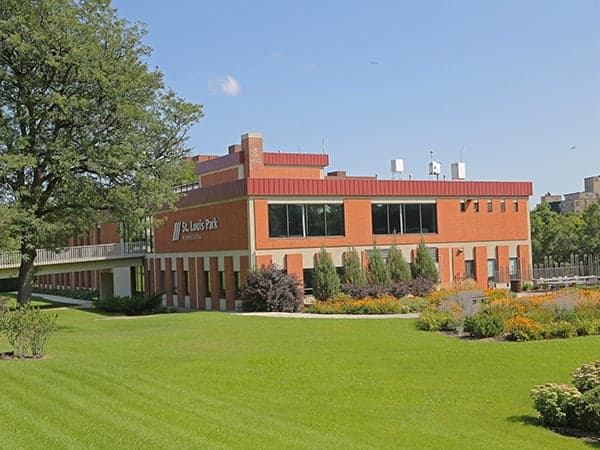
Photo: Wikipedia
Political ClimatePolitical Climate in St Louis Park, MN
District shown is the primary district for this city’s centroid. Cities may span multiple districts.
Local Political AnalysisPolitical Analysis of St Louis Park, MN
St. Louis Park has been a reliably blue stronghold for decades, but the shift in recent years has been dramatic. The Cook PVI of D+32 tells you everything you need to know: this isn't just a Democratic suburb anymore; it's a deep-blue enclave where progressive policies are the norm, not the exception. I've lived here long enough to remember when the city was a mix of working-class families and small business owners who voted for common-sense solutions, not ideological experiments. Now, it feels like every election cycle pushes the needle further left, with local leaders embracing policies that prioritize government mandates over personal choice.
How it compares
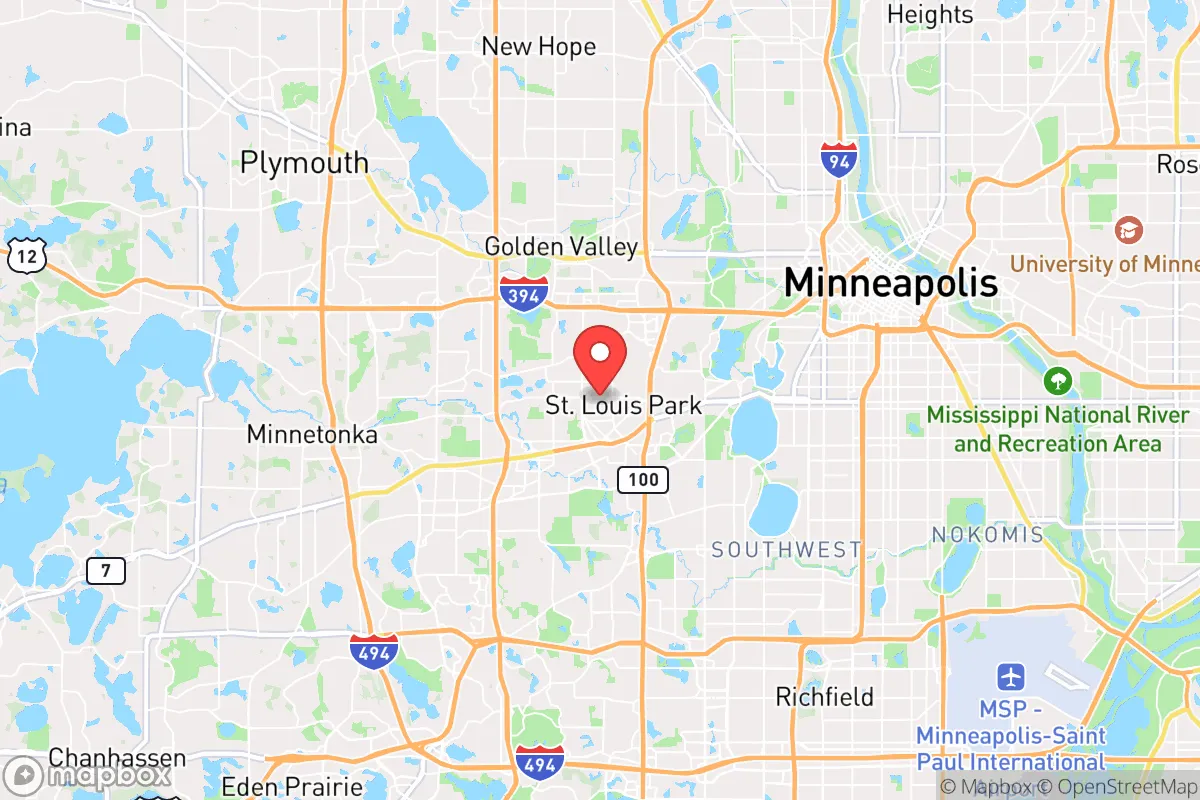
To understand St. Louis Park's political climate, you have to look at its neighbors. Head west to Edina, and you'll find a similar blue tilt, though Edina still has a stronger Republican minority and a more measured approach to zoning and taxes. Drive east into Minneapolis, and you're in the epicenter of progressive governance—rent control, defund-the-police rhetoric, and a city council that often seems out of touch with everyday concerns. St. Louis Park sits somewhere in between, but it's increasingly mimicking Minneapolis's playbook. The contrast is stark when you go south to Bloomington or north to Golden Valley—both are purple-leaning communities where fiscal conservatism still has a voice. In St. Louis Park, that voice is barely a whisper at city council meetings.
What this means for residents
For a conservative or even a moderate, living here means watching your tax dollars fund programs you may not support. The city council has pushed for inclusionary zoning mandates that force developers to set aside units for low-income housing, which sounds noble but often drives up costs for everyone else. There's also a growing push for sanctuary city policies that limit cooperation with federal immigration enforcement—a move that prioritizes ideology over public safety. If you value personal freedoms, you'll notice the creeping hand of government in everything from plastic bag bans to restrictions on short-term rentals. The school board has also leaned hard into equity initiatives that sometimes overshadow academic excellence. It's not that these policies are all bad on paper, but the cumulative effect is a loss of local control and a one-size-fits-all approach that leaves little room for dissent.
What really stands out culturally is the lack of political diversity in public discourse. At neighborhood gatherings or school events, it's rare to hear a dissenting opinion without someone labeling it as out of touch. The local paper and social media groups tend to amplify progressive voices while sidelining anyone who questions the direction. I've seen long-time residents quietly sell their homes and move to places like Plymouth or Maple Grove—communities where you can still have a backyard barbecue without someone lecturing you about carbon footprints. The trajectory here is clear: more regulations, higher taxes, and a government that sees itself as a solution to every problem. If that aligns with your values, you'll fit right in. If not, you'll feel like a stranger in a town you once called home.

State Political ClimatePolitical Climate in Minnesota
State Political AnalysisPolitical Environment in the State
Minnesota has shifted from a classic purple battleground to a reliably blue state over the past two decades, with Democrats (DFL) now controlling all levers of state government after the 2022 elections. The state voted for Hillary Clinton by 1.5 points in 2016, then for Joe Biden by 7 points in 2020, and while Donald Trump narrowed the margin to 4.2 points in 2024, the DFL simultaneously expanded its legislative majorities. This isn't a fluke—it's the culmination of a 15-year trend where the Twin Cities metro, now home to over 60% of the state's population, has become a Democratic stronghold while rural areas have grown redder but less populous.
Urban vs. rural divide
The political map of Minnesota is essentially two states. The Twin Cities metro (Hennepin, Ramsey, Washington, and Dakota counties) delivers massive Democratic margins—Hennepin County alone gave Biden 71% of the vote in 2020, a net of over 350,000 votes that essentially decides statewide races before rural votes are counted. Meanwhile, Greater Minnesota has swung hard right. Counties like Stearns (St. Cloud), Olmsted (Rochester), and Crow Wing (Brainerd) have trended Republican, with Crow Wing voting +30 points for Trump in 2024. The Iron Range (St. Louis, Itasca counties) is the most dramatic shift: once a DFL stronghold, it flipped to Trump in 2016 and stayed red in 2020 and 2024, driven by frustration with Democratic environmental and mining policies. Suburbs like Lakeville and Woodbury are now competitive, but the overall trend is clear—the metro's growth is outpacing rural population declines, cementing the state's blue lean.
Policy environment
Minnesota's policy environment under DFL control has become a laboratory for progressive governance. The 2023 tax bill created a new fourth-tier income tax bracket of 10.85% on income over $1 million, making Minnesota one of the highest-tax states in the nation. The state also enacted a paid family and medical leave program funded by a payroll tax on all workers, and a clean energy standard requiring 100% carbon-free electricity by 2040. On education, the state now offers free school meals to all students and increased per-pupil funding, but parental rights advocates have raised alarms about the 2023 "trans refuge" law that shields gender-affirming care for minors from out-of-state legal challenges. Election laws were loosened: automatic voter registration and no-excuse absentee voting are now permanent, and felons regain voting rights upon release from prison. Property taxes remain a sore point—the statewide average effective rate is 1.05%, above the national median, and recent reforms did little to curb local levy growth.
Trajectory & freedom
On the freedom index, Minnesota is clearly moving in the wrong direction for conservatives. The 2023 omnibus public safety bill eliminated cash bail for most misdemeanors and restricted police use of no-knock warrants, while simultaneously expanding gun control with a red flag law and universal background checks for private transfers. The 2024 "Driver's Licenses for All" law allows undocumented immigrants to obtain standard driver's licenses, a policy that has sparked heated debate about election integrity and identity verification. On the positive side, Minnesota remains a shall-issue state for concealed carry (permit required but no discretion), and the 2023 "Born Alive" infant protection law passed with bipartisan support. However, the 2023 "Reproductive Freedom" law codified abortion rights up to viability with no parental notification requirement for minors, and the state now funds abortion through Medicaid. Property rights took a hit with the 2023 "Climate and Health" bill that imposed new environmental review requirements on agricultural operations and development projects.
Civil unrest & political movements
Minnesota remains scarred by the 2020 George Floyd protests in Minneapolis, which resulted in over $500 million in property damage and the burning of the Third Police Precinct. The aftermath saw a defund the police movement that briefly gained traction in the Minneapolis City Council, though a 2021 ballot measure to replace the police department with a public safety department was defeated. The 2022 election integrity debate was intense, with Republican candidates running on claims of irregularities in the 2020 election, though no major fraud was proven. Immigration politics are a flashpoint: Hennepin County has a sanctuary policy limiting cooperation with ICE, and the 2024 driver's license law has fueled concerns about non-citizen voting, despite state law requiring proof of lawful presence to register. Organized conservative movements are active in the St. Cloud and Rochester areas, with groups like the Minnesota Family Council and Action 4 Liberty holding regular rallies. The 2023 "Trans refuge" law has sparked a parental rights movement, with school board meetings in Edina and Wayzata becoming battlegrounds over curriculum and library books.
Projection
Over the next 5-10 years, Minnesota's political trajectory is likely to continue leftward, but with caveats. The Twin Cities metro is growing faster than the rest of the state, and in-migration from blue states like California and Illinois is reinforcing Democratic dominance. However, the Iron Range and southwestern Minnesota are losing population, which could accelerate rural radicalization. The 2026 gubernatorial election will be a key test—if a Republican can win back the governor's office, it could slow the progressive agenda, but the DFL's legislative majorities are likely safe through the 2030 redistricting cycle. The 2024 election results showed Trump gaining ground in the metro's outer suburbs, suggesting a potential ceiling on Democratic growth. A new resident moving in now should expect higher taxes, more regulation, and a political culture that is increasingly hostile to conservative values in the metro, but with pockets of resistance in the exurbs and rural areas.
Bottom line for a conservative relocating to Minnesota: You're moving into a state where your vote in statewide races will likely be overwhelmed by the metro, but where local control in the exurbs and rural areas still offers some breathing room. If you can tolerate high taxes and a progressive state government, the quality of life—schools, healthcare, outdoor recreation—is excellent. But if you're looking for a state that respects your gun rights, parental authority, and tax dollars, you'll find yourself fighting an uphill battle in St. Paul. The Lakeville, Woodbury, and Rochester suburbs offer the best balance of conservative community and economic opportunity, while the Iron Range is a cultural fit but economically struggling. Choose your county carefully—it matters more than your vote for governor.
* Values derived from national, state, county, city and local statistics and may differ in a specific area. Last updated: 2026-04-24T08:04:19.000Z
Narrative content on this page is AI-generated and may contain mistakes. Verify any details that matter before acting on them.
ReloMaps may earn a commission from affiliate links at no extra cost to you.

