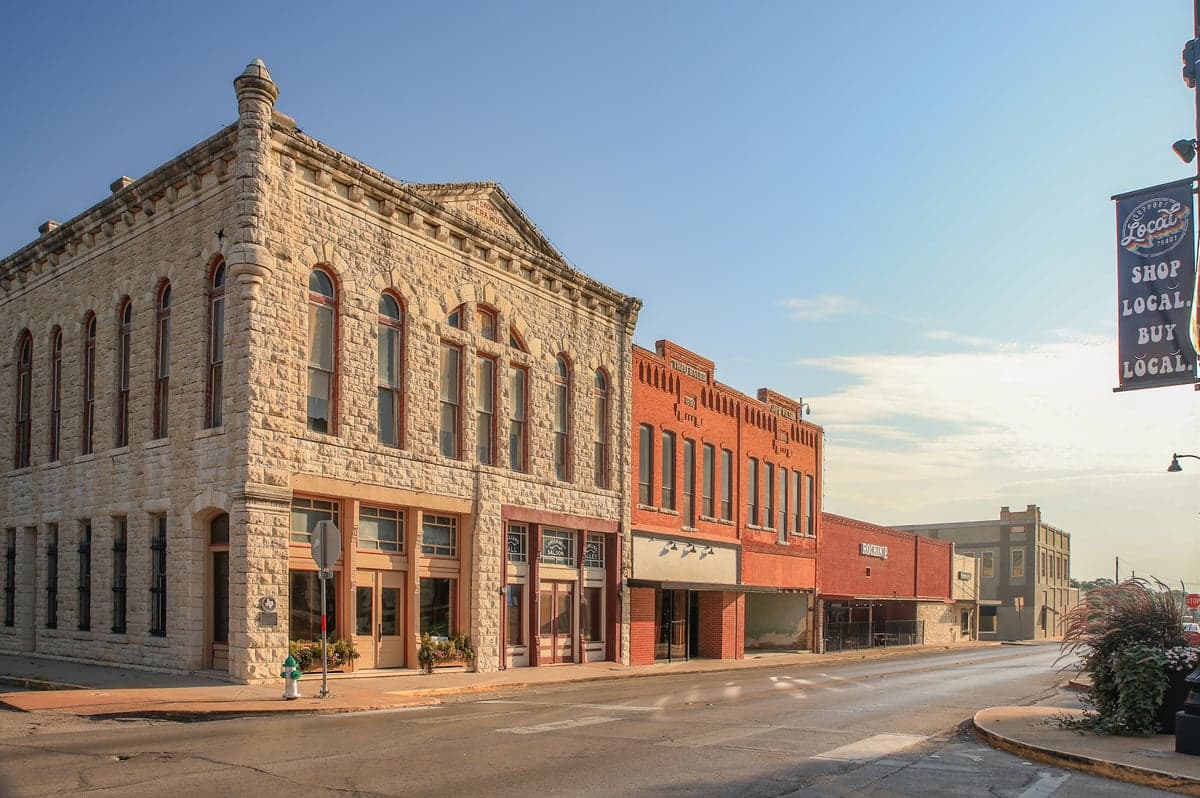
Photo: Wikipedia
Strategic Assessment of Stephenville, TX
Meaningful friction. Expect exposure to either population pressure, blast zones, or natural disaster risk. Consider buying a retreat property.
What does the Strategic Assessment tell us?
Our Strategic Assessment grades tactical survivability of an area. Major population centers, military targets, fallout zones, natural disasters, and border exposure all drive risk — lower exposure means a more defensible position in a crisis.
This is heavily inspired by Joel Skousen's Strategic Relocation book. Highly recommended you checkout the book ($)What does this tell us?
Our Strategic Assessment grades tactical survivability of an area. Major population centers, military targets, fallout zones, natural disasters, and border exposure all drive risk — lower exposure means a more defensible position in a crisis.
This is heavily inspired by Joel Skousen's Strategic Relocation book. Highly recommended you checkout the book ($)Strategic Pillars

Key Distances
Regional Safe Places
Below is our recommended "safe zones" in Texas and the surrounding area based on our strategic heuristics. For most people, it's unrealistic to live in a “safe zone” full-time due to work, family or other personal reasons. They tend to be more rural. However, many of these areas are perfect for second homes and retreat properties that double as a vacation home or even a short-term rental.

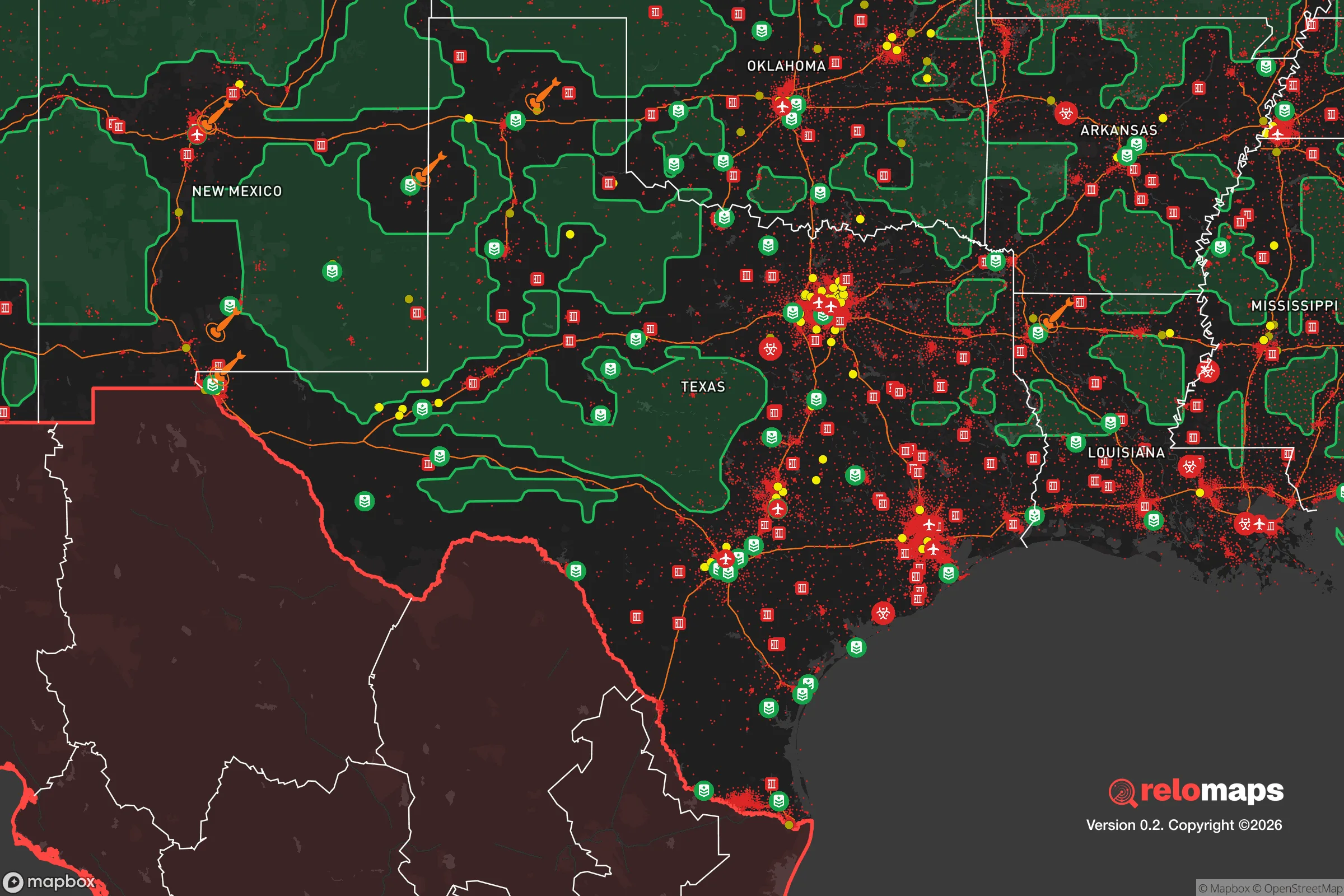


Important Note: For informational purposes only. This does not mean nothing bad ever happens in the green zones. Please use common sense. This is based on public data and modeled with AI. We tried to take a conservative approach but mistakes happen. We update this regularly as new information becomes available.
Solar Generator Recommendations
Backup power matters more here than in safer locations. We've picked three solar generators across budgets and capacity tiers — start with the budget unit if you only need a few essentials, or step up if you want to run a fridge and HVAC for days at a time.

Jackery Portable Power Station Explorer 300
Budget OptionPower on the Go: Weighing only 11 lbs, it's convenient to set up and store with book-sized foldable solar panels

BLUETTI Portable Power Station AC180
Designed for both indoor and outdoor scenarios, AC180 is highly capable as it has a robost capacity and continuous output power.

EF ECOFLOW DELTA Pro Ultra Power Station
Upgraded PickEcoFlow DELTA Pro Ultra is a whole-home energy system designed to grow with your family. Integrated with the Smart Home Panel 2, it scales to meet your evolving energy needs — keeping your home powered, intelligent, and secure through every stage of life.
We earn a commission, at no additional cost to you.
Strategic Assessment Analysis
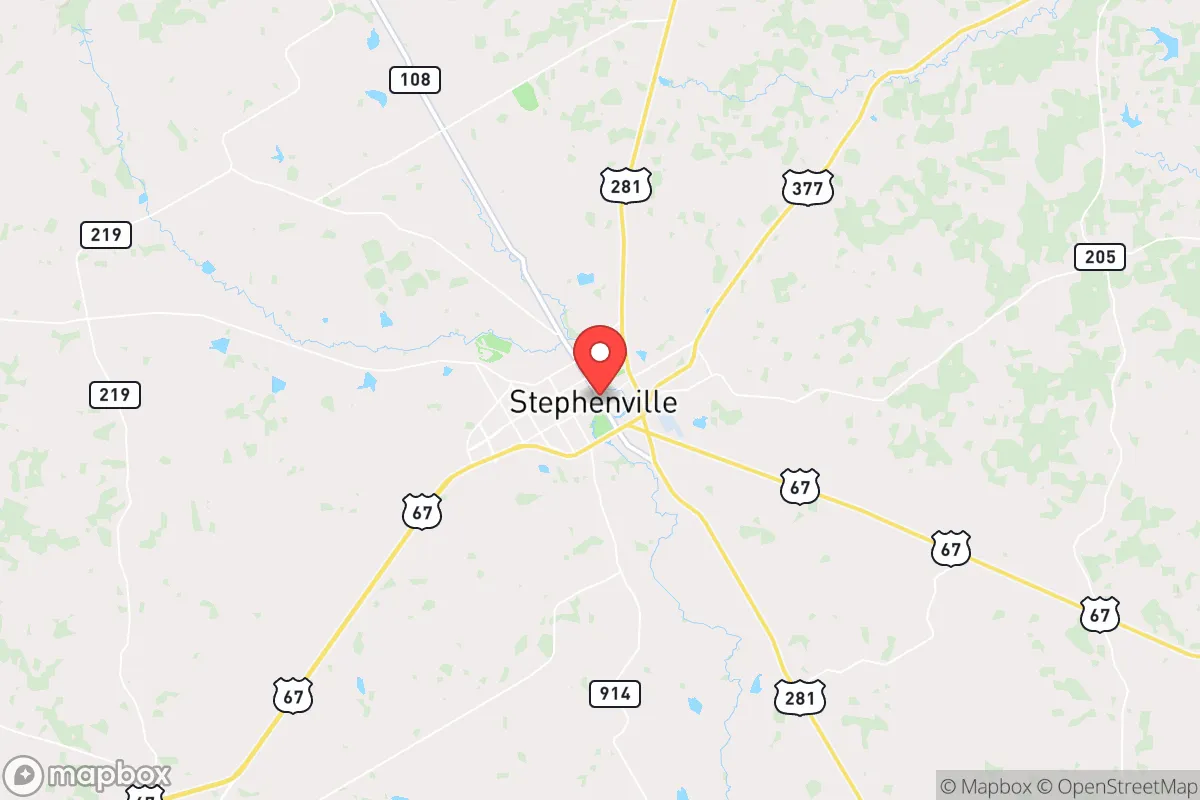
Stephenville, Texas, offers a compelling strategic position for those prioritizing resilience and self-sufficiency, blending a robust local economy with a geographic buffer from the most acute risks of major metropolitan collapse. Located roughly 75 miles southwest of Fort Worth and 150 miles from Dallas, the "Cowboy Capital of the World" sits in a sweet spot: close enough to access urban supply chains and medical centers, yet far enough to avoid the immediate fallout of a major civic disruption in the Metroplex. Its position in Erath County, anchored by Tarleton State University and a diversified agricultural base, provides a foundation that is less brittle than many small towns, making it a serious candidate for a long-term relocation strategy.
Geographic position and natural advantages for long-term security
Stephenville’s location on the edge of the Cross Timbers region and the rolling plains gives it several natural advantages that a prepper-minded relocator should note. The area sits atop the Trinity Aquifer, providing a reliable groundwater source that is less stressed than the Ogallala further west, and the local topography—gently rolling hills with scattered woodlands—offers decent natural cover and defensible terrain without being mountainous or isolated to the point of logistical impracticality. The climate is semi-arid but with enough annual rainfall (around 30 inches) to support dryland farming and ranching, which is the backbone of the local economy. This means that in a prolonged disruption scenario, the region’s agricultural output—cattle, hay, and small grains—can sustain a local population far better than a suburb dependent on trucked-in groceries. The absence of major floodplains, hurricane zones, or seismic activity further reduces the risk of natural disasters that could trigger cascading failures. For a relocator, this translates to a lower probability of being forced to evacuate due to weather, a key consideration when building a permanent retreat.
Risks, exposures, and proximity to fallout-relevant landmarks
No location is without vulnerabilities, and Stephenville’s primary exposure stems from its proximity to the Dallas-Fort Worth metroplex, a high-value target for both civil unrest and potential kinetic events. While 75 miles provides a meaningful buffer—enough to avoid the immediate blast radius or panic-driven exodus from a major attack—it is not enough to guarantee safety from secondary effects like refugee flows, supply chain collapse, or electromagnetic pulse (EMP) disruptions. The nearby Comanche Peak Nuclear Power Plant, located about 40 miles northeast near Glen Rose, is a specific concern: a catastrophic failure or targeted strike there could render downwind areas, including parts of Erath County, uninhabitable for weeks or longer. Additionally, the region’s reliance on a single major highway corridor—U.S. 377 and I-20 to the north—means that any blockage or chokepoint could severely limit resupply and egress. For the strategic relocator, these risks are manageable but require planning: maintaining a 90-day supply of food, water, and medical gear, and having multiple overland routes out of the area (including secondary roads toward Brownwood or San Angelo) are non-negotiable. The presence of Tarleton State University also introduces a transient population of roughly 15,000 students, which could become a liability during a breakdown of civil order, as young, mobile populations often flee toward perceived safety, straining local resources.
Practical resilience for a relocator: food, water, energy, and defensibility
Stephenville’s practical resilience is where it truly shines for a prepper-oriented household. The local water supply is robust: the city draws from the Trinity Aquifer via multiple wells, and many rural properties have access to private wells or surface water from the Bosque River and its tributaries. For a relocator, securing a property with a well and a backup hand pump or solar-powered pump is straightforward and relatively affordable compared to more arid regions. Food security is equally strong—Erath County is one of the top cattle-producing counties in Texas, and the local farmers’ markets, feed stores, and co-ops mean that even in a partial collapse, barter networks for eggs, meat, and produce would likely persist. Energy independence is achievable: the area has good solar insolation (averaging 5.5 peak sun hours per day), and many rural homes already use propane or diesel generators as a hedge against grid outages, which are common during summer storms. Defensibility is moderate but improvable: the terrain lacks natural chokepoints like mountain passes, but the dispersed rural settlement pattern means that a well-chosen property with a long driveway, good sightlines, and a perimeter fence can be hardened without drawing attention. The local culture is heavily oriented toward self-reliance, gun ownership, and community mutual aid—values that align with a conservative, prepper mindset. However, the town itself is not a gated fortress; a relocator should plan to live on the outskirts, not in the city limits, to maintain operational security and avoid being caught in a potential refugee surge from the north.
The overall strategic picture for Stephenville is one of calculated viability: it is not a remote bunker, but a functioning small city with a strong agricultural base, decent water resources, and a population that largely shares the values of preparedness and independence. The primary trade-off is proximity to DFW—which offers economic opportunity and medical access in stable times, but introduces real risks during a major crisis. For a single individual or family willing to invest in off-grid infrastructure, maintain a low profile, and build relationships with local ranchers and farmers, Stephenville provides a solid foundation for weathering a range of scenarios, from economic collapse to localized civil unrest. It is not a perfect retreat—no place is—but it is a rational, defensible choice for those who want to stay connected to the broader world while maintaining the ability to disconnect and survive when that world falters. The key is to act now, secure a property with water and growing space, and integrate into the community before the next crisis tests the system.

* Values derived from national, state, county, city and local statistics and may differ in a specific area. Last updated: 2026-04-18T19:22:45.000Z
Narrative content on this page is AI-generated and may contain mistakes. Verify any details that matter before acting on them.
ReloMaps may earn a commission from affiliate links at no extra cost to you.

