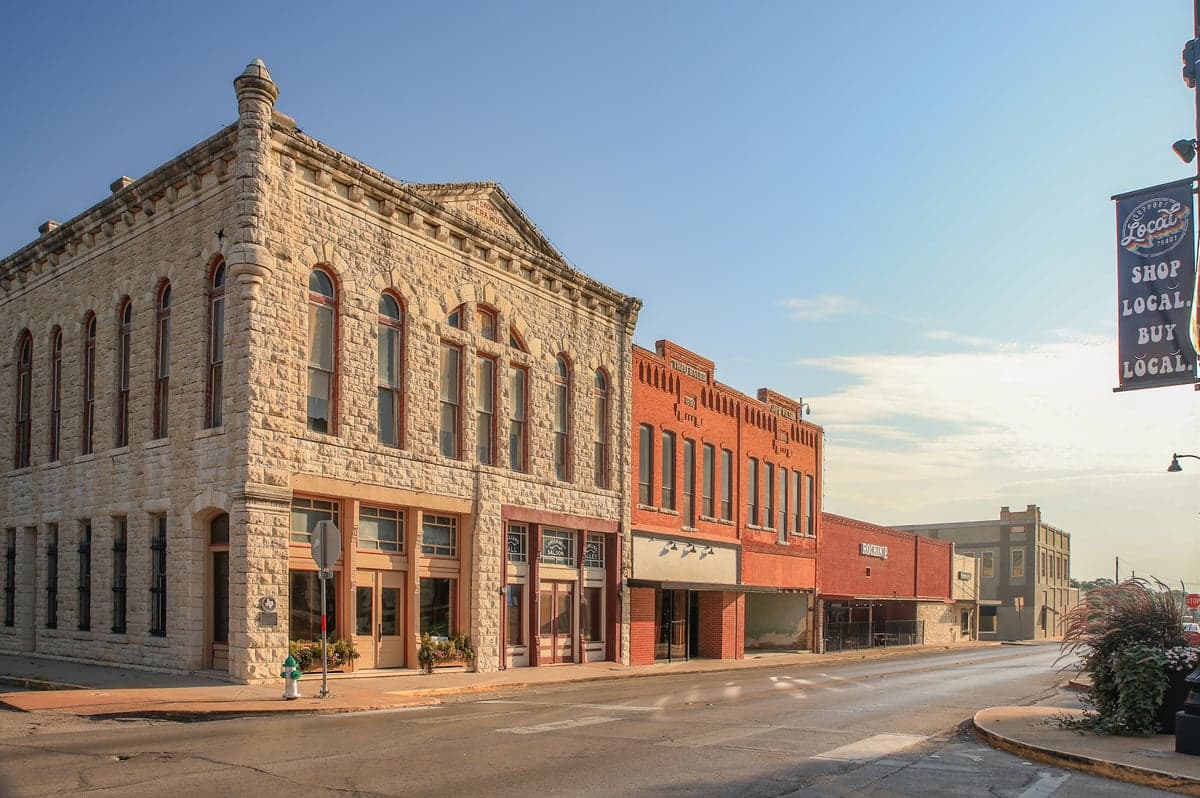
Photo: Wikipedia
Political ClimatePolitical Climate in Stephenville, TX
District shown is the primary district for this city’s centroid. Cities may span multiple districts.
Local Political AnalysisPolitical Analysis of Stephenville, TX
Stephenville is about as solidly conservative as a Texas town gets, and that’s not changing anytime soon. The Cook PVI sits at R+18, which means the area votes nearly 20 points more Republican than the national average, and in 2024, Erath County went for the GOP ticket by a comfortable 30-point margin. You don’t see much hand-wringing over politics here—folks tend to agree that the less government meddles in your life, the better. The local vibe is still very much “live and let live,” as long as you’re not asking for handouts or trying to impose new rules on how people run their businesses or raise their kids. That said, there’s a quiet unease among long-time residents about the slow creep of progressive ideas filtering in from the bigger cities, especially through the university crowd at Tarleton State.
How it compares
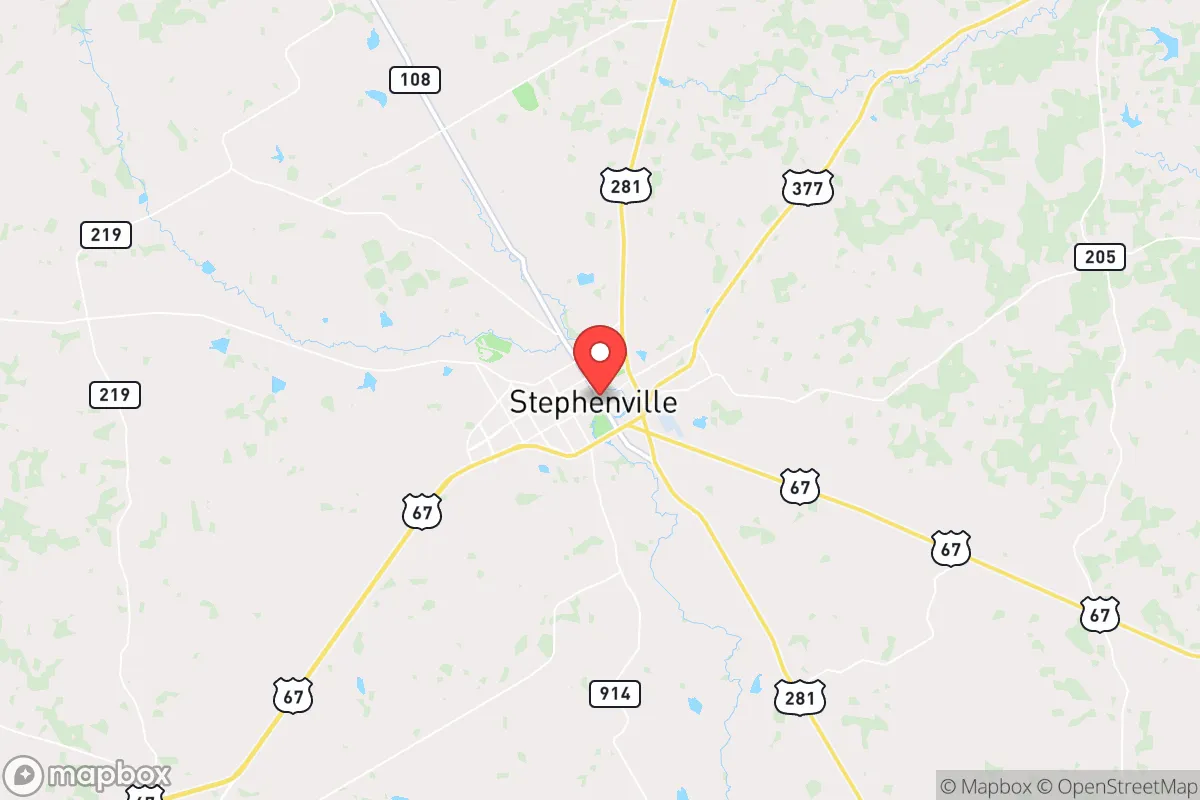
Drive 30 minutes east to Dublin, and you’ll find a similar conservative streak—lots of churches, family farms, and a general distrust of Austin’s agenda. Head west to Comanche, and it’s even more rural and Republican, with hardly a blue sign in sight. The real contrast comes when you go south to Granbury or north to Mineral Wells; both are still red, but you’ll notice more transplants from Dallas-Fort Worth bringing their urban sensibilities. Stephenville, though, has held the line better than most. The town’s identity is still rooted in agriculture and the cowboy culture of the Lone Star State, which naturally leans toward personal responsibility and limited government. The nearby city of Brownwood, about 45 minutes south, is similar in its conservatism but has a slightly older population that’s even more resistant to change. In Stephenville, you get a younger, more energetic conservative base—thanks in part to Tarleton—but it’s still overwhelmingly traditional.
What this means for residents
For the average person living here, the political climate means you can go about your business without worrying about the government breathing down your neck. Property taxes are a sore spot—Texas doesn’t have a state income tax, so local governments lean hard on property levies—but there’s a strong pushback against any new bond measures that would raise them further. You won’t find mask mandates or business shutdowns here; during the pandemic, Stephenville largely let people make their own choices, and that’s the general attitude toward most issues. The city council and county commissioners are reliably conservative, so you’re not going to see zoning laws that restrict gun ownership or new ordinances that tell you what you can plant in your front yard. If you’re someone who values the Second Amendment, low taxes, and the freedom to run your own life without a permission slip from the county, this is a comfortable place to be. The downside? If you’re hoping for more progressive policies—like expanded public transit or stricter environmental regulations—you’ll be disappointed, but most residents see that as a feature, not a bug.
One thing that sets Stephenville apart is its fierce independence from state-level overreach. While Austin and Dallas have been pushing for more centralized control over local decisions—like housing mandates and energy regulations—Stephenville’s leaders have been vocal about keeping those decisions local. The town has also resisted the kind of “smart growth” planning that some see as a backdoor to government control over private property. Culturally, you’ll find a strong emphasis on community self-reliance: people here don’t expect the government to solve their problems, and they’re quick to organize through churches, civic clubs, and volunteer fire departments. The long-term outlook is cautiously optimistic, but there’s a real concern that as more people move in from the DFW metroplex, the political balance could shift. For now, though, Stephenville remains a place where conservative values aren’t just tolerated—they’re the norm, and the expectation is that government stays out of the way.

State Political ClimatePolitical Climate in Texas
State Political AnalysisPolitical Environment in the State
Texas remains a solidly Republican state at the statewide level, but the coalition that keeps it red has shifted dramatically over the past two decades. The GOP still holds every statewide office and both chambers of the legislature, but the margin of victory has narrowed from double digits in the 2000s to about 9 points in the 2024 presidential race. The real story is the internal realignment: the old Democratic strongholds in rural South Texas are flipping red, while the suburban rings around Dallas, Houston, and Austin are trending blue. This creates a political landscape that feels more volatile than the final vote totals suggest, with the state’s future direction hanging on which of these competing trends wins out.
Urban vs. rural divide
The political map of Texas is a study in contrasts. The big metros—Houston, Dallas-Fort Worth, San Antonio, and Austin—are the engine of Democratic growth. Harris County (Houston) alone delivered a net 200,000-vote margin for Democrats in 2024, while Dallas and Travis counties (Austin) added another 150,000 combined. But the GOP has built a firewall in the exurbs and rural areas. Collin County north of Dallas, once a reliable Republican stronghold, is now a battleground—it went from +18 R in 2016 to just +4 R in 2024. Meanwhile, the Rio Grande Valley counties like Hidalgo and Cameron that voted Democratic for generations flipped to Trump in 2024, driven by conservative social values and frustration with the border crisis. The rural Panhandle and West Texas, places like Lubbock and Midland, remain deeply red, with margins exceeding 40 points. The divide isn’t just urban vs. rural anymore—it’s increasingly about which suburbs and small cities are growing fastest and who’s moving in.
Policy environment
Texas’s policy environment is defined by a low-tax, low-regulation posture that has attracted millions of new residents. There is no state income tax, and property taxes are high but capped by the 2023 law that increased the homestead exemption to $100,000 and compressed school tax rates. The regulatory climate is business-friendly, with no state-level occupational licensing for many trades and a right-to-work law that keeps unions weak. On education, the state has expanded school choice through the 2023 creation of education savings accounts for special needs students, though a broader voucher program remains stalled. Healthcare policy is a mixed bag: Texas has not expanded Medicaid, leaving roughly 1.5 million uninsured adults in the coverage gap, but the state has invested heavily in rural hospital subsidies and telehealth. Election laws were tightened in 2021 with Senate Bill 1, which banned 24-hour and drive-through voting, added ID requirements for mail ballots, and empowered partisan poll watchers. The state also passed a 2023 law requiring all counties to maintain paper ballot backups. For a conservative, the policy environment is broadly favorable, but the lack of Medicaid expansion and rising property taxes are persistent pain points.
Trajectory & freedom
On personal liberty, Texas has moved in two directions simultaneously. On the positive side for conservatives, the state has aggressively expanded gun rights: permitless carry (constitutional carry) became law in 2021, allowing any law-abiding adult to carry a handgun without a license. The 2023 legislative session also passed a law prohibiting enforcement of federal gun regulations that don’t exist under state law—a direct challenge to federal overreach. Parental rights were strengthened with the 2023 law requiring school districts to notify parents of any changes to a child’s mental or physical health, effectively banning gender transition procedures for minors. On medical autonomy, Texas banned nearly all abortions in 2021 through the Heartbeat Act (SB 8), enforced by private civil lawsuits, and followed with a near-total ban in 2023. However, the state has also expanded government power in ways that concern liberty-minded residents. The 2021 election law (SB 1) increased state oversight of local election administration, and the 2023 law criminalizing illegal entry into Texas (SB 4) gives state law enforcement broad arrest powers. The net trajectory is toward more state-level control, which is a double-edged sword: it protects conservative values but also centralizes power in Austin.
Civil unrest & political movements
Texas has seen its share of political flashpoints. The 2020 Black Lives Matter protests in Austin were among the largest in the country, leading to the city council’s defunding of the police—a move that was later partially reversed after a backlash. The border crisis has been a constant source of tension, with Governor Abbott’s Operation Lone Star deploying state troopers and National Guard to the border, busing migrants to northern cities, and installing razor wire along the Rio Grande. This has sparked legal battles with the Biden administration and created a visible, ongoing confrontation that residents in border towns like El Paso and Brownsville experience daily. On the right, the Texas Nationalist Movement has gained some traction, pushing for a referendum on secession, though it remains a fringe movement. Election integrity remains a hot-button issue: the 2020 and 2022 cycles saw numerous lawsuits over mail ballot procedures, and the 2024 election was marked by heightened scrutiny of voter rolls in Harris County. A new resident will notice the political polarization in everyday life—yard signs, bumper stickers, and local news coverage are intensely partisan, especially in the suburbs.
Projection
Over the next 5-10 years, Texas is likely to become more competitive at the statewide level but remain Republican-leaning. The key demographic driver is in-migration: the state adds roughly 400,000 new residents per year, and while many are conservatives from California and the Northeast, a significant share are younger, college-educated professionals who lean left. The suburbs of Dallas, Houston, and Austin will continue to trend blue, while the Rio Grande Valley and rural areas will stay red or shift further right. The wildcard is the Hispanic vote: if the GOP continues to make gains among working-class Hispanic voters, the state could remain red for another generation. If not, Texas could become a true swing state by 2032. For a new resident, the practical implication is that the political environment will remain stable at the state level—low taxes, conservative social policies, and business-friendly regulation—but local politics will become more contentious, especially in the fast-growing suburbs where school board and city council races are increasingly partisan battlegrounds.
For someone moving to Texas, the bottom line is that you’re getting a state that is still fundamentally conservative but undergoing a rapid demographic and cultural shift. The policy environment protects your wallet and your rights on most fronts, but you’ll need to be engaged locally to keep it that way. The state government in Austin is your ally on most issues, but your city council or county commissioners may not be—especially if you settle in the blue-leaning suburbs of Dallas or Houston. If you value low taxes, gun rights, and parental control over education, Texas is still one of the best bets in the country. Just don’t expect it to stay exactly the same as it is today.
* Values derived from national, state, county, city and local statistics and may differ in a specific area. Last updated: 2026-04-18T19:22:45.000Z
Narrative content on this page is AI-generated and may contain mistakes. Verify any details that matter before acting on them.
ReloMaps may earn a commission from affiliate links at no extra cost to you.

