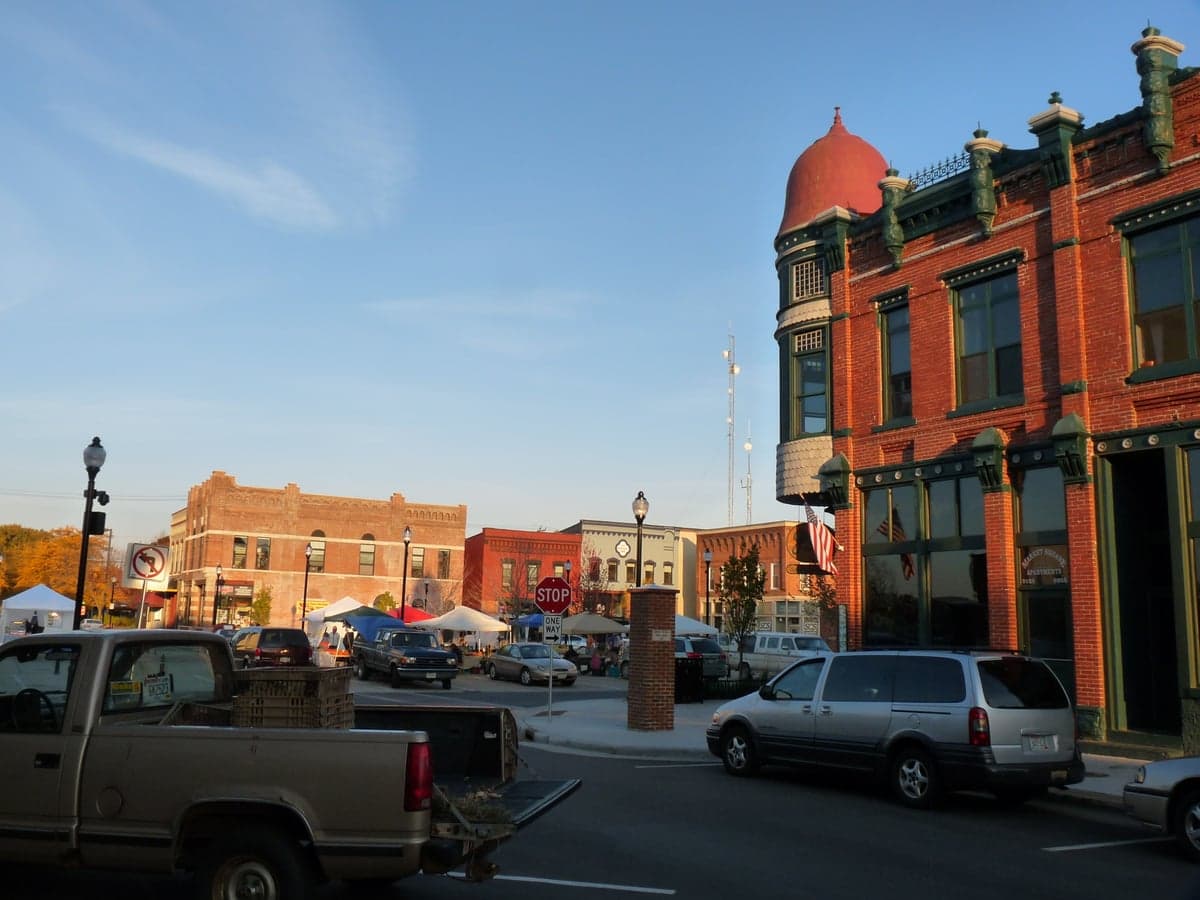
Photo: Wikipedia
Political ClimatePolitical Climate in Stevens Point, WI
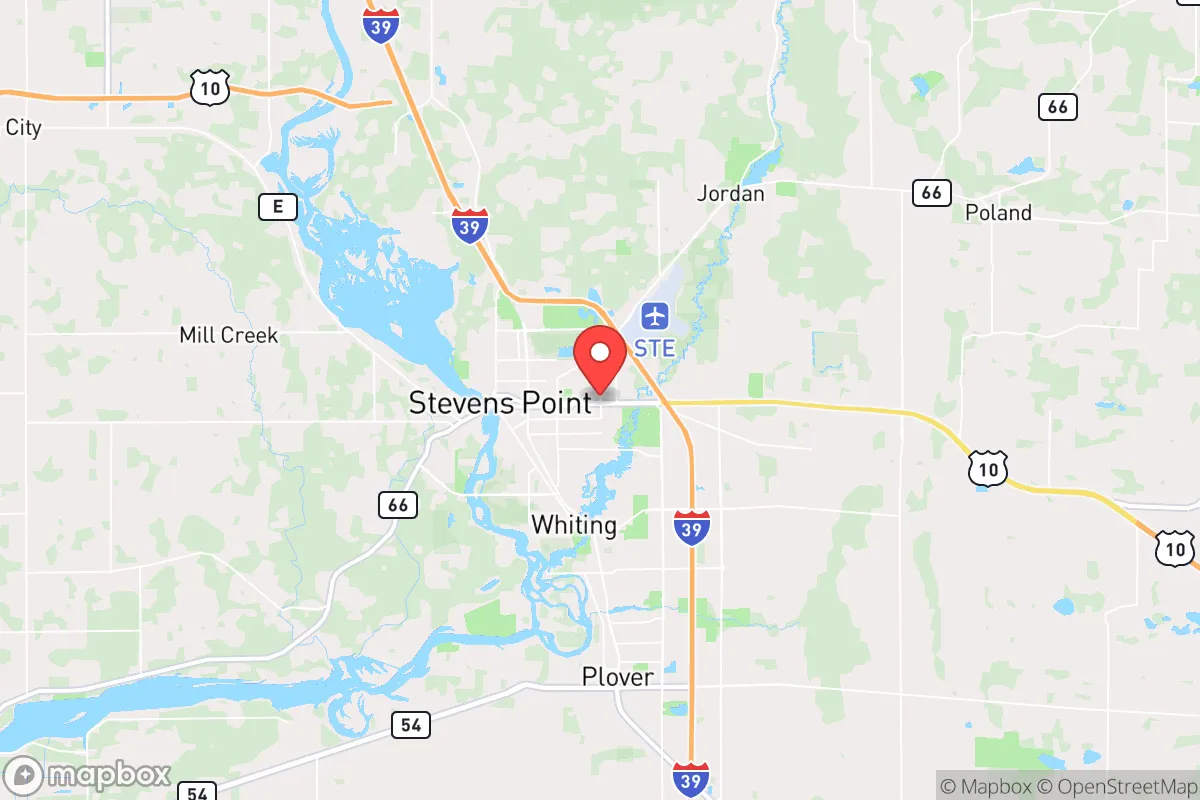
District shown is the primary district for this city’s centroid. Cities may span multiple districts.
Local Political AnalysisPolitical Analysis of Stevens Point, WI
Stevens Point, Wisconsin, sits in a bit of a political tug-of-war, and if you’ve lived here as long as I have, you’ve felt the shift. The Cook PVI clocks the area at R+3, meaning it leans slightly Republican overall, but that number hides a lot of local tension. The city itself has been drifting leftward over the past decade, while the surrounding Portage County—especially towns like Plover and Whiting—still hold a more traditional, conservative line. It’s not the same Stevens Point I remember from the 90s, when folks mostly agreed on keeping government out of your business and your backyard.
How it compares
Drive ten minutes east to Plover, and you’ll hear a different conversation—more about property rights, lower taxes, and skepticism of new mandates. Whiting, just south of town, leans similar. But inside Stevens Point, especially near the university, you get a younger, more progressive crowd that’s pushed for things like paid leave ordinances and stricter rental regulations. Compare that to nearby Wausau to the north, which is solidly red and hasn’t seen the same kind of cultural shift. The contrast is stark: in Stevens Point, you’ll see more yard signs for local environmental initiatives, while in the surrounding towns, it’s still about Second Amendment rights and school board transparency. The R+3 rating feels like a compromise between the city’s blue lean and the county’s red roots, but that balance is getting harder to maintain.
What this means for residents
For a long-time resident like me, the biggest concern is how much the local government is starting to meddle. We’ve seen city council debates over mask mandates that went on for months, and there’s a push to add more zoning restrictions that could affect how you use your own property. The school board has gotten more vocal about equity initiatives, which rubs some folks the wrong way—especially when it feels like they’re prioritizing ideology over reading and math scores. On the flip side, property taxes here are still reasonable compared to Madison or Milwaukee, and the county sheriff’s office hasn’t gone soft on enforcing the law. But if you value personal freedom—like deciding what’s best for your kids or your business without a bureaucrat’s sign-off—you’ll want to keep an eye on city hall. The progressive faction is small but loud, and they’ve got the university crowd backing them.
Culturally, Stevens Point still has its charms: the farmers market, the riverfront, and a sense of community that hasn’t totally faded. But there’s a growing divide between the old guard and the newcomers. You’ll see it in the local paper’s letters to the editor—arguments over everything from bike lanes to police funding. The university, UW-Stevens Point, brings in a transient population that often votes left, which tilts local elections. Long-term, I worry the city will keep sliding toward policies that sound good on paper but end up costing us in taxes and freedom. If you’re thinking of moving here, know that the politics are changing, and not everyone is happy about it. The surrounding towns offer a quieter, more predictable alternative, but inside the city limits, you’re in for a fight over the direction of the place.

State Political ClimatePolitical Climate in Wisconsin
State Political AnalysisPolitical Environment in the State
Wisconsin has long been a classic swing state, but over the past 10-20 years, it has become a fiercely contested battleground where the political climate is defined by a razor-thin partisan split. The state leans roughly 50-50, with Republicans holding a slight edge in statewide elections, as seen in the 2024 presidential race where Donald Trump carried the state by about 1 point. The dominant coalitions are a deeply conservative rural and exurban base, concentrated in the WOW counties (Waukesha, Ozaukee, Washington) around Milwaukee, and a powerful progressive stronghold in Dane County (Madison) and Milwaukee proper. The trajectory has been one of hardening polarization: the state flipped from reliably blue in the 1980s and 1990s to a true toss-up after the 2010 Tea Party wave, and it has only grown more entrenched since the 2020 election and the subsequent election integrity battles.
Urban vs. rural divide
The political map of Wisconsin is a textbook case of the urban-rural chasm. Milwaukee County, home to the state's largest city, votes overwhelmingly Democratic—often by 30-40 points—driven by union legacy, minority communities, and a strong progressive activist base. Dane County, anchored by Madison and the University of Wisconsin, is even more lopsided, routinely delivering 70-80% of its vote to Democrats. In contrast, the rest of the state is deeply red. The WOW counties—Waukesha, Ozaukee, and Washington—are among the most reliably Republican suburbs in the nation, often voting 60-70% GOP. Rural counties like Marathon (Wausau), Brown (Green Bay), and Outagamie (Appleton) have shifted rightward over the past decade, driven by cultural conservatism and frustration with state-level mandates. The Fox Valley region, once a moderate swing area, now leans clearly Republican. The divide is so stark that the state's 10 largest counties are almost evenly split: the five most urban (Milwaukee, Dane, Kenosha, Racine, Rock) vote blue, while the five more suburban/exurban (Waukesha, Brown, Outagamie, Washington, Ozaukee) vote red. This geographic split means that statewide elections are often decided by a few thousand votes in the suburbs of Milwaukee or the rural northwoods.
Policy environment
Wisconsin's policy environment is a mixed bag that reflects its divided government. The state has a flat income tax rate of 4.4% (as of 2025), down from 7.65% in 2011, thanks to Republican-led tax cuts. Property taxes are moderate, ranking around the middle nationally, but they vary wildly by district. The regulatory posture is generally business-friendly, with right-to-work legislation passed in 2015 and tort reform limiting lawsuit payouts. Education policy is a flashpoint: the state has a robust school choice program (vouchers for private and religious schools) that has expanded under GOP governors, but public school funding remains a perennial fight. Healthcare is dominated by the BadgerCare expansion, which was accepted under Governor Tony Evers (D) in 2019, but the state still has a relatively high uninsured rate compared to neighbors. Election laws have been a major battleground: after the 2020 election, Republicans passed stricter voter ID laws, limited absentee ballot drop boxes, and banned most private election funding. The state also has a conservative-leaning Supreme Court (4-3 as of 2025) that has upheld these laws. However, the governor's veto power remains a check on further conservative legislation.
Trajectory & freedom
On the freedom front, Wisconsin is a state of contradictions. On the positive side for conservatives, the state has seen significant expansions of gun rights: in 2011, it became a shall-issue concealed carry state, and in 2023, it passed a law allowing permitless carry (Act 12). Parental rights have been strengthened with a 2023 law requiring schools to notify parents of any changes to a student's health or emotional well-being. Property rights are generally respected, with no statewide rent control and limited eminent domain abuse. However, the trajectory is concerning in several areas. The state has seen a steady creep of government overreach, particularly during the COVID-19 pandemic when Governor Evers issued repeated emergency orders and mask mandates that were later struck down by the courts. Medical autonomy took a hit with the 2023 law banning gender transition procedures for minors (Act 100), which conservatives see as protecting children, but it also represents a government intervention into private medical decisions. Taxation remains a bright spot: the flat tax is a genuine freedom win, but local governments in blue counties (especially Dane and Milwaukee) have raised sales taxes and imposed new fees. The biggest red flag is the growing influence of progressive prosecutors in Milwaukee and Dane counties, who have adopted soft-on-crime policies that have led to rising property crime and a sense of lawlessness in some neighborhoods.
Civil unrest & political movements
Wisconsin has been a hotbed of political activism and civil unrest over the past decade. The 2011 Act 10 protests, which saw tens of thousands occupy the state capitol to oppose public sector union restrictions, were a defining moment that energized both the left and the right. The 2020 Kenosha unrest, following the Jacob Blake shooting, saw riots, arson, and the killing of two protesters by Kyle Rittenhouse—a case that became a national flashpoint for self-defense and Second Amendment rights. Election integrity has been a major issue since 2020, with ongoing investigations into ballot drop boxes and the use of private grants for election administration. The state has seen a rise in organized activist groups on both sides: on the right, the Wisconsin Institute for Law & Liberty (WILL) has been a powerful force for conservative legal challenges, while on the left, groups like the Wisconsin Democracy Campaign push for expanded voting access. Immigration politics are less intense than in border states, but there have been flashpoints over sanctuary policies in Madison and Milwaukee, which have declared themselves "welcoming cities" and limit cooperation with ICE. A new resident would notice the political tension in everyday life—yard signs, bumper stickers, and heated local Facebook groups are common, especially in swing suburbs like Wauwatosa or Brookfield.
Projection
Looking ahead 5-10 years, Wisconsin is likely to remain a toss-up state, but the trends are concerning for conservatives. The biggest demographic shift is the continued growth of Dane County, which is adding population faster than any other part of the state, driven by tech and biotech jobs. This will make the state more competitive for Democrats in statewide races. Meanwhile, rural counties are losing population, which could erode the GOP's base. However, the suburbs of Milwaukee—places like Germantown and Mequon—are becoming more conservative as they attract families fleeing the city's crime and taxes. The wild card is the state's aging population: older voters lean Republican, but younger voters are moving to Madison and Milwaukee. If the GOP can hold the WOW counties and the Fox Valley, while making inroads with working-class voters in the northwoods, they can remain competitive. The biggest threat to freedom is the possibility of a Democratic trifecta (governor + legislature) if the state Supreme Court orders new legislative maps, which could lead to a wave of progressive policies like a state income tax hike, expanded Medicaid, and stricter gun laws. A new resident moving in now should expect a state that is politically volatile, with high stakes in every election.
For a conservative-leaning individual or family considering a move to Wisconsin, the bottom line is this: you will find a state with a strong conservative base in the suburbs and rural areas, low taxes, and solid gun rights, but you will also be living in a state where the political future is uncertain. The best places to settle are the WOW counties or the Fox Valley, where you can enjoy a high quality of life, good schools, and a like-minded community. Avoid Dane County and the city of Milwaukee if you value low taxes and personal safety. The state is a battleground, and your vote will matter—but so will your choice of neighborhood.
* Values derived from national, state, county, city and local statistics and may differ in a specific area. Last updated: 2026-04-21T10:30:11.000Z
Narrative content on this page is AI-generated and may contain mistakes. Verify any details that matter before acting on them.
ReloMaps may earn a commission from affiliate links at no extra cost to you.

