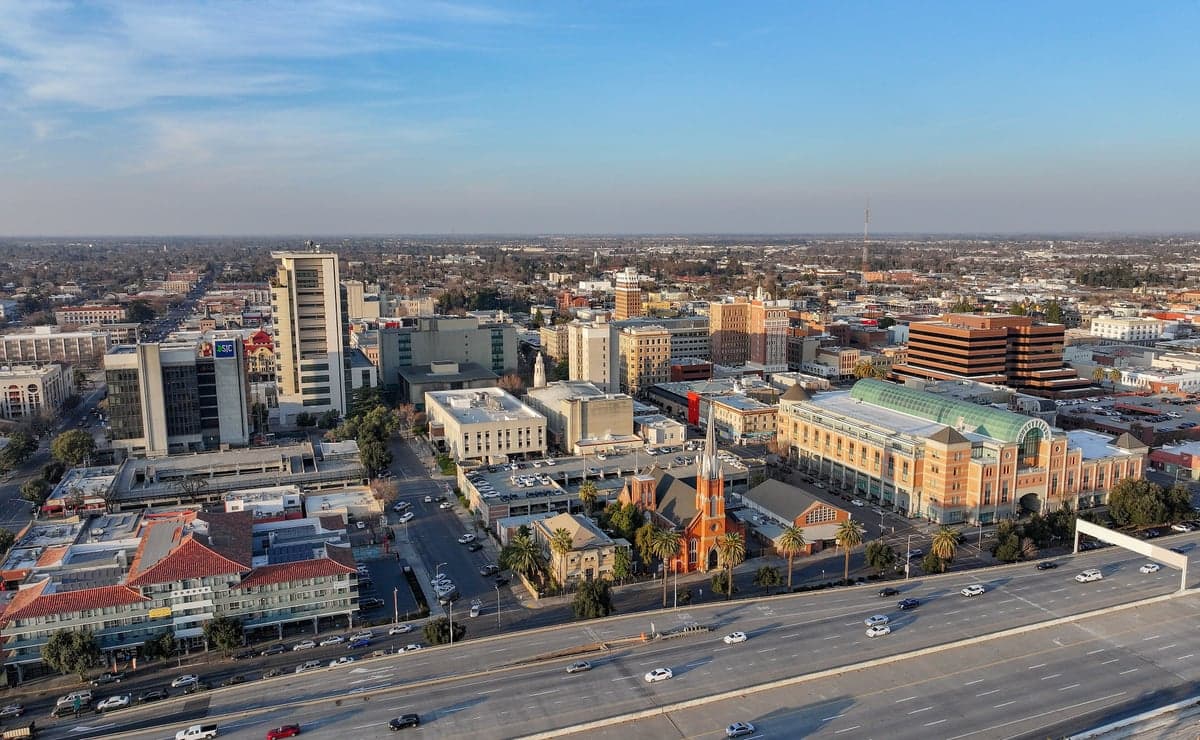


Photo: Wikipedia
Quality of Life in Stockton, CA
A high quality of life with strong walkability, manageable living costs, healthy neighborhood signals, and solid amenity access.
What does Quality of Life tell us?
Quality of Life blends cost of living, nearby amenities, socioeconomic signals, and neighborhood character. City-level scores represent the whole municipality; individual neighborhoods can differ.
What does this tell us?
Quality of Life blends cost of living, nearby amenities, socioeconomic signals, and neighborhood character. City-level scores represent the whole municipality; individual neighborhoods can differ.
Cost of Living
36% above national average
The Real Cost of Living in Stockton, CA for 2026
| Tier | Individual | Family (4) |
|---|---|---|
| Survival | $24k | $45k |
| Comfortable | $80k | $118k |
| Luxury | $131k+ | $202k+ |
| Elite (Top 5%) | $154k+ | $238k+ |
65%
The Area Signal
A metric tracking the socioeconomic signals of the area.
Hobbies
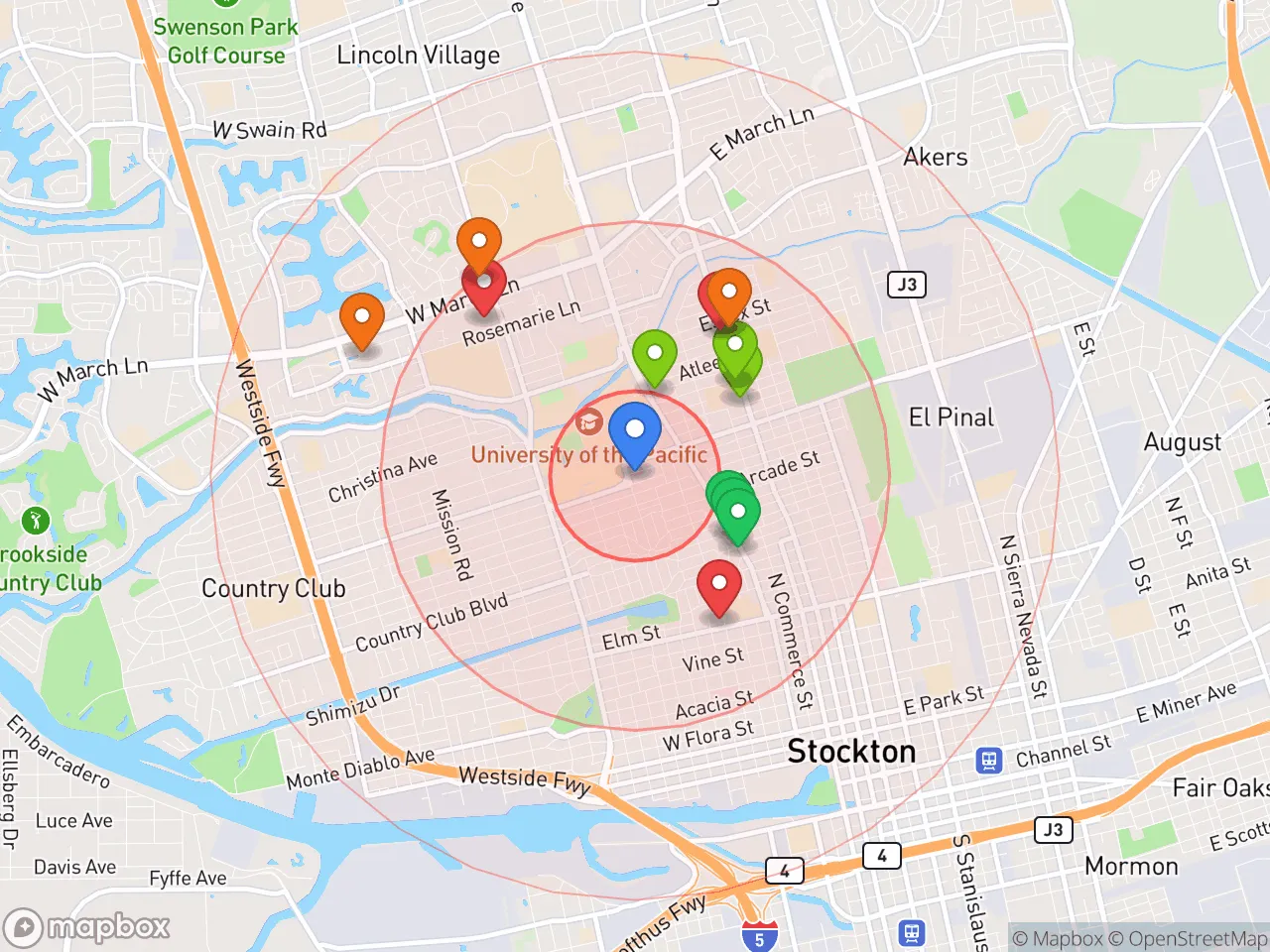
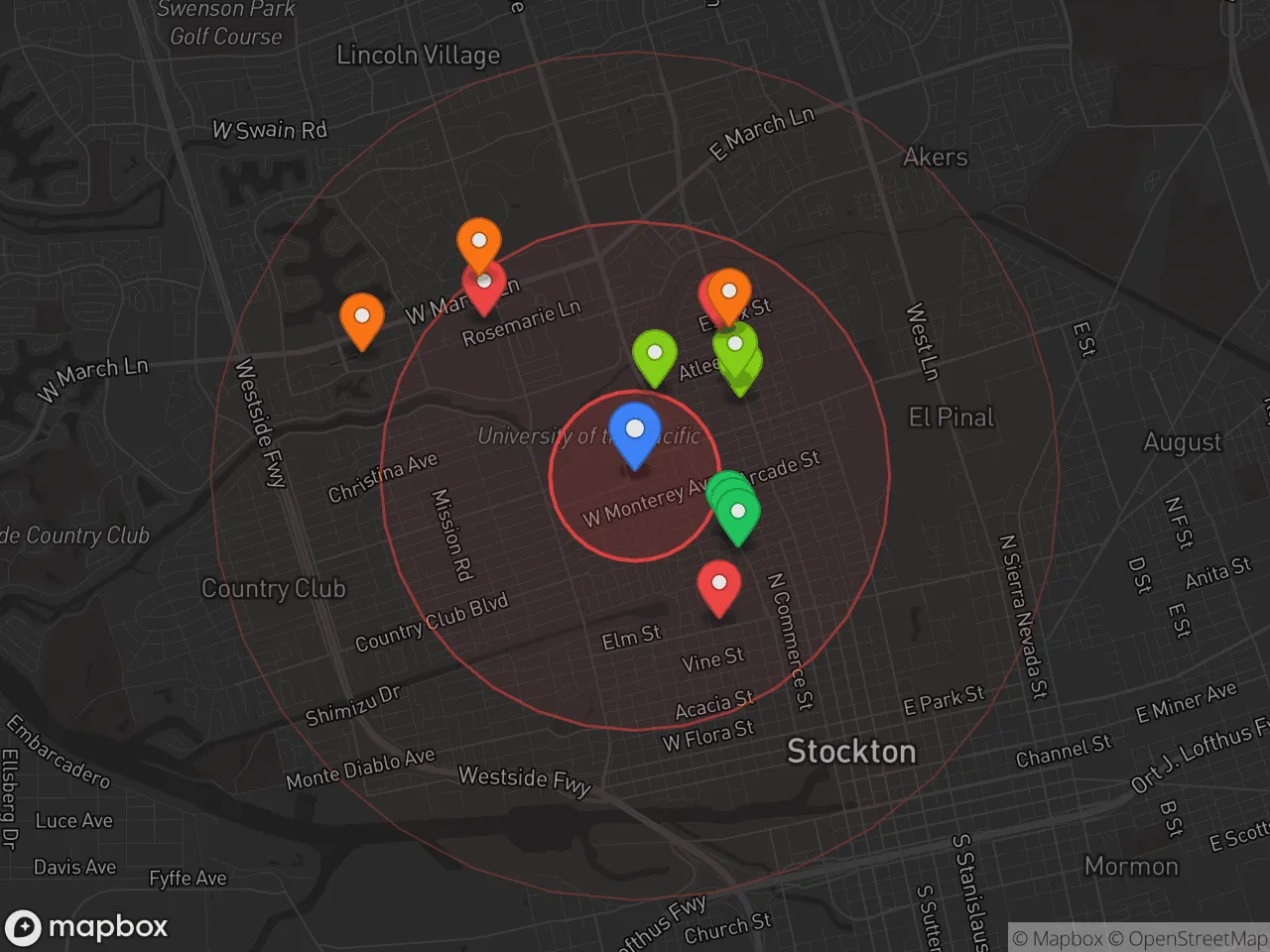
Explore the areaGroceries
6 within 10 miles
Gas
20 within 10 miles
Hospital
10 within 20 miles
Airport
SAN — Oakland San Francisco Bay
Post Office
USPS — 401 North San Joaquin Street, Stockton
Critical Amenities
Quality-of-Life Analysis
Stockton, California, presents a quality-of-life profile that is notably more affordable than much of the Bay Area, yet it carries a cost of living significantly above the national average. With a cost of living index of 136 (where 100 equals the U.S. average), the city attracts a mix of long-term residents, commuters seeking lower housing costs, and families priced out of San Francisco and San Jose. The population is diverse, with a strong working-class and middle-class presence, many of whom are employed in logistics, healthcare, and agriculture, while a growing number commute to higher-paying jobs in the Bay Area.
Cost of living, housing, and affordability compared to the Bay Area
Stockton’s affordability is its primary draw, but it remains expensive by national standards. The median home value sits at $412,900, a figure that is roughly one-third of the median in San Francisco but still nearly double the U.S. average. Median rent is $1,495, which is substantially lower than the Bay Area’s typical $2,500+ but still a stretch for many local earners. The average commute time is 32.1 minutes, reflecting the reality that many residents drive to jobs in Tracy, Modesto, or even the East Bay. Compared to nearby cities like Lathrop or Manteca, Stockton offers slightly lower home prices but similar rent levels. However, property taxes in San Joaquin County are relatively moderate under Proposition 13 rules, and state income tax remains high, which can offset some housing savings for higher-income earners. For renters, the market is competitive but not as cutthroat as in the Bay Area, with more options for single-family homes at the median rent point.
What daily life is like for families: amenities, schools, and local rhythm
Daily life in Stockton revolves around a mix of urban and suburban rhythms, with a strong emphasis on community events and outdoor recreation. The city is home to the University of the Pacific, a private university that adds a cultural and academic anchor, and the Stockton Unified School District offers several magnet and charter options, though overall public school ratings are mixed compared to suburban districts like Lincoln Unified. Amenities include the Banner Island Ballpark (home of the Stockton Ports minor league baseball team), the Stockton Arena for concerts and sports, and the Downtown Stockton waterfront along the San Joaquin Delta, which hosts farmers markets and festivals. For families, the Children’s Museum of Stockton and Oak Grove Regional Park provide affordable recreation. The city’s crime rate has improved since its peak in the early 2010s, but property crime remains a concern in some neighborhoods, so choosing a specific area—like the Brookside or Lincoln Village neighborhoods—is important for safety. The commute pattern means many residents leave early and return late, giving the city a quieter daytime feel compared to the constant bustle of the Bay Area.
Stockton is best suited for those who prioritize lower housing costs over proximity to high-end urban amenities and who are willing to trade a longer commute for a larger home or yard. It works well for remote workers who can avoid the daily drive, families seeking a more affordable entry point into California real estate, and commuters with jobs in Tracy, Modesto, or the East Bay who can tolerate a 30- to 45-minute drive. Retirees on fixed incomes may find the cost of living challenging unless they own their home outright, while young professionals seeking nightlife and walkability may feel limited. Overall, Stockton offers a pragmatic, grounded quality of life for those who value space and affordability over prestige and convenience.

Crime in Stockton, CA
WARNING: The crime statistics are unreliable for this jurisdiction. Local authorities have either not reported or under reported their data to the FBI. This could be due to bad intentions, incompetence or technical issues. Regardless, we suggest skepticism.
Significantly higher crime rates than 88% of comparable U.S. locations.
Violent CrimeViolent Crime Analysis
Property CrimeProperty Crime Analysis
Crime Analysis
Stockton, California, reports a violent crime rate of 328.5 incidents per 100,000 residents and a property crime rate of 1,394.1 per 100,000, placing it among the higher-risk cities in the state. While these figures are elevated, the city’s safety picture is heavily shaped by its location within a large metro area and the progressive judicial policies of San Joaquin County, which prioritize diversion and reduced incarceration over strict enforcement. For potential residents, understanding these numbers requires looking beyond raw statistics to the local justice system’s impact on public safety.
Crime in context
Stockton’s violent crime rate of 328.5 per 100,000 is roughly 1.8 times the national average (about 180 per 100K) and significantly higher than California’s state average of approximately 260 per 100K. Property crime, at 1,394.1 per 100K, is nearly double the national rate of around 700 per 100K. These numbers reflect a city that has struggled with economic disinvestment and gang-related activity for decades. However, the local context is critical: San Joaquin County’s district attorney and judges have adopted progressive stances, including cash bail reform, reduced sentencing for property offenses, and a focus on restorative justice. While intended to reduce incarceration, these policies have been linked to higher recidivism and a perception that property crimes carry minimal consequences, emboldening repeat offenders.
What residents experience
Daily life for Stockton residents involves heightened vigilance, particularly regarding property crime. Car break-ins, package thefts, and residential burglaries are common, with many residents investing in security cameras, motion-sensor lights, and neighborhood watch programs. Violent crime, while less frequent, tends to concentrate in specific areas and often involves disputes among individuals known to each other, meaning random attacks on strangers are less common but still a concern. The progressive judicial approach means that even when arrests are made, offenders frequently receive short sentences or diversion programs, leading to a revolving-door effect that frustrates victims and undermines deterrence. Residents report that calling the police for property crimes often results in a report number but little follow-up, as resources are stretched thin.
Neighborhood-level variation
Safety varies dramatically across Stockton’s neighborhoods. Areas like Brookside, Lincoln Village, and Spanos Park experience significantly lower crime rates, with gated communities and private security providing a buffer. In contrast, neighborhoods in south Stockton, including the Airport District and parts of downtown, see the highest concentrations of violent and property crime. The progressive policies of the county’s justice system mean that even in safer enclaves, residents cannot fully insulate themselves from spillover effects, as offenders released on reduced bail or probation often travel across the city. For anyone considering relocation, a thorough block-by-block assessment and a willingness to invest in robust home security are essential, as the overall crime data reflects a city where the justice system’s leniency directly impacts daily safety.
* Values derived from national, state, county, city and local statistics and may differ in a specific area. Last updated: 2026-04-30T03:55:20.000Z
Narrative content on this page is AI-generated and may contain mistakes. Verify any details that matter before acting on them.
ReloMaps may earn a commission from affiliate links at no extra cost to you.

