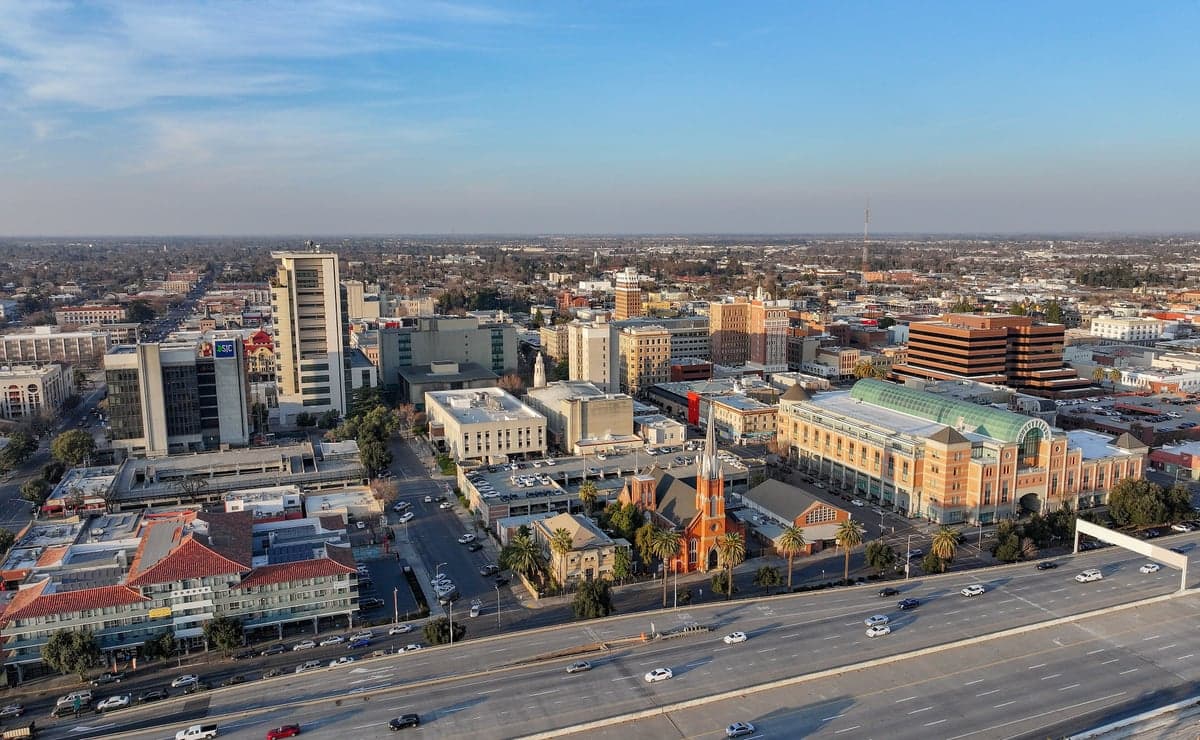
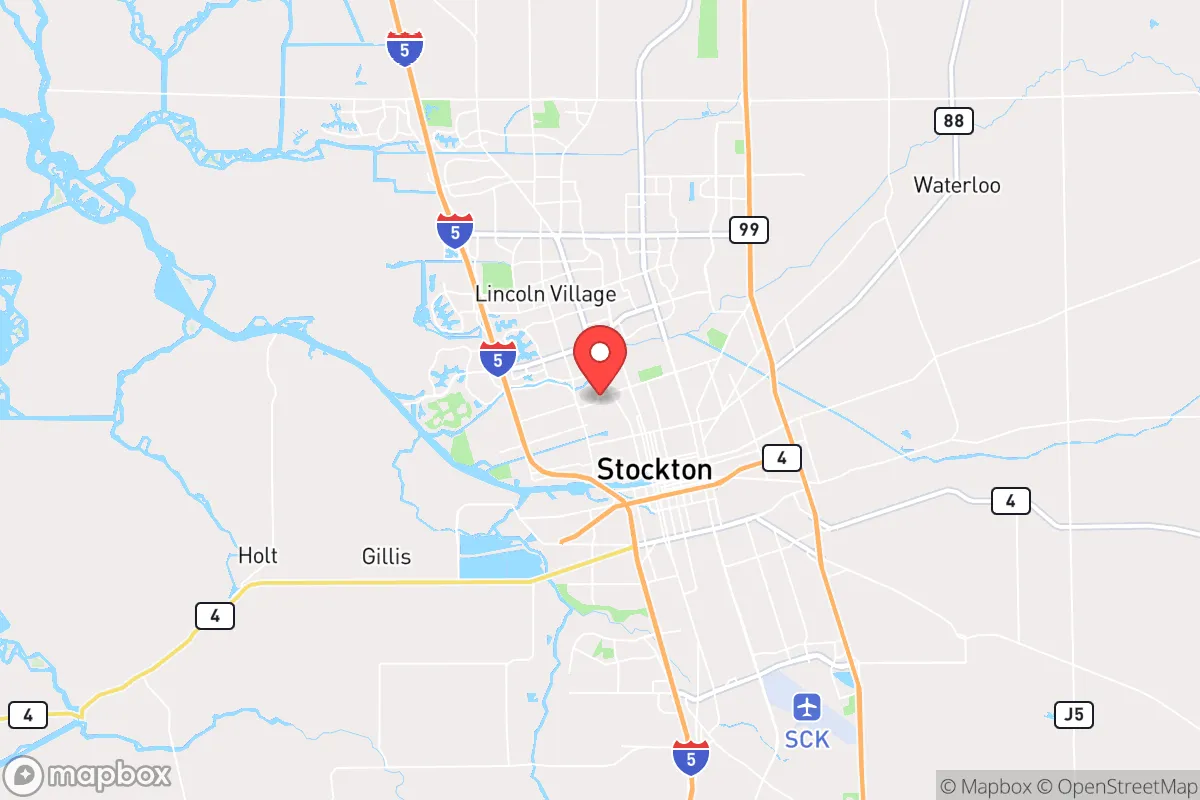
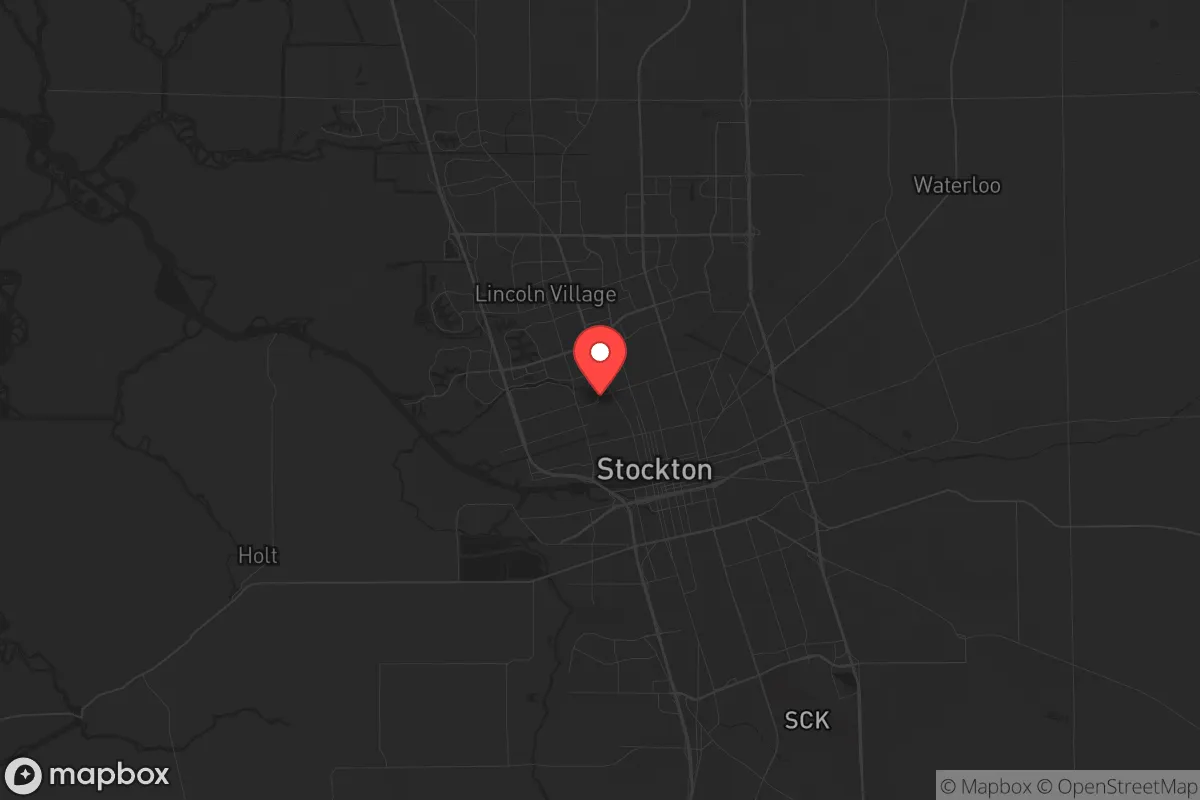
Photo: Wikipedia
Strategic Assessment of Stockton, CA
Multiple tactical vulnerabilities. Population density, target proximity, or disaster risk are likely compounding. A retreat property and exit planning is required.
What does the Strategic Assessment tell us?
Our Strategic Assessment grades tactical survivability of an area. Major population centers, military targets, fallout zones, natural disasters, and border exposure all drive risk — lower exposure means a more defensible position in a crisis.
This is heavily inspired by Joel Skousen's Strategic Relocation book. Highly recommended you checkout the book ($)What does this tell us?
Our Strategic Assessment grades tactical survivability of an area. Major population centers, military targets, fallout zones, natural disasters, and border exposure all drive risk — lower exposure means a more defensible position in a crisis.
This is heavily inspired by Joel Skousen's Strategic Relocation book. Highly recommended you checkout the book ($)Strategic Pillars

Key Distances
Regional Safe Places
Below is our recommended "safe zones" in California and the surrounding area based on our strategic heuristics. For most people, it's unrealistic to live in a “safe zone” full-time due to work, family or other personal reasons. They tend to be more rural. However, many of these areas are perfect for second homes and retreat properties that double as a vacation home or even a short-term rental.

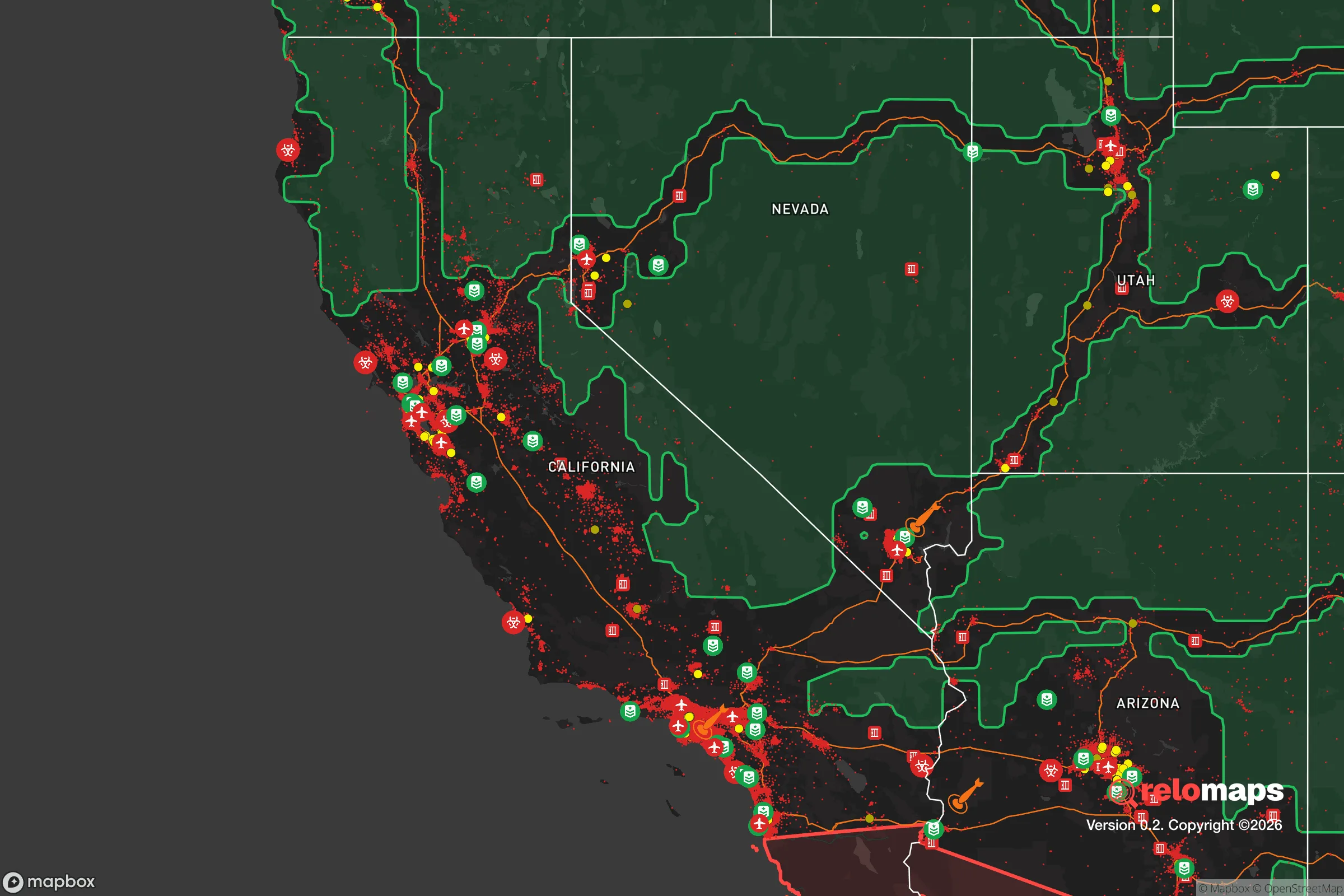


Important Note: For informational purposes only. This does not mean nothing bad ever happens in the green zones. Please use common sense. This is based on public data and modeled with AI. We tried to take a conservative approach but mistakes happen. We update this regularly as new information becomes available.
Solar Generator Recommendations
Backup power matters more here than in safer locations. We've picked three solar generators across budgets and capacity tiers — start with the budget unit if you only need a few essentials, or step up if you want to run a fridge and HVAC for days at a time.

Jackery Portable Power Station Explorer 300
Budget OptionPower on the Go: Weighing only 11 lbs, it's convenient to set up and store with book-sized foldable solar panels

BLUETTI Portable Power Station AC180
Designed for both indoor and outdoor scenarios, AC180 is highly capable as it has a robost capacity and continuous output power.

EF ECOFLOW DELTA Pro Ultra Power Station
Upgraded PickEcoFlow DELTA Pro Ultra is a whole-home energy system designed to grow with your family. Integrated with the Smart Home Panel 2, it scales to meet your evolving energy needs — keeping your home powered, intelligent, and secure through every stage of life.
We earn a commission, at no additional cost to you.
Strategic Assessment Analysis
Stockton, California, presents a deeply contradictory picture for the conservative prepper or strategic relocator. On one hand, its location at the confluence of the San Joaquin River and the Delta water system offers undeniable logistical and resource advantages. On the other, the city itself is a high-crime, high-tax, politically blue urban center that sits within striking distance of some of the most catastrophic potential fallout zones in the country. For the individual or family serious about resilience, Stockton is less a destination and more a potential staging area or a cautionary case study in the trade-offs between access and exposure.
Geographic position and natural advantages for a prepper
Stockton’s primary strategic asset is its position as the inland port of the Central Valley. It sits at the head of the Delta, giving it direct water access to the San Francisco Bay and, by extension, the Pacific Ocean. In a grid-down scenario, this waterway becomes a critical supply and evacuation corridor. The surrounding San Joaquin Valley is some of the most productive agricultural land on the planet. Within a 30-mile radius, you have access to massive almond, walnut, tomato, and dairy operations. For a relocator willing to build relationships with local farmers, food security is not theoretical—it’s a matter of logistics. The area also sits atop a significant groundwater basin, though it’s heavily overdrafted and subject to state regulation. For a prepper, the key takeaway is that Stockton’s natural advantages are real but require active management. The flat terrain is easy to navigate but offers zero defensible high ground. The climate is Mediterranean—hot, dry summers and cool, wet winters—which is favorable for long-term food storage and off-grid solar power generation, provided you can secure the land and water rights.
Risks, exposures, and proximity to fallout-relevant landmarks
This is where Stockton’s strategic calculus turns sharply negative. The city lies roughly 50 miles east of the San Francisco Bay Area, which includes the Port of Oakland, the Bay Bridge, and the region’s major tech and financial hubs. In a scenario involving civil unrest, mass casualty events, or a major disaster, Stockton would be a primary evacuation route for hundreds of thousands of people fleeing the Bay Area. Interstate 5 and State Route 99, both of which run through Stockton, would become chokepoints and likely targets for looting or roadblocks. The city itself has a violent crime rate that consistently ranks among the highest in the nation—over four times the national average for violent crime per capita. For a prepper, this means the local population is already under severe stress, and the social fabric is frayed. Additionally, Stockton is within 70 miles of the San Onofre Nuclear Generating Station (SONGS) and within 100 miles of the Diablo Canyon Power Plant. While both are south of the city, prevailing winds in the Central Valley can carry fallout from a nuclear incident or a dirty bomb detonation in the Bay Area directly toward Stockton. The city’s flat, open geography offers no natural shielding from airborne contaminants. For the conservative relocator, the proximity to these high-value, high-risk targets is a deal-breaker for long-term habitation.
Practical resilience for a relocator: food, water, energy, and defensibility
If you’re considering Stockton as a base, you need to think in terms of a fortified compound rather than a suburban home. The water situation is the first priority. The Delta water is plentiful but heavily treated and subject to state water rights battles. A prepper should plan on drilling a private well—though permits are expensive and the water table is dropping. Rainwater catchment is viable, with the area averaging about 14 inches of rain per year, but you’ll need significant storage capacity to get through the dry summer months. For energy, the Central Valley’s solar potential is excellent. You can generate enough power for a modest home with a 5-7 kW system, but you’ll need battery storage and a backup generator for the inevitable grid failures. Food is the one area where Stockton shines. The city is surrounded by farms, and the Stockton Farmers Market is one of the largest in the region. For a relocator, the play is to secure a property with enough land for a substantial garden and small livestock—chickens, goats, maybe a pig or two. The soil is fertile, and the growing season is long. Defensibility is the weak link. Stockton is flat, with no natural chokepoints. The best you can do is a rural property on the outskirts—think Linden, Thornton, or the far east side near the Calaveras River—where you have a buffer of agricultural land between you and the urban core. Even then, you’re relying on distance and a good fence, not terrain, for security.
The overall strategic picture for Stockton is one of high potential paired with high risk. For the conservative prepper, it’s not a place to hunker down for the long haul. The crime, the proximity to Bay Area fallout zones, and the political climate (California’s strict gun laws, high taxes, and progressive governance) make it a poor choice for a permanent retreat. However, it could serve as a forward operating base—a place to store supplies, maintain a boat for Delta access, and build relationships with local farmers before a crisis hits. The smart play is to use Stockton as a staging area while securing a more defensible property in the Sierra Nevada foothills (e.g., Amador or Calaveras counties) as your primary bug-out location. If you’re determined to stay, focus on a rural parcel with a well, solar, and a serious security perimeter. Stockton’s advantages are real, but they come with strings attached—strings that, in a worst-case scenario, could snap.

* Values derived from national, state, county, city and local statistics and may differ in a specific area. Last updated: 2026-04-30T03:55:20.000Z
Narrative content on this page is AI-generated and may contain mistakes. Verify any details that matter before acting on them.
ReloMaps may earn a commission from affiliate links at no extra cost to you.

