
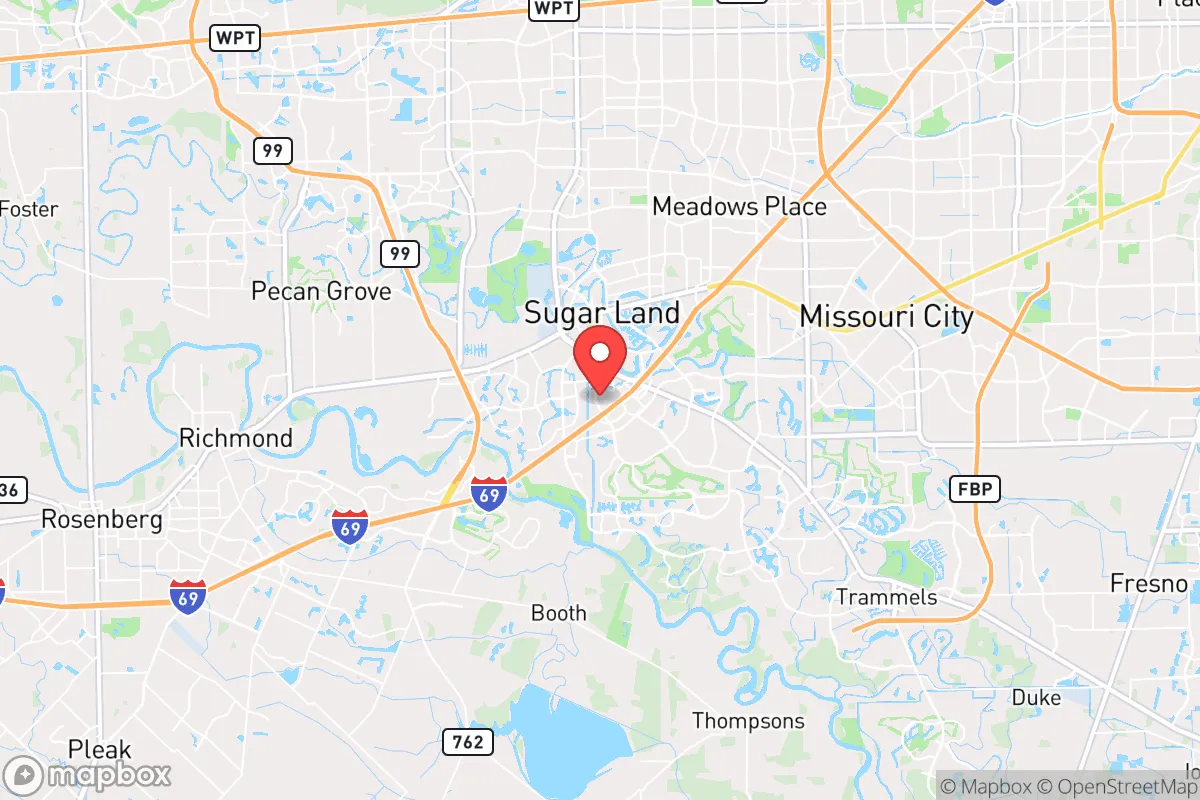
Quality of Life in Sugar Land, TX
A high quality of life with strong walkability, manageable living costs, healthy neighborhood signals, and solid amenity access.
What does Quality of Life tell us?
Quality of Life blends cost of living, nearby amenities, socioeconomic signals, and neighborhood character. City-level scores represent the whole municipality; individual neighborhoods can differ.
What does this tell us?
Quality of Life blends cost of living, nearby amenities, socioeconomic signals, and neighborhood character. City-level scores represent the whole municipality; individual neighborhoods can differ.
Cost of Living
58% above national average
The Real Cost of Living in Sugar Land, TX for 2026
| Tier | Individual | Family (4) |
|---|---|---|
| Survival | $31k | $58k |
| Comfortable | $79k | $116k |
| Luxury | $224k+ | $347k+ |
| Elite (Top 5%) | $263k+ | $408k+ |
118%
The Area Signal
A metric tracking the socioeconomic signals of the area.
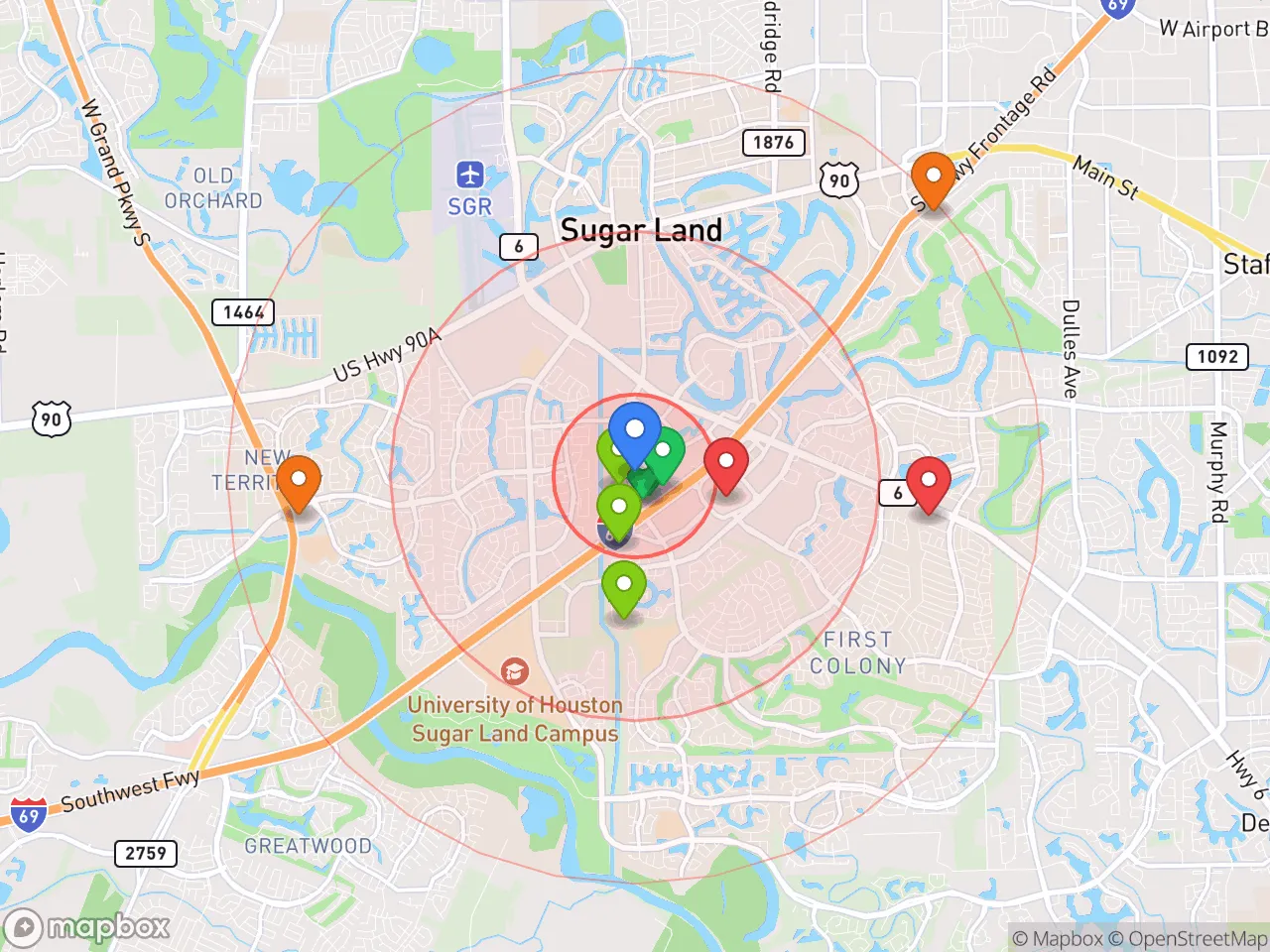
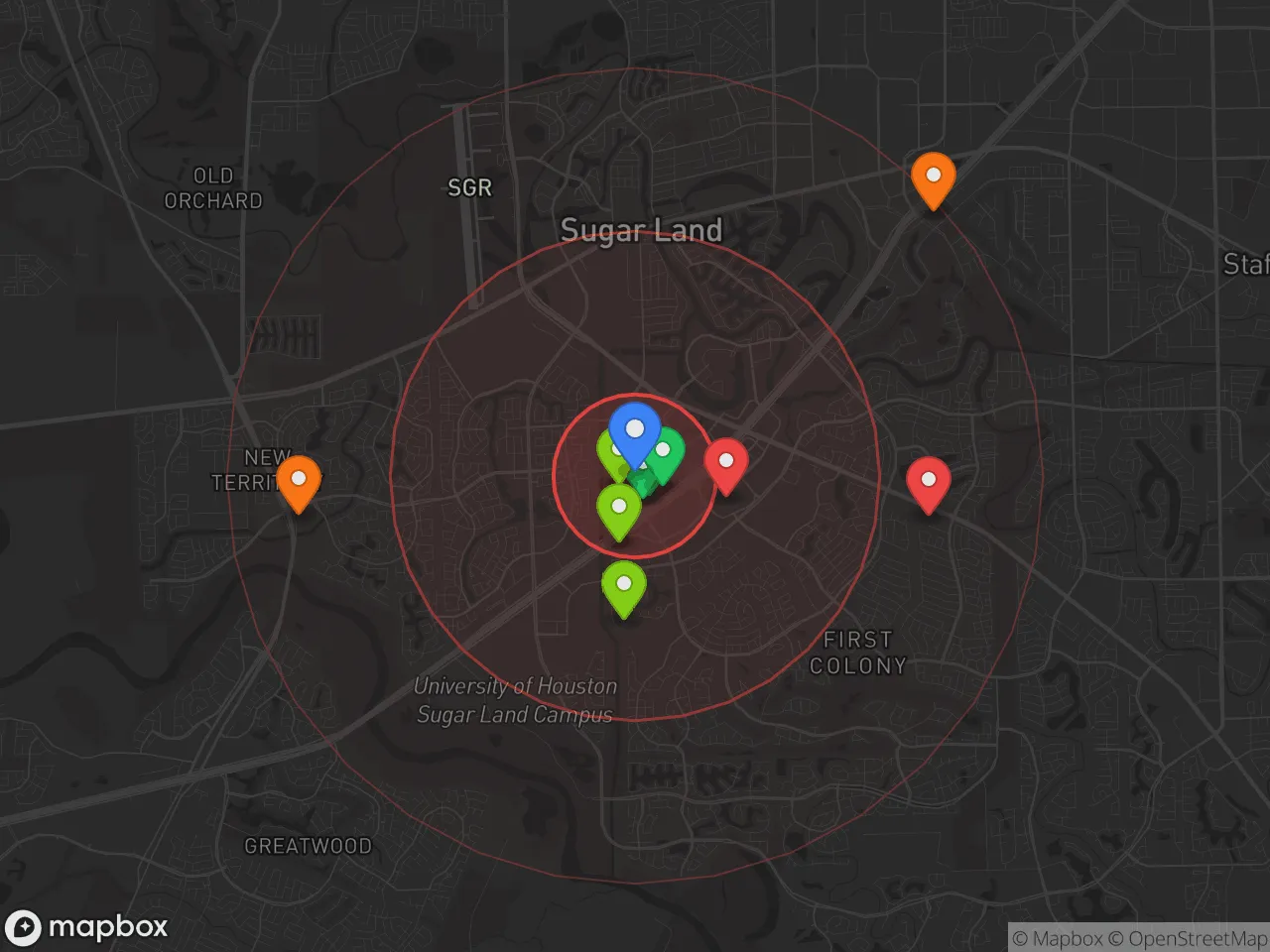
Hobbies
Explore the areaGroceries
9 within 10 miles
Gas
20 within 10 miles
Hospital
20 within 20 miles
Airport
IAH — George Bush Intercontinental
Post Office
USPS — Missouri City, TX
Critical Amenities
Quality-of-Life Analysis
Sugar Land, Texas, consistently ranks among the most affluent and family-oriented suburbs in the Houston metropolitan area, attracting professionals, executives, and families seeking top-tier schools and low crime rates. With a cost of living index of 158 (58% above the U.S. average), the city commands a premium over nearby suburbs like Katy or Missouri City, but delivers a correspondingly high quality of life through exceptional public services and master-planned communities. The population skews toward college-educated homeowners, many employed in energy, healthcare, and technology sectors, who prioritize long-term stability and community amenities over urban proximity.
Cost of living, housing costs, and affordability compared to nearby suburbs
Sugar Land’s housing market is the primary driver of its elevated cost of living. The median home value sits at $406,600, roughly 40% higher than the national median and significantly above neighboring Missouri City ($310,000) but comparable to Cinco Ranch in Katy. Median rent is $1,939, placing it among the pricier rental markets in Fort Bend County, though still below the most expensive Houston inner-loop neighborhoods like River Oaks or Montrose. Property taxes in Fort Bend County average around 2.3% of assessed value, which is typical for Texas but adds a notable annual expense for homeowners. For renters, the trade-off is clear: higher monthly costs for access to Fort Bend Independent School District (FBISD), which consistently earns A ratings from the Texas Education Agency and includes nationally recognized high schools like Clements and Dulles. Compared to the Houston metro average commute of 27 minutes, Sugar Land’s average commute of 28.9 minutes is slightly longer, reflecting its suburban positioning along Highway 59 and the Grand Parkway, but still manageable for workers commuting to the Texas Medical Center or Energy Corridor.
What daily life is like for families: amenities, schools, and recreation
Daily life in Sugar Land revolves around its master-planned communities, extensive park system, and highly rated schools. The city operates over 30 parks, including the 200-acre Sugar Land Memorial Park and the popular Oyster Creek Park, which features a 2.5-mile hike-and-bike trail. The Smart Financial Centre at Sugar Land hosts concerts and Broadway tours, while the Sugar Land Town Square offers a walkable dining and shopping hub with seasonal events like outdoor movies and farmers markets. For families, the school system is the central draw: FBISD’s Sugar Land campuses consistently rank in the top 10% of Texas schools, with specialized programs in STEM, fine arts, and International Baccalaureate at Clements High School. The city’s crime rate is roughly 70% lower than the national average, making it one of the safest large suburbs in the state. Traffic congestion is a noted downside during peak hours on Highway 6 and US 59, but the city’s extensive network of feeder roads and toll lanes mitigates some delays. Grocery and retail options are abundant, with major chains like H-E-B and Whole Foods, plus the First Colony Mall anchoring the retail corridor.
Families and professionals who value top-ranked schools, low crime, and suburban amenities will thrive in Sugar Land, especially those with the income to absorb its above-average housing costs. Empty-nesters and retirees also find appeal in the city’s active adult communities and proximity to Houston’s medical facilities. However, young singles or budget-conscious renters may find better value in nearby Stafford or Rosenberg, where median rents are $300–$500 lower. For those seeking a safe, well-resourced environment with strong property appreciation, Sugar Land remains a premier choice in the Houston region.

Crime in Sugar Land, TX
Lower crime rates than 81% of comparable U.S. locations.
Violent CrimeViolent Crime Analysis
Property CrimeProperty Crime Analysis
Crime Analysis
Sugar Land is consistently ranked among the safest cities in Texas, with violent crime rates dramatically lower than both state and national averages. The city reported a violent crime rate of just 73.9 incidents per 100,000 residents, a figure that represents a fraction of the national average of roughly 380 per 100,000. Property crime, however, occurs at a rate of 1,218.9 per 100,000, which is notably lower than the Texas average of approximately 2,500 per 100,000 but still warrants attention from prospective residents.
Crime in context
Sugar Land’s violent crime rate is roughly 80% lower than the national average, placing it among the safest suburbs in the Houston metropolitan area. The city benefits from a well-funded police department and a relatively affluent, educated population. Property crime, while higher than violent crime, remains below the Texas state average. For comparison, nearby Houston’s violent crime rate exceeds 1,000 per 100,000, making Sugar Land a stark outlier in safety. The city’s low crime numbers are a direct result of effective local law enforcement and a community-oriented policing strategy that emphasizes prevention and rapid response.
What residents experience
Most residents report feeling safe walking in their neighborhoods and shopping at major retail centers like First Colony Mall and Town Square. The most common property crimes are vehicle break-ins and package thefts, particularly in apartment complexes and near transit hubs. Violent incidents are rare and typically isolated to domestic situations or disputes among known individuals. Sugar Land has not experienced the surge in smash-and-grab robberies or organized retail theft seen in some larger Texas cities. However, residents should be aware that the broader Fort Bend County justice system, like many in large metro areas, has adopted progressive policies that prioritize diversion programs and reduced sentencing for non-violent offenders. While these policies aim to reduce recidivism, they can result in repeat property offenders cycling back into neighborhoods more quickly than in jurisdictions with stricter enforcement.
Neighborhood-level variation is modest but worth noting. Communities west of Highway 6, such as Greatwood and New Territory, report the lowest crime rates, with many blocks experiencing zero incidents annually. Older neighborhoods closer to U.S. 59, particularly those with apartment complexes, see slightly higher property crime rates. The city’s overall safety profile is excellent, but the influence of progressive prosecutorial policies in the region means residents should remain vigilant about securing vehicles and packages. For families and professionals prioritizing safety, Sugar Land remains one of the most secure choices in the Houston area.
* Values derived from national, state, county, city and local statistics and may differ in a specific area. Last updated: 2026-04-22T02:01:47.000Z
Narrative content on this page is AI-generated and may contain mistakes. Verify any details that matter before acting on them.
ReloMaps may earn a commission from affiliate links at no extra cost to you.

