
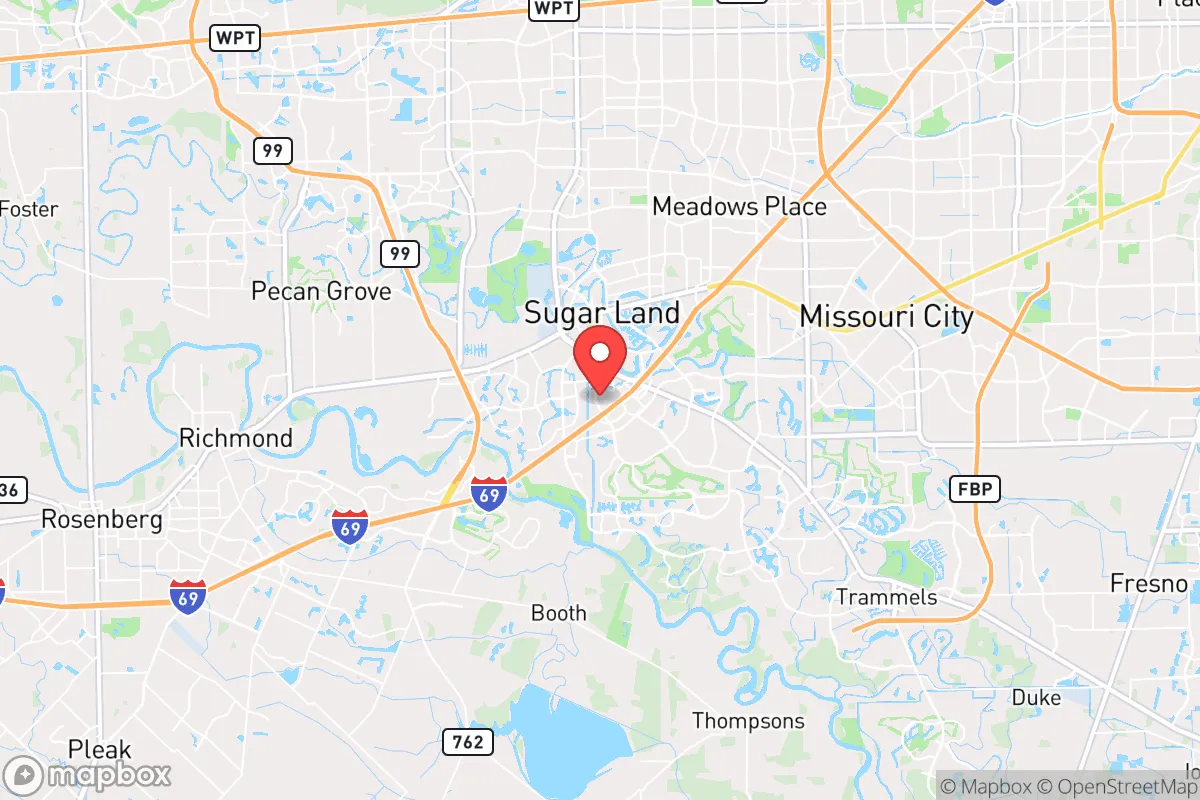
Strategic Assessment of Sugar Land, TX
Multiple tactical vulnerabilities. Population density, target proximity, or disaster risk are likely compounding. A retreat property and exit planning is required.
What does the Strategic Assessment tell us?
Our Strategic Assessment grades tactical survivability of an area. Major population centers, military targets, fallout zones, natural disasters, and border exposure all drive risk — lower exposure means a more defensible position in a crisis.
This is heavily inspired by Joel Skousen's Strategic Relocation book. Highly recommended you checkout the book ($)What does this tell us?
Our Strategic Assessment grades tactical survivability of an area. Major population centers, military targets, fallout zones, natural disasters, and border exposure all drive risk — lower exposure means a more defensible position in a crisis.
This is heavily inspired by Joel Skousen's Strategic Relocation book. Highly recommended you checkout the book ($)Strategic Pillars

Key Distances
Regional Safe Places
Below is our recommended "safe zones" in Texas and the surrounding area based on our strategic heuristics. For most people, it's unrealistic to live in a “safe zone” full-time due to work, family or other personal reasons. They tend to be more rural. However, many of these areas are perfect for second homes and retreat properties that double as a vacation home or even a short-term rental.

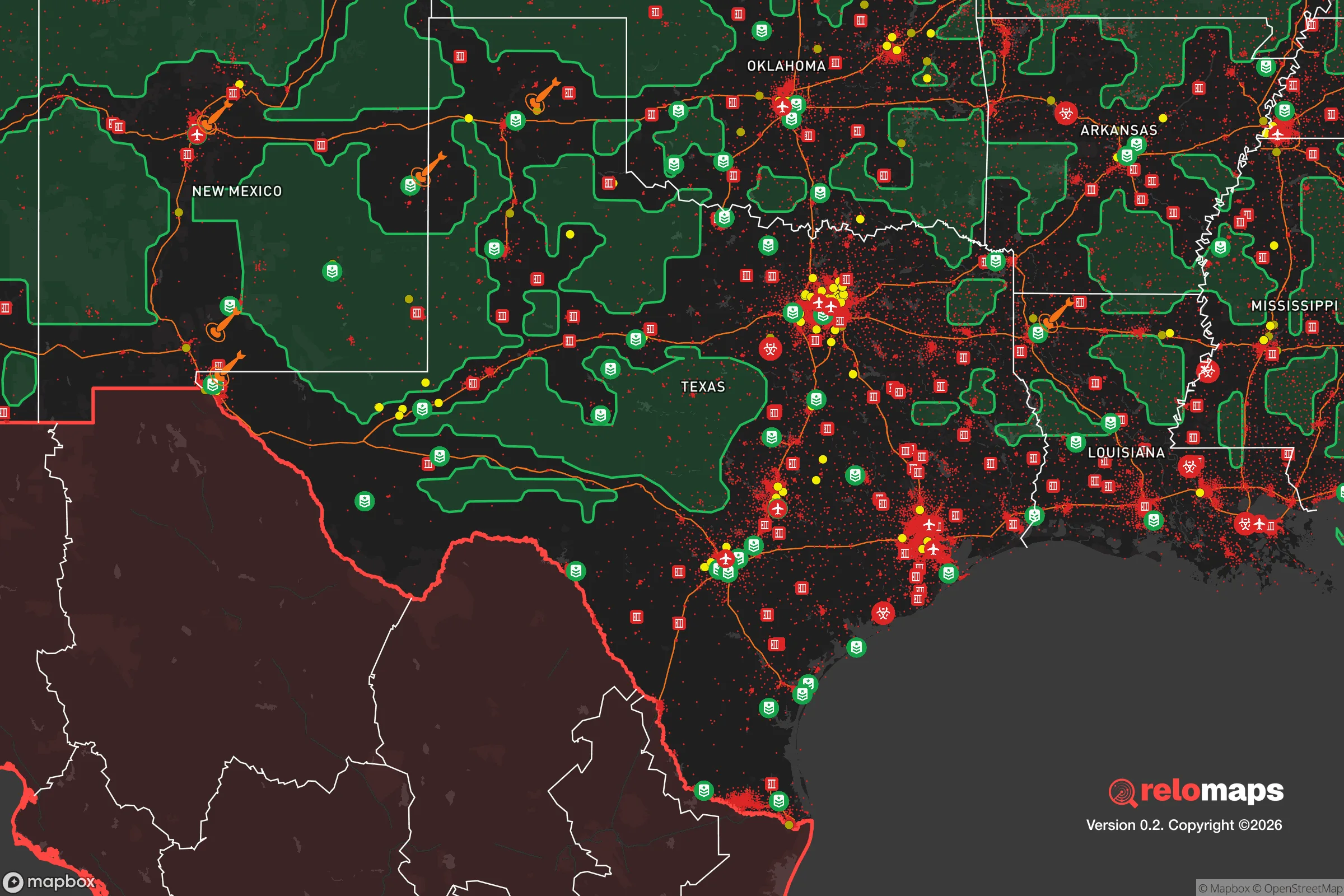


Important Note: For informational purposes only. This does not mean nothing bad ever happens in the green zones. Please use common sense. This is based on public data and modeled with AI. We tried to take a conservative approach but mistakes happen. We update this regularly as new information becomes available.
Solar Generator Recommendations
Backup power matters more here than in safer locations. We've picked three solar generators across budgets and capacity tiers — start with the budget unit if you only need a few essentials, or step up if you want to run a fridge and HVAC for days at a time.

Jackery Portable Power Station Explorer 300
Budget OptionPower on the Go: Weighing only 11 lbs, it's convenient to set up and store with book-sized foldable solar panels

BLUETTI Portable Power Station AC180
Designed for both indoor and outdoor scenarios, AC180 is highly capable as it has a robost capacity and continuous output power.

EF ECOFLOW DELTA Pro Ultra Power Station
Upgraded PickEcoFlow DELTA Pro Ultra is a whole-home energy system designed to grow with your family. Integrated with the Smart Home Panel 2, it scales to meet your evolving energy needs — keeping your home powered, intelligent, and secure through every stage of life.
We earn a commission, at no additional cost to you.
Strategic Assessment Analysis
Sugar Land sits in a precarious but potentially advantageous position for those thinking seriously about resilience and long-term preparedness. Located roughly 20 miles southwest of downtown Houston, this master-planned community of roughly 118,000 people offers a blend of suburban order and proximity to critical infrastructure that could be either a lifeline or a liability depending on how events unfold. The city’s grid-like layout, extensive HOA governance, and relatively affluent tax base create a veneer of stability, but the real strategic question is whether that stability holds when the lights go out or the supply chains snap. For a relocator with a prepper mindset, Sugar Land demands a clear-eyed assessment of its geographic assets, its exposure to cascading risks, and the practical day-to-day realities of living there when things go sideways.
Geographic position and natural advantages for long-term stability
Sugar Land’s location along the Brazos River and its proximity to the Gulf Coast give it access to water, but that same proximity introduces serious flood risk—the area was hammered by Hurricane Harvey in 2017, with some neighborhoods seeing over 40 inches of rain in four days. The natural advantage here is the region’s flat, open terrain, which offers good line-of-sight and limited natural cover for anyone approaching on foot, but also makes the area vulnerable to storm surge and prolonged flooding. The city sits on the western edge of the Houston metropolitan sprawl, meaning it’s far enough from the urban core to avoid the worst of a city-wide collapse scenario, yet close enough to benefit from Houston’s medical infrastructure (Texas Medical Center is 25 minutes away) and major logistics hubs like George Bush Intercontinental Airport and the Port of Houston. The soil is mostly clay and sand, which drains poorly—something to consider if you’re planning on digging a bunker or installing a septic system. The climate is humid subtropical, with hot summers and mild winters, which means heat stress and dehydration are real concerns if power goes out for more than a few days. For a prepper, the key natural advantage is the region’s agricultural productivity: the surrounding prairie and bottomland soil can support crops, and the long growing season (roughly 300 days) means you could theoretically supplement food supplies with gardening if you have the land and water rights.
Risks, exposures, and proximity to fallout-relevant landmarks
The biggest strategic liability for Sugar Land is its proximity to Houston’s petrochemical corridor, which runs along the Houston Ship Channel roughly 30 miles to the east. That corridor contains over 200 chemical plants and refineries, including the ExxonMobil Baytown complex and the LyondellBasell refinery—both of which are high-value targets for any adversary looking to disrupt the U.S. energy grid or create mass panic. A major industrial accident, terrorist attack, or EMP event hitting that corridor could produce a toxic plume that drifts southwest toward Sugar Land depending on wind patterns. The city is also within 50 miles of the Johnson Space Center in Clear Lake, a potential target for state-sponsored sabotage or civil unrest. On the plus side, Sugar Land is far enough from the coast to avoid direct hurricane storm surge (the coast is about 50 miles south), but it’s still in the hurricane risk zone—Category 4 or 5 storms can push water up the Brazos and cause catastrophic flooding. The area’s electrical grid is part of ERCOT, which has a documented history of failure during extreme weather (Winter Storm Uri in 2021 left millions without power for days). For a relocator, the risk calculus is clear: you’re trading the immediate dangers of urban collapse for a slower-burn set of threats tied to industrial infrastructure and climate volatility. The presence of multiple major highways (US-59, I-69, and the Grand Parkway) means evacuation routes are available but could become choke points during a mass exodus—plan alternate routes and consider a vehicle with high ground clearance and off-road capability.
Practical resilience for a relocator: food, water, energy, and defensibility
For daily life in a prepper context, Sugar Land offers some genuine practical advantages but also significant gaps. Water is the first concern: the city draws from the Brazos River and groundwater wells, but the municipal system is vulnerable to contamination from upstream industrial spills or flooding. A well on your property is the gold standard, but many Sugar Land lots are small (typically 0.25 to 0.5 acres) and HOA restrictions often prohibit drilling. Rainwater collection is legal in Texas but may be restricted by local covenants—check before buying. Food security is moderate: the area has multiple H-E-B and Walmart stores, but these are the first to empty during a panic. Local farmers’ markets exist (the Sugar Land Farmers Market runs seasonally), but they’re not a reliable year-round source. For long-term food storage, you’ll need to build a pantry and consider freeze-dried supplies or a home garden. Energy resilience is a mixed bag: natural gas is widely available, and many homes have gas stoves and water heaters, which work without grid power. Solar panels are increasingly common, but HOAs may limit placement or visibility. A whole-house generator running on propane or natural gas is a smart investment—expect to pay $5,000–$10,000 installed. Defensibility is the weakest link: Sugar Land is a suburban grid of cul-de-sacs and wide streets, which makes it easy to navigate but hard to secure. Most homes have open floor plans with large windows, and fences are typically six-foot wood or vinyl—adequate for privacy but not for ballistic protection. The local police department is well-funded (Sugar Land has one of the lowest crime rates in Texas for cities over 100,000), but during a widespread crisis, response times will stretch to hours or days. Your best bet is to build a neighborhood watch network and harden your immediate perimeter with reinforced doors, window film, and a safe room. The city’s HOA structure can be a double-edged sword: it maintains property values and order, but it can also restrict your ability to install defensive measures or store supplies visibly.
The overall strategic picture for Sugar Land is one of calculated risk. It’s not a bug-out location—you’re still within the blast radius of Houston’s industrial and population centers, and the flood risk is real. But for someone who wants to maintain a professional career while building a resilient lifestyle, it offers a workable middle ground. The key is to treat Sugar Land as a base of operations rather than a final redoubt: have a secondary location farther out (think Hill Country or East Texas) with a cache of supplies, and use Sugar Land for its economic opportunities and community stability. If you’re willing to invest in backup power, water storage, and a solid network of like-minded neighbors, this area can sustain you through most scenarios short of a full societal collapse. Just don’t kid yourself that the manicured lawns and HOA newsletters will protect you from the hard realities of a disrupted world. Prepare accordingly, and you’ll be ahead of 90% of the population.

* Values derived from national, state, county, city and local statistics and may differ in a specific area. Last updated: 2026-04-22T02:01:47.000Z
Narrative content on this page is AI-generated and may contain mistakes. Verify any details that matter before acting on them.
ReloMaps may earn a commission from affiliate links at no extra cost to you.

