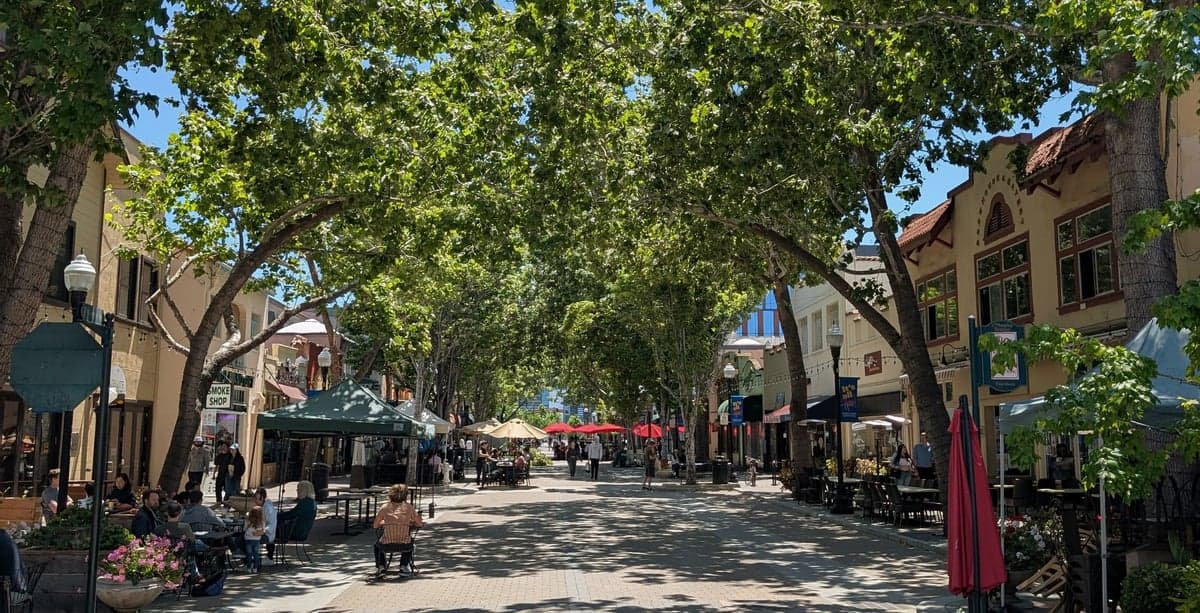
Photo: Wikipedia
Political ClimatePolitical Climate in Sunnyvale, CA
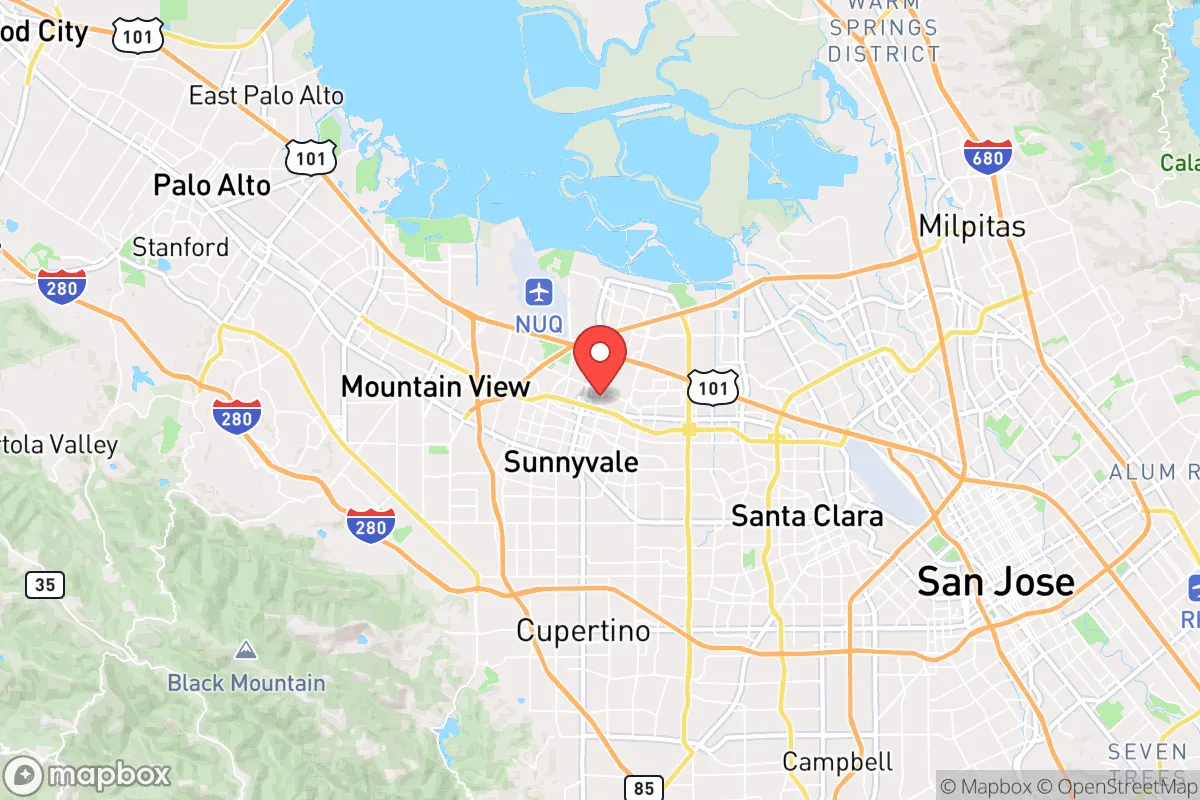
District shown is the primary district for this city’s centroid. Cities may span multiple districts.
Local Political AnalysisPolitical Analysis of Sunnyvale, CA
Sunnyvale, California, sits squarely in deep-blue territory, with a Cook PVI of D+21 that tells you all you need to know about its electoral lean. But if you’ve lived here as long as I have, you know that number doesn’t capture the whole story—it’s more like a snapshot of a place that’s been shifting steadily leftward for decades, and not always in ways that sit well with folks who value personal freedom and limited government. The city’s politics are dominated by a progressive majority that’s increasingly comfortable with top-down solutions, from housing mandates to business regulations, and the trajectory suggests more of the same in the years ahead.
How it compares
Sunnyvale’s D+21 rating puts it in the same league as neighboring Cupertino and Santa Clara, both of which are even more lopsidedly Democratic. But drive just a few miles south to Los Gatos or Saratoga, and you’ll find a noticeably more moderate vibe—those towns still lean blue, but with a stronger libertarian streak and less appetite for the kind of heavy-handed policy experiments you see in Sunnyvale. Head east over the hills to places like Livermore or Pleasanton, and the contrast is stark: those communities vote more like the rest of the country, with a healthy skepticism of government overreach. Within Sunnyvale itself, the older neighborhoods near the bay—where longtime residents still remember when the city was a sleepy orchard town—tend to be more conservative than the newer, denser developments near the Caltrain corridor, which are filled with tech workers who often embrace progressive politics as part of their professional culture.
What this means for residents
For a resident who values personal freedoms, the practical effects of Sunnyvale’s political climate are hard to ignore. The city council has been aggressive on zoning and land-use policies, pushing through high-density housing projects that override neighborhood input and often come with strict rent-control measures that discourage private property owners from renting out their homes. Business owners face a thicket of local regulations—from paid sick leave mandates to minimum wage hikes that go beyond state law—that can make it tough to keep a small shop open without a compliance team. On the plus side, the city’s tax base is strong thanks to the tech industry, so public services like parks and libraries are well-funded, and crime rates are low compared to nearby San Jose. But the trade-off is a growing sense that local government is more interested in social engineering than in protecting the rights of individuals to run their lives and businesses as they see fit.
What’s different about Sunnyvale
One thing that sets Sunnyvale apart from its neighbors is its long history as a hub for aerospace and defense contractors—Lockheed Martin still has a major presence here—which gives the city a slightly more pragmatic, less ideologically pure flavor than, say, Berkeley or San Francisco. You’ll still find plenty of folks who remember when the city was a conservative stronghold in the 1970s and 80s, and who quietly roll their eyes at the latest progressive crusade. But the cultural tide is unmistakable: the school board has embraced critical race theory-inspired curricula, the city has declared itself a “sanctuary” jurisdiction that limits cooperation with federal immigration enforcement, and there’s constant pressure to adopt even more ambitious climate and equity policies. If you’re looking for a place where local government stays out of your way and lets you live your life, Sunnyvale is probably not that place anymore—and it’s only going to get more interventionist as the years go on.

State Political ClimatePolitical Climate in California
State Political AnalysisPolitical Environment in the State
California is a one-party Democratic state where registered Democrats outnumber Republicans by nearly 2-to-1, and the state has voted for the Democratic presidential candidate by double-digit margins in every election since 2008. The dominant coalition is a mix of coastal urban progressives, Silicon Valley tech elites, and union-aligned public sector workers, with a growing Latino electorate that leans left. Over the past 20 years, the state has shifted from a competitive purple state—where Arnold Schwarzenegger won as a Republican in 2003—to a deep blue stronghold, driven by demographic change, suburban flight from the GOP, and the collapse of the Republican Party’s brand in the wake of the 1994 anti-immigrant Proposition 187 backlash.
Urban vs. rural divide
The political map of California is a stark study in contrast. The coastal metros—Los Angeles, San Francisco, San Diego, and San Jose—are the engine of Democratic dominance, delivering 60-85% of the vote for Democrats. The Central Valley and inland regions, by contrast, are increasingly red: Bakersfield, Fresno, and Redding reliably vote Republican, with some rural counties like Modoc and Lassen giving Trump over 70% in 2024. The suburbs are the battleground: Orange County, once a Republican stronghold, flipped blue in 2018 and has stayed there, while San Diego County’s inland suburbs like Escondido and Santee remain conservative holdouts. The Bay Area’s exurbs—Pleasanton, Livermore, and Tracy—are trending purple as housing costs push moderates inland, but the overall urban-rural gap is wider than in any other state, with 87% of the population living in Democratic-leaning urban or suburban areas.
Policy environment
California’s policy environment is a case study in progressive governance, with high taxes, heavy regulation, and a robust social safety net. The state has the highest state income tax rate in the nation (13.3% for top earners), a 7.25% sales tax that can exceed 10% with local add-ons, and some of the highest gas taxes in the country. Property taxes are capped at 1% of assessed value under Proposition 13, but reassessments upon sale can spike dramatically. Education policy is dominated by the teachers’ unions, with per-pupil spending above $20,000 but mediocre outcomes—only 47% of students meet math standards. Healthcare is heavily regulated, with a state-run exchange (Covered California) and a recent law (SB 525) raising the minimum wage for healthcare workers to $25/hour. Election laws are among the most liberal: universal mail-in voting, same-day registration, and no voter ID requirements, which critics argue undermines election integrity. The state also has a “sanctuary state” law (SB 54) that limits local law enforcement cooperation with federal immigration authorities.
Trajectory & freedom
California is becoming less free by nearly every measure, especially for conservatives. The state has enacted some of the strictest gun control laws in the nation, including an “assault weapons” ban, a 10-day waiting period, and a 2024 law (SB 2) that bans carrying firearms in most public places, effectively gutting the Second Amendment. Parental rights have been eroded: a 2023 law (AB 1078) bans school boards from banning books on LGBTQ+ or racial topics, and a 2024 law (AB 1955) prevents schools from notifying parents if a child changes their gender identity. Medical autonomy took a hit with the 2022 law (AB 2098) that allows the medical board to discipline doctors for “misinformation” about COVID-19 vaccines. Property rights are constrained by rent control (AB 1482) and a 2024 law (SB 9) that allows duplexes on single-family lots without local approval. On the plus side, the state passed a 2024 law (SB 1047) requiring AI safety testing, which some see as a curb on corporate overreach, but the overall trajectory is toward more government control over daily life.
Civil unrest & political movements
California has been a flashpoint for civil unrest and political movements. The 2020 George Floyd protests in Los Angeles, San Francisco, and Oakland saw widespread looting and property destruction, with some estimates of $1 billion in damages. The state’s sanctuary policies have made it a magnet for immigration activism, with regular protests at the border in San Diego and in Sacramento. On the right, the “California Exodus” movement has gained traction, with groups like the “California Republican Assembly” and “Californians for Population Stabilization” pushing for secession or relocation to red states. Election integrity remains a hot-button issue: the 2020 and 2024 elections saw widespread allegations of ballot harvesting and voter fraud, particularly in Los Angeles County, where the registrar’s office has been criticized for mismanagement. The state’s high cost of living has also fueled a growing homelessness crisis, with tent encampments in San Francisco’s Tenderloin district and Los Angeles’ Skid Row becoming visible symbols of failed governance.
Projection
Over the next 5-10 years, California is likely to become even more progressive, driven by continued in-migration from abroad and out-migration of conservatives to Texas, Idaho, and Florida. The state’s population has already declined for three consecutive years, with net domestic out-migration of over 300,000 people annually. The remaining population is increasingly young, diverse, and left-leaning, with the Latino vote shifting further left after the 2024 election. The state’s fiscal situation is precarious: a $68 billion budget deficit in 2024 forced cuts to education and healthcare, and the state’s unfunded pension liabilities exceed $1 trillion. Expect more tax hikes, more regulation, and more progressive social policies, including a potential single-payer healthcare system (SB 770) and a wealth tax (AB 259). For conservatives, the state will feel increasingly hostile, with fewer gun rights, less parental control, and higher costs. The only wild card is a potential economic crash that could force moderation, but that’s a long shot.
For a new resident, the bottom line is this: California offers unmatched natural beauty, a strong economy, and cultural diversity, but at the cost of high taxes, heavy regulation, and a government that actively undermines conservative values. If you value personal freedom, low taxes, and a say in your children’s education, this is not the state for you. If you can afford the cost of living and are willing to navigate a system that prioritizes progressive ideology over individual rights, you’ll find plenty to love. But don’t expect things to get better—they’re likely to get worse.
* Values derived from national, state, county, city and local statistics and may differ in a specific area. Last updated: 2026-04-30T00:09:39.000Z
Narrative content on this page is AI-generated and may contain mistakes. Verify any details that matter before acting on them.
ReloMaps may earn a commission from affiliate links at no extra cost to you.

