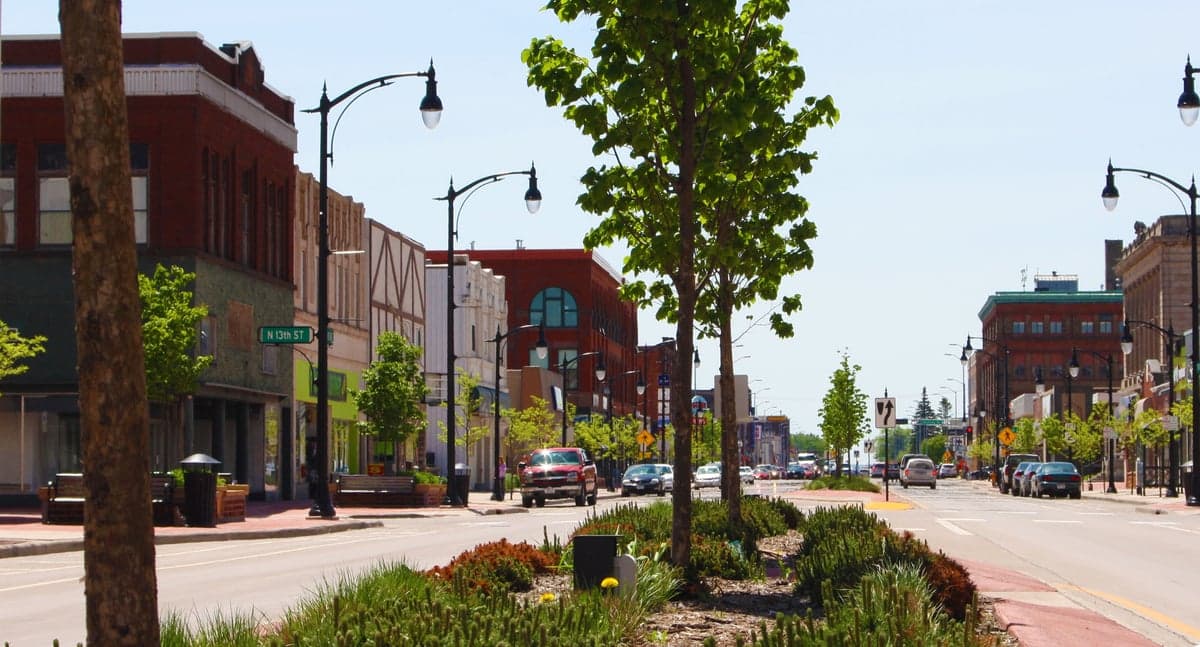
Photo: Wikipedia
Strategic Assessment of Superior, WI
Workable tactical position. Some exposure to population density or targets, but generally defensible in a crisis.
What does the Strategic Assessment tell us?
Our Strategic Assessment grades tactical survivability of an area. Major population centers, military targets, fallout zones, natural disasters, and border exposure all drive risk — lower exposure means a more defensible position in a crisis.
This is heavily inspired by Joel Skousen's Strategic Relocation book. Highly recommended you checkout the book ($)What does this tell us?
Our Strategic Assessment grades tactical survivability of an area. Major population centers, military targets, fallout zones, natural disasters, and border exposure all drive risk — lower exposure means a more defensible position in a crisis.
This is heavily inspired by Joel Skousen's Strategic Relocation book. Highly recommended you checkout the book ($)Strategic Pillars

Key Distances
Regional Safe Places
Below is our recommended "safe zones" in Wisconsin and the surrounding area based on our strategic heuristics. For most people, it's unrealistic to live in a “safe zone” full-time due to work, family or other personal reasons. They tend to be more rural. However, many of these areas are perfect for second homes and retreat properties that double as a vacation home or even a short-term rental.
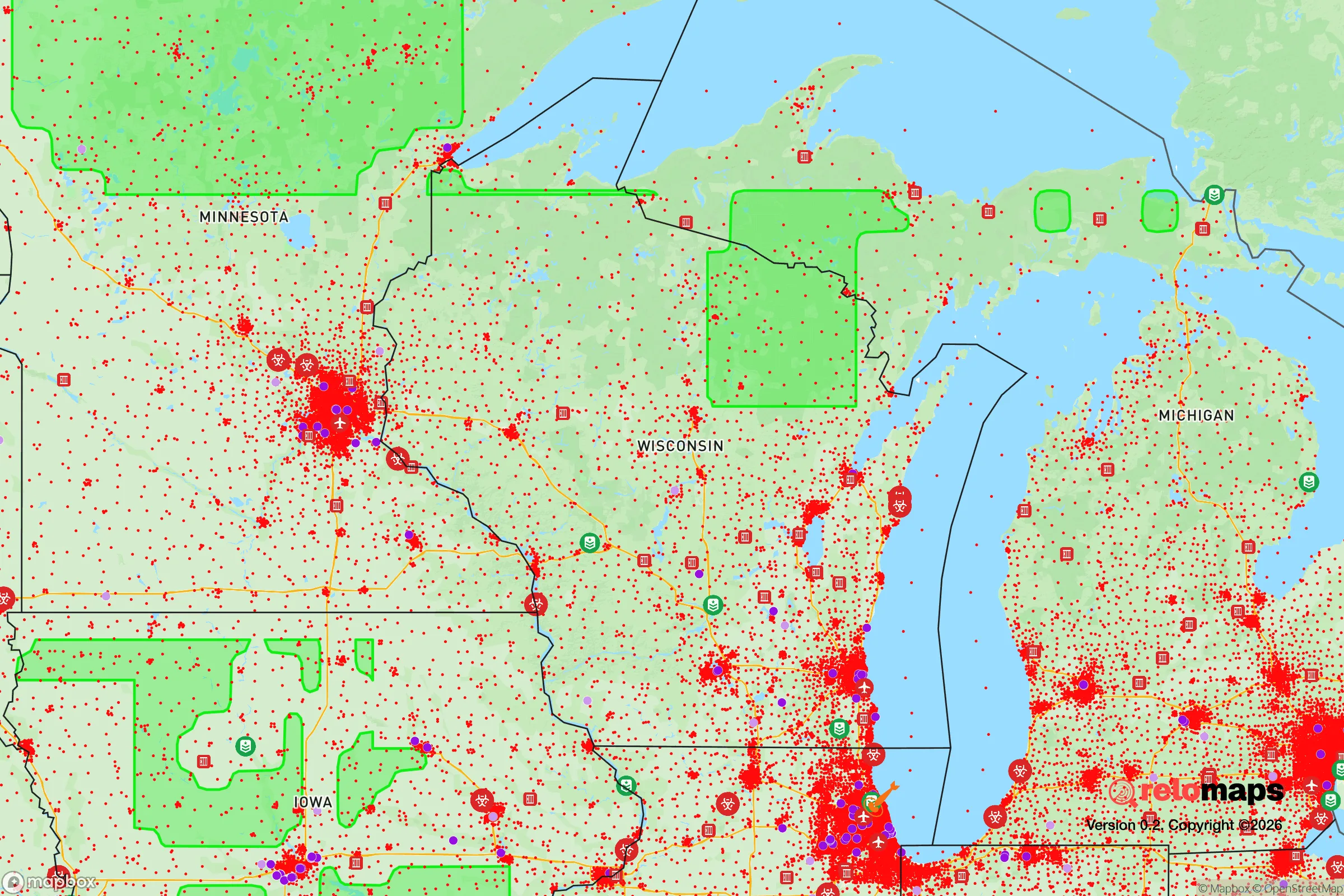
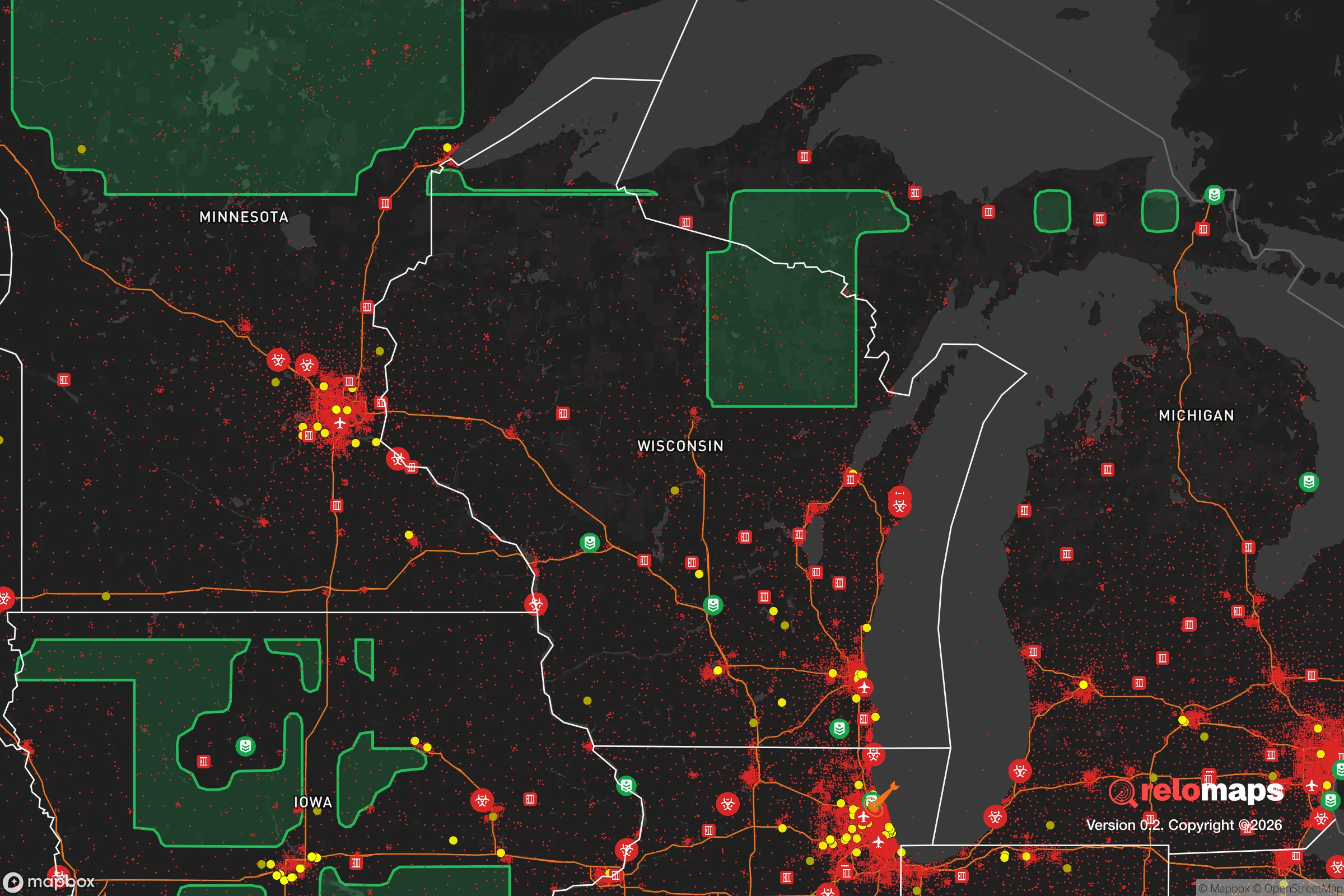


Important Note: For informational purposes only. This does not mean nothing bad ever happens in the green zones. Please use common sense. This is based on public data and modeled with AI. We tried to take a conservative approach but mistakes happen. We update this regularly as new information becomes available.
Solar Generator Recommendations
Backup power matters more here than in safer locations. We've picked three solar generators across budgets and capacity tiers — start with the budget unit if you only need a few essentials, or step up if you want to run a fridge and HVAC for days at a time.

Jackery Portable Power Station Explorer 300
Budget OptionPower on the Go: Weighing only 11 lbs, it's convenient to set up and store with book-sized foldable solar panels

BLUETTI Portable Power Station AC180
Designed for both indoor and outdoor scenarios, AC180 is highly capable as it has a robost capacity and continuous output power.

EF ECOFLOW DELTA Pro Ultra Power Station
Upgraded PickEcoFlow DELTA Pro Ultra is a whole-home energy system designed to grow with your family. Integrated with the Smart Home Panel 2, it scales to meet your evolving energy needs — keeping your home powered, intelligent, and secure through every stage of life.
We earn a commission, at no additional cost to you.
Strategic Assessment Analysis
Superior, Wisconsin, offers a surprisingly resilient strategic position for those prioritizing self-reliance and distance from the most volatile urban centers, though it is not without significant exposure. Sitting directly across the St. Louis River from Duluth, Minnesota, this city of roughly 27,000 provides a buffer from the worst of the Twin Cities' potential unrest while still maintaining access to critical Great Lakes shipping and regional infrastructure. For a relocator with a prepper mindset, Superior's value lies in its blend of industrial capacity, freshwater abundance, and relative geographic isolation from the most likely epicenters of mass casualty events or civic breakdown.
Geographic position and natural advantages for long-term security
Superior's location at the western tip of Lake Superior is its single greatest strategic asset. The city sits on a natural harbor that is the busiest port on the Great Lakes by tonnage, handling iron ore, coal, grain, and limestone. This industrial backbone means the area has a working-class, blue-collar character that aligns well with a self-sufficient ethos—people here are accustomed to physical labor, heavy machinery, and practical trades. The surrounding Douglas County is heavily forested and sparsely populated, offering ample opportunities for hunting, foraging, and off-grid retreats within a 30- to 60-minute drive. The proximity to the Apostle Islands and the vast freshwater of Lake Superior itself provides an essentially unlimited water source, assuming proper filtration and treatment. The region's cold winters, while harsh, also serve as a natural deterrent to large-scale transient populations or refugee flows from warmer climates during a crisis. The city's position on the Wisconsin-Minnesota border also gives residents access to two state-level governance structures, which can be a hedge if one state's response to a disaster proves incompetent or overreaching.
Risks, exposures, and proximity to fallout-relevant landmarks
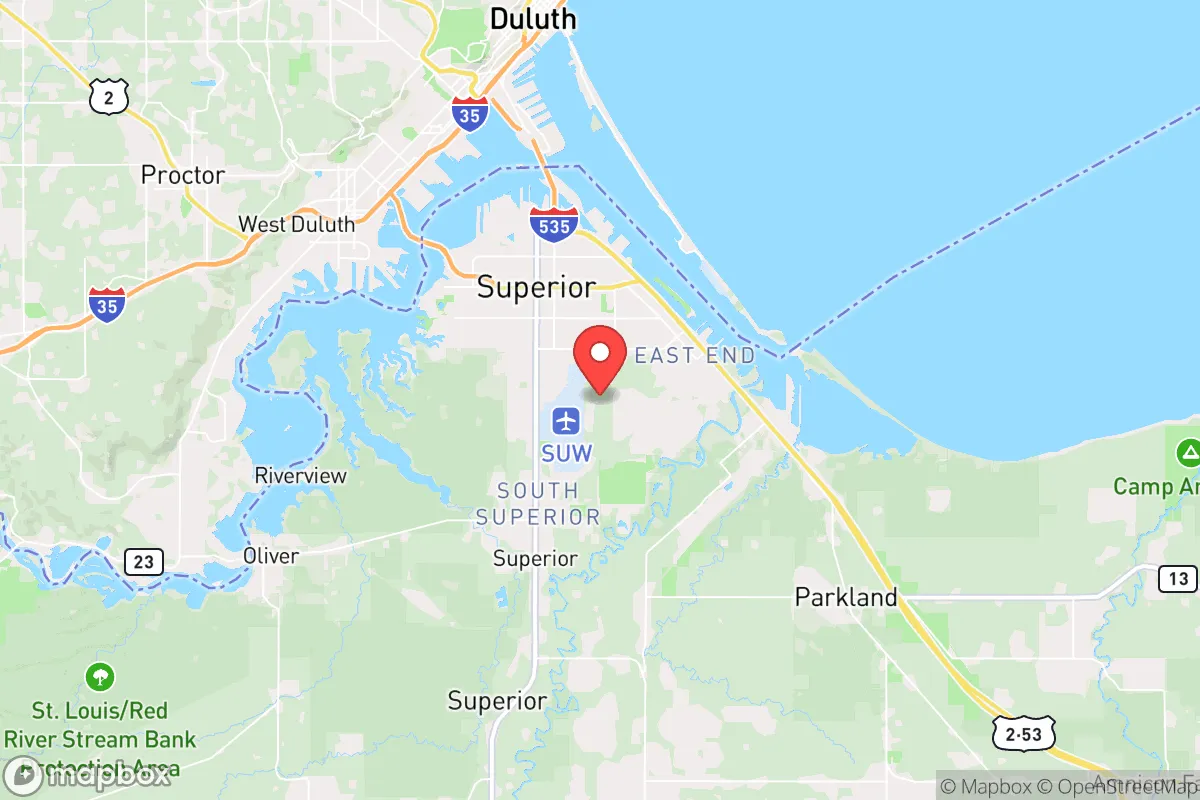
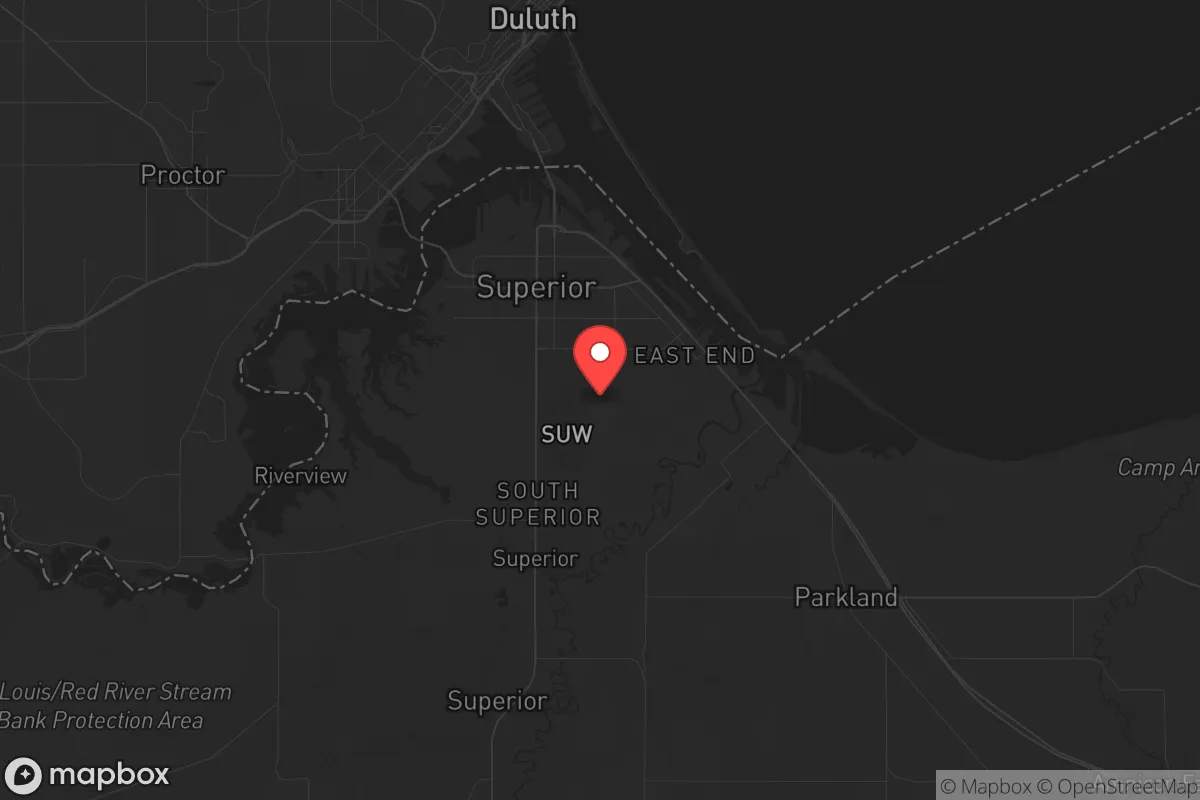
The most glaring vulnerability for Superior is its proximity to Duluth, a city of about 87,000 that serves as a regional hub for healthcare, shipping, and transportation. Duluth is home to the Duluth International Airport, a major Air National Guard base (the 148th Fighter Wing operates F-16s from there), and the Port of Duluth-Superior, which handles military cargo and hazardous materials. In a scenario involving civil unrest or a mass casualty event, Duluth's population density and infrastructure make it a potential target for disruption or a staging ground for federal forces. The twin ports are also connected by the Blatnik Bridge and the Richard I. Bong Memorial Bridge, both of which are chokepoints that could be compromised in a crisis, effectively isolating Superior from Minnesota-side resources. Additionally, the city lies within 150 miles of the Twin Cities metro area (3.7 million people), which is a primary risk vector for refugee flows, supply chain collapse, and disease spread. The region's reliance on a single major highway (US-2 and I-35 through Duluth) for ground transport means that any major disruption to that corridor would severely limit resupply and evacuation options. There are no major nuclear power plants within immediate fallout range, but the presence of the Duluth-Superior harbor as a strategic shipping point for iron ore and coal could attract attention in a conflict scenario.
Practical resilience for a relocator: food, water, energy, and defensibility
For a relocator focused on practical preparedness, Superior offers a mixed bag. Water is abundant and high-quality—Lake Superior holds 10% of the world's surface freshwater, and the city's water treatment plant draws directly from it. In a grid-down scenario, a simple gravity-fed filter or a hand-pump at a lakeside property would provide indefinite supply. Food security is moderate: the surrounding region has short growing seasons (Zone 4a/4b), but the clay-loam soils in the St. Louis River valley can support potatoes, root vegetables, and cold-hardy greens. Local farmers' markets and a handful of small-scale farms exist, but the area is not a breadbasket. Long-term food storage and a greenhouse or high tunnel would be essential for year-round self-sufficiency. Energy resilience is a concern: Superior's power grid is tied to the regional MISO system, and winter storms frequently cause outages. However, the prevalence of wood-burning stoves and the availability of firewood from the surrounding national forests (Chequamegon-Nicolet) make heating a manageable problem. Solar potential is limited by heavy cloud cover and short winter days, so a generator with stored fuel or a small wind turbine would be more practical. Defensibility is decent but not fortress-like: the city's layout is spread out, with many single-family homes on large lots, allowing for perimeter awareness and retreat space. The surrounding woods and lakes provide natural cover and escape routes. However, the bridges to Duluth are a double-edged sword—they are the only practical way to access Minnesota-side resources, but they also create a funnel for any threat coming from the west. A relocator would be wise to establish a primary residence on the Wisconsin side, with a secondary bug-out location deeper into the Chequamegon forest or the Bayfield Peninsula, where road access is limited and population density drops to near zero.
The overall strategic picture for Superior is one of cautious viability for a conservative-minded prepper. It offers genuine advantages—freshwater abundance, industrial infrastructure, a working-class culture, and relative isolation from the worst of the Twin Cities' potential chaos. But it is not a remote mountain redoubt; it is a working port town with real exposure to Duluth's military and transportation assets, and it sits within a day's drive of a major metropolitan area. For a single individual or a family willing to invest in cold-weather gear, food storage, and a secondary retreat property, Superior provides a solid base of operations with a low cost of living and a community that largely minds its own business. The key is to treat it as a staging ground, not a final fortress—and to have a plan for the day the bridges go down or the Guard rolls in. If you can handle the winters and the isolation, this is one of the more defensible spots in the Upper Midwest for riding out the storm.

* Values derived from national, state, county, city and local statistics and may differ in a specific area. Last updated: 2026-04-30T00:21:38.000Z
Narrative content on this page is AI-generated and may contain mistakes. Verify any details that matter before acting on them.
ReloMaps may earn a commission from affiliate links at no extra cost to you.

