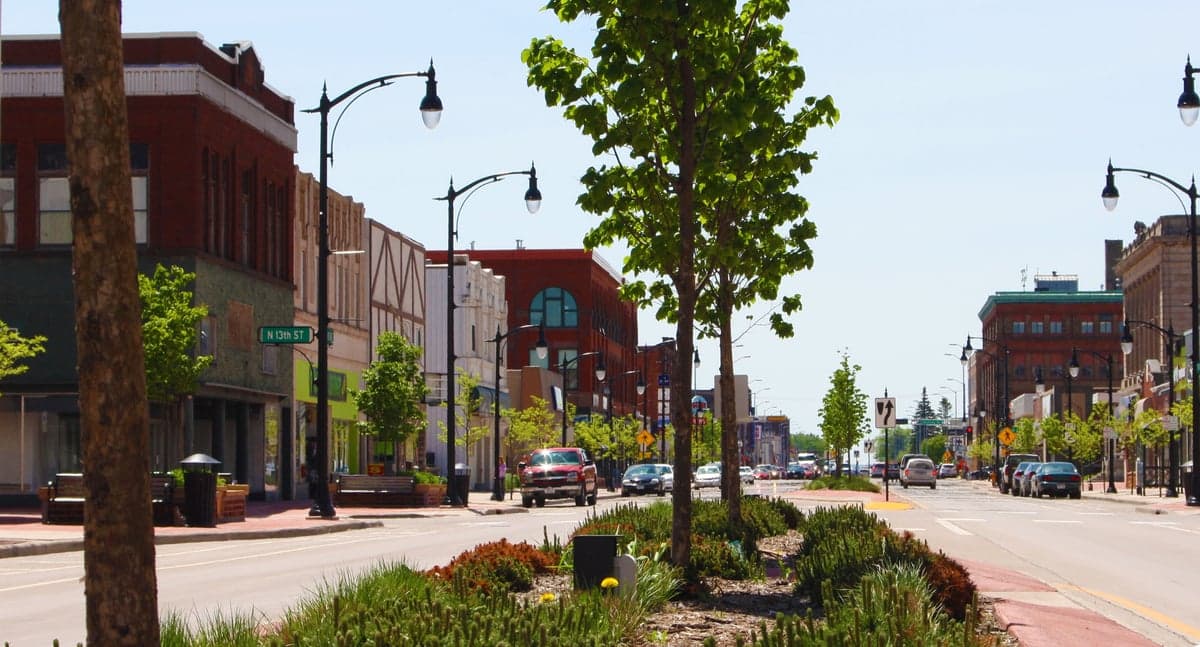
Photo: Wikipedia
Political ClimatePolitical Climate in Superior, WI
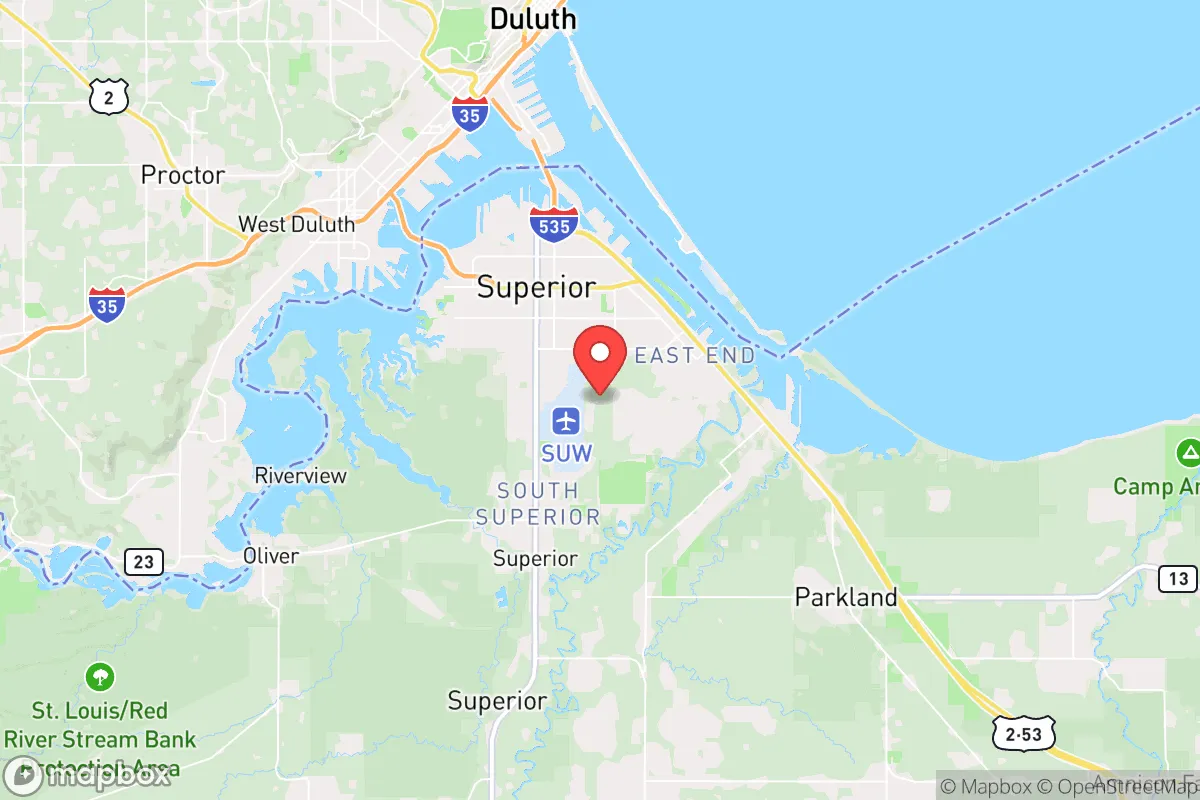
District shown is the primary district for this city’s centroid. Cities may span multiple districts.
Local Political AnalysisPolitical Analysis of Superior, WI
Superior, Wisconsin, sits in a county that leans reliably conservative, with a Cook PVI of R+11, meaning it votes about 11 points more Republican than the national average. That’s a solid red anchor in a state that’s been a political battleground for years. But if you’ve lived here a while, you know the local vibe isn’t as simple as that number suggests—it’s a working-class town with a strong union history, and the political lean has shifted a bit over the last decade, especially as folks from the Twin Cities and Duluth have started trickling in. The real story is how the old-school, mind-your-own-business conservatism is holding the line against a slow creep of progressive ideas that feel out of step with what most people here actually want.
How it compares
Drive five miles east across the bridge into Duluth, Minnesota, and you’re in a completely different world politically. Duluth is deep blue—think Cook PVI of D+15 or so—with city council members pushing rent control, bike lane expansions, and sanctuary city policies. Superior, by contrast, still feels like a place where people wave from their trucks and expect you to handle your own problems. The surrounding towns like Poplar, Lake Nebagamon, and Solon Springs are even more conservative, often voting 65-70% Republican in local races. That contrast is stark: you can live in Superior, work in Duluth, and feel like you’re crossing a cultural border every time you hit the bridge. The R+11 rating holds up because the rural parts of Douglas County pull hard right, but even in the city itself, the default attitude is “leave me alone and let me live my life.”
What this means for residents
For the people who actually live here, the political climate means lower taxes and fewer regulations than you’d get across the state line. Wisconsin’s right-to-work laws and lack of a state income tax on retirement income are big draws for folks who don’t want the government meddling in their paycheck or their property. You won’t see mask mandates or business shutdowns like you did in Minnesota during the pandemic—Superior’s leadership pushed back hard on that stuff. The downside? The city council has had a few close votes on things like “equity” initiatives and zoning changes that feel like they’re imported from Duluth. If that trend continues, you could see property taxes creep up or more restrictions on things like short-term rentals and home-based businesses. For now, though, the conservative majority on the council keeps most of that at bay.
One thing that stands out culturally is the strong gun rights culture here. Wisconsin is a shall-issue state for concealed carry, and you’ll see “Come and Take It” stickers on trucks in every parking lot. There’s also a deep skepticism of federal land management—the Chequamegon-Nicolet National Forest is nearby, and locals get frustrated when the feds restrict logging or ATV access. The school board has been a flashpoint too, with parents pushing back hard on critical race theory and gender ideology in the curriculum. So far, the traditional values have held, but you can feel the pressure building as more remote workers and retirees from blue states move in. If you’re looking for a place where the government stays out of your business and your neighbors share your values, Superior is still that place—but keep an eye on the next few elections, because the fight is real.

State Political ClimatePolitical Climate in Wisconsin
State Political AnalysisPolitical Environment in the State
Wisconsin has long been a classic swing state, but over the past decade it has hardened into a deeply polarized battleground where the rural-urban split defines everything. The state leans roughly 50-50 in statewide elections, but the trajectory has been concerning for conservatives: Milwaukee and Madison have grown more progressive and dominant, while the rest of the state has shifted rightward. In 2020, Joe Biden won Wisconsin by just over 20,000 votes out of 3.3 million cast, and the 2024 race was similarly razor-thin, with Donald Trump flipping it back by a similarly narrow margin. The 10-20 year arc shows a state that was once reliably purple now tilting blue in presidential years, driven by explosive growth in Dane County (Madison) and Milwaukee's inner suburbs, while the rural north and west remain deeply red.
Urban vs. rural divide
The political map of Wisconsin is a tale of two worlds. Milwaukee County and Dane County (Madison) together cast about 30% of the state's vote and reliably deliver 70-75% Democratic margins. Madison is the engine of progressive activism in the state—home to the University of Wisconsin, a massive public sector workforce, and a culture that embraces everything from bike lanes to sanctuary city policies. Milwaukee, meanwhile, has seen its Democratic margins shrink slightly as black voters have become less reliably Democratic, but it still votes overwhelmingly blue. The WOW counties (Waukesha, Ozaukee, Washington) that ring Milwaukee are the state's conservative anchor, voting 60-65% Republican, though even there, suburban drift toward the center has been noticeable—Waukesha County went from 67% Trump in 2016 to 62% in 2020. The rural northwoods counties like Vilas, Oneida, and Lincoln are deeply red, while the western driftless region around La Crosse and Eau Claire has become a swing zone, with college towns pulling those counties leftward. The Fox Valley (Appleton, Green Bay, Oshkosh) remains a bellwether—Brown County (Green Bay) flipped from Obama to Trump to Biden to Trump, reflecting the region's volatility.
Policy environment
Wisconsin's policy landscape is a mixed bag for conservatives. The state has a flat income tax rate of 4.4% (down from 7.65% in 2011), thanks to Republican-led cuts under Governor Scott Walker and subsequent GOP legislatures. Property taxes are moderate, ranking around the middle nationally, but they vary wildly by district—Madison's levies are among the highest in the state. The regulatory posture is generally business-friendly, with a right-to-work law (2015) and tort reform that has kept lawsuit costs low. However, education policy is a flashpoint: the state's school choice program (the nation's oldest, dating to 1990) has expanded significantly under GOP control, with over 40,000 students now using vouchers in Milwaukee, Racine, and statewide. But the state also has a powerful teachers' union that fights every reform. Healthcare is a mixed bag—Wisconsin did not expand Medicaid under the Affordable Care Act (the "BadgerCare" waiver was a compromise), but the state's insurance market is relatively stable. Election laws have been a constant fight: Wisconsin has strict voter ID laws (upheld by courts), but also allows same-day voter registration and no-excuse absentee voting, which conservatives argue creates vulnerabilities. The Republican legislature has passed numerous election integrity bills, but Democratic Governor Tony Evers has vetoed most of them.
Trajectory & freedom
On personal liberty, Wisconsin's trajectory is a tug-of-war. Gun rights are strong: the state is a "shall issue" concealed carry state (since 2011), with no permit required for open carry, and preemption laws prevent local governments from enacting their own restrictions. The 2023 "constitutional carry" bill passed the legislature but was vetoed by Evers. Parental rights have been a major battleground: in 2022, the legislature passed a bill requiring schools to notify parents if a child requests a name or pronoun change, but Evers vetoed it. The state also has a robust school choice system that gives parents control over where their children go to school. Medical freedom took a hit during COVID: Governor Evers issued a statewide mask mandate (struck down by the state Supreme Court in 2021), and the state's health department pushed vaccine mandates for healthcare workers. Property rights are generally respected, but the state's Department of Natural Resources has broad authority over land use, particularly in the northwoods, which frustrates rural landowners. Tax freedom has improved: the flat tax and elimination of the state estate tax (2008) have reduced the burden, but the state's gas tax (32.9 cents per gallon) is above the national median. The biggest freedom concern for conservatives is the state Supreme Court, which flipped to a 4-3 liberal majority in 2023 after Janet Protasiewicz's election—she ran on a platform of overturning the state's Republican-drawn legislative maps, which she and the court did in 2024, creating a map that could flip the legislature to Democratic control in 2026.
Civil unrest & political movements
Wisconsin has a history of intense political activism. The 2011 Act 10 protests against Governor Walker's collective bargaining reforms drew 100,000 people to the state capitol and sparked a recall election (which Walker survived). The 2020 Kenosha unrest after the Jacob Blake shooting saw riots, arson, and the Kyle Rittenhouse shooting, which became a national flashpoint for self-defense and Second Amendment debates. Immigration politics are relatively quiet—Wisconsin is not a border state, but there are sanctuary city policies in Madison and Milwaukee, which the legislature has tried to ban. Election integrity remains a live issue: the 2020 election saw a massive infusion of private funding (the "Zuckerbucks" controversy) that Republicans have tried to outlaw, and the 2024 election saw ongoing disputes over absentee ballot drop boxes. Secession/nullification rhetoric is minimal, but there is a strong "Wisconsin First" sentiment among rural conservatives who feel ignored by the Madison-Milwaukee axis. The Waukesha Christmas parade attack in 2021 (where a man drove through a parade, killing six) became a political flashpoint over bail reform and criminal justice policy.
Projection
Over the next 5-10 years, Wisconsin is likely to become more competitive but also more polarized. The in-migration pattern is telling: people are moving to the Madison suburbs (Middleton, Verona, Sun Prairie) and the Milwaukee exurbs (Pewaukee, Sussex), but also to the northwoods for remote work. The demographic shift is driven by college-educated professionals moving to Dane County, while the rural population ages and shrinks. The new legislative maps (2024) will likely produce a Democratic-controlled Assembly by 2026 or 2028, which would mean a full blue trifecta (governor, legislature, Supreme Court) for the first time since 2010. That would likely bring a progressive agenda: expanded Medicaid, a state-level version of the Green New Deal, stricter gun laws, and a repeal of right-to-work. The Supreme Court will also decide on abortion rights (currently legal up to 20 weeks, with a 1849 law that could be revived), and the 2025 election for a seat could flip the court back to conservative control. The wildcard is the 2026 governor's race: if a Republican wins, they could veto the worst of the progressive agenda, but if Evers is succeeded by a Democrat, the state could look like Illinois within a decade.
For a conservative moving to Wisconsin, the bottom line is this: choose your county carefully. If you want a community that reflects your values, look at the WOW counties, the Fox Valley, or the rural northwoods. Avoid Madison and Milwaukee unless you're prepared for high taxes, progressive policies, and a culture that will clash with your worldview. The state's political future is uncertain, but the trend lines suggest that without a strong Republican governor and a conservative Supreme Court, Wisconsin will drift leftward. The good news is that the state's constitutional protections for gun rights and school choice are durable, and the flat tax is locked in. But the fight over the next decade will be over the courts, the maps, and the culture—and it's a fight conservatives are currently losing. If you're moving here, get involved in local politics, join a county party, and prepare for a long-term battle. Wisconsin is still worth fighting for, but it's no longer the safe bet it was 20 years ago.
* Values derived from national, state, county, city and local statistics and may differ in a specific area. Last updated: 2026-04-30T00:21:38.000Z
Narrative content on this page is AI-generated and may contain mistakes. Verify any details that matter before acting on them.
ReloMaps may earn a commission from affiliate links at no extra cost to you.

