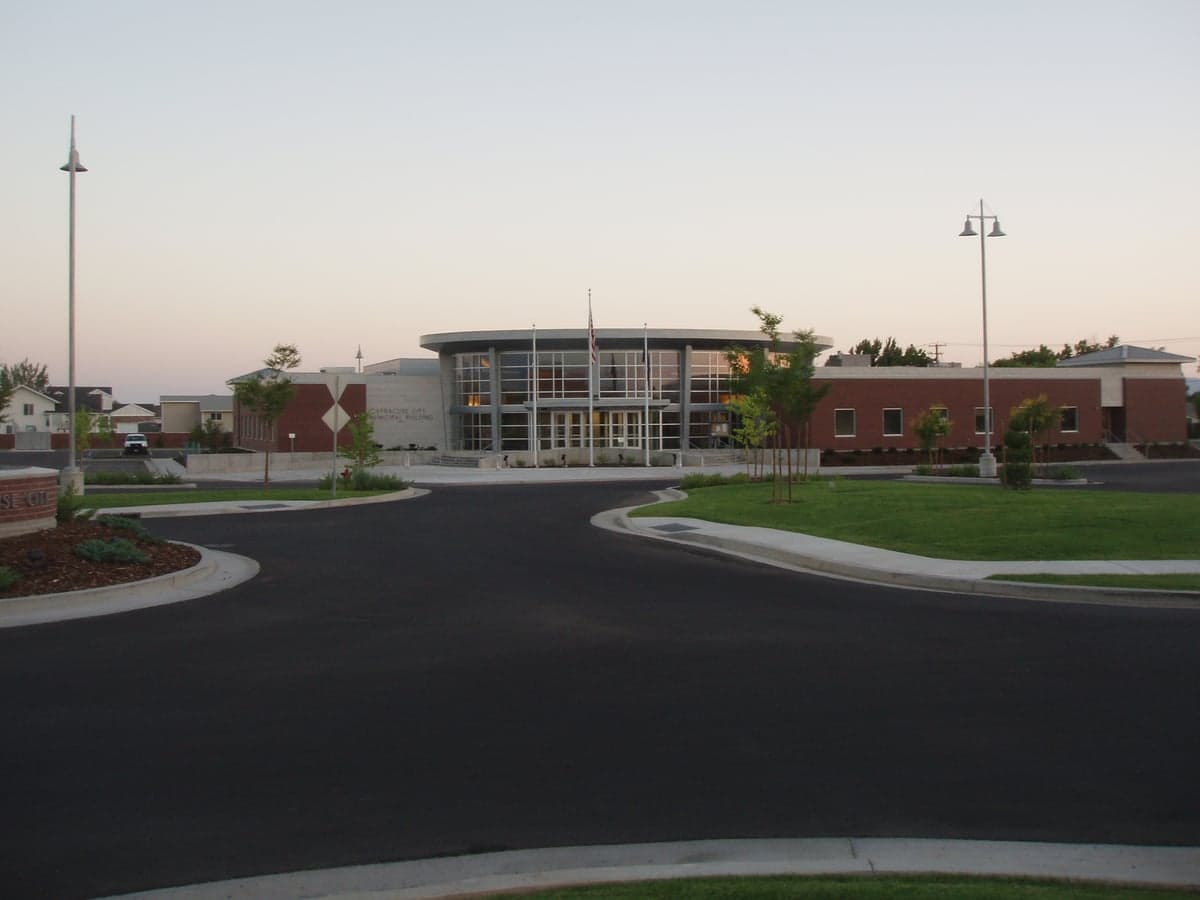
Photo: Wikipedia
Quality of Life in Syracuse, UT
A high quality of life with strong walkability, manageable living costs, healthy neighborhood signals, and solid amenity access.
What does Quality of Life tell us?
Quality of Life blends cost of living, nearby amenities, socioeconomic signals, and neighborhood character. City-level scores represent the whole municipality; individual neighborhoods can differ.
What does this tell us?
Quality of Life blends cost of living, nearby amenities, socioeconomic signals, and neighborhood character. City-level scores represent the whole municipality; individual neighborhoods can differ.
Cost of Living
79% above national average
The Real Cost of Living in Syracuse, UT for 2026
| Tier | Individual | Family (4) |
|---|---|---|
| Survival | $32k | $60k |
| Comfortable | $103k | $152k |
| Luxury | $158k+ | $246k+ |
| Elite (Top 5%) | $186k+ | $289k+ |
87%
The Area Signal
A metric tracking the socioeconomic signals of the area.
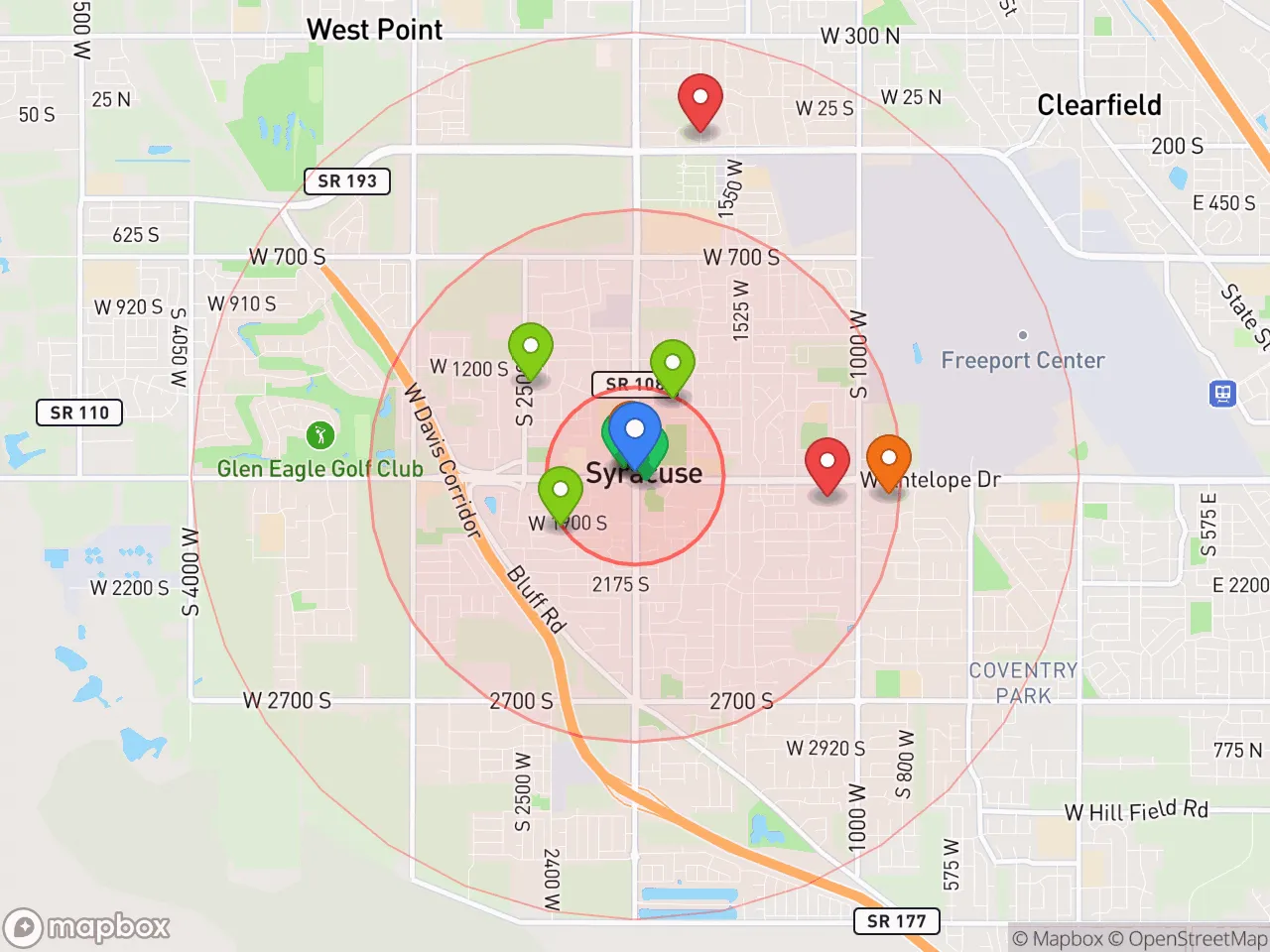
Hobbies
Explore the areaGroceries
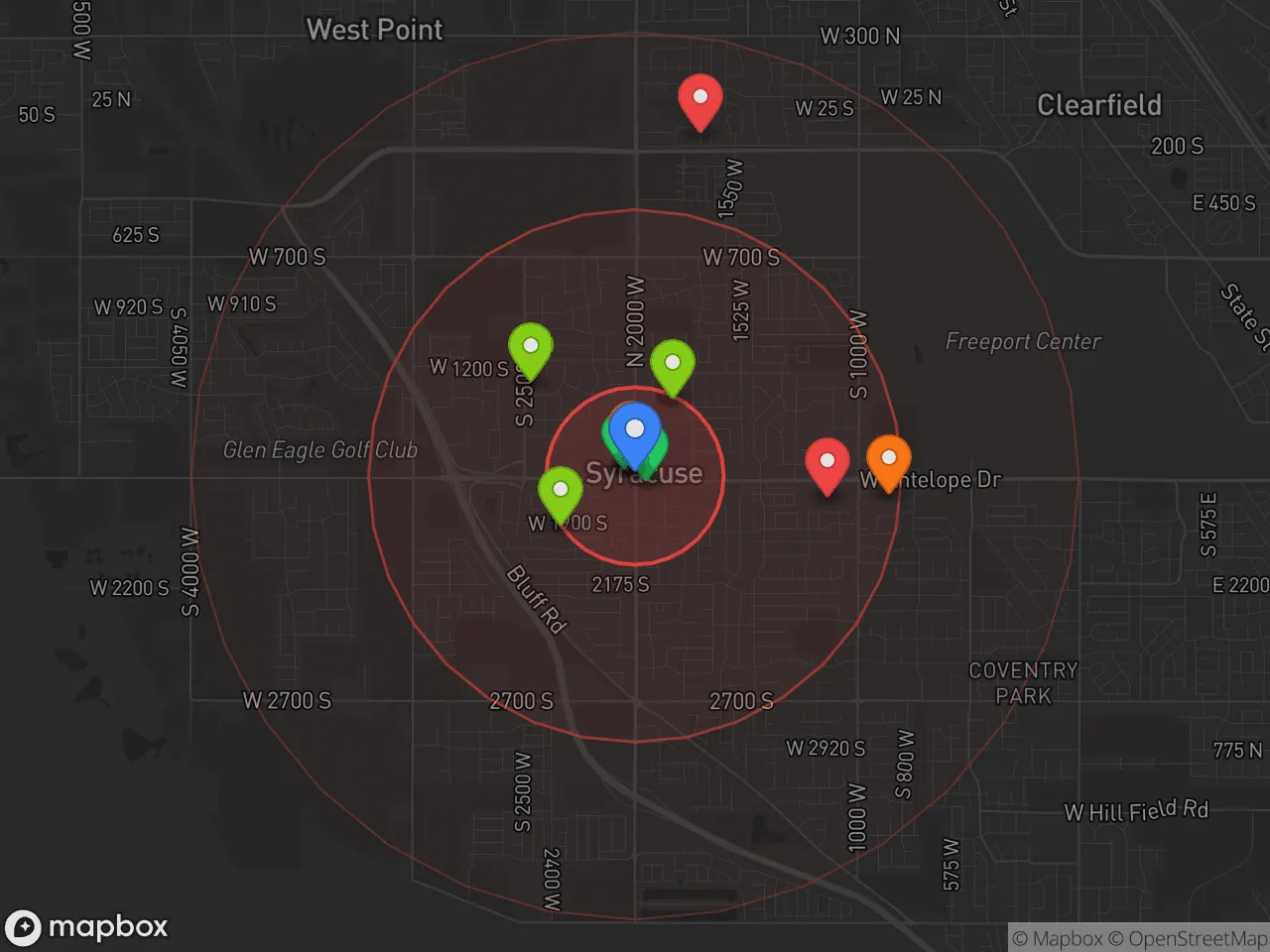
4 within 10 miles
Gas
20 within 10 miles
Hospital
9 within 20 miles
Airport
SLC — Salt Lake City International
Post Office
USPS — Clearfield, UT
Critical Amenities
Quality-of-Life Analysis
Syracuse, Utah, is an affluent suburb on the Wasatch Front’s northern edge, where the median home value of $531,600 and a cost-of-living index of 179 (79% above the U.S. average) signal a community built around high-earning professionals, growing families, and long-term residents who prioritize space and school quality over urban proximity. With a median rent of $2,006 and an average commute of roughly 29 minutes, the town attracts those who can trade a longer drive for newer housing stock, lower crime rates, and direct access to the Great Salt Lake’s recreation corridor. The population skews married with children, and the local economy is heavily tied to defense, aerospace, and tech jobs in nearby Ogden, Hill Air Force Base, and northern Salt Lake County.
Cost of living, housing affordability, and how Syracuse compares to nearby cities
Syracuse’s cost-of-living index of 179 is the highest in Davis County, outpacing neighboring Clearfield (index ~150) and Roy (~145), and is roughly 20% above the Salt Lake City metro average. The median home value of $531,600 reflects a market where single-family homes on quarter-acre lots routinely sell for $500,000–$650,000, while townhomes and newer duplexes start near $400,000. Rents at a median of $2,006 are about $300–$400 higher than in adjacent West Point or Clinton, but still below the $2,300+ averages in central Salt Lake City. Property taxes in Davis County run approximately 0.6% of assessed value, which is moderate for Utah, but the high baseline home price means annual tax bills often exceed $3,200. For renters, the 29-minute average commute—driven by the lack of a direct FrontRunner station in Syracuse (the nearest is Clearfield, 5 miles south)—is a trade-off for newer rental stock and lower density. First-time buyers often look to Clinton or Roy for more affordable entry points, while Syracuse remains a premium choice for move-up buyers and established professionals.
Schools, amenities, and what daily life is like for families
Daily life in Syracuse revolves around the Davis School District, which consistently ranks among Utah’s top five for test scores and graduation rates. Syracuse Elementary, Syracuse Junior High, and Syracuse High School all feed into a system where the average student-teacher ratio is 23:1, and the high school’s graduation rate exceeds 95%. The town’s amenity anchor is Syracuse City Park, a 40-acre complex with sports fields, a splash pad, and a paved trail network connecting to the Legacy Parkway Trail, which runs 14 miles south to Farmington. For shopping and dining, residents drive 10 minutes to the Station Park development in Farmington (Costco, Target, sit-down restaurants) or 15 minutes to the Newgate Mall in Ogden. The Great Salt Lake’s Antelope Island State Park, 20 minutes west, offers hiking, bison viewing, and mountain biking. The lack of a downtown core means most errands require a car, and the town’s zoning is almost entirely residential—there are no major employers within Syracuse’s limits. The 29-minute average commute reflects the reality that most workers head south to Salt Lake City (35–40 minutes) or north to Hill Air Force Base (15–20 minutes).
Syracuse is best suited for families and professionals who value newer housing, low crime rates, and top-tier schools over walkability, nightlife, or urban density. Empty nesters and retirees are less common here, as the housing stock is dominated by four- and five-bedroom homes and the tax burden is high for fixed incomes. Singles and young professionals may find the social scene limited—most evening activity centers on school sports, church congregations, and neighborhood gatherings. For those who can afford the premium and accept the car-dependent lifestyle, Syracuse offers a stable, family-oriented environment with direct access to both the Wasatch Mountains and the Great Salt Lake’s recreational assets.

Crime in Syracuse, UT
Lower crime rates than 94% of comparable U.S. locations.
Violent CrimeViolent Crime Analysis
Property CrimeProperty Crime Analysis
Crime Analysis
Syracuse, Utah, is a notably safe community, with crime rates significantly below both state and national averages. The city's violent crime rate of 80.8 incidents per 100,000 residents and property crime rate of 421 per 100,000 place it in a strong position for safety-conscious families and individuals. These figures reflect a community where serious crime is uncommon, though residents should remain aware of property-related risks typical of suburban environments.
Crime in context
Syracuse's crime statistics are substantially lower than broader benchmarks. The violent crime rate of 80.8 per 100,000 is roughly one-fifth the national average of approximately 380 per 100,000 and well below Utah's state rate of about 240 per 100,000. Property crime in Syracuse, at 421 per 100,000, is also favorable compared to the national average of roughly 1,950 per 100,000 and Utah's average of about 1,600 per 100,000. This positions Syracuse among the safer suburbs of the Ogden-Clearfield metropolitan area, where crime tends to be lower than in larger urban centers like Salt Lake City. However, as part of a large metro area, Syracuse is not immune to broader regional trends; the proximity to more urbanized areas means that property crime, particularly vehicle burglaries and package thefts, can occasionally spill over from nearby communities.
What residents experience
For daily life in Syracuse, the low violent crime rate means that incidents like assault, robbery, or homicide are rare and often isolated. Residents typically feel safe walking their neighborhoods, using local parks, and leaving homes unattended during the day. The primary concern for most households is property crime, which, while still low in absolute terms, accounts for the majority of reported incidents. Vehicle break-ins and theft from unlocked cars are the most common property crimes, often occurring overnight in driveways or on-street parking. The Syracuse Police Department actively encourages residents to lock vehicles and secure valuables, as many thefts are crimes of opportunity. The city's proactive community policing approach, including neighborhood watch programs and regular patrols, helps maintain a visible law enforcement presence that deters more serious offenses.
Neighborhood-level variation
Crime in Syracuse is not evenly distributed, though the variation is modest given the overall low rates. Newer subdivisions on the city's west side, near the Great Salt Lake, tend to report slightly higher rates of property crime, likely due to construction activity and transient workers. The older, established neighborhoods closer to the historic downtown core and near Syracuse Elementary School generally experience the lowest crime rates, benefiting from long-term residents and strong community ties. Areas adjacent to major thoroughfares like SR-108 (2000 West) see more vehicle-related thefts. Overall, no neighborhood in Syracuse is considered high-risk, but residents in newer developments or near commercial corridors should exercise extra caution with property security.
* Values derived from national, state, county, city and local statistics and may differ in a specific area. Last updated: 2026-04-21T12:57:51.000Z
Narrative content on this page is AI-generated and may contain mistakes. Verify any details that matter before acting on them.
ReloMaps may earn a commission from affiliate links at no extra cost to you.

