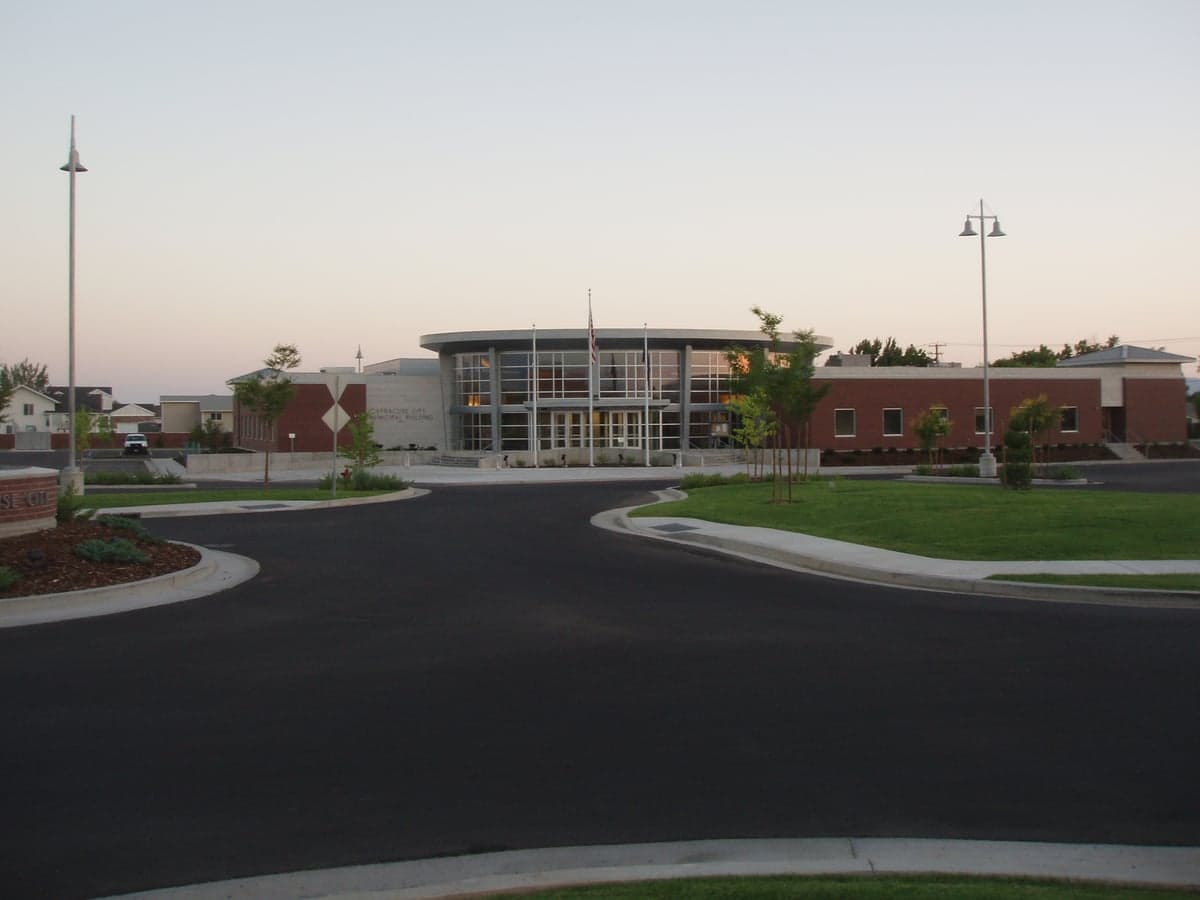
Photo: Wikipedia
Political ClimatePolitical Climate in Syracuse, UT
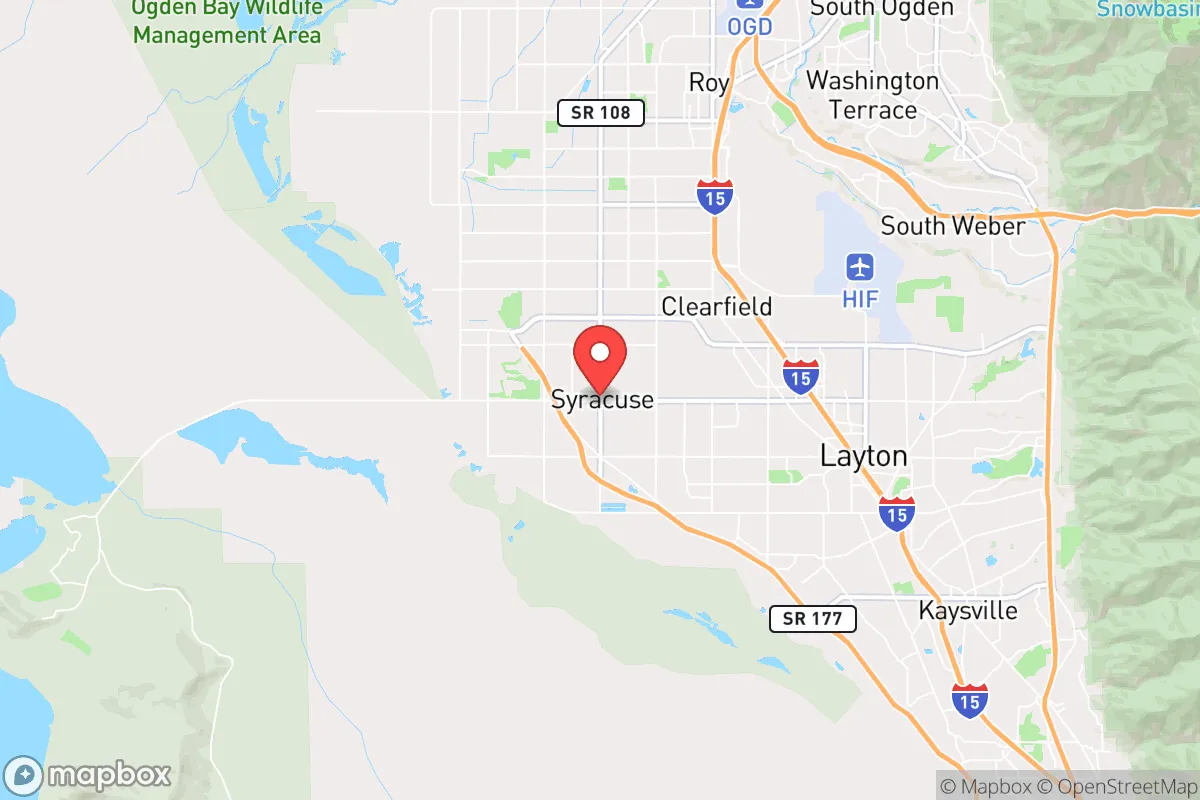
District shown is the primary district for this city’s centroid. Cities may span multiple districts.
Local Political AnalysisPolitical Analysis of Syracuse, UT
Syracuse, Utah, sits solidly in conservative territory, with a Cook PVI of R+10 that reflects decades of consistent Republican voting. This isn't a purple suburb hedging its bets—it's a place where local elections are often decided in the primary, and where the dominant political culture prizes limited government, personal responsibility, and a healthy skepticism of federal overreach. If you're looking for a community that hasn't drifted into progressive experimentation, Syracuse still feels like a holdout, though the pressure from the Wasatch Front's rapid growth is something longtime residents watch closely.
How it compares
Drive ten miles south to Layton or fifteen miles to Ogden, and you'll notice a different political temperature. Layton, with its Hill Air Force Base influence, leans conservative but has a more transient, military-connected population that can shift with national trends. Ogden, meanwhile, has embraced a more urban, artsy identity that brings a noticeable progressive tilt—think bike lanes, density zoning, and city council debates over diversity initiatives. Syracuse, by contrast, remains a bedroom community where the local conversation still centers on property rights, school curriculum transparency, and keeping taxes low. The contrast is stark: while Davis County as a whole votes red, Syracuse is one of the deeper red pockets, and residents here tend to view the county's more moderate moves—like transit-oriented development or inclusionary housing policies—with a wary eye.
What this means for residents
For someone moving here, the political climate translates into a few concrete realities. First, local government stays small and hands-off—you won't see the kind of zoning overreach or business regulation that plagues cities like Salt Lake or even Ogden. Second, school board meetings are where the real action happens, and they've become battlegrounds over critical race theory, gender ideology, and library content. Syracuse parents tend to show up, and they've successfully pushed back against curriculum changes that feel like top-down indoctrination. Third, taxes remain among the lowest in the county, with no city income tax and property rates that haven't ballooned like in neighboring Farmington or Kaysville. The trade-off is that you won't find the same level of public transit or cultural amenities—but for most residents, that's a feature, not a bug.
Looking ahead, the concern here is the slow creep of Wasatch Front urbanization. As more Californians and out-of-state transplants move in, there's a real risk that Syracuse's independent, live-and-let-live ethos gets diluted by people who want to import the same regulations and mandates they fled. The 2024 election cycle already showed signs of this tension, with local races seeing more contested primaries and outside money flowing into school board campaigns. If you value a community where your property rights aren't second-guessed by a planning commission and your kids aren't subjected to social experiments in the classroom, Syracuse still delivers. But keep an eye on the city council elections—that's where the next battle over personal freedoms will be fought, and it's not a fight the old guard intends to lose.

State Political ClimatePolitical Climate in Utah
State Political AnalysisPolitical Environment in the State
Utah is a deeply conservative state, with Republicans holding every statewide office and supermajorities in both legislative chambers, but the political landscape is more nuanced than a simple red-state label suggests. The state voted for Donald Trump by 20 points in 2024, a slight tightening from 2020’s 21-point margin, reflecting a slow but steady shift driven by explosive growth in the urban Wasatch Front. Over the last 20 years, Utah has moved from a reliably 30-point GOP lock to a still-solid but increasingly contested battleground, as in-migration from California and other blue states brings a mix of libertarian-leaning conservatives and left-leaning professionals to places like Salt Lake City, Provo, and St. George.
Urban vs. rural divide
The political map of Utah is defined by a stark urban-rural split, with the Wasatch Front—home to 80% of the state’s population—acting as the primary battleground. Salt Lake County, the state’s most populous, has trended purple over the past decade: it voted for Hillary Clinton in 2016 and Joe Biden in 2020, though Trump narrowly carried it in 2024. The city of Salt Lake itself is a liberal stronghold, with progressive policies on homelessness and public transit, while the suburbs like Sandy and Draper remain reliably conservative. Provo and Utah County are the heart of the state’s conservative base, driven by the LDS Church’s cultural influence and a booming tech economy—think of it as a Mormon Silicon Valley. Rural counties like Duchesne, Uintah, and San Juan are deep red, often voting 70-80% Republican, fueled by energy extraction and ranching interests. The southern swing area around St. George in Washington County has grown rapidly with retirees and remote workers, and while it still leans GOP, the margin has narrowed as newcomers bring more moderate views on growth and environmental issues.
Policy environment
Utah’s policy environment is a mixed bag for conservatives: low taxes and light regulation in many areas, but with a heavy-handed government presence in others. The state has a flat income tax rate of 4.65% and no corporate income tax on pass-through entities, making it attractive for business. Property taxes are among the lowest in the nation, and there’s no inheritance tax. However, the state’s regulatory posture is interventionist on social issues—Utah has strict alcohol laws, including a state-run liquor monopoly and limits on beer strength, which feel like nanny-state overreach to many. Education policy is a bright spot: the state passed a universal school choice voucher program in 2023, allowing families to use public funds for private or homeschool expenses. Healthcare is dominated by Intermountain Health, a nonprofit system that keeps costs relatively low, but the state has not expanded Medicaid, leaving a coverage gap for low-income adults. Election laws are secure: Utah requires voter ID, has no-excuse mail-in voting (which conservatives have largely accepted), and uses paper ballots with audits. The legislature has also passed laws to ban ranked-choice voting and restrict ballot initiatives, ensuring the GOP’s grip on the process.
Trajectory & freedom
Utah’s trajectory on personal freedom is a mixed picture—some areas are expanding, while others are contracting in ways that should concern liberty-minded residents. On the positive side, the state passed a constitutional carry law in 2021, allowing permitless concealed carry for adults 21 and over, and has preempted local gun ordinances, so no city can ban firearms in parks or public buildings. Parental rights were strengthened with the 2023 “Utah Parental Rights in Education” law, which requires schools to notify parents about curriculum changes and prohibits instruction on sexual orientation or gender identity in K-3 classrooms. Medical autonomy took a hit, though: the state banned abortion at 18 weeks in 2023, with no exceptions for rape or incest, and has a trigger law that would ban it entirely if Roe v. Wade is overturned—a win for pro-life advocates but a loss for those who prioritize individual choice. Property rights are generally strong, but the state’s rapid growth has led to zoning battles in places like Park City and Moab, where local governments impose strict short-term rental caps and development moratoriums, effectively limiting what you can do with your own land. Taxation remains low, but the state has a sales tax on groceries, which hits low-income families hardest.
Civil unrest & political movements
Utah is not a hotbed of civil unrest, but there are visible flashpoints that a new resident would notice. The most prominent is the ongoing debate over public lands: the federal government controls about 65% of Utah’s land, and the state has been in a long-running legal battle with the Bureau of Land Management over the Bears Ears and Grand Staircase-Escalante national monuments. This has sparked protests from both sides—conservative ranchers and off-roaders demanding local control, and environmental activists pushing for preservation. Immigration politics are relatively quiet, but the state passed a 2023 law requiring local law enforcement to cooperate with ICE, and there are no sanctuary cities. Election integrity controversies are minimal, though the 2020 election saw some fringe calls for audits, which the GOP-controlled legislature dismissed. The most visible activist movement is the “Utah Rising” coalition, a left-leaning group that has organized protests against the state’s abortion ban and for LGBTQ rights, but these are small and largely confined to Salt Lake City. On the right, the “Constitutional Sheriffs” movement has some traction in rural counties, with sheriffs in places like Iron and Washington counties publicly refusing to enforce certain state gun laws.
Projection
Over the next 5-10 years, Utah will likely remain a conservative state, but the margin will continue to narrow as in-migration from blue states accelerates. The Wasatch Front will become more competitive, with Salt Lake County potentially flipping to a permanent blue-leaning status, while Utah County and the rural areas hold the line. The biggest wildcard is the LDS Church’s influence: as younger members become more secular and the church itself softens on some social issues, the cultural bedrock of conservatism may erode. Expect more fights over land use, water rights, and growth management, especially in St. George and Park City, where housing costs are skyrocketing. The state’s tax structure is likely to stay low, but there will be pressure to fund infrastructure and education as the population booms. For a conservative moving in now, the state will still feel like a safe bet in a decade, but the political climate will be more contested, with a growing progressive minority in the urban core.
For a new resident, the bottom line is that Utah offers a low-tax, family-friendly environment with strong gun rights and school choice, but you’ll have to accept some government overreach on alcohol and land use. The state is still a conservative haven, but the culture is shifting—especially in the cities—so if you’re looking for a place where your values are the norm, the suburbs of Utah County or the rural counties are your best bet. Just be prepared for the growth and the political battles that come with it.
* Values derived from national, state, county, city and local statistics and may differ in a specific area. Last updated: 2026-04-21T12:57:51.000Z
Narrative content on this page is AI-generated and may contain mistakes. Verify any details that matter before acting on them.
ReloMaps may earn a commission from affiliate links at no extra cost to you.

