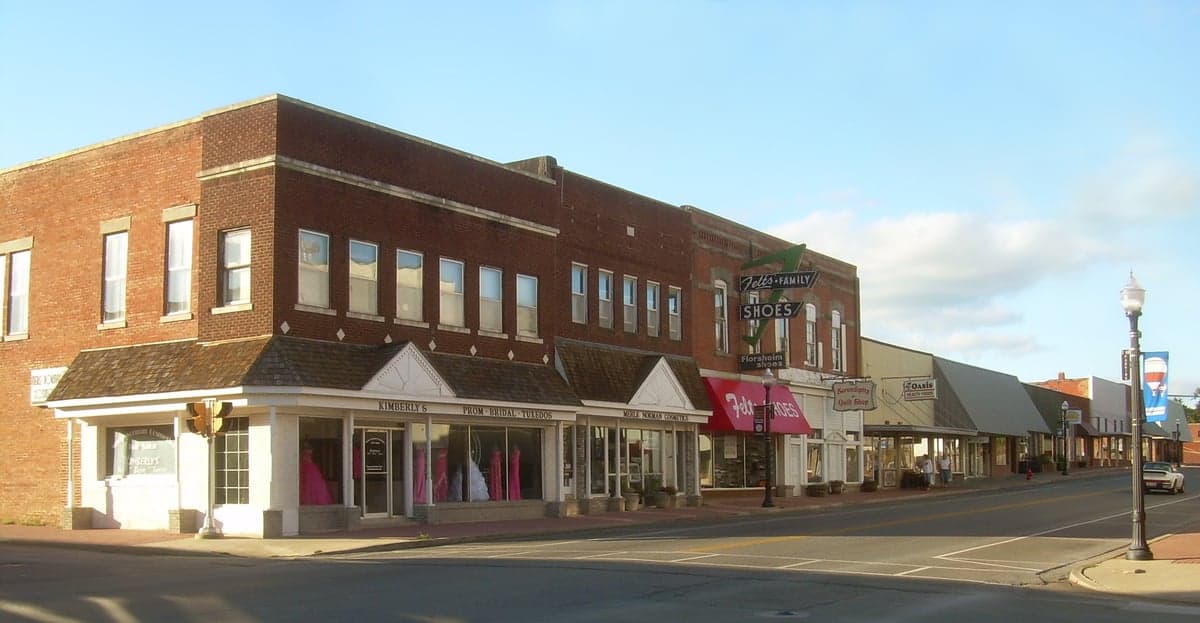
Photo: Wikipedia
Political ClimatePolitical Climate in Tahlequah, OK
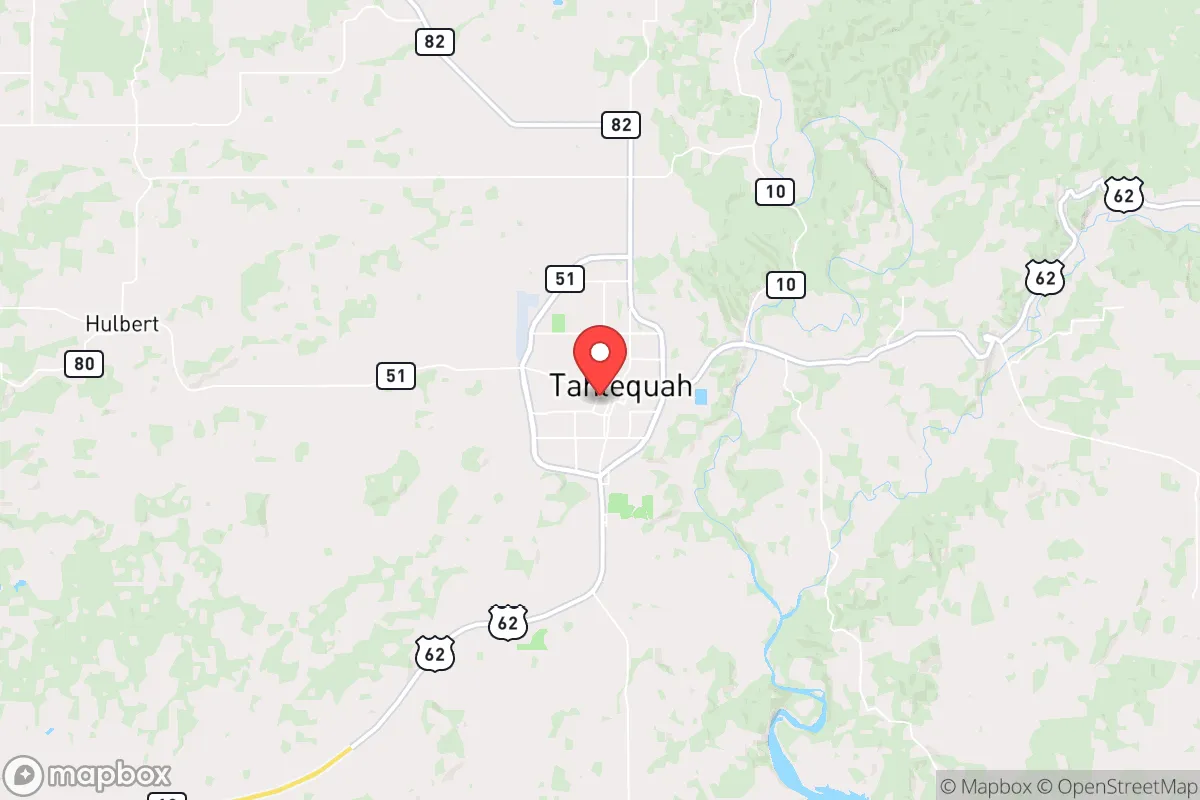
District shown is the primary district for this city’s centroid. Cities may span multiple districts.
Local Political AnalysisPolitical Analysis of Tahlequah, OK
Tahlequah has long been a conservative stronghold, and that’s not changing anytime soon. The area’s Cook PVI of R+28 tells you everything you need to know—this is deep-red country, where folks take personal responsibility and limited government seriously. You’ll find that most locals here vote Republican not out of habit, but because they’ve seen what happens when government gets too big for its britches. The political lean is solid, and the trajectory is holding steady, though you might notice a few cracks if you look close enough at the college crowd.
How it compares
Drive twenty minutes east to Stilwell, and you’ll find a similar conservative vibe, though it’s a bit more rural and less engaged in county-level politics. Head south to Muskogee, and things get a little more mixed—Muskogee County leans red but not as hard, with a PVI around R+15, and you’ll see more union influence and a few progressive pockets near the hospital and college. The real contrast is west, in Tulsa County, where the city of Tulsa itself has shifted noticeably left in recent years, with a PVI of R+12 but a city council that’s increasingly cozy with progressive policies. Tahlequah, by comparison, feels like a time capsule of traditional values—neighbors still wave, and the county commission isn’t trying to micromanage your property or your business. That’s a big reason why folks from Tulsa are starting to move here, looking for a place where government stays out of the way.
What this means for residents
For the average person living here, the political climate means you can breathe a little easier. Property taxes are low, zoning is minimal, and you won’t find the kind of overreach you see in blue cities—no mask mandates that last for years, no heavy-handed business closures, and no one telling you what you can or can’t do with your land. The local school board is conservative, so you’re not going to see critical race theory or gender ideology shoved into the curriculum. That said, there’s been a slow creep of progressive influence from Northeastern State University, where a small but vocal faculty group pushes for diversity, equity, and inclusion initiatives that feel more like indoctrination than education. Most residents just roll their eyes and keep living their lives, but it’s worth keeping an eye on—if that crowd ever gets a foothold in city hall, you’ll see the same kind of government overreach that’s wrecking places like Norman or Stillwater.
Culturally, Tahlequah is still a place where the Second Amendment is respected, not debated, and where the Cherokee Nation’s sovereignty is a point of pride, not a political football. You won’t find many people here clamoring for higher taxes or more regulations—most just want to be left alone to work, hunt, and raise their families. The biggest policy distinction is the lack of a city income tax, which keeps more money in your pocket compared to places like Tulsa or Oklahoma City. Looking ahead, the long-term trend is cautiously optimistic—as long as the conservative majority holds, Tahlequah will stay a refuge from the progressive nonsense spreading elsewhere. But if you see more out-of-state transplants moving in and trying to change things, that’s when you’ll want to start paying attention.

State Political ClimatePolitical Climate in Oklahoma
State Political AnalysisPolitical Environment in the State
Oklahoma has been a reliably red state for decades, but the political climate here isn't as simple as a straight-party vote. The state leans heavily Republican at the federal and state level — Donald Trump won it by over 33 points in 2024 — but the real story is the internal tension between a deeply conservative rural base and a growing, more moderate urban corridor. Over the last 10-20 years, the state has shifted from a pragmatic, oil-patch conservatism toward a more culturally assertive, freedom-focused brand of politics, driven by suburban and exurban migration out of places like Tulsa and Oklahoma City.
Urban vs. rural divide
The political map of Oklahoma is a study in contrasts. The two major metros — Oklahoma City and Tulsa — are Republican strongholds, but they’re not monolithic. Oklahoma City’s core has trended slightly more moderate, with pockets like the Plaza District and Midtown showing a younger, more diverse electorate. But the suburbs — Edmond, Norman (home to the University of Oklahoma), and Broken Arrow — are deeply red, often voting 70% or higher for GOP candidates. The rural areas, especially in the Panhandle and southeastern counties like McCurtain and Pushmataha, are among the most conservative in the nation. The divide isn’t just about party; it’s about culture. Rural Oklahomans see the state as a last bastion of traditional values, while urbanites in Stillwater or Lawton are more focused on economic growth and quality-of-life issues. The 2020 census showed that growth is concentrated in the I-35 corridor and the Tulsa suburbs, while rural counties are losing population — a trend that will slowly shift the political center of gravity toward the metros.
Policy environment
Oklahoma’s policy environment is aggressively pro-business and low-tax, but with a strong cultural conservative overlay. The state has a flat income tax of 4.75%, which is set to drop to 3.99% by 2027 under legislation passed in 2024. There’s no estate tax, and property taxes are among the lowest in the nation — typically under 1% of assessed value. The regulatory posture is light: Oklahoma is a right-to-work state, and occupational licensing requirements have been steadily reduced. On education, the state passed universal school choice in 2023 via the Oklahoma Parental Choice Tax Credit Act, which provides up to $7,500 per child for private school or homeschooling expenses. This was a major win for parental rights advocates. Healthcare is a mixed bag: the state refused Medicaid expansion until 2020, and while it’s now in place, the system remains underfunded. Election laws are strict — voter ID is required, and the state has purged inactive voters regularly. The 2024 session saw a bill banning ranked-choice voting, which passed easily. For a conservative moving in, the policy environment is generally favorable, but the state’s heavy reliance on oil and gas revenue means budget volatility is a real concern.
Trajectory & freedom
Oklahoma is on a trajectory of expanding personal freedom in several key areas, but with some worrying exceptions. The state has become a national leader in gun rights: constitutional carry was enacted in 2019, and in 2024, the legislature passed a bill prohibiting the enforcement of any federal gun laws deemed unconstitutional — a direct challenge to federal overreach. Parental rights have been strengthened: the Parents’ Bill of Rights (2022) requires schools to notify parents of any medical or mental health services offered to their children, and the 2023 Save Women’s Sports Act bans biological males from competing in female sports. Medical freedom saw a win with the 2024 Right to Try expansion, allowing terminally ill patients access to experimental treatments without FDA interference. However, there are red flags. The state’s medical marijuana program, once one of the most liberal in the country, has been heavily restricted since 2023 with new licensing caps and advertising bans. And the Oklahoma State Department of Health still holds broad emergency powers that were used aggressively during COVID — a reminder that government overreach can come from any direction. Property rights are generally strong, but the state’s use of eminent domain for pipeline projects has sparked local backlash, particularly in Kingfisher County.
Civil unrest & political movements
Oklahoma has seen relatively little civil unrest compared to coastal states, but there are flashpoints. The Walmart parking lot protests in Enid and Ponca City during 2020 were small and quickly fizzled, but the Black Lives Matter rally in Tulsa’s Greenwood District — the site of the 1921 race massacre — drew national attention and some property damage. The state’s immigration politics are heated but not chaotic: Oklahoma passed a strict anti-sanctuary city law in 2018, and in 2024, the legislature approved a bill allowing state law enforcement to arrest illegal immigrants — a direct response to federal inaction. There’s a growing nullification movement among rural counties, with several passing resolutions declaring their intent to ignore federal gun or environmental regulations. The Oklahoma Freedom Caucus in the state legislature has been a driving force, pushing bills on election integrity (including a 2024 law requiring hand-counting of ballots in all elections) and opposing any form of vaccine mandates. The most visible flashpoint for a new resident would be the “Don’t Tread on Me” flags flying from pickup trucks in rural areas and the occasional “Let’s Go Brandon” banners at high school football games — it’s a state where political expression is loud and unapologetic.
Projection
Over the next 5-10 years, Oklahoma will likely become more culturally conservative, not less. The in-migration pattern is driven by people fleeing high-tax states like California and Illinois — many of them conservative families looking for lower costs and more freedom. The Tulsa Remote program has brought in remote workers, but they tend to be younger and more moderate, which could create a slow liberalizing effect in the city core. However, the state’s rural population is aging and shrinking, while the suburbs are booming. Expect the legislature to continue pushing on school choice, gun rights, and election integrity. The biggest wild card is the state’s budget: if oil prices crash, the tax cuts may prove unsustainable, and the state could face a fiscal crisis that forces a retreat from some of these policies. For now, the trajectory is clear: Oklahoma is doubling down on its identity as a freedom-friendly, low-regulation state, and anyone moving here should expect that trend to continue.
For a new resident, the bottom line is this: Oklahoma offers a political environment where your personal freedoms — from gun ownership to school choice to medical decisions — are broadly protected, and the state government is actively working to expand them. The trade-off is that you’ll be living in a place where the culture is unapologetically conservative, and where the political debate can feel like a culture war at times. If that aligns with your values, you’ll find a welcoming community and a state that respects your right to live as you see fit. Just be prepared for the occasional dust storm — both literal and political.
* Values derived from national, state, county, city and local statistics and may differ in a specific area. Last updated: 2026-04-25T13:51:00.000Z
Narrative content on this page is AI-generated and may contain mistakes. Verify any details that matter before acting on them.
ReloMaps may earn a commission from affiliate links at no extra cost to you.

