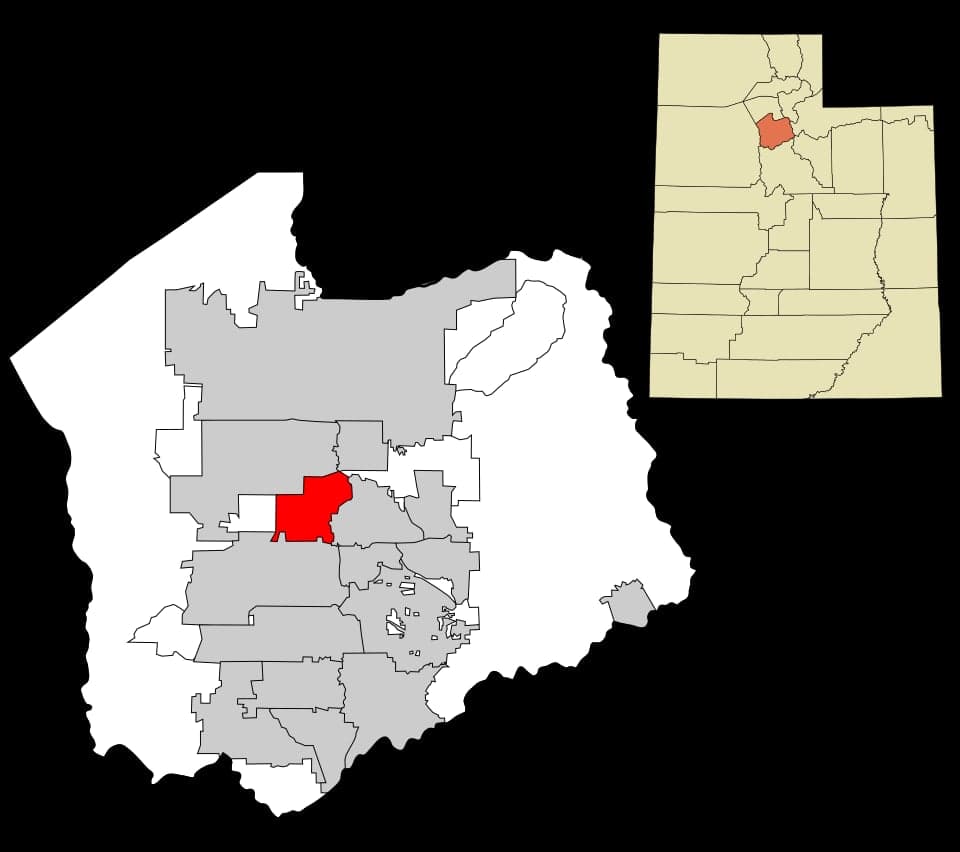
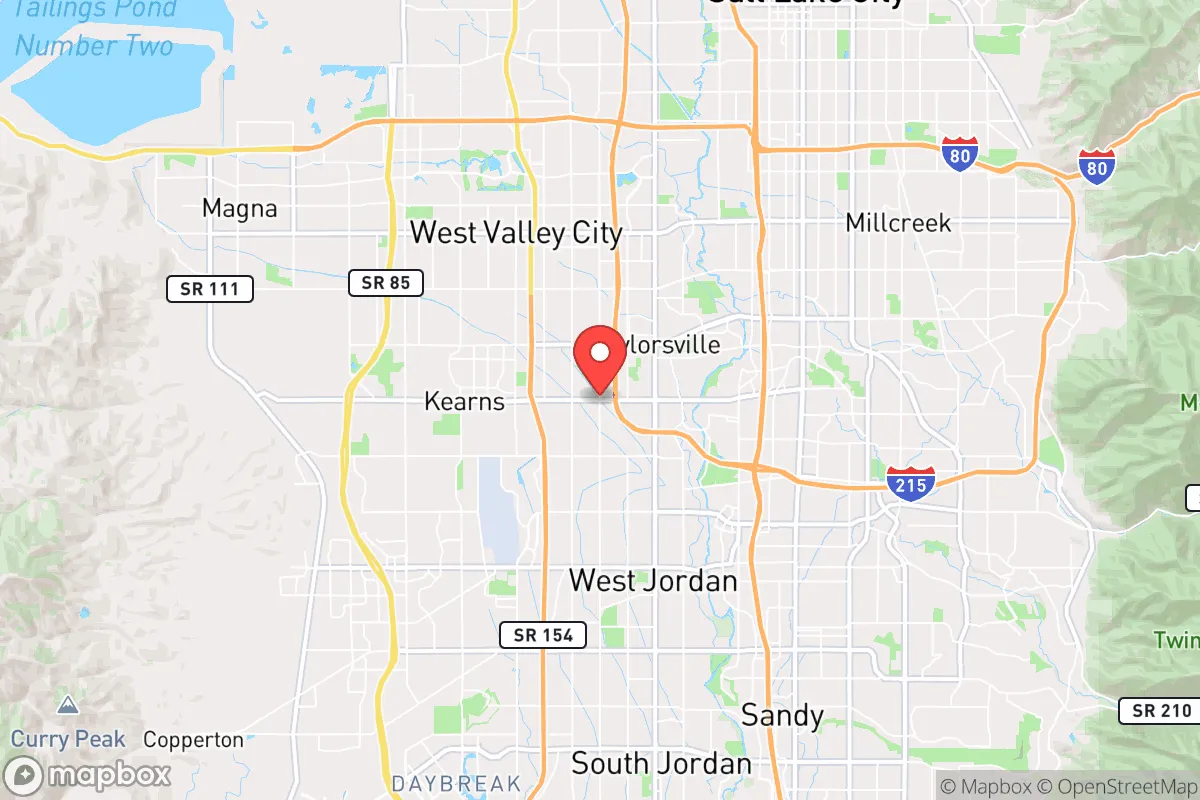
Photo: Wikipedia
Political ClimatePolitical Climate in Taylorsville, UT
District shown is the primary district for this city’s centroid. Cities may span multiple districts.
Local Political AnalysisPolitical Analysis of Taylorsville, UT
Taylorsville, Utah, has long been a solidly conservative community, and that hasn't changed much despite some national trends. The area carries a Cook Partisan Voting Index of R+14, meaning it votes about 14 points more Republican than the national average. That's a pretty reliable number, and it reflects the values most folks here hold onto—limited government, personal responsibility, and a general distrust of anything that smells like federal overreach. You still see more Trump signs than anything else in the yards around here, and local elections tend to favor candidates who talk about keeping taxes low and government out of your business.
How it compares
If you drive just a few miles north into Salt Lake City proper, you'll feel the difference immediately. Salt Lake has been trending left for years, with a lot of younger transplants and a more progressive city council pushing things like bike lanes, higher density zoning, and social programs that feel a lot like government telling you how to live. Taylorsville, by contrast, is more like the suburbs of West Valley City or Kearns—working-class, family-oriented, and skeptical of that kind of top-down planning. Even nearby Murray, which used to be pretty conservative, has shifted a bit toward the center. But Taylorsville has held steady. The local city council is still dominated by folks who believe in low taxes and minimal interference, and the school board elections rarely see progressive candidates gain traction. It's a pocket of stability in a state that, while still red, is seeing some worrying cracks in the foundation—especially along the Wasatch Front.
What this means for residents
For the people living here, this political climate means a few practical things. First, you're not going to see a lot of new regulations on your property or your business. The city council tends to take a hands-off approach, which is a relief if you value your freedom to do what you want with your own land or run a small shop without a mountain of permits. Second, the schools here still emphasize traditional values—patriotism, hard work, and personal accountability—rather than the kind of social engineering you hear about in more progressive districts. That said, there's a growing concern among long-time residents that the state legislature in Salt Lake City is starting to listen too much to the urban crowd. Some of the recent bills on land use and housing have felt like a step toward telling local communities how to manage their own growth. It's not full-blown overreach yet, but the pattern is there, and it's worth keeping an eye on.
Culturally, Taylorsville is still very much a place where neighbors know each other, and the local LDS influence is strong but not overbearing. You won't find the kind of aggressive activism you see in places like Park City or even parts of Salt Lake County. The biggest policy distinction is probably the city's stance on development: they've been slow to approve high-density apartment complexes, preferring single-family homes and keeping the suburban feel intact. That's a deliberate choice, and it reflects a belief that local control matters more than state-mandated growth targets. In the long term, the worry is that as more people move here from out of state—especially from blue states—the political balance could shift. But for now, Taylorsville remains a place where you can still live your life without the government breathing down your neck, and that's something worth holding onto.

State Political ClimatePolitical Climate in Utah
State Political AnalysisPolitical Environment in the State
Utah has long been one of the most reliably conservative states in the Union, with a Republican lean that has only deepened over the past two decades. The state’s dominant political coalition is a blend of the Church of Jesus Christ of Latter-day Saints (LDS) cultural influence, a strong small-government ethos, and a growing population of conservative transplants from California and the West Coast. In the 2024 presidential election, Donald Trump carried Utah by 21 points, a slight dip from his 2020 margin of 20 points, but still far above the national average. The state’s trajectory over the last 10-20 years has been one of steady rightward movement, with the legislature passing some of the most aggressive pro-life, pro-gun, and pro-parental rights laws in the country. However, a subtle but real tension is emerging between the traditional, church-aligned conservatism of the Wasatch Front and a more libertarian, anti-establishment strain fueled by new arrivals and younger voters.
Urban vs. rural divide
The political map of Utah is starkly divided between the urban Wasatch Front and the vast rural expanse. The state’s largest metro area, Salt Lake City, is a deep blue island in a sea of red. Salt Lake County, home to roughly 40% of the state’s population, voted for Joe Biden in 2020 by a 10-point margin, and Kamala Harris carried it by a similar spread in 2024. This is driven by the city’s growing secular, progressive, and young professional population, along with a significant LGBTQ+ community. In contrast, the surrounding suburbs and exurbs are deeply conservative. Utah County, anchored by Provo and Orem, is the heart of LDS cultural conservatism and voted for Trump by over 40 points in 2024. Davis County and Weber County, north of Salt Lake, are reliably Republican but with a more moderate, establishment flavor. The rural counties—like San Juan, Kane, and Garfield—are among the most Republican in the nation, often voting 80%+ for the GOP. A notable recent shift is in Summit County (Park City), which has become a wealthy, liberal enclave, voting for Biden by 30 points. The urban-rural divide is sharp and growing, but the sheer population weight of the conservative suburbs and rural areas keeps the state firmly red.
Policy environment
Utah’s policy environment is a model of conservative governance. The state has a flat income tax rate of 4.65%, no state-level property tax on vehicles, and a sales tax that is moderate but with few exemptions. The regulatory posture is decidedly pro-business, with a right-to-work law and minimal zoning restrictions in most areas. Education policy is a mixed bag: the state has a robust school choice program, including a new universal education savings account (ESA) program passed in 2023, which allows parents to use public funds for private school tuition, homeschooling, or other educational expenses. However, the state’s public school funding remains below the national average, and teacher pay is a persistent concern. Healthcare policy is conservative, with no Medicaid expansion under the Affordable Care Act until a 2018 ballot initiative forced it through, though the legislature has since added work requirements. Election laws are among the most secure in the nation: Utah requires voter ID, has automatic voter registration tied to driver’s licenses, and conducts all-mail elections with signature verification. The state also has a strong constitutional carry law (permitless carry) passed in 2021, and a near-total abortion ban with exceptions only for rape, incest, and the life of the mother, enacted in 2022. This is a state that actively protects Second Amendment rights and parental authority.
Trajectory & freedom
Utah is becoming more free in many respects, but with some concerning caveats. On the positive side, the state has expanded gun rights significantly: the 2021 permitless carry law was followed by a 2023 law prohibiting local governments from banning firearms in public buildings. Parental rights were strengthened with the 2023 Utah Parental Rights in Education Act, which requires schools to notify parents of any curriculum involving sexuality or gender identity and prohibits instruction on these topics in K-3 classrooms. The state also passed a religious freedom restoration act in 2021, which provides strong protections for religious expression. However, there are red flags. The state’s Inland Port Authority and Point of the Mountain Development Authority represent significant government intervention in land use and economic development, raising concerns about cronyism and central planning. Additionally, the state’s anti-discrimination laws have been expanded to include sexual orientation and gender identity in housing and employment, which some conservatives view as government overreach into private business decisions. The most contentious area is medical freedom: Utah has not banned COVID-19 vaccine mandates for private employers, and the state’s health department retains significant authority over public health emergencies. The trajectory is generally positive for liberty, but the growth of state-level economic development authorities and the influence of the LDS church’s institutional preferences create a unique blend of freedom and top-down control.
Civil unrest & political movements
Utah has seen relatively little civil unrest compared to other states, but there have been notable flashpoints. The Black Lives Matter protests in Salt Lake City in 2020 were large and occasionally violent, with property damage in the downtown area. This led to a strong backlash, with the legislature passing a critical infrastructure protection law in 2021 that increased penalties for rioting and blocking highways. Immigration politics are a simmering issue: Utah has a guest worker program (the Utah Compact) that is more moderate than many red states, but the legislature has passed laws requiring local law enforcement to cooperate with federal immigration authorities. There is no sanctuary city movement of any significance; Salt Lake City has a symbolic “welcoming city” resolution but no actual non-cooperation policy. Election integrity controversies are minimal—Utah’s mail-in voting system is widely trusted, and there have been no major fraud allegations. The most visible political movement is the “Utah Republican Party” internal battle between the more moderate, LDS-aligned establishment and the more populist, Trump-aligned wing. This has played out in primary elections, with incumbents in Utah County and Cache County facing challenges from the right. A new resident would notice a generally civil political culture, but with a growing edge of partisan tension, especially in the suburbs.
Projection
Over the next 5-10 years, Utah will likely remain a deeply red state, but the nature of that conservatism is shifting. The massive in-migration from California, Washington, and Oregon—over 100,000 new residents per year—is bringing a mix of libertarian-leaning conservatives and some moderate liberals. The Wasatch Front will continue to see Salt Lake City become more progressive, while the suburbs like Lehi, Sandy, and Draper will remain conservative but with a more tech-oriented, less church-dominated flavor. The rural areas will stay deeply red. The biggest wildcard is the LDS church’s influence: as the state becomes more diverse and less LDS (the church’s share of the population has dropped from 70% to around 55% in the last two decades), the political culture may become more libertarian and less theocratic. Expect continued expansion of school choice, gun rights, and parental rights, but also potential battles over property rights as the state’s rapid growth leads to more government intervention in land use. A new resident moving in now should expect to find a state that is conservative and free, but with a growing tension between traditional values and a more individualistic, tech-driven libertarianism.
Bottom line for a new resident: Utah offers a high degree of personal freedom, low taxes, and a culture that respects family and faith. You will find a state that is politically safe and stable, but not without its own internal debates. If you value gun rights, school choice, and a limited government that stays out of your life, Utah is a strong choice. Just be aware that the state’s rapid growth is bringing change, and the political landscape in 2035 may look different than it does today—likely more libertarian, but still firmly conservative.
* Values derived from national, state, county, city and local statistics and may differ in a specific area. Last updated: 2026-05-03T20:37:38.000Z
Narrative content on this page is AI-generated and may contain mistakes. Verify any details that matter before acting on them.
ReloMaps may earn a commission from affiliate links at no extra cost to you.

