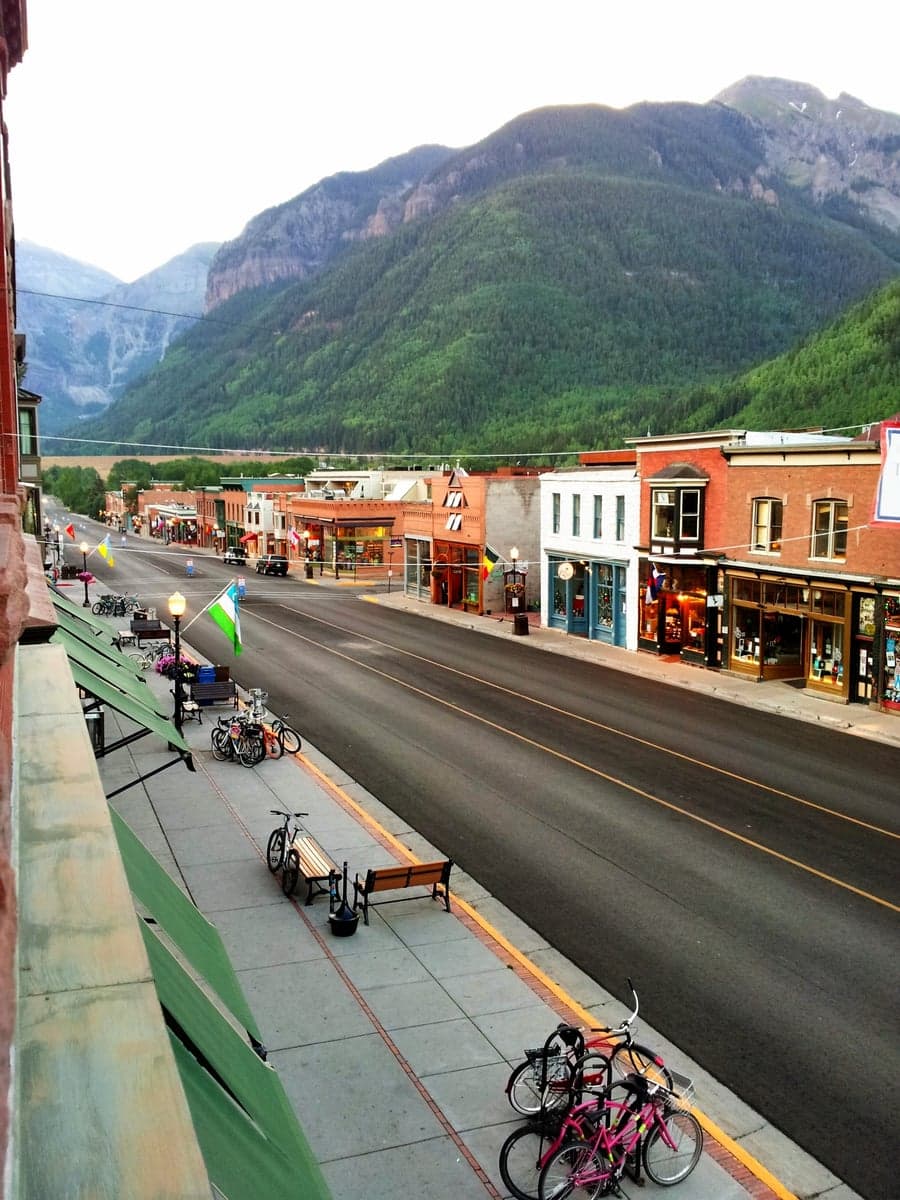
Photo: Wikipedia
Strategic Assessment of Telluride, CO
Strong survivability profile. Good buffer from population centers, with manageable environmental and tactical risks.
What does the Strategic Assessment tell us?
Our Strategic Assessment grades tactical survivability of an area. Major population centers, military targets, fallout zones, natural disasters, and border exposure all drive risk — lower exposure means a more defensible position in a crisis.
This is heavily inspired by Joel Skousen's Strategic Relocation book. Highly recommended you checkout the book ($)What does this tell us?
Our Strategic Assessment grades tactical survivability of an area. Major population centers, military targets, fallout zones, natural disasters, and border exposure all drive risk — lower exposure means a more defensible position in a crisis.
This is heavily inspired by Joel Skousen's Strategic Relocation book. Highly recommended you checkout the book ($)Strategic Pillars

Key Distances
Regional Safe Places
Below is our recommended "safe zones" in Colorado and the surrounding area based on our strategic heuristics. For most people, it's unrealistic to live in a “safe zone” full-time due to work, family or other personal reasons. They tend to be more rural. However, many of these areas are perfect for second homes and retreat properties that double as a vacation home or even a short-term rental.
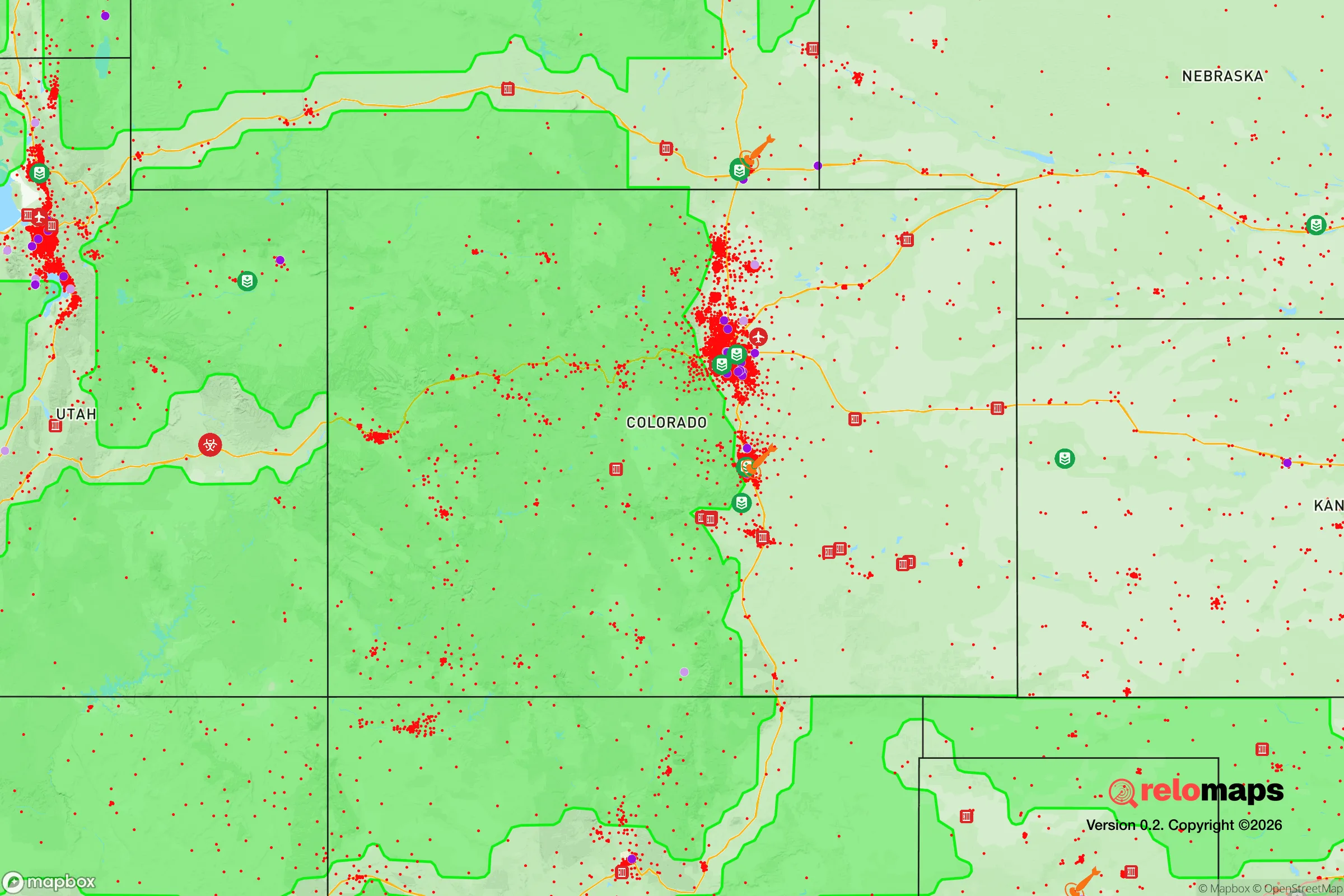
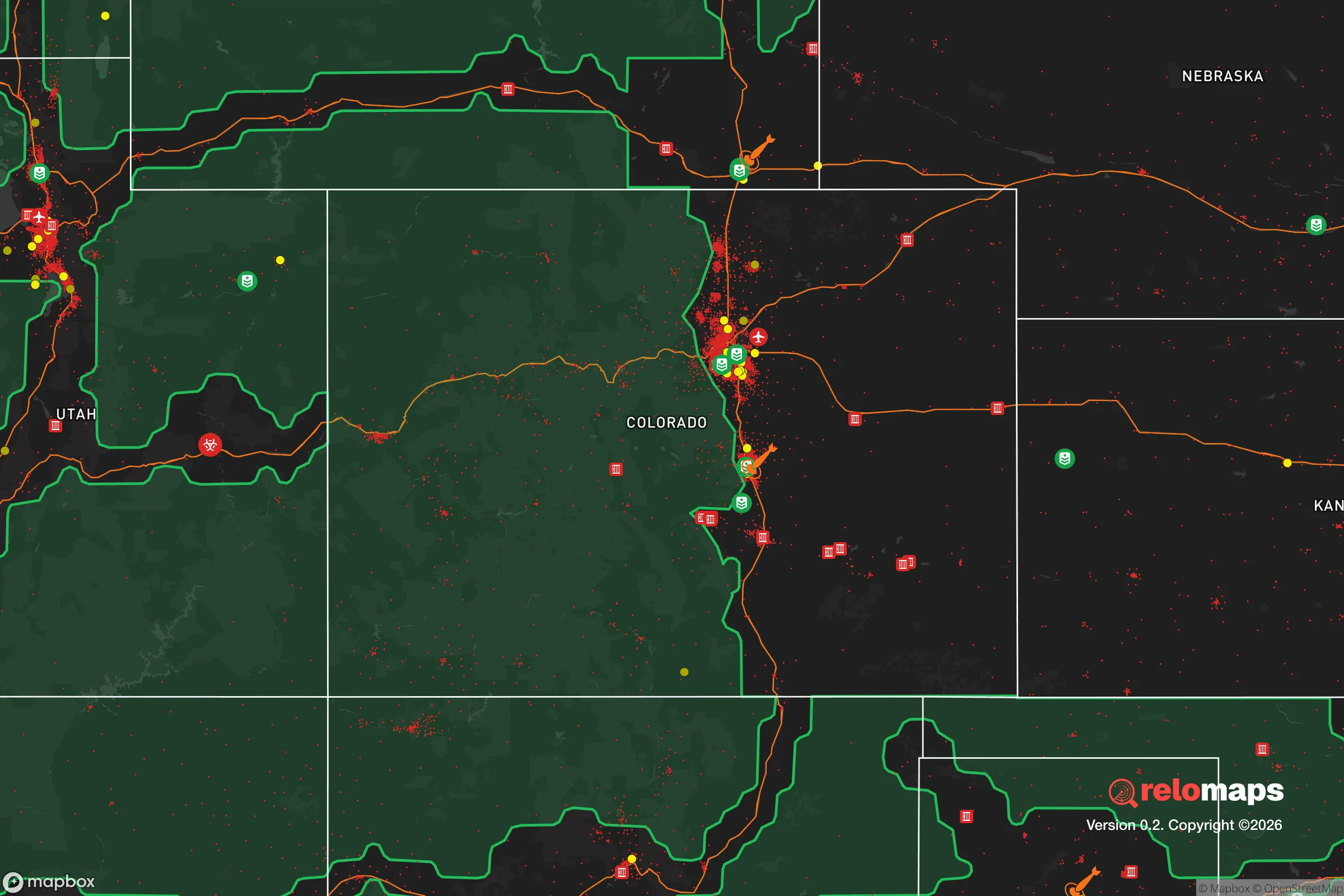


Important Note: For informational purposes only. This does not mean nothing bad ever happens in the green zones. Please use common sense. This is based on public data and modeled with AI. We tried to take a conservative approach but mistakes happen. We update this regularly as new information becomes available.
Solar Generator Recommendations
Backup power matters more here than in safer locations. We've picked three solar generators across budgets and capacity tiers — start with the budget unit if you only need a few essentials, or step up if you want to run a fridge and HVAC for days at a time.

Jackery Portable Power Station Explorer 300
Budget OptionPower on the Go: Weighing only 11 lbs, it's convenient to set up and store with book-sized foldable solar panels

BLUETTI Portable Power Station AC180
Designed for both indoor and outdoor scenarios, AC180 is highly capable as it has a robost capacity and continuous output power.

EF ECOFLOW DELTA Pro Ultra Power Station
Upgraded PickEcoFlow DELTA Pro Ultra is a whole-home energy system designed to grow with your family. Integrated with the Smart Home Panel 2, it scales to meet your evolving energy needs — keeping your home powered, intelligent, and secure through every stage of life.
We earn a commission, at no additional cost to you.
Strategic Assessment Analysis
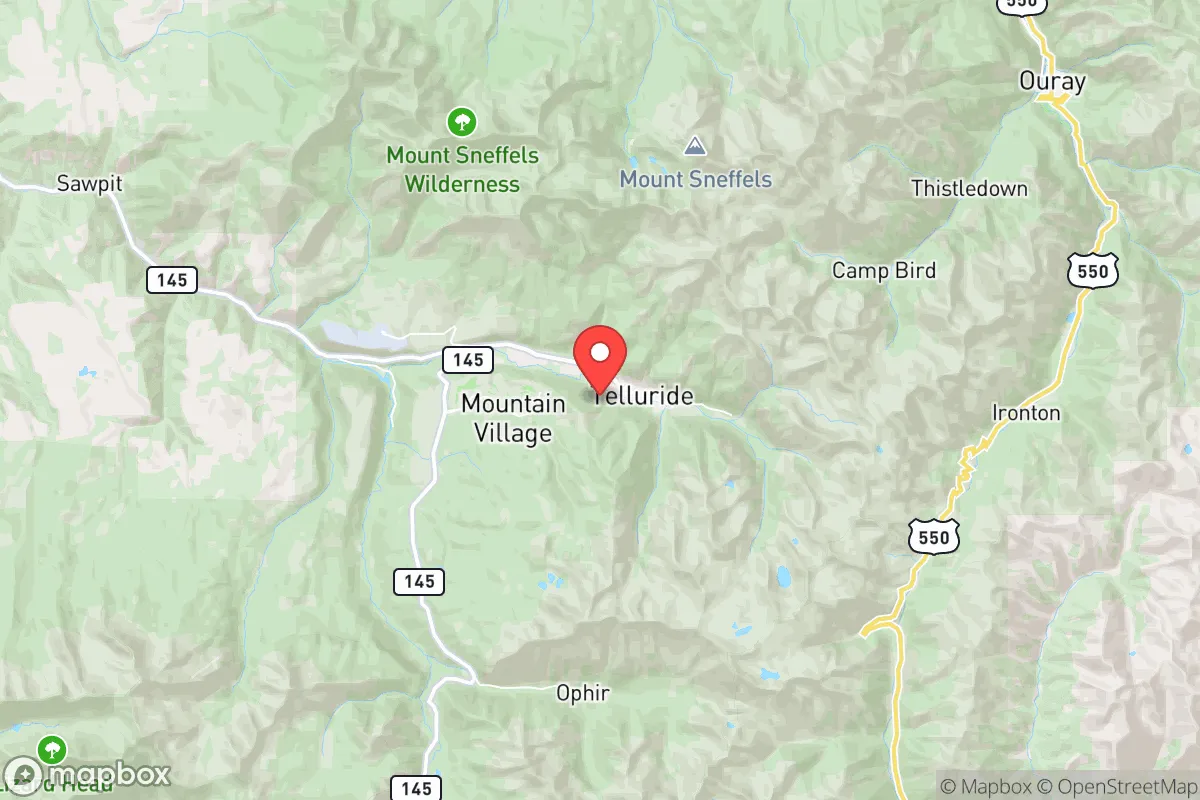
Telluride, Colorado, offers a unique strategic proposition for those prioritizing resilience and self-sufficiency, but its strengths come with severe trade-offs. Nestled in a box canyon at 8,750 feet in the remote San Juan Mountains, the town is geographically isolated from major population centers, with the nearest city of significant size—Grand Junction—being over 125 miles away via winding mountain roads. This isolation is a double-edged sword: it provides a natural buffer against the cascading effects of urban collapse, but it also creates a logistical bottleneck that could become a trap if not carefully planned for. For a conservative-leaning relocator concerned with civic unrest, mass casualty events, or systemic breakdown, Telluride’s location offers a high degree of natural defensibility, but only if you understand the terrain’s full implications.
Geographic position and natural advantages for strategic relocation
Telluride’s geography is its primary asset for a prepper mindset. The town sits at the head of a valley surrounded by 13,000- and 14,000-foot peaks, with only one paved road—Colorado Highway 145—providing vehicle access from the west via the San Miguel River canyon. This chokepoint is easily monitored and, in a worst-case scenario, could be physically blocked or defended with minimal effort. The surrounding Uncompahgre National Forest and San Juan National Forest offer vast, rugged terrain for off-grid retreats, hunting, and foraging, though the high altitude limits year-round agriculture. The area’s natural water supply is robust: the San Miguel River runs directly through town, fed by snowmelt, and numerous alpine lakes and streams dot the backcountry. For a relocator, this means a reliable, gravity-fed water source that is less susceptible to contamination than lowland reservoirs. The elevation also provides a natural defense against airborne pathogens or fallout, as prevailing winds tend to disperse contaminants over the sparsely populated high desert to the south and east. However, the severe winter climate—average snowfall of 200+ inches—means that any long-term survival plan must account for months of deep snow, avalanche risk, and subzero temperatures that can cripple unprepared individuals.
Risks, exposures, and proximity to fallout-relevant landmarks
Telluride’s remoteness is a double-edged sword when considering modern threats. The town is over 300 miles from Denver and more than 500 miles from any major military or nuclear target like Cheyenne Mountain or the Utah Test and Training Range, making it a low-priority zone for direct strategic strikes. However, the region is not without its own vulnerabilities. The nearby Moab uranium mill tailings site (about 90 miles west) and the Los Alamos National Laboratory (about 250 miles south) are potential sources of radiological contamination in a major event, though prevailing winds generally push hazards away from Telluride. More immediate risks are natural: the box canyon is prone to avalanche paths that have historically destroyed homes, and the area sits in a seismically active zone with the potential for landslides that could block the only road out. For a survivalist, the biggest exposure is the town’s extreme dependence on tourism—over 70% of the local economy relies on seasonal visitors. In a prolonged crisis, the population could swell with stranded tourists or contract as service workers flee, creating unpredictable resource demands. The single road access also means that any major disaster—wildfire, earthquake, or civil unrest in nearby Montrose or Durango—could cut Telluride off from resupply for weeks.
Practical resilience for a relocator: food, water, energy, and defensibility
For a relocator serious about self-sufficiency, Telluride presents a mixed picture. Water is abundant but requires treatment: the San Miguel River is clean at its source but can carry giardia and heavy metals from historic mining runoff. A good Berkey filter or UV system is non-negotiable. Food production is severely limited by the short growing season (50-70 frost-free days) and poor soil; most vegetables must be grown in greenhouses or high tunnels, and staple crops like corn or wheat are impractical. Hunting is viable—mule deer, elk, and black bear are common—but requires skill and a license, and game populations are sensitive to winter severity. Energy resilience is a strong point: the region has excellent solar potential (over 300 sunny days per year), though snow cover can reduce winter output. Micro-hydro from the many creeks is a viable alternative for those with year-round water flow. The local power grid is relatively stable but fed by long transmission lines from the Delta area, making it vulnerable to disruption. Defensibility is high due to the terrain: a small group could control the valley entrance with minimal effort, and the steep slopes make flanking maneuvers difficult. However, the town itself is a dense, walkable community with limited space for stockpiling or fortification. The nearest major medical facility is in Montrose, 65 miles away, and the Telluride Medical Center is a small clinic—adequate for routine care but not for trauma or prolonged crisis. For a family, the local schools are excellent (Telluride School District consistently ranks among Colorado’s best), but the social environment is overwhelmingly liberal and transient, which may be a cultural friction point for conservative relocators.
The overall strategic picture for Telluride is one of high reward paired with high risk. It is an ideal location for a bug-out destination or seasonal retreat for those with the resources to maintain a second property, but it is a poor choice for a full-time, self-sufficient homestead due to the harsh climate and logistical fragility. The isolation that makes it defensible also makes it dependent on outside supply chains for most essentials—fuel, ammunition, medical supplies, and bulk food. For a conservative relocator looking to ride out a period of national instability, Telluride offers a secure, low-profile base with natural barriers and abundant water, but only if you have the financial means to pre-position supplies and the physical capability to handle extreme winters. It is not a place for the unprepared or the faint of heart, but for those who can master its challenges, it remains one of the most strategically sound locations in the lower 48 for long-term survival.

* Values derived from national, state, county, city and local statistics and may differ in a specific area. Last updated: 2026-04-29T00:37:26.000Z
Narrative content on this page is AI-generated and may contain mistakes. Verify any details that matter before acting on them.
ReloMaps may earn a commission from affiliate links at no extra cost to you.

