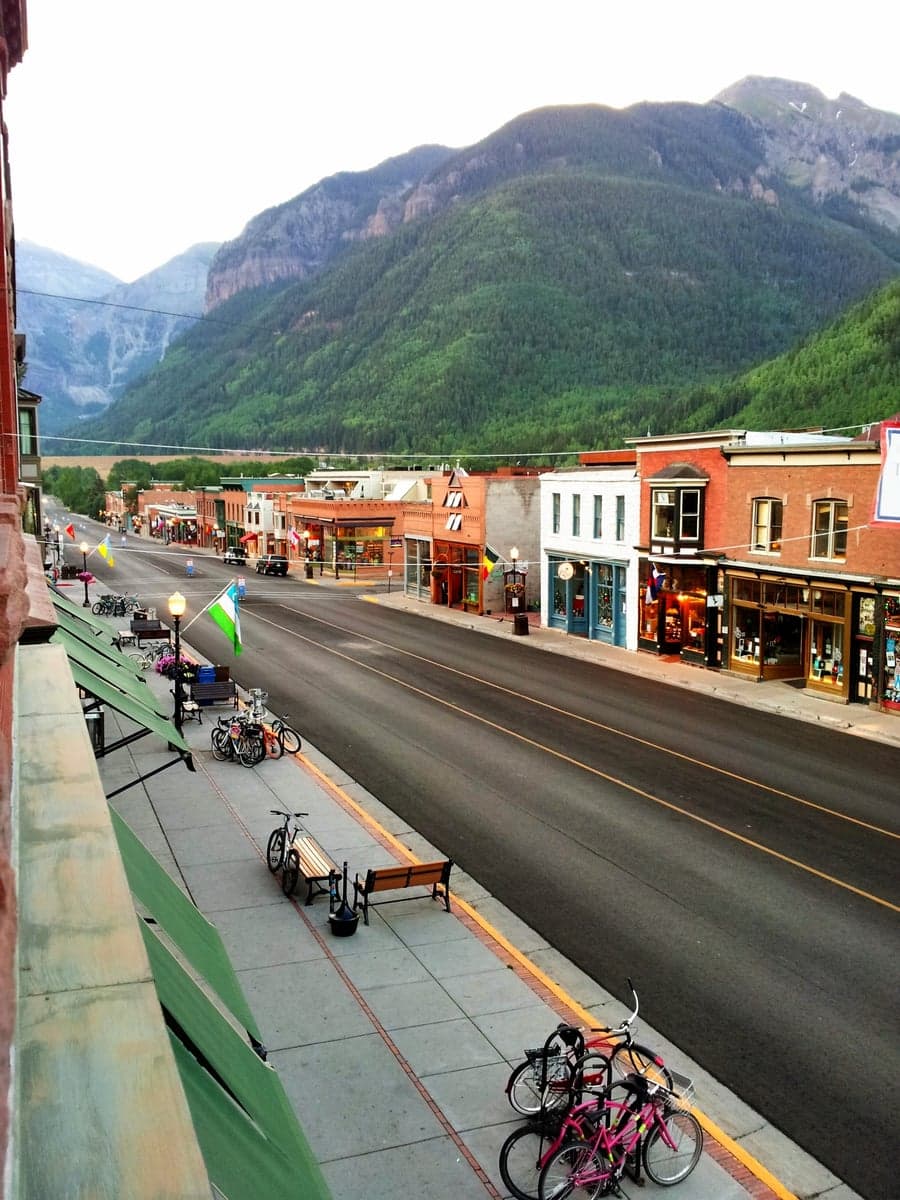
Photo: Wikipedia
Political ClimatePolitical Climate in Telluride, CO
District shown is the primary district for this city’s centroid. Cities may span multiple districts.
Local Political AnalysisPolitical Analysis of Telluride, CO
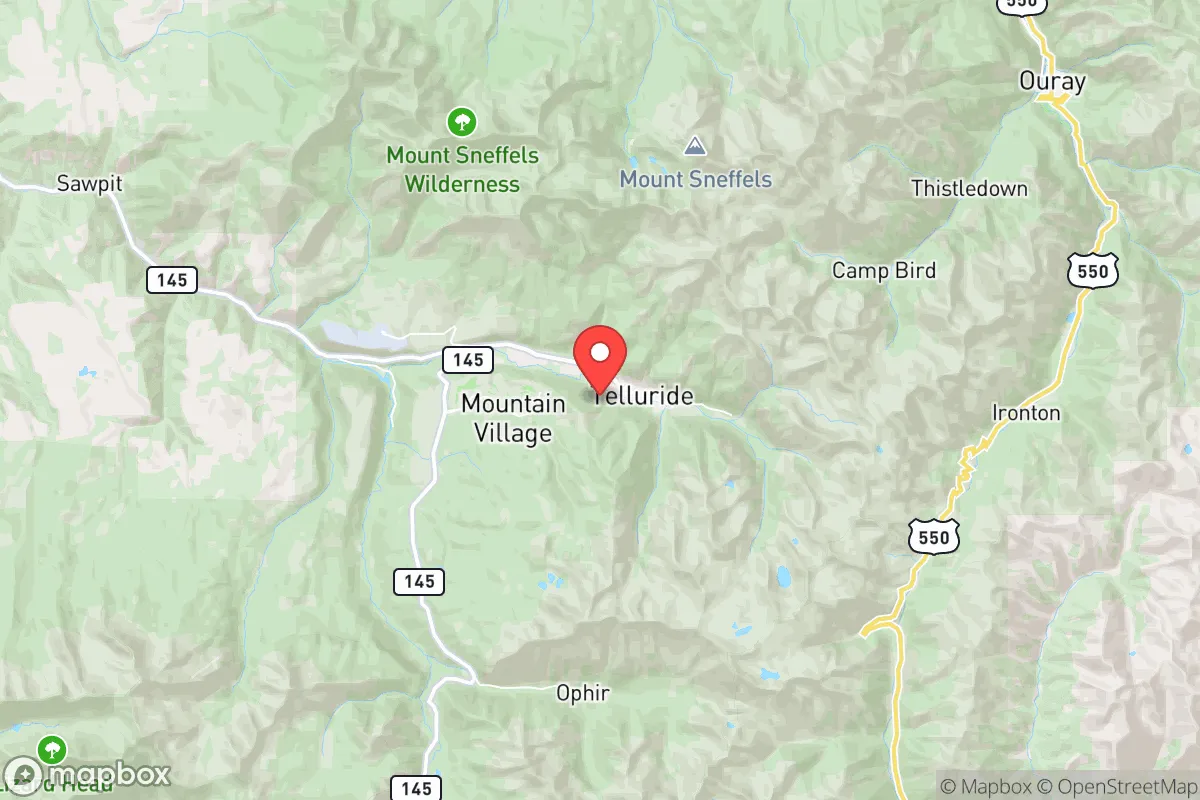
Telluride’s political climate has shifted dramatically over the past decade, and if you’re looking at it from a conservative perspective, the trajectory is concerning. The town itself is now a deep-blue island in a county that, according to the Cook PVI, leans Republican by a +5 margin—but that number doesn’t tell the whole story. San Miguel County as a whole still votes red on paper, but Telluride proper has become a stronghold for progressive policies, with local elections often swinging hard left. The surrounding towns like Mountain Village, Norwood, and even Placerville tend to be more balanced, but Telluride’s influence on county-wide decisions is outsized because of its population density and tourism-driven economy.
How it compares
Drive 30 minutes west to Norwood, and you’ll find a community that still values personal freedom and limited government—folks who’d rather be left alone than told how to live. In Telluride, the vibe is completely different. The town council has pushed through measures like strict short-term rental caps, plastic bag bans, and a local minimum wage that’s well above the state’s, all under the banner of “sustainability.” Compare that to nearby Ridgway or Ouray, where similar proposals have been voted down or watered down. The contrast is stark: Telluride feels like a Boulder transplant, while the rest of the region holds onto a more traditional Western independence. Even the county’s R+5 PVI masks the fact that Telluride’s precincts often vote 70-80% Democrat, while rural precincts carry the Republican weight.
What this means for residents
For a long-time resident who values personal freedoms, the creep of government overreach is hard to ignore. The town’s rental restrictions, for example, have made it nearly impossible for working-class families to find affordable housing—unless you’re connected or willing to pay a premium. The local government’s push for “equity” initiatives and climate action plans sounds good on paper, but in practice, it means more regulations, higher fees, and a growing sense that your property rights aren’t your own. If you own a home here, you’ve likely seen your taxes climb to fund programs you didn’t vote for. The school board has also leaned progressive, with curriculum changes that prioritize social justice over core academics. It’s not the Telluride I remember from the 90s, when the biggest political fights were about mining rights and water access.
Looking ahead, the trend doesn’t seem to be reversing. As more remote workers and second-home buyers from blue states move in, the local electorate shifts further left. The 2024 election saw Telluride’s precincts turn out heavily for progressive candidates, even as the county as a whole stayed red. If you’re considering a move here, know that your voice on local issues—especially around property rights, taxes, and school policy—will likely be in the minority unless you live outside town limits. The cultural divide between Telluride and the rest of San Miguel County is real, and it’s only widening.

State Political ClimatePolitical Climate in Colorado
State Political AnalysisPolitical Environment in the State
Colorado has shifted from a reliably purple swing state to a solidly blue-leaning one over the past two decades, with Democrats now controlling the governorship, both chambers of the legislature, and all statewide offices. The state voted for Hillary Clinton by 5 points in 2016, Joe Biden by 13 points in 2020, and Kamala Harris by roughly 11 points in 2024, reflecting a durable leftward tilt driven by explosive growth in the Denver-Boulder-Aurora metroplex. For a conservative considering relocation, the state’s political trajectory is a cautionary tale of how rapid in-migration and demographic change can transform a once-balanced state into a one-party progressive stronghold.
Urban vs. rural divide
The political map of Colorado is a stark story of two states. The Front Range urban corridor—Denver, Boulder, Aurora, and the sprawling suburbs of Jefferson and Arapahoe counties—generates roughly 70% of the state’s vote and leans heavily Democratic. Denver County itself votes about 80% Democratic, while Boulder County is even further left. Meanwhile, the rest of Colorado—the Eastern Plains, the Western Slope, and the San Luis Valley—remains deeply Republican. El Paso County (Colorado Springs) is the largest reliably red county, voting +15 R in 2024, but it’s increasingly an island surrounded by blue suburbs. The critical shift came in suburban counties like Arapahoe, Jefferson, and Larimer (Fort Collins), which voted Republican in the 2000s but flipped to Democrats by 2016 and have stayed there. Weld County (Greeley) remains a red outlier in the north, voting +20 R, but its population growth is slower than the Denver metro’s. The rural-urban divide is so sharp that many rural counties—like Kit Carson, Baca, and Moffat—vote 80% Republican, but their combined population is smaller than Denver’s alone.
Policy environment
Colorado’s policy environment has become aggressively progressive under unified Democratic control. The state income tax rate is a flat 4.4%, which is moderate, but the overall tax burden is rising due to property tax increases and new fees. In 2024, voters narrowly rejected a measure to cap property tax growth, signaling that tax hikes are likely to continue. The regulatory posture is hostile to energy development: Colorado has some of the strictest oil and gas regulations in the country, including 2020’s SB 19-181, which gave local governments veto power over drilling permits—effectively killing new projects on the Front Range. Education policy is dominated by teachers’ unions and progressive school boards; the state has adopted the controversial “Comprehensive Health Education” standards that include LGBTQ+ topics in K-3 curriculum, and parental notification for gender-related issues is not required. Election laws are among the most liberal: Colorado has universal mail-in voting, same-day registration, and automatic voter registration, which critics argue undermines election integrity. The state also has a “red flag” gun law (HB 19-1177) that allows courts to temporarily seize firearms from individuals deemed a risk, with no due process hearing required before the seizure.
Trajectory & freedom
Colorado is becoming less free by any conservative measure of personal liberty. The most significant contraction came in 2024 with the passage of HB 24-1292, which bans the sale and transfer of many semi-automatic firearms and limits magazine capacity to 15 rounds—one of the strictest gun laws in the nation. This follows 2023’s HB 23-1219, which raised the minimum age to purchase any firearm to 21. On parental rights, the state passed HB 24-1036, which prohibits schools from notifying parents if a student changes their gender identity or pronouns, overriding parental authority. Medical autonomy has been curtailed by COVID-era mandates that remain on the books for healthcare workers, and the state has no religious exemption for vaccine requirements. Property rights are under pressure from “land use” bills like SB 23-213, which preempts local zoning to force higher-density housing near transit, reducing local control. On the positive side for conservatives, Colorado has a strong TABOR (Taxpayer Bill of Rights) amendment that limits tax increases without voter approval, though Democrats have repeatedly found ways to work around it through fees and exemptions. The overall trajectory is clear: each legislative session brings new restrictions on gun rights, parental rights, and local control.
Civil unrest & political movements
Colorado has seen significant civil unrest and organized political movements on both sides. The 2020 George Floyd protests in Denver turned violent, with looting and fires in the downtown area, and the city’s “defund the police” movement led to a temporary 30% cut to the police budget, though much of it was later restored. On the right, the “Colorado Springs” model of conservative activism remains strong, with Focus on the Family and other evangelical organizations headquartered there. The secession movement in rural counties—the “51st state” proposal for a “North Colorado”—gained traction in 2013 but fizzled without legislative support. Immigration politics are a flashpoint: Denver is a “sanctuary city” that limits cooperation with ICE, and the state passed a law in 2024 restricting local law enforcement from detaining individuals based on immigration status. The 2020 election saw minor controversies over ballot drop boxes and signature verification, but no major fraud was proven. A new resident will notice the stark contrast between the “Keep Colorado Colorado” bumper stickers in rural areas and the “Hate Has No Home Here” signs in Denver suburbs—a visible cultural war playing out on every street corner.
Projection
Over the next 5-10 years, Colorado is likely to become more progressive, not less. The demographic trends are clear: the fastest-growing counties are the blue-leaning suburbs of Denver (Adams, Arapahoe, Douglas), while rural counties continue to lose population. In-migration from California, Texas, and the Midwest tends to be younger and more liberal, reinforcing the leftward shift. The state’s Republican Party is fractured between moderates and Trump-aligned conservatives, and has not won a statewide election since 2016. The only realistic path for a conservative resurgence would be a major backlash against progressive overreach—like the gun ban or parental rights violations—but that would require a level of voter mobilization that hasn’t materialized yet. Expect more gun control, more restrictions on parental rights, higher taxes, and continued erosion of local control. The “Colorado Dream” of a libertarian-leaning mountain state is effectively dead; the new Colorado is a progressive laboratory.
For a conservative moving to Colorado, the bottom line is this: you will be living in a state where your values are increasingly out of step with the government. If you choose to relocate here, pick your county carefully—El Paso (Colorado Springs) or Weld (Greeley) offer the best chance of local representation. But understand that state-level politics will work against you on guns, education, and parental rights. The state’s natural beauty and outdoor lifestyle are undeniable, but the political climate is a trade-off that requires constant vigilance and likely active involvement in local politics to preserve any semblance of freedom.
* Values derived from national, state, county, city and local statistics and may differ in a specific area. Last updated: 2026-04-29T00:37:26.000Z
Narrative content on this page is AI-generated and may contain mistakes. Verify any details that matter before acting on them.
ReloMaps may earn a commission from affiliate links at no extra cost to you.

